

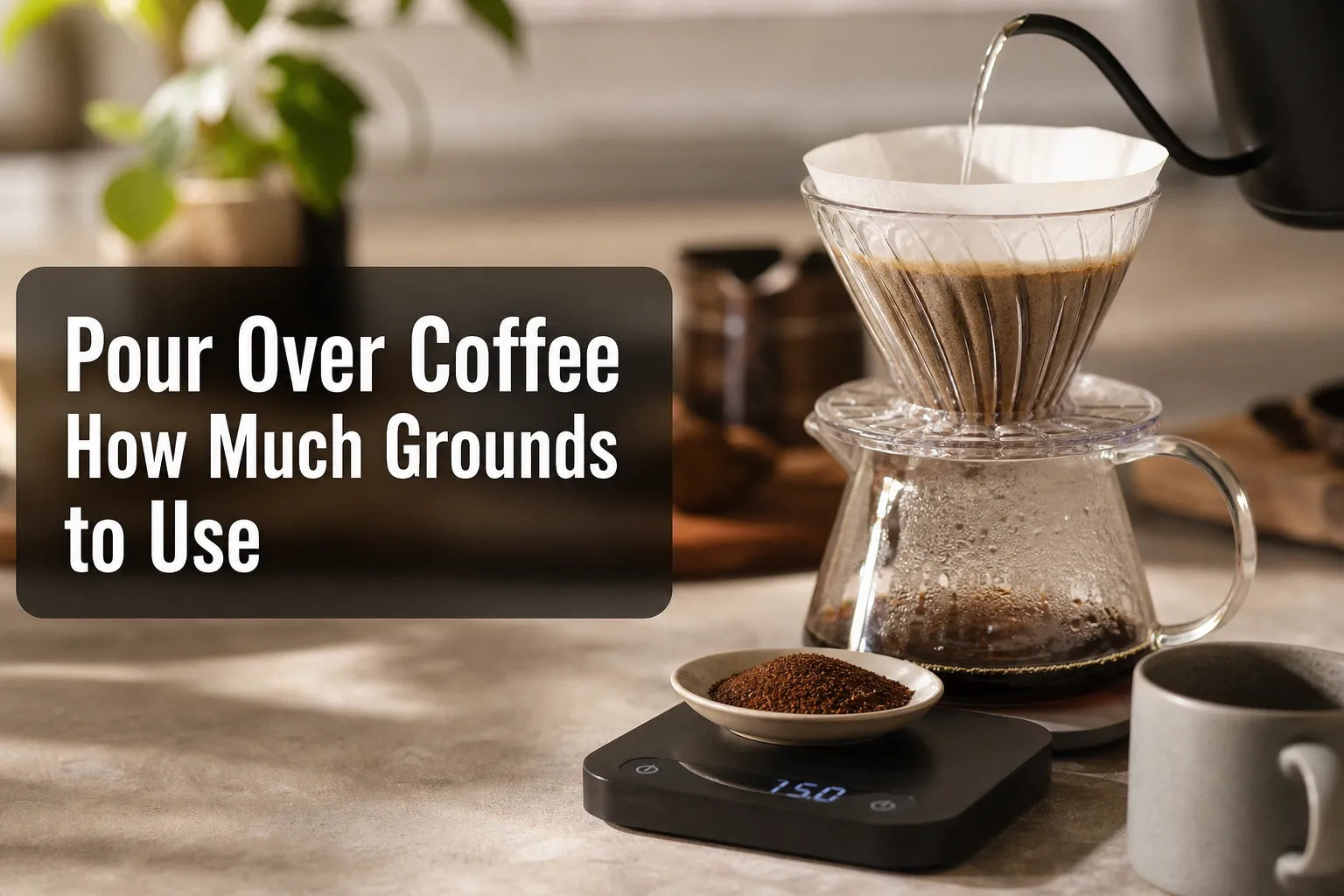
Pour Over Coffee: How Much Grounds to Use for a Better Cup at Home
If you’ve ever asked yourself how much coffee grounds to use for pour over, you’re already focusing on the variable that changes everything. Too little coffee, and your cup tastes thin or sour. Too much, and it can turn heavy, bitter, or simply waste great beans.
For home brewers, the sweet spot is learning a simple ratio you can repeat, then adjusting it to suit your taste, brewer, and roast level. That’s the difference between guessing and brewing with confidence. And when you pair the right dose with precise pouring, a quality kettle, and consistent water temperature, pour-over becomes less intimidating and much more rewarding.
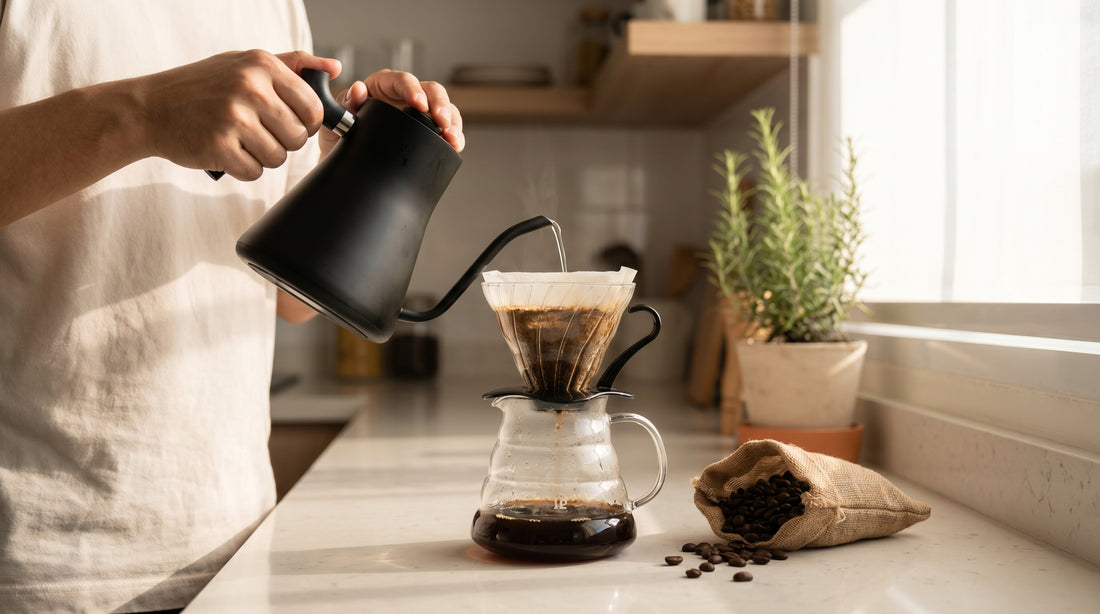
The Short Answer: Start With a 1:16 to 1:17 Ratio
A great beginner-friendly starting point is:
1 gram of coffee for every 16 to 17 grams of water
-
In practical terms, that means:
20 g coffee for 320–340 g water
22 g coffee for 350–375 g water
30 g coffee for 500 g water
This range produces a balanced cup that highlights sweetness, clarity, and body without leaning too intense or too weak. It also aligns closely with specialty coffee standards.
"The Specialty Coffee Association (SCA) recommends a brewing ratio of 55 grams of coffee per liter of water." - Specialty Coffee Association
That guideline works out to roughly 1:18, but many home brewers prefer 1:16 or 1:17 for pour over because it often tastes a bit richer and more expressive, especially with modern light-to-medium roasts.
Why the Ratio Matters More Than Scoops
The biggest mistake beginners make is measuring coffee by spoon instead of weight. A tablespoon of coffee can vary wildly depending on roast level, bean density, and grind size. That means your “usual scoop” may not actually be usual at all.
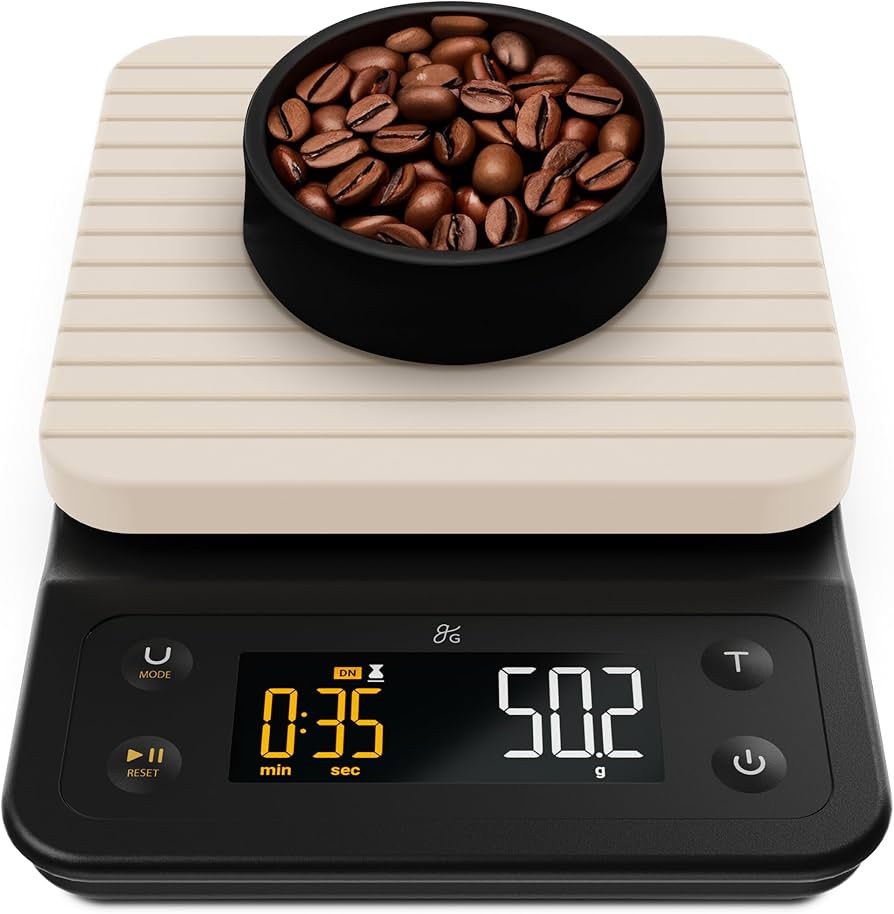
Using a digital scale gives you:
better consistency
easier recipe adjustments
less waste
more control over flavor
For pour over, small changes matter. Just 2 grams more or less coffee can noticeably shift the cup.
The Best Pour Over Coffee Ratios by Strength
Here’s a quick-reference table you can use depending on how you like your coffee.
Strength Preference |
Coffee-to-Water Ratio |
Flavor Result |
|---|---|---|
Stronger, fuller cup |
1:15 |
More body, more intensity |
Balanced everyday brew |
1:16 |
Sweet, rounded, versatile |
Clean and bright |
1:17 |
More clarity, lighter body |
Lighter, delicate cup |
1:18 |
Softer, tea-like texture |
If you’re not sure where to begin, choose 1:16.5. It’s one of the most forgiving ratios for V60, Kalita Wave, and similar brewers.
Exact Coffee Ground Amounts for Common Cup Sizes
One reason people search for pour over coffee how much grounds is that “cup size” gets confusing fast. Coffee makers, mugs, and recipe guides all define a cup differently. The simplest fix is to measure by water weight in grams.
Single Mug: 250 g Water
For a standard mug-sized brew:
1:15 = 16.5–17 g coffee
1:16 = 15.5–16 g coffee
1:17 = 14.5–15 g coffee
Best for: a smaller morning cup with good concentration.
Medium Serving: 350 g Water
A very common single-serve pour-over size:
1:15 = about 23 g coffee
1:16 = about 22 g coffee
1:17 = about 20.5–21 g coffee
Best for: one generous mug.
Two Small Cups: 500 g Water
Ideal for sharing or a larger brew:
1:15 = about 33 g coffee
1:16 = about 31 g coffee
1:17 = about 29–30 g coffee
Best for: two smaller cups or one large travel mug.
Quick Conversion Table
Water |
1:15 |
1:16 |
1:17 |
|---|---|---|---|
250 g |
16.7 g |
15.6 g |
14.7 g |
300 g |
20 g |
18.8 g |
17.6 g |
350 g |
23.3 g |
21.9 g |
20.6 g |
400 g |
26.7 g |
25 g |
23.5 g |
500 g |
33.3 g |
31.3 g |
29.4 g |
600 g |
40 g |
37.5 g |
35.3 g |
If You Don’t Have a Scale: Tablespoon Guide
A scale is still best, but if you need a rough kitchen shortcut:
1 level tablespoon of ground coffee = about 5 to 6 grams
For a 350 g pour over, you’ll usually need about 4 tablespoons, depending on your target ratio
That means:
lighter brew: about 3.5 to 4 tablespoons
stronger brew: about 4 to 4.5 tablespoons
This is a backup method, not a precision one. If you care about consistency, a scale is one of the smartest coffee upgrades you can make.
How Grind Size Changes the Amount That Tastes Best
Competitor guides often mention ratio, but many stop short of explaining why the “right amount” can still taste wrong. That’s because dose and grind always work together.
Here’s the easy version:
Finer grind = more extraction
Coarser grind = less extraction
So if your ratio is correct but the coffee tastes off:
Sour, sharp, or watery: grind a little finer
Bitter, dry, or hollow: grind a little coarser
For most pour-over brewers, start with a medium grind, similar to coarse sand. Then adjust from there instead of changing everything at once.
Water Temperature Still Matters
Even the perfect coffee dose won’t help much if your water temperature is inconsistent.
"For optimal pour-over coffee extraction, the Specialty Coffee Association recommends using water between 92°C and 96°C (198°F to 205°F)." - Specialty Coffee Association guidance cited by Brew.ist
That’s exactly why a precision electric gooseneck kettle changes the experience at home. Controlled temperature and a steady, accurate stream make it easier to repeat great brews, especially when dialing in a new coffee.
At Cocinare, that philosophy sits at the center of the brewing ritual: precision pouring for better pour-over coffee, paired with premium craftsmanship and design-forward styling that looks as good on the counter as it performs in the cup.
A Beginner-Friendly Pour Over Recipe You Can Repeat
If you want one dependable starting recipe, use this:
Standard Recipe
Coffee: 22 g
Water: 360 g
Ratio: 1:16.4
Grind: medium
Water temp: 198–205°F
Brew time: 2:30 to 3:30
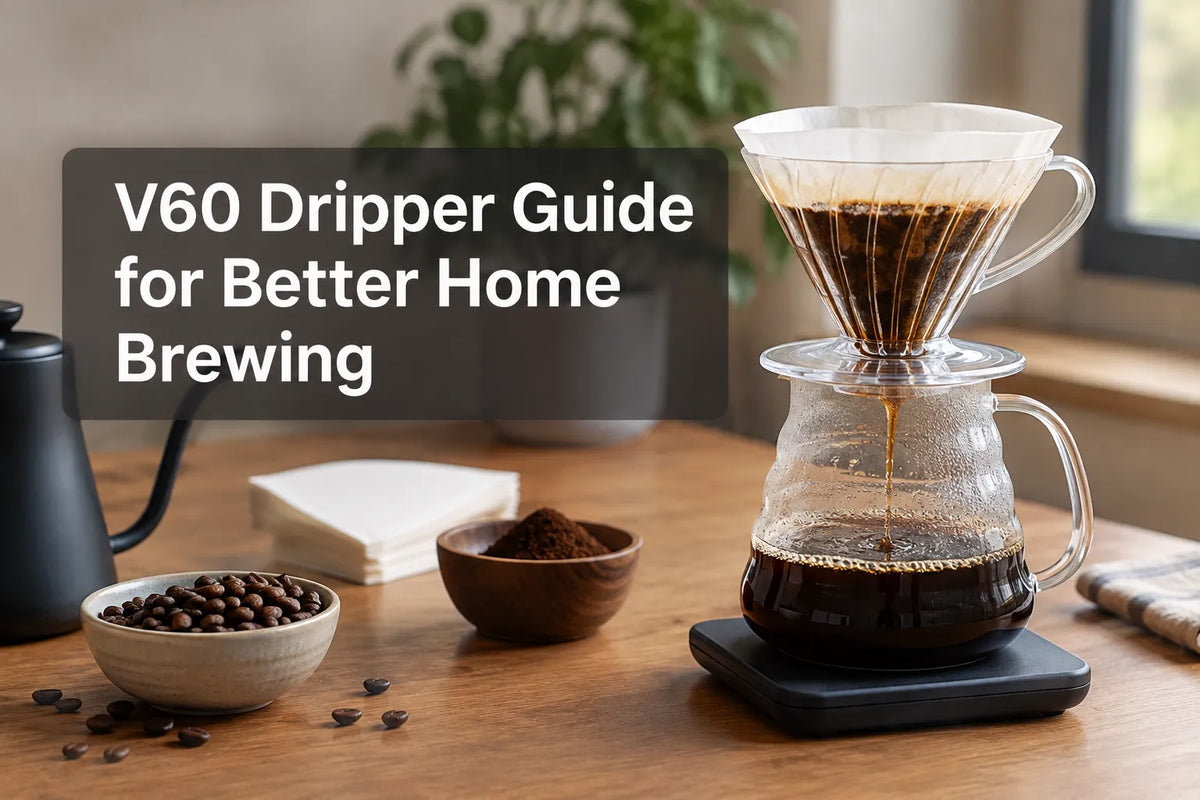
Simple Brewing Steps
Rinse your paper filter with hot water.
Add 22 g of ground coffee.
Bloom with about 45–50 g of water for 30 to 45 seconds.
Continue pouring in slow circles until you reach 360 g total water.
Let the brew finish draining.
Taste and adjust next time.
This recipe is forgiving, balanced, and ideal for home brewers using a V60, Kalita Wave, or similar dripper.
How to Adjust for Taste Without Starting Over
Once your base recipe is set, you only need to adjust one variable at a time.
If Your Coffee Tastes Too Weak
Try one of these:
use a slightly stronger ratio, like 1:15 or 1:16
grind a bit finer
pour more slowly for a longer brew time
If Your Coffee Tastes Too Strong
Try:
moving to 1:17 or 1:18
grinding a touch coarser
speeding up drawdown slightly
If It Tastes Sour
Usually means under-extraction. Fix it by:
grinding finer
using slightly hotter water
extending contact time
If It Tastes Bitter
Usually means over-extraction. Fix it by:
grinding coarser
using slightly cooler water
shortening brew time
Brew Ratio by Pour Over Brewer Type
Different brewers can shine with slightly different approaches.
Brewer |
Suggested Starting Ratio |
Notes |
|---|---|---|
Hario V60 |
1:16 to 1:17 |
Great clarity, responds strongly to pouring technique |
Kalita Wave |
1:15.5 to 1:16.5 |
Forgiving and balanced |
Chemex |
1:16 to 1:17 |
Clean cup, often benefits from slightly more coffee |
Melitta-style dripper |
1:16 |
Easy everyday brewing |
Origami dripper |
1:16 to 1:17 |
Depends on filter style and flow rate |
Common Mistakes When Measuring Pour Over Coffee Grounds
1. Using Volume Instead of Weight
Scoops are convenient, but they’re not consistent enough for repeatable specialty coffee.
2. Changing Ratio and Grind at the Same Time
If you adjust both, you won’t know what actually improved the cup.
3. Ignoring Water Weight
Remember: your target brew recipe is based on water added, not the final liquid in the mug.
4. Brewing Without a Consistent Pour
An uneven pour creates uneven extraction. A gooseneck kettle helps you control flow, agitation, and saturation.
5. Using Beautiful Beans With Basic Technique
Great coffee deserves better than guesswork. Precision tools make better habits easier.
Why a Great Kettle Makes the Ratio Easier to Use
A lot of articles focus on grams alone, but the real home-brewing breakthrough is pairing the right dose with the right pour.
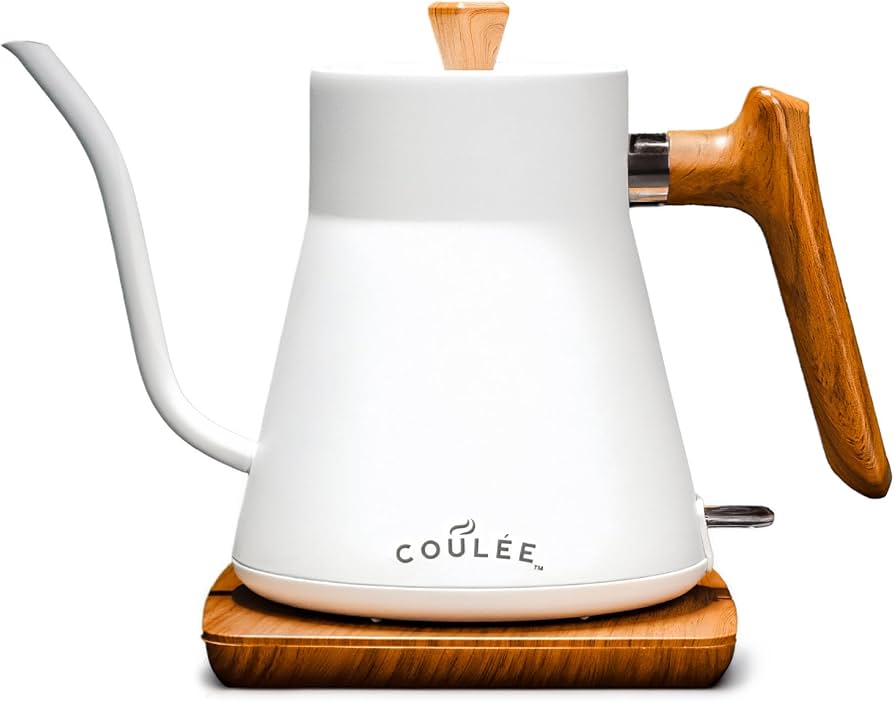
A premium electric gooseneck kettle helps you:
hit your target temperature more accurately
pour slowly and evenly
bloom the grounds more effectively
avoid flooding the brew bed
turn brewing into a ritual instead of a rush
Cocinare brings that performance into a more elevated lifestyle format. The brand’s kettles are built for coffee lovers who care about durable quality, visual detail, and brewing precision in equal measure. Whether your style leans minimalist, expressive, or collectible, Cocinare’s multiple collections make it easier to match your brewing gear to your home and taste.
That includes:
modern, premium aesthetics
artistic and limited-edition collaborations
thoughtful performance for daily pour-over use
free shipping in the U.S.
up to 18-month hassle-free warranty
30-day money-back guarantee
For design-conscious home brewers, that combination is rare: barista-style control without sacrificing visual appeal.
The Best Starting Point for Most People
If you want the simplest answer possible, use this:
Start Here
Coffee: 21 to 22 grams
Water: 350 grams
Ratio: about 1:16
Grind: medium
Water temp: 200°F
Then taste.
If it feels too light, go to 23 g next time.
If it feels too strong, try 20 g.
That’s the easiest way to build intuition without overcomplicating your morning routine.
Final Verdict
When it comes to pour over coffee, how much grounds to use is not a mystery once you understand the ratio. For most home brewers, 1:16 to 1:17 is the sweet spot, with about 21–22 grams of coffee for 350 grams of water as an ideal everyday recipe.
From there, better coffee comes down to consistency: weigh your dose, control your pour, and keep your water temperature steady. That’s where the right kettle becomes more than a nice accessory. It becomes part of the craft.
If you want to make your home coffee ritual more precise, more beautiful, and more enjoyable, Cocinare is a natural next step. With design-led electric gooseneck kettles, premium build quality, artistic collections, and customer-friendly perks, Cocinare helps transform a simple cup into a refined daily experience.
FAQ
What is the 15-15-15 coffee rule?
The 15-15-15 coffee rule is sometimes used informally to describe a stronger brew ratio of about 1:15, or simply as a reminder to keep brewing variables consistent. In pour over, it usually points to using more coffee for a fuller, richer cup.
What is the best method for pouring over coffee?
The best method is to use a consistent coffee-to-water ratio, a medium grind, and a slow, controlled pour with a gooseneck kettle. Start with a bloom, then pour in steady circles until you reach your target water weight.
How many tablespoons of coffee should I use for a pour over?
As a rough guide, use about 4 tablespoons for a 350 g pour over, since each tablespoon holds roughly 5 to 6 grams of ground coffee. For better consistency, measuring by weight is still the better option.
What is the 15 15 15 coffee rule?
This usually refers to the same idea as the 15-15-15 coffee rule: brewing on the stronger side with a ratio near 1:15. In practice, most beginners will find 1:16 to 1:17 easier and more balanced for pour over coffee.

Share:
Best Electric Gooseneck Kettle for Style
Best Pour Over Coffee Maker Picks for 2026