

Hand Pour Coffee: Why It Tastes Better at Home
If you love coffee but feel like your home brews never quite match the clarity, aroma, and balance you get in a great café, hand pour coffee is often the missing link. It gives you something automatic brewers rarely do: real control. Control over water flow, extraction, timing, and ultimately, flavor.
For coffee enthusiasts, design-conscious home brewers, and anyone building a more intentional morning ritual, a hand pour coffee maker turns brewing into more than a routine. It becomes a craft. And with the right kettle, especially one built for precision pouring, it becomes dramatically easier to brew a cup that tastes cleaner, sweeter, and more expressive.
"Daily consumption has held steady since 2022, with 66% of adults drinking coffee each day." - National Coffee Association
That matters because the better your daily ritual gets, the more value you feel every single morning. Hand pour coffee brings café-style intention into the home, without making your kitchen feel like a lab.
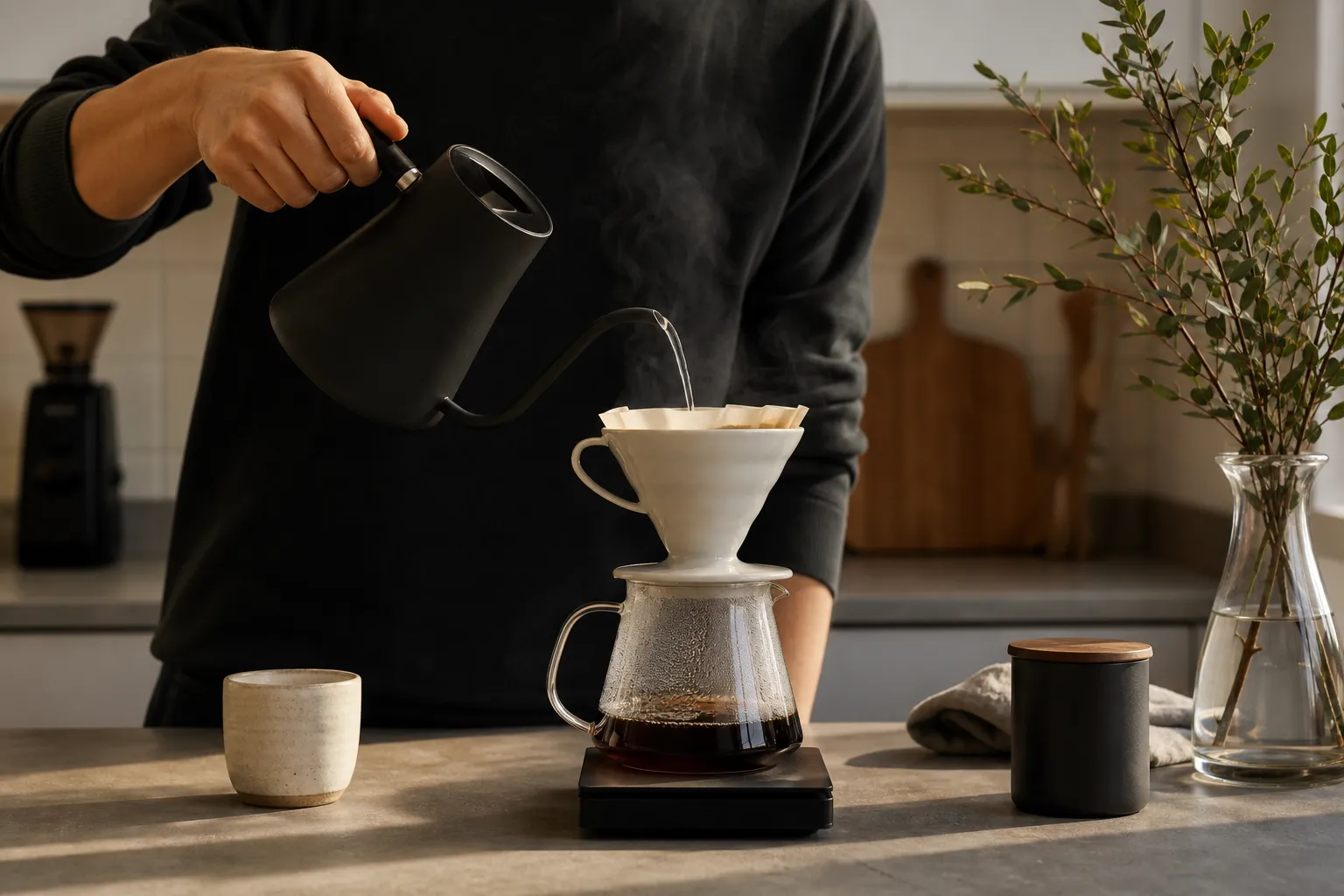
What Is Hand Pour Coffee?
Hand pour coffee is a manual brewing method where you pour hot water over ground coffee in a filter, usually in slow, controlled stages. Instead of pressing a button and letting a machine decide how water hits the grounds, you guide the extraction yourself.
That one shift changes everything.
With hand pouring, you can influence:
how evenly the grounds are saturated
how long the coffee extracts
how much body or clarity ends up in the cup
whether the result tastes bright and layered or flat and muddy
At its best, hand pour coffee highlights the natural character of the beans. Floral Ethiopian coffees can taste tea-like and aromatic. Chocolatey Colombian coffees can feel rounder and sweeter. Fruity light roasts can reveal complexity that many drip machines blur out.
Why Hand Pour Coffee Tastes Better
The biggest reason hand pour coffee often tastes better at home is simple: precision leads to better extraction.
Automatic machines can make decent coffee, but many struggle with water distribution, temperature stability, and contact time. Hand pouring lets you correct all three.
Better saturation of the coffee bed
When you pour with intention, you wet the grounds evenly. That means fewer dry pockets and fewer over-extracted spots. Even saturation creates a more balanced cup.
More consistent water flow
A controlled stream lets you decide whether to slow extraction for sweetness or keep it lighter for more sparkle and acidity. This is why a gooseneck kettle is so important: it gives you the fine control standard kettles simply cannot.
More control over bloom
Fresh coffee releases trapped gases when first hit with hot water. This phase, called the bloom, affects how well the rest of the brew extracts. Hand pouring gives you time to bloom the coffee properly before continuing.
More clarity in the final cup
Because hand pour coffee usually uses paper or fine metal filtration and a carefully managed pour pattern, it often produces a cleaner, brighter cup than immersion-heavy methods.
The Real Advantage: Control Without Complexity
Some people assume manual brewing is difficult. In reality, hand pour coffee is only as complicated as you make it.
A great setup can be beautifully simple:
fresh coffee
filtered water
a dripper and filter
a scale if you want extra consistency
a precise gooseneck electric kettle
That last tool matters more than most people realize. A premium kettle doesn't just heat water. It shapes the brew itself. The best ones make it easier to pour steadily, hold the ideal temperature, and feel confident from the first bloom to the last circle.
At Cocinare, that blend of performance and design is the point. A well-crafted kettle should help you brew better coffee, but it should also elevate your space and make the ritual feel worth returning to every day.
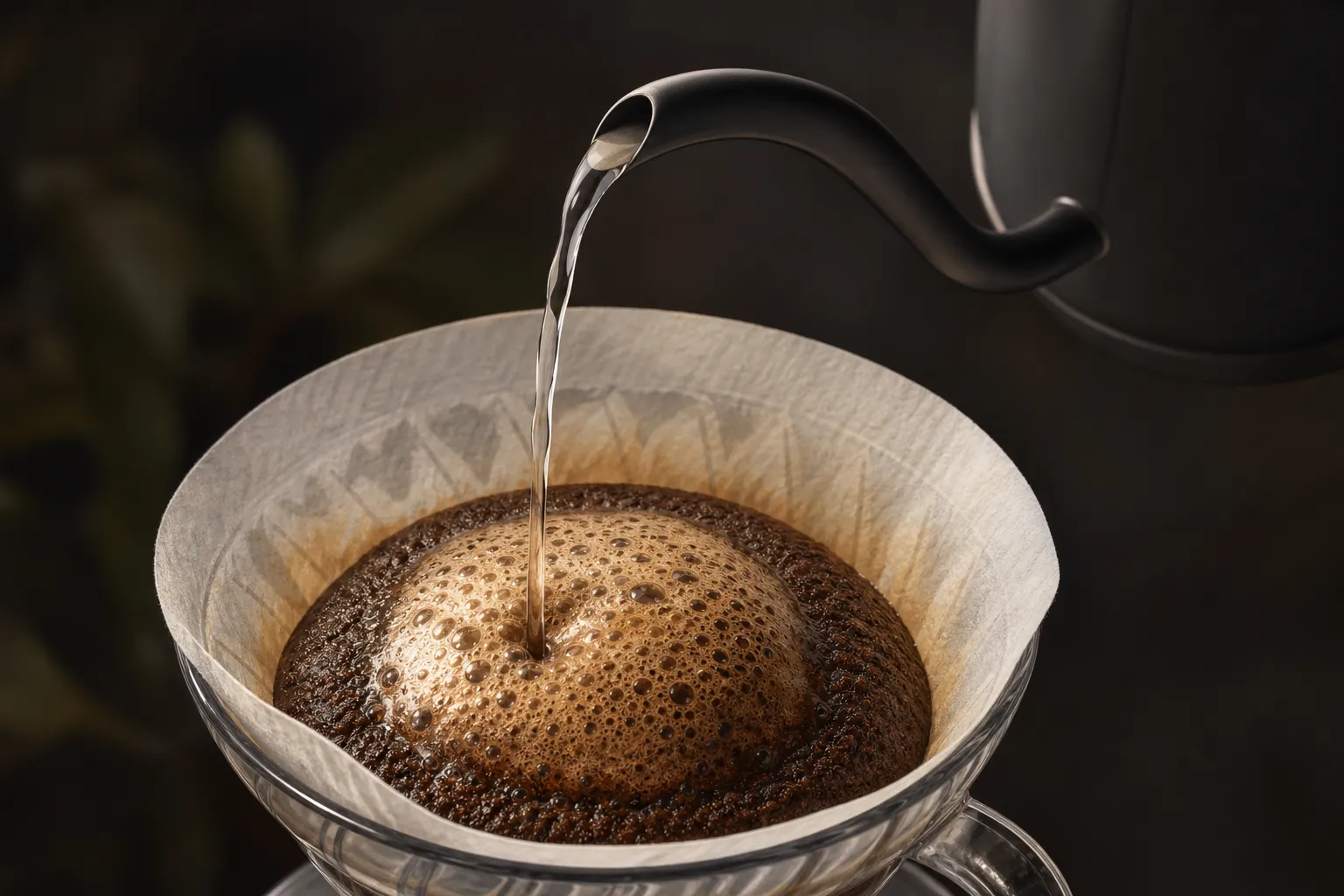
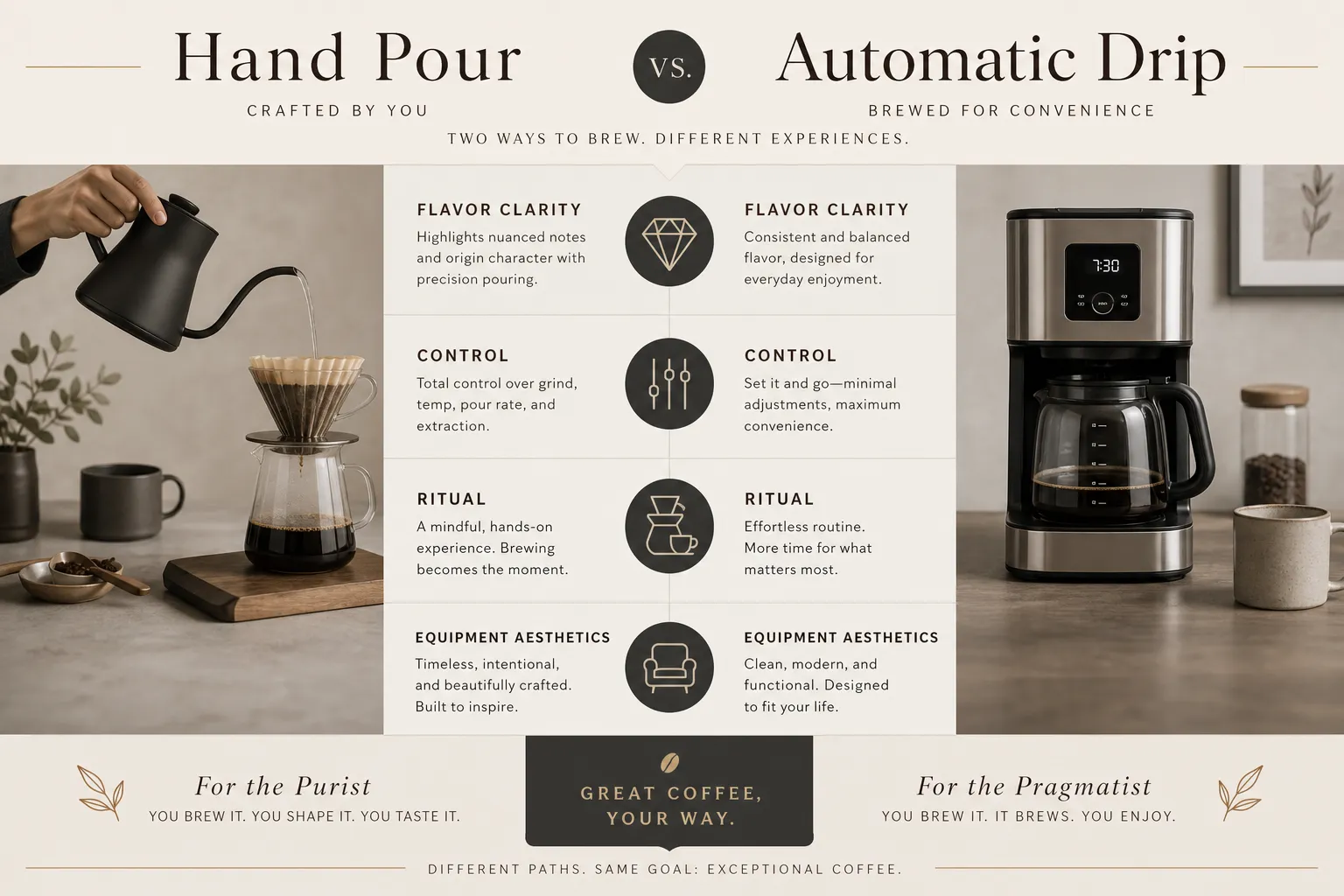
Hand Pour Coffee vs Automatic Drip
Both methods pass water through coffee grounds and a filter, but the experience and flavor outcome can be very different.
Feature |
Hand Pour Coffee |
Automatic Drip Coffee |
|---|---|---|
Water flow control |
Full manual control |
Machine-controlled |
Brewing ritual |
Intentional and immersive |
Fast and passive |
Flavor clarity |
Often higher |
Often flatter |
Temperature management |
Precise with a quality kettle |
Varies by machine |
Customization |
High |
Limited |
Design appeal |
Can feel premium and artisanal |
Usually utilitarian |
For people who care about taste, hand pour usually wins on nuance. For people who care about speed alone, automatic drip is convenient. But many home brewers find that once they taste a truly dialed-in pour over, convenience no longer feels like enough.
What Competitor Articles Get Right - and What They Miss
Most articles about pour over vs drip focus on the same themes:
pour over offers more control
drip is easier and faster
water temperature matters
a gooseneck kettle improves precision
pour over tends to produce a cleaner cup
All true. But many gloss over the deeper reasons people actually switch to hand pour coffee at home.
The biggest content gaps
Brewing is emotional, not just technical
Great home coffee is about more than extraction charts. It is about slowing down, enjoying the aroma, and turning a daily habit into a sensory ritual.
Equipment design changes behavior
If your brewing gear looks beautiful and feels intuitive, you are more likely to use it often and use it well. This is especially true for customers who want their kitchen tools to match a modern, design-led lifestyle.
The kettle is the hero tool
Many articles mention kettles casually, but for hand pour coffee, the kettle is central. Precision pouring is what makes the method work consistently. A thoughtfully designed electric gooseneck kettle is not an accessory. It is the engine behind better brewing.
Better coffee at home should feel attainable
Too much coffee content becomes intimidating. The reality is that a few smart changes can dramatically improve your cup without turning your counter into a competition setup.
The Four Variables That Shape Flavor
Once you understand these, hand pour coffee becomes much easier to master.
1. Grind size
Grind too fine, and your coffee may taste bitter or hollow because the water extracts too much. Grind too coarse, and the cup can taste weak or sour.
As a starting point, aim for a medium grind, similar to sea salt, then adjust based on taste.
2. Water temperature
Water that is too cool under-extracts. Water that is too hot can push bitter notes forward.
"The Specialty Coffee Association recommends brewing coffee with water heated to a temperature between 195°F and 205°F." - Specialty Coffee Association guidance, cited summary
This is where a precision electric kettle becomes a clear upgrade. You stop guessing and start repeating what works.
3. Pour rate
Your pour speed affects contact time. A slow, steady stream usually gives you more even extraction than a heavy, uncontrolled pour.
4. Coffee-to-water ratio
A good baseline is around 1:15 to 1:17 coffee to water, depending on how rich or light you like your cup. Once you find a favorite ratio, consistency gets much easier.
A Simple Hand Pour Coffee Recipe for Home
If you are just getting started, this method is approachable and reliable.
What you need
20 grams of coffee
320 grams of water
hand pour coffee maker or dripper
paper or reusable filter
gooseneck kettle
mug or server
Step-by-step
1. Heat your water
Bring water into the ideal brewing range, roughly 195°F to 205°F.
2. Rinse the filter
This removes papery taste and preheats the dripper.
3. Add ground coffee
Level the bed gently for a more even extraction.
4. Bloom
Pour just enough water to saturate the grounds, about 40 to 50 grams. Wait 30 to 45 seconds.
5. Continue pouring in circles
Pour slowly from the center outward, then back in. Avoid dumping water too aggressively onto the filter walls.
6. Finish the brew
Aim for a total brew time of around 2.5 to 4 minutes, depending on the coffee and grind.
7. Taste and adjust
If it tastes sour, try a finer grind or slightly hotter water. If it tastes bitter, go coarser or pour a little faster.
Why a Hand Pour Coffee Maker Is Worth It
A hand pour coffee maker is one of the best upgrades for people who want better coffee without committing to a large machine. It is compact, beautiful, and deeply effective when paired with a proper kettle.
It gives you more flavor transparency
The method reveals more of the bean's origin character, roast profile, and sweetness.
It makes daily coffee feel intentional
There is a tactile pleasure in grinding beans, heating water, watching the bloom rise, and pouring in a steady rhythm.
It fits a modern kitchen
Unlike bulky brewers, hand pour setups can feel elegant and unobtrusive. They suit minimalist spaces, curated countertops, and gift-worthy home coffee corners.
It rewards better tools
A premium kettle, durable dripper, and well-made accessories do not just look better. They help create a more repeatable brew.
The Case for a Precision Gooseneck Kettle
If you only upgrade one thing, make it the kettle.
A precision gooseneck kettle improves hand pour coffee by giving you:
a narrow, stable stream
better control over agitation
more confidence during bloom and main pours
more consistent brewing temperature
a smoother, more enjoyable ritual
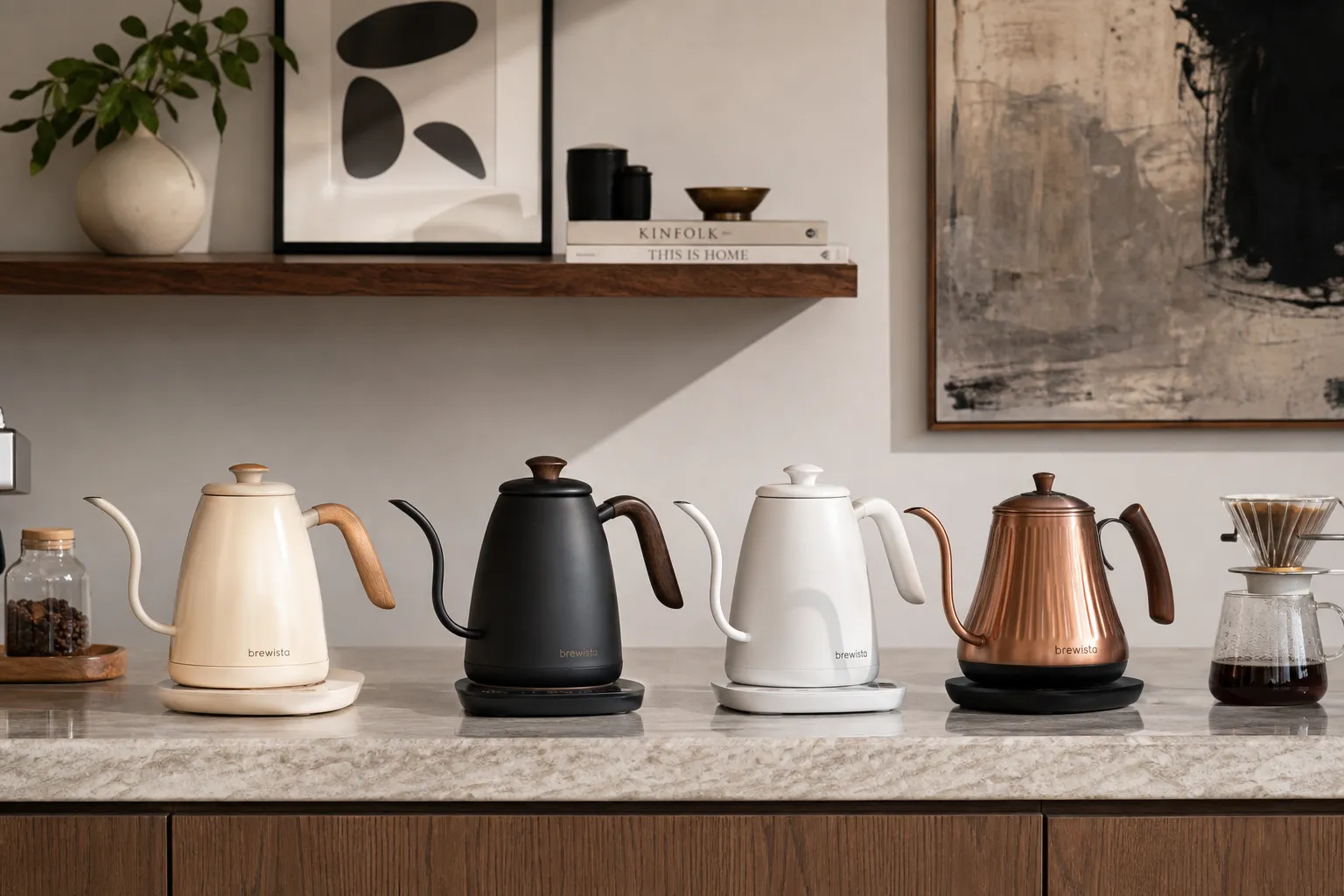
Cocinare is built around this exact idea. The brand's kettles are designed for home brewers who want barista-style control without sacrificing aesthetics. From the refined elegance of the Artisan Collection to expressive options in the Color-changing Collection and collectible drops in the Collab Collection, the experience is intentionally both functional and visual.
That means you can choose a kettle that suits your brewing style and your home, whether you prefer quiet sophistication, a more artistic statement, or a limited-edition piece that feels personal.
How Design Improves the Brewing Ritual
This is where premium coffee gear often separates itself.
A better brewing setup should not only perform well. It should make you want to use it. It should feel good in the hand, look right on the counter, and turn a rushed habit into a more grounded part of your day.
That is one of the most overlooked reasons people stick with hand pour coffee once they start. It is not just that it tastes better. It feels better.
For design-conscious customers, Cocinare brings together:
precise pouring for better extraction
premium and durable build quality
modern, style-forward aesthetics
multiple collections for different tastes and lifestyles
artistic and limited-edition collaborations
a home brewing ritual that feels elevated, not clinical
And because buying premium gear should still feel low-risk, Cocinare supports that experience with free U.S. shipping, an up to 18-month hassle-free warranty, and a 30-day money-back guarantee.
Common Mistakes That Make Hand Pour Coffee Taste Bad
Even good beans can produce disappointing results if the technique is off. Here are the most common problems.
Using stale coffee
Freshly roasted coffee makes a dramatic difference. If the coffee is old, the cup will often taste dull no matter how good your technique is.
Pouring with a standard kettle
A wide, uncontrolled stream disturbs the bed too aggressively and creates uneven extraction.
Ignoring water quality
If your water tastes off, your coffee will too. Filtered water is usually the best place to start.
Skipping the bloom
Without blooming, trapped gas can interfere with even extraction.
Chasing complexity too early
You do not need a dozen variables on day one. Start with a repeatable recipe and refine slowly.
How to Make Hand Pour Coffee Taste Like a Café
If your goal is coffee shop quality at home, focus on these upgrades first:
Buy fresher beans.
Use filtered water.
Heat water precisely.
Use a real gooseneck kettle.
Keep your coffee-to-water ratio consistent.
Adjust grind based on taste, not guesswork.
Brew in a calm, repeatable way.
The beautiful part is that none of this requires a commercial bar setup. A thoughtful hand pour coffee maker and a well-designed kettle can take you surprisingly far.
Final Verdict
Hand pour coffee tastes better at home because it gives you direct control over the details that shape flavor: temperature, timing, saturation, and flow. It also creates something many automatic brewers cannot: a brewing ritual that feels calm, personal, and deeply rewarding.
If you want coffee that is cleaner, more expressive, and more aligned with the quality you admire in specialty cafés, hand pouring is one of the smartest upgrades you can make. And if you want that ritual to feel as beautiful as it tastes, Cocinare is a natural place to begin. With precision-focused electric kettles, premium craftsmanship, design-led collections, and customer-friendly benefits like free U.S. shipping, up to 18-month warranty coverage, and a 30-day money-back guarantee, Cocinare helps turn better brewing into a better everyday experience.
FAQ
Why does pour over coffee taste better?
Pour over coffee often tastes better because it gives you more control over extraction, including water flow, temperature, and brew time. That control helps create a cup that is cleaner, sweeter, and more balanced than many automatic brewers can produce.
Why does coffee shop coffee taste better than at home?
Coffee shops usually use fresher beans, better grinders, precise water temperature, and trained brewing technique. The good news is that with quality gear and a repeatable hand pour method, you can get much closer to that café-level flavor at home.
How to get the best tasting coffee at home?
Start with fresh coffee, filtered water, the right grind size, and precise pouring. A hand pour coffee maker paired with a gooseneck electric kettle makes it easier to brew consistently and bring out more flavor in every cup.
Why doesn't my pour over coffee taste good?
If your pour over tastes off, the most likely causes are stale beans, poor water, the wrong grind size, or uneven pouring. Small adjustments to temperature, ratio, and pour control can make a big difference quickly.
Why doesn't my pour over coffee taste good?
Most bad pour over results come from under-extraction or over-extraction. If it tastes sour, try a finer grind or hotter water; if it tastes bitter, try a coarser grind or a faster pour.
What is the secret to great tasting coffee?
The secret is consistency with the fundamentals: fresh beans, good water, proper temperature, and controlled brewing. Hand pour coffee rewards attention to those details and makes great flavor easier to repeat.
Share:
Electric Gooseneck: Why Coffee Lovers Prefer It
Pour Over Coffee at Home: Elevate Every Cup