

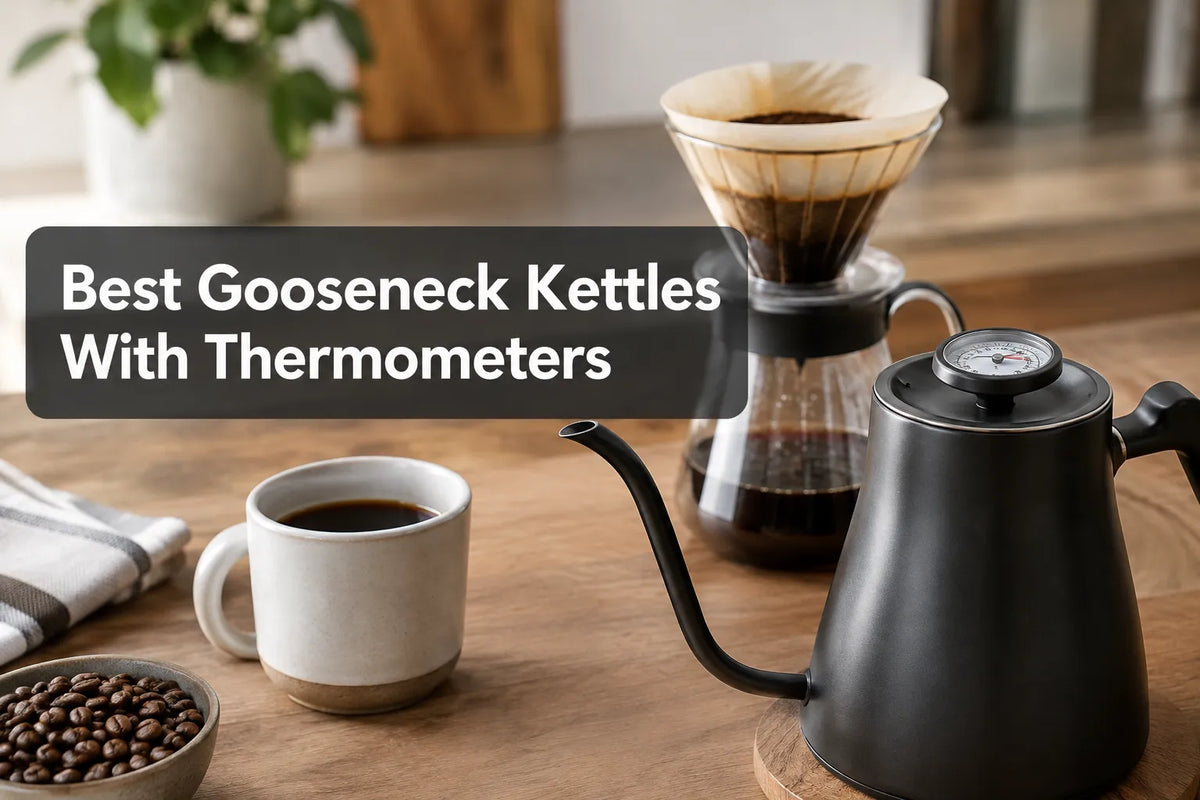
The best gooseneck kettles with thermometers include both stovetop and electric models. On the stove, you read a lid dial and lift the kettle at the temperature you want. With an adjustable electric model, you choose that temperature before heating.
On a busy morning, the stove asks you to watch the dial while you grind and set up the dripper. An electric kettle with a hold setting lets you finish those tasks before you pour. The spout matters in either setup: you want to wet the coffee bed without flooding it.
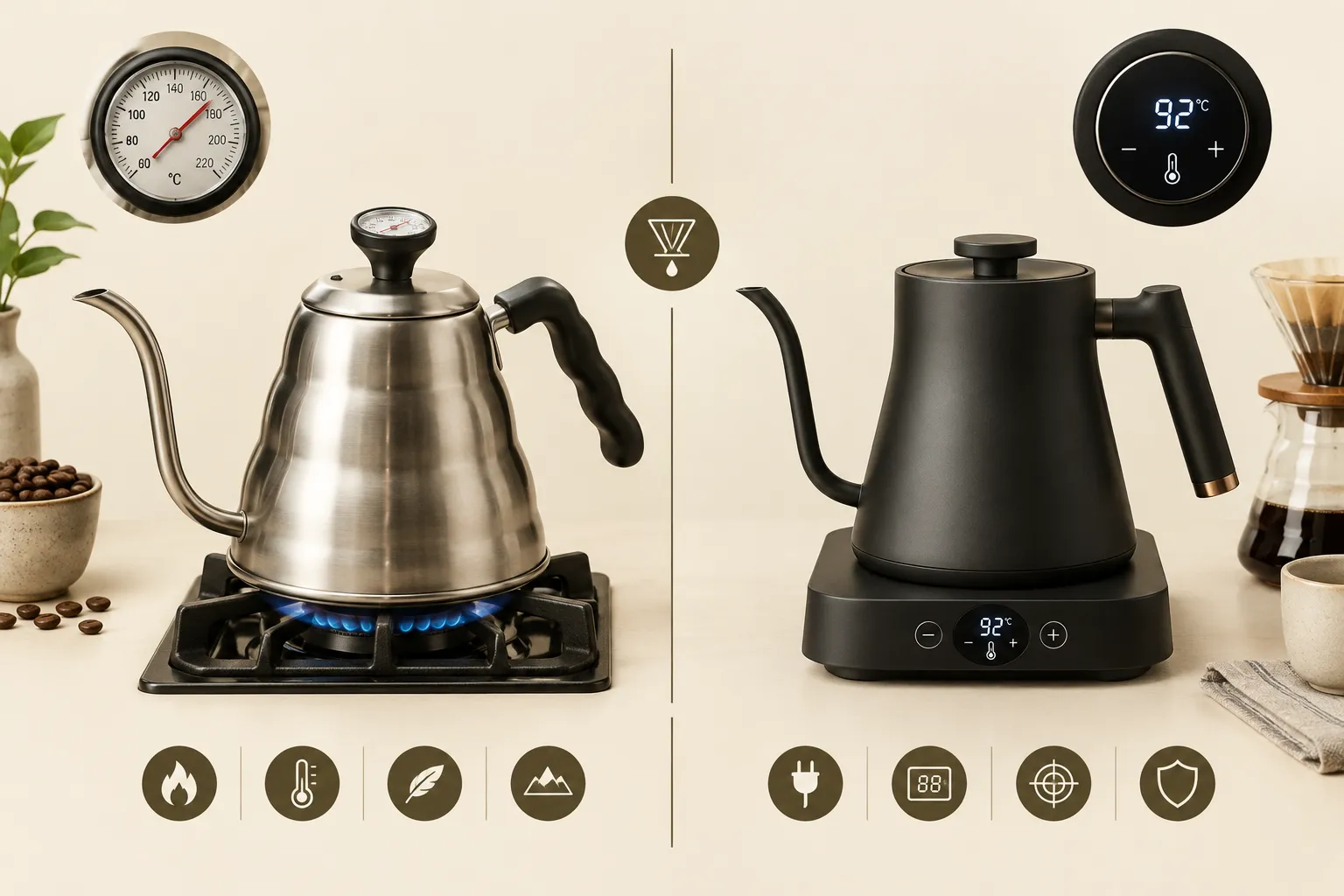
Electric vs stovetop gooseneck kettles: thermometer or temperature control?
Feature |
Stovetop kettle with lid thermometer |
Variable-temperature electric gooseneck |
|---|---|---|
What the number means |
Water temperature as indicated by the gauge |
A display of measured water temperature, usually alongside a chosen target |
How heat stops |
You remove the kettle from the burner |
The kettle stops heating at its target |
Best fit |
One usual recipe, existing stove, hands-on brewing |
Different recipes, repeat batches, or a workflow with pauses |
Trade-off |
You must watch the gauge and account for temperature drift |
More counter space, electronics and a power outlet |
An analog dial removes the guesswork after water has boiled. You can use the kettle without a powered base, but you must lift it from the heat yourself when the dial reaches your chosen point.
A digital display can show temperature without controlling it. For automatic heating, look for a temperature-setting control. A hold mode is useful if you rinse filters or make several cups, since you can return to water at your chosen setpoint.
If you brew one Hario V60 each morning, a stovetop gooseneck kettle with a built-in dial may be enough. For several pour-overs in a row, a hold function saves you a return trip to the burner. It also helps if you move between coffee and delicate green tea and want a different target temperature for each.
The stove needs your attention; the electric base needs counter space and an outlet. If you own a regular electric kettle, consider whether a second powered appliance earns its place. A thermometer-only model gives you a narrow curved spout for pour-over without adding another base.
Best gooseneck kettles with thermometers and displays
The electric picks combine a temperature reading with adjustable heat. The stovetop picks have built-in gauges and use your burner. A standard gooseneck with no gauge cannot show you the water temperature.
The standard stovetop Hario Buono has no built-in thermometer. It remains an option if you need a pouring kettle and already measure water temperature another way.
Pick |
Temperature approach |
Why choose it |
Main compromise |
|---|---|---|---|
Fellow Stagg stovetop |
Lid gauge, manual burner control |
Purpose-built pour-over design with a visible dial |
No automatic cutoff at your brewing target |
Coffee Gator gooseneck |
Built-in thermometer, manual heating |
Another thermometer-only option |
You still manage the heat |
TIMEMORE Fish Smart |
Electric target setting and hold mode |
Slow, controlled pouring and repeatable heating |
Touch controls may take getting used to |
Fellow Stagg EKG |
Electric target setting, display and hold mode |
Slow pour and straightforward temperature setting |
Restricted flow can feel slow for other kitchen tasks |
Brewista Artisan |
Electric temperature control |
Precision spout with an expressive look |
Broad shape and control layout may not suit everyone |
Cocinare Wave |
Electric adjustable temperature and 60-minute hold |
Display and artistic Artisan styling |
Requires a powered base rather than a stove |
Fellow Stagg stovetop: best for a hands-on routine
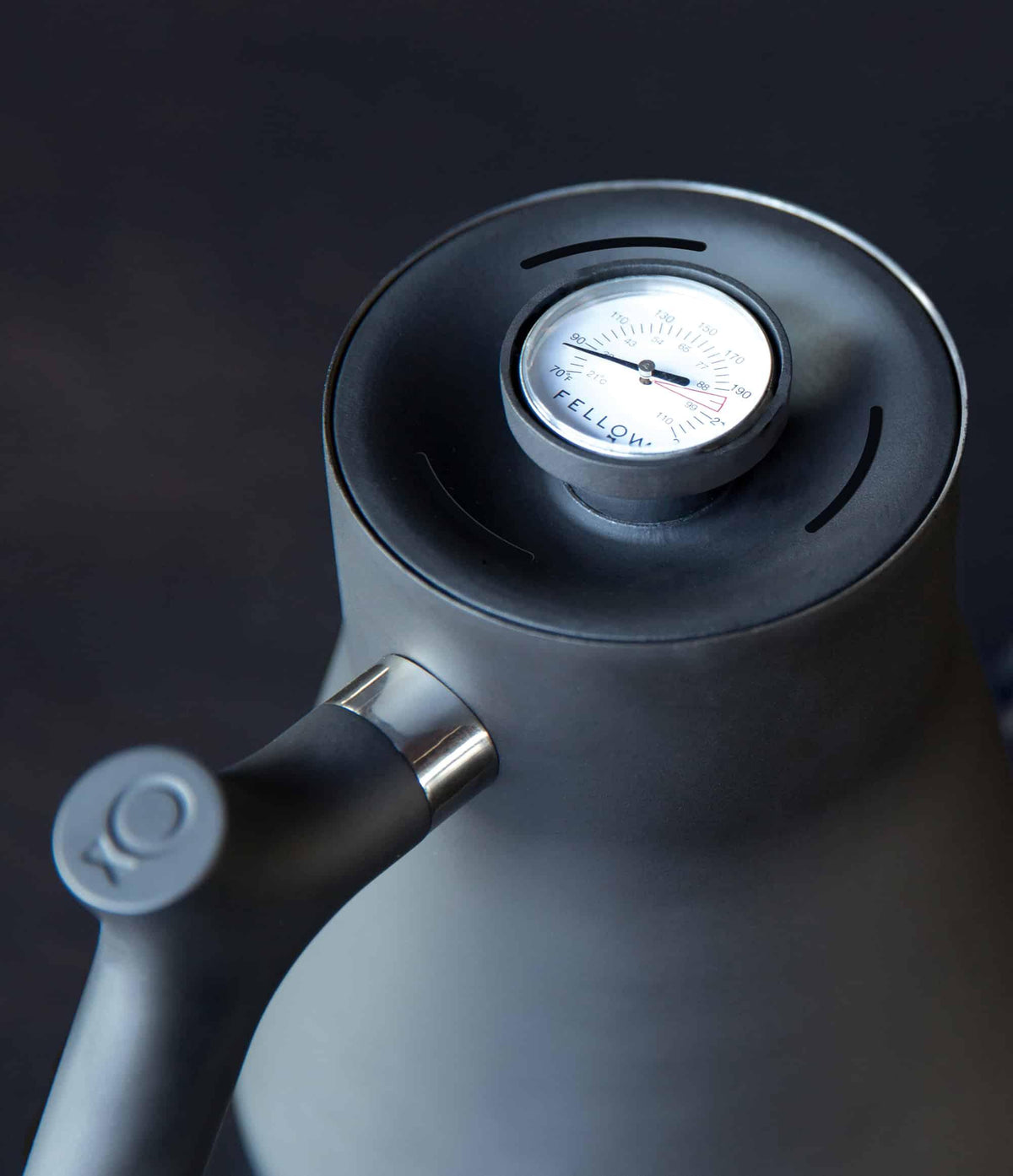
The Fellow Stagg stovetop kettle puts the thermometer in the lid. You can watch the water heat on your existing burner and lift the kettle once the dial reaches your target, with no loose probe to wash or put away.
You still manage the burner. On an induction hob, the base must be compatible. You should also be able to read the dial from where you stand and trust the lid to stay in place when you pour.
Coffee Gator gooseneck: best for a straightforward built-in gauge
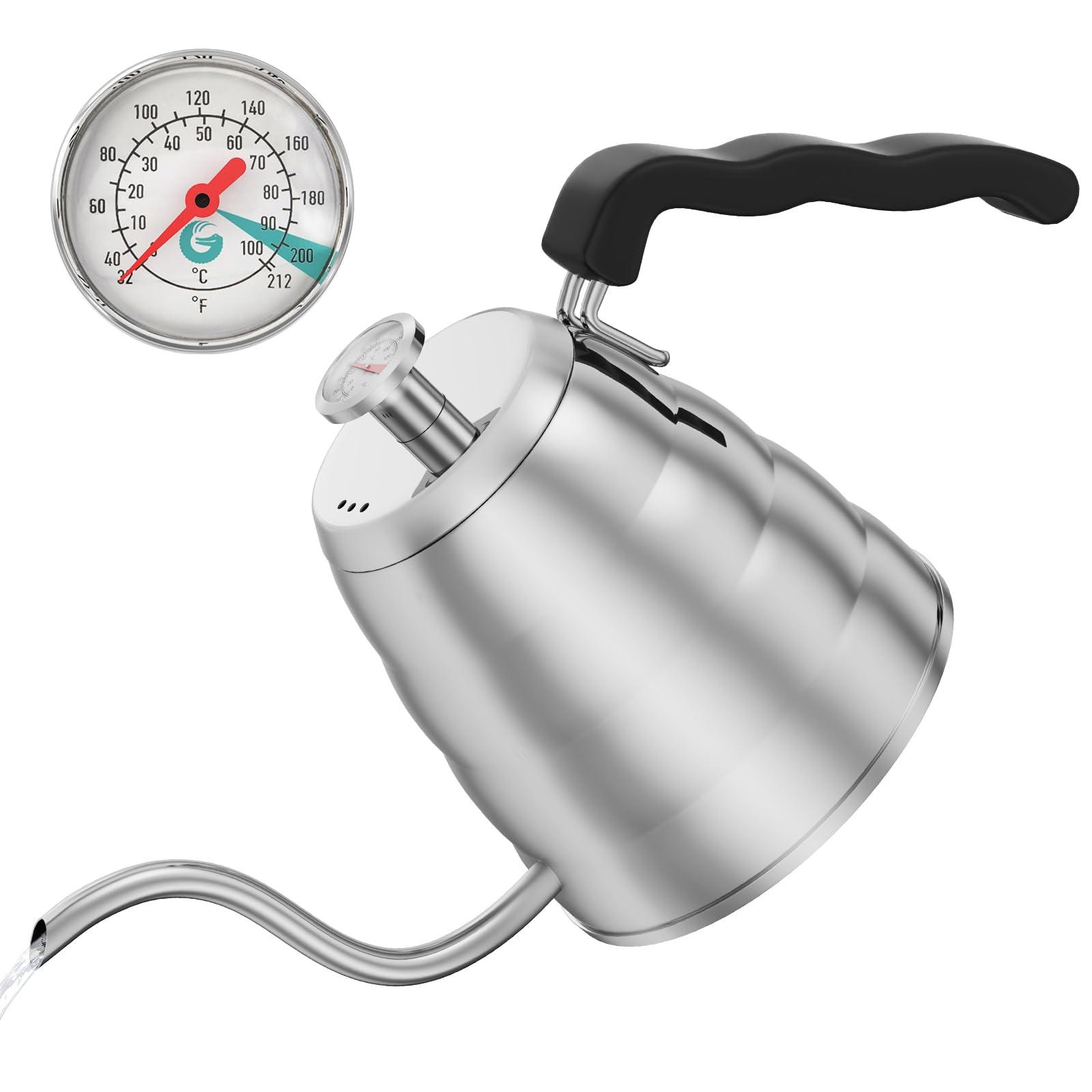
The Coffee Gator gooseneck has an elongated spout and a built-in thermometer. It fits a brewer who wants to see the water temperature while handling the heat by hand. The dial will not stop the burner or hold water at a setpoint.
TIMEMORE Fish Smart: best for a controlled, gentle stream
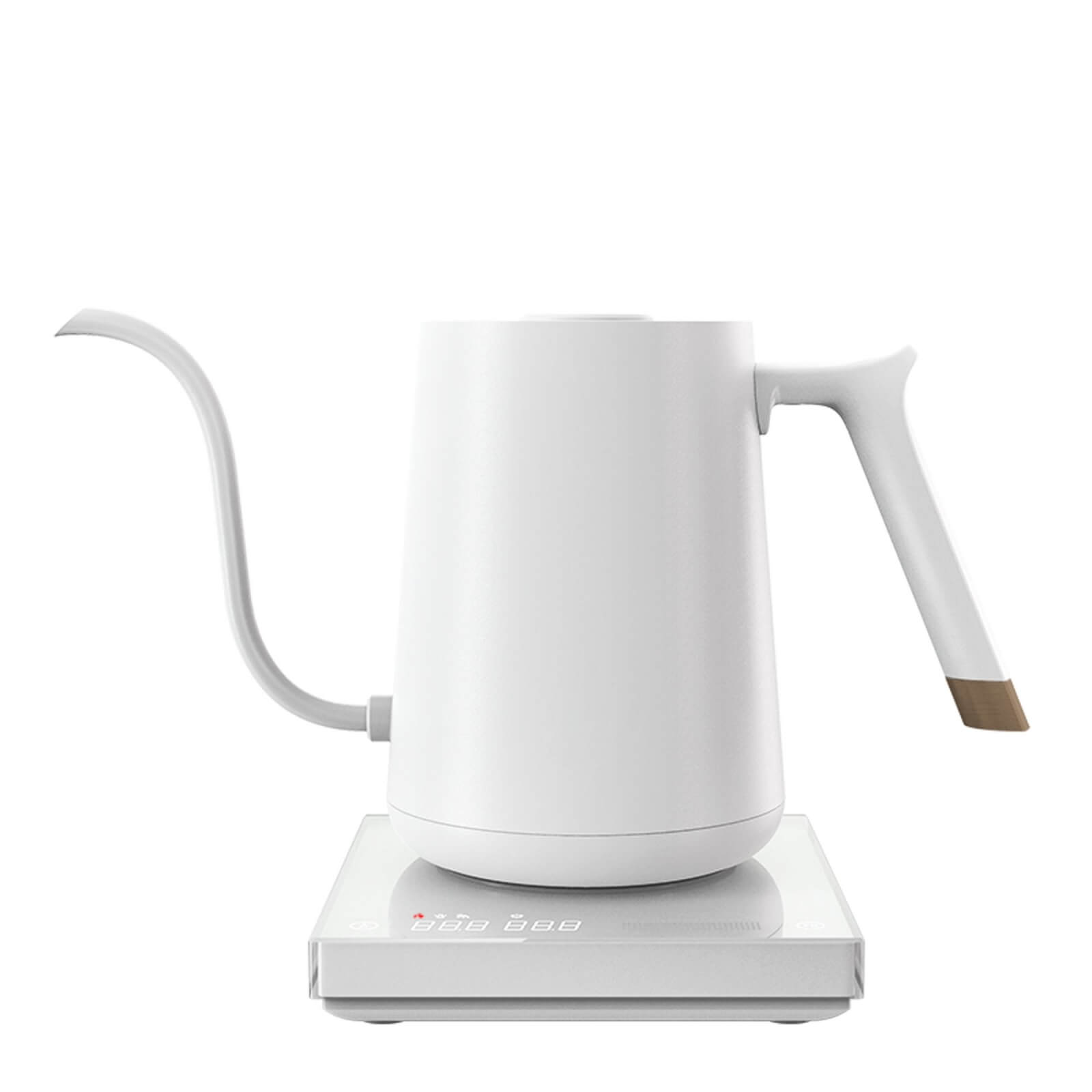
The Fish Smart has adjustable electric heating and a hold mode. Its slow stream gives you time to steer the water if a faster kettle tends to splash the coffee bed. The touchpad can take a few gestures to respond, a drawback if you prefer the feel of buttons.
Set your target, then grind and prepare the filter while it heats. If your stove routine is already quick and you only want a visible reading, you may get little benefit from its base.
Fellow Stagg EKG: best for a slow-pour electric setup
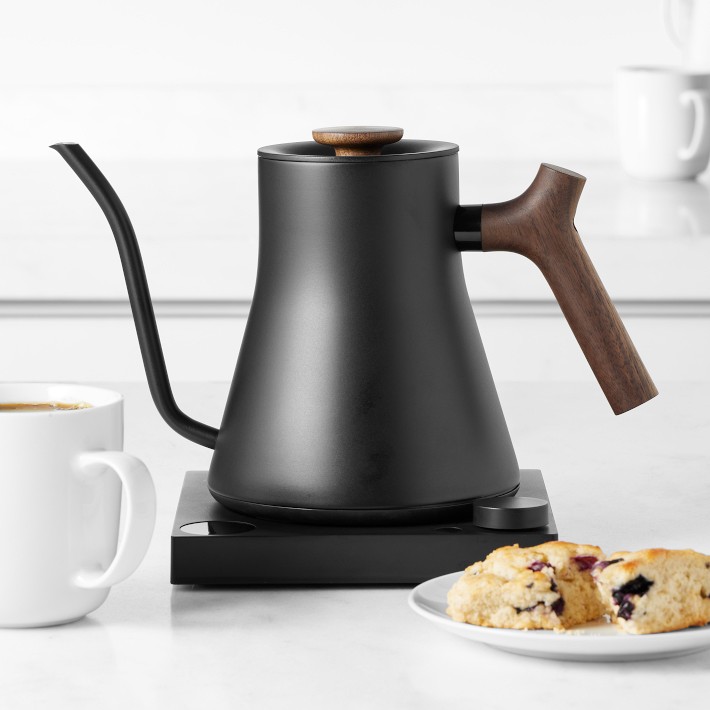
The Stagg EKG has a display, an adjustment dial and a temperature hold function. Its slow gooseneck stream gives you time to direct water over the coffee bed, though it makes filling a large teapot a slower job.
It suits a brewer who values a gentle stream and a clear electric interface. The stovetop Stagg shares the name, not the EKG's heating controls.
Brewista Artisan: best for a more expressive counter setup
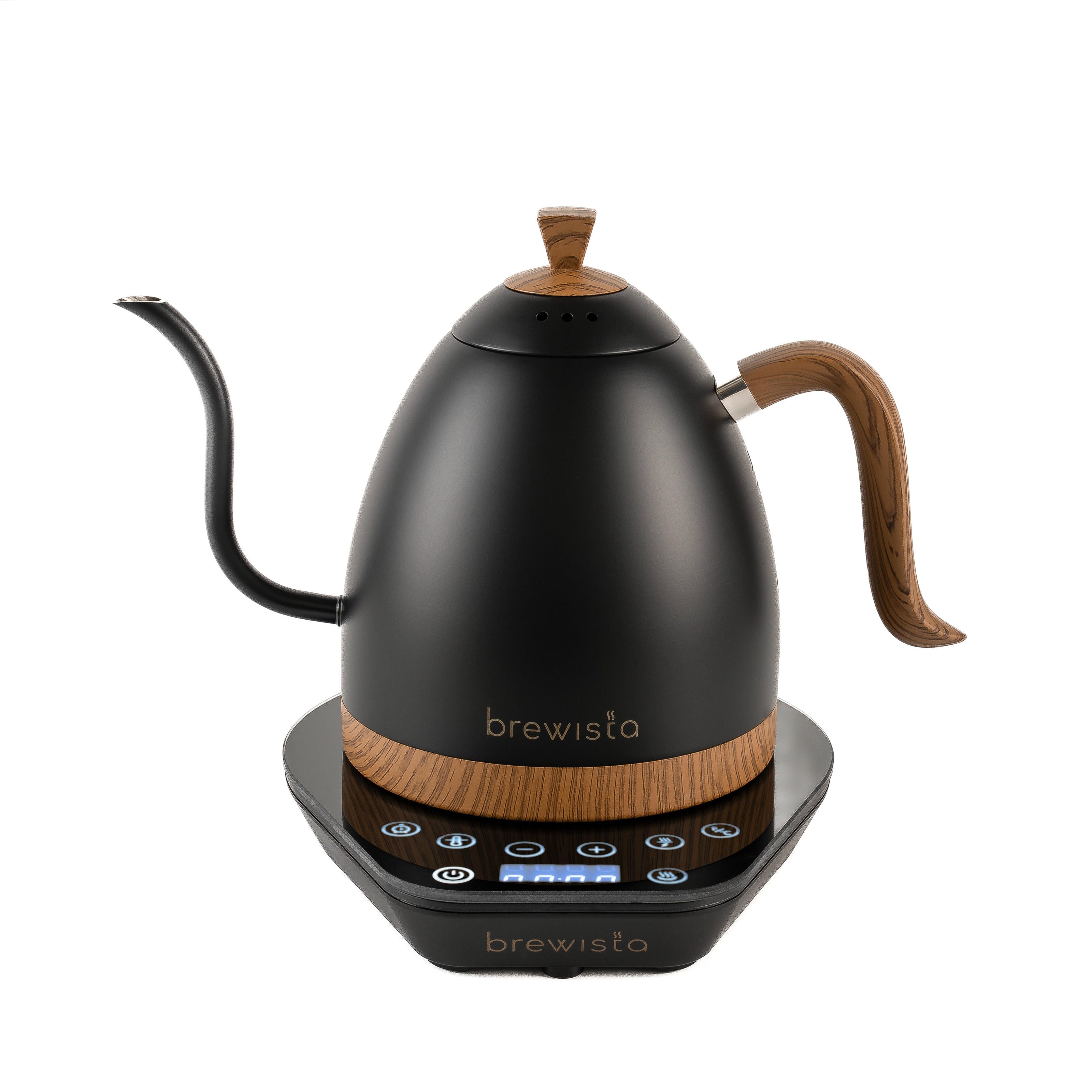
The Brewista Artisan offers electric temperature control and a precise spout in a range of finishes. Its wider body has visual presence in a coffee corner, but it may feel awkward in a small hand. Its control panel also has more buttons than some brewers want.
If you change brewing temperatures, you will use the integrated heater; for a single familiar recipe, a lid gauge may suffice.
Cocinare Wave: best for a design-led electric routine
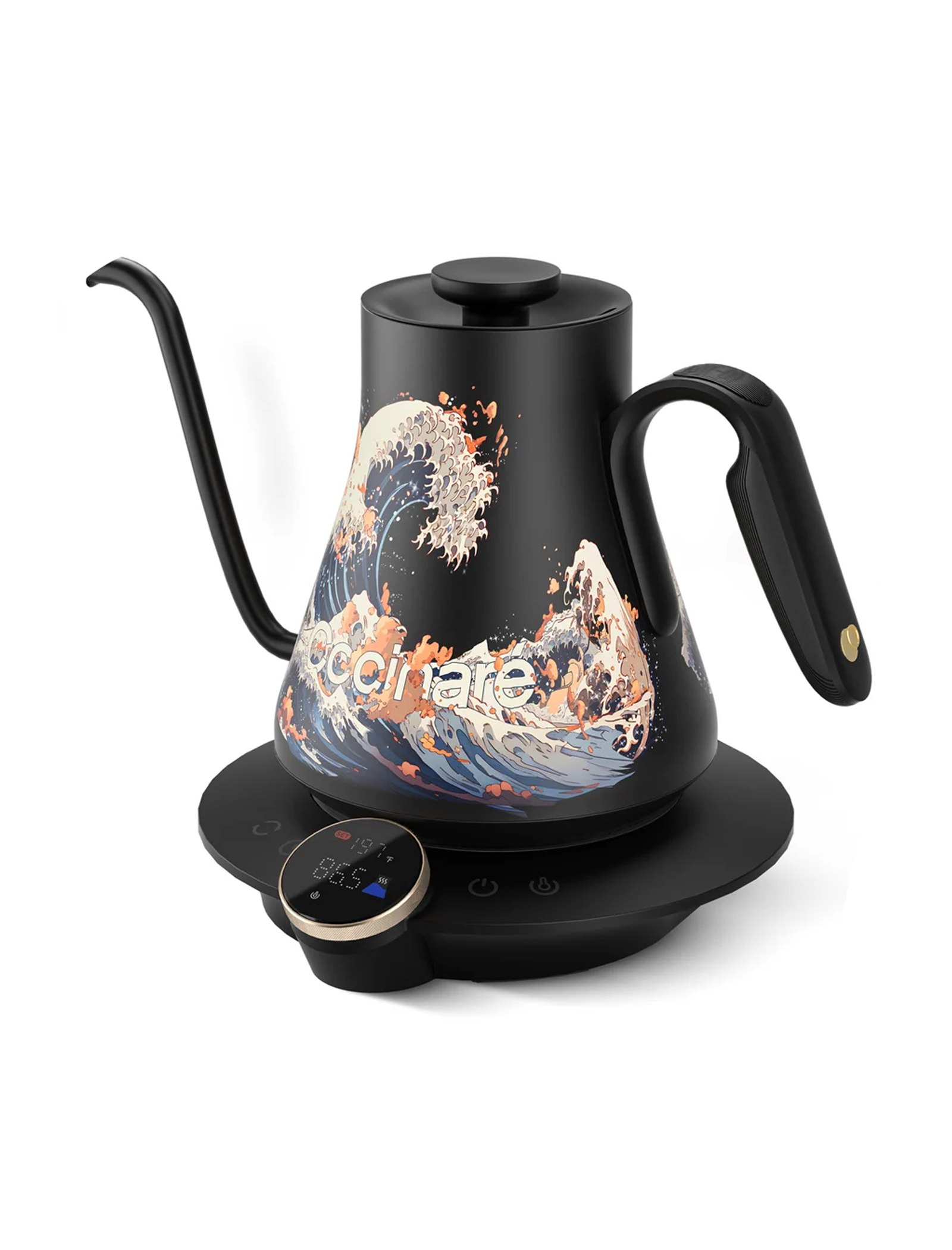
The Cocinare Wave in the Artisan Collection combines an adjustable 140–212°F temperature range, a digital display and a 60-minute keep-warm function. Cocinare's comparison of its collections also shows the Color-changing and Collab lines with adjustable heat and digital displays, so the look need not dictate whether you get temperature control. The hold program applies to setpoints up to 206°F, not the full heating range.
Wave is for a brewer who wants electric control and cares how the kettle looks on the counter. An analog dial on a stovetop kettle takes up less room if temperature setting is not part of your routine.
What matters beyond the number on the gauge
Readout location and temperature drift
A lid dial gives you a quick reading. Once you lift the kettle off the heat, the water cools while you rinse the filter or weigh the coffee. An electric hold mode cuts the wait before you pour, although the water still cools on its way through the spout and into the coffee bed.
Use the kettle reading as your starting point. Keep your fill level and preparation routine consistent before you change the setpoint to adjust the taste.
"Water must reach 92°C where it contacts the grounds within the first minute and never exceed 96°C during brewing." - Specialty Coffee Association, certified home brewer requirements
That requirement applies to water at the coffee bed in a certified brewer; it does not prescribe one kettle setting for every pour-over recipe.
The Specialty Coffee Association's brewer requirements put the measuring point at the grounds. Your lid gauge or electric display reads water sooner. To compare two brews, allow the same time between heating and pouring.
Spout, balance and usable volume
A predictable, narrow stream helps you wet the grounds evenly. Hold a kettle with your usual amount of water if you have the chance; its balance changes as you pour. A slow spout can make pour-over easier and filling a cooking pot tiresome.
If you switch between a small V60 and a French press, flow rate is a real trade-off. A slow spout helps you make a balanced pour over the dripper, then takes longer to fill the press. Handle position and weight affect your control, especially as the kettle empties.
Allow enough capacity for the brew and a filter rinse. Stay between the kettle's fill marks: an electric unit needs enough water to operate as intended, and an overfilled stovetop kettle is awkward to carry.
Cleaning and ownership
With a stovetop kettle, note how much space you have to clean around the lid thermometer. Keep water off an electric base, and use the maker's descaling instructions. A fine-looking finish will not help if the handle feels uncomfortable or the lid gets in the way when you fill it.
Many goosenecks use stainless steel. For cleaning, the opening matters more than the exterior finish, especially if hard water leaves scale inside. A built-in gauge also means one less loose probe to handle. Never immerse the electric base.
How to use a thermometer kettle for pour-over
Fill to a level that covers the brew and any filter rinse without exceeding the marked limit.
Heat the water. With a lid gauge, stay nearby and remove the kettle when its reading reaches your chosen point. With an electric controller, set a target and let the kettle stop heating.
Rinse the filter and warm the brewer if that is part of your normal routine. If these steps take time, note the temperature just before pouring.
Pour a small first wetting, then continue with a steady stream. Keep pour height and pace reasonably consistent so a change in flavor is not confused with a change in temperature.
If the cup tastes different from your usual result, change one variable at a time. A thermometer helps you repeat a recipe; it cannot compensate for a wildly changing pour.
The verdict
For one daily pour-over on your stove, a built-in lid thermometer gives you a temperature cue without another appliance. If you rotate coffees or pause between brews, an electric kettle lets you set and hold a temperature. Whichever you choose, the spout still has to suit the way you pour.
If you want electric control with a design-led finish, try Cocinare's Wave. Cocinare offers free standard shipping in the contiguous U.S., a 12-month warranty extendable to 18 months with registration, and a 30-day return window with conditions. You get adjustable heating and a display; if you prefer using your stove, buy a lid-gauge kettle instead.
FAQ
Which gooseneck kettle has the best temperature control?
A variable-temperature electric model offers more control than a stovetop lid thermometer because it lets you set a heating target. The Fellow Stagg EKG, TIMEMORE Fish Smart, Brewista Artisan and Cocinare Wave offer electric temperature control; choose by pour speed and interface as well as the display.
Which gooseneck kettles have temperature control?
The Fellow Stagg EKG, TIMEMORE Fish Smart, Brewista Artisan and Cocinare Wave are electric goosenecks with adjustable temperature. A stovetop kettle with a thermometer shows the water's temperature, but you still regulate the heat yourself.
Is there a gooseneck kettle with a temperature display?
Yes. Electric goosenecks such as the Fellow Stagg EKG have a display that shows water temperature and lets you work toward a chosen target. If you only need a reading, look for a stovetop gooseneck with a thermometer dial in the lid.
Are temperature-controlled kettles worth it?
They are useful if you switch brewing recipes, prepare repeated cups or want to set a target while you prepare the brewer. If you use one recipe, already have a stove and are happy to watch a gauge, a thermometer-only kettle may be better value.
Share:
Best Stovetop Gooseneck Kettles
Best Coffee Grinders for Drip Coffee