

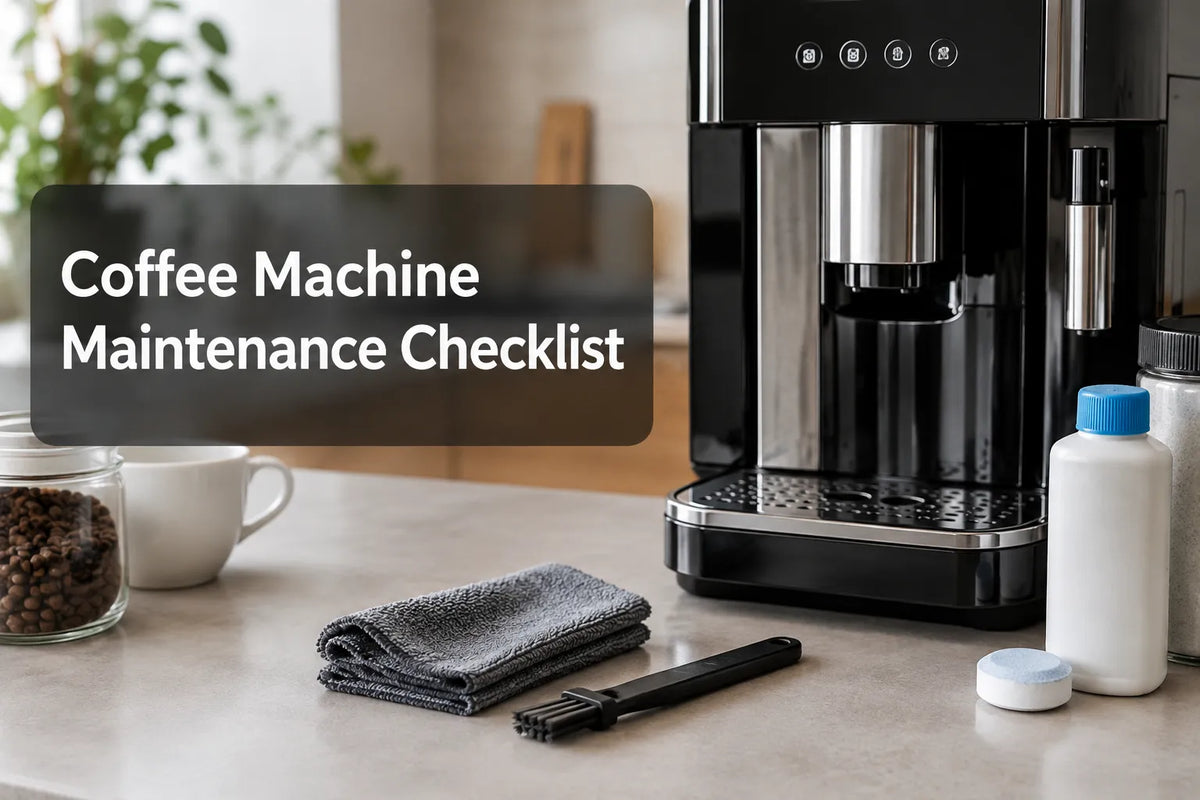
For coffee machine maintenance, clear out coffee and milk residue after each brew. Then descale when your machine and water call for it. That division keeps the daily routine short and gives the less visible buildup its own place on the calendar. Drip, manual espresso and bean-to-cup machines need different cleaning steps, but all three benefit from that habit.
Before you start, switch off and unplug the machine for hand cleaning, let hot surfaces cool, and follow its manual for removable parts, cleaning agents and internal cycles. Never immerse the powered body or base in water.
The video shows how to clean a coffee maker; the checklist below separates the jobs by machine type:
Coffee machine maintenance at a glance
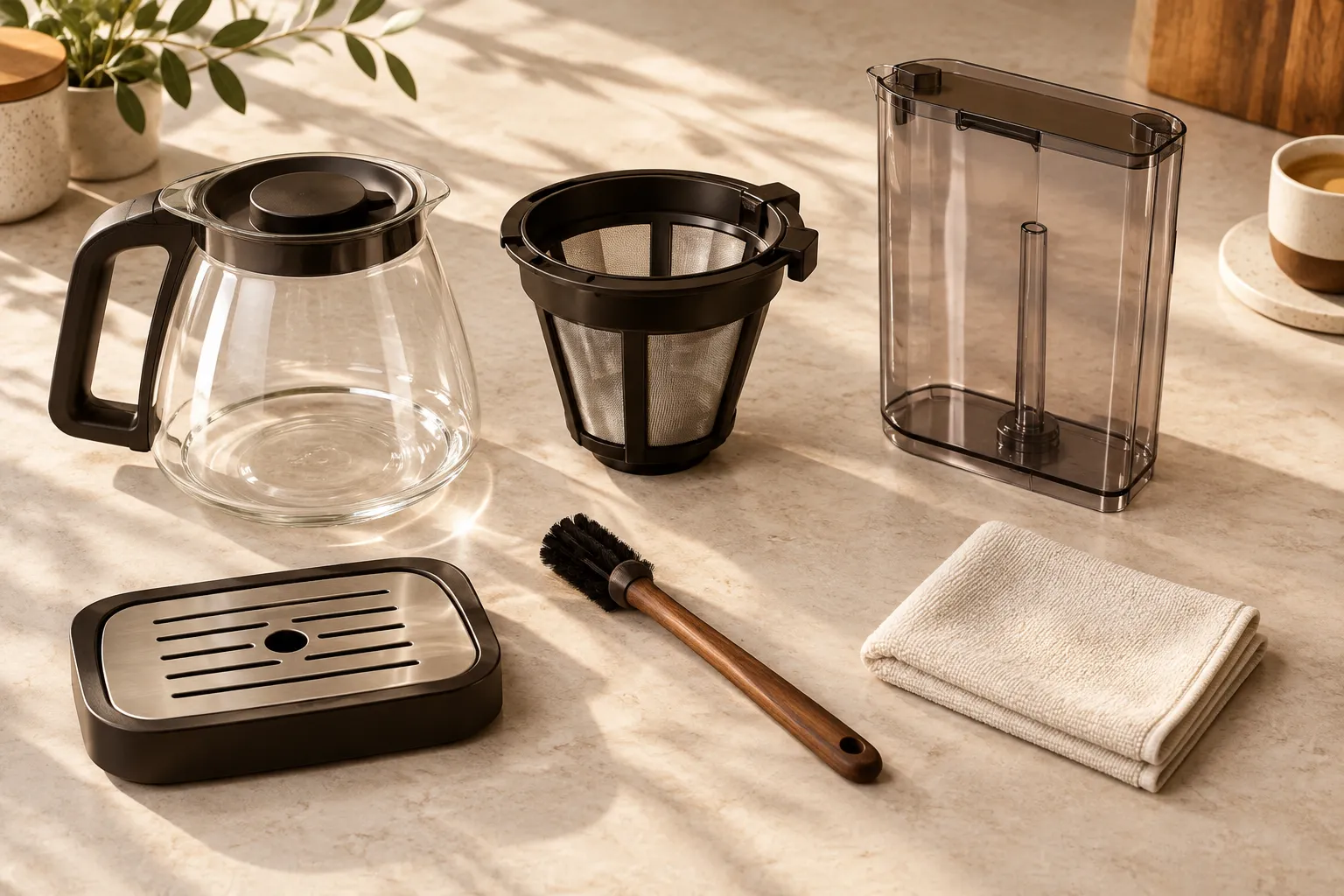
Start with these tasks, then add any cleaning program your model requires. If you make several drinks a day or use milk, don't wait until the end of the week to wash soiled parts.
When |
All machines |
Drip brewer |
Manual espresso |
Bean-to-cup |
|---|---|---|---|---|
After each brew or at day's end |
Discard grounds, empty spill trays, wipe splashes and refresh standing water |
Rinse basket; wash carafe and lid |
Rinse basket and portafilter; wipe and purge steam wand after milk use |
Empty used-grounds container and drip tray; run any prompted milk rinse |
Weekly |
Wash permitted removable parts with mild soap, rinse and air-dry |
Wipe accessible spray head and cooled hotplate |
Brush accessible group area; clean portafilter and baskets; backflush only if the model supports it |
Clean removable brew unit if the manual allows; clean milk-system parts as directed |
When prompted or per manual |
Replace water filter and descale with approved product and cycle |
Run the specified descaling cycle, then rinse |
Follow the model's descaling procedure; backflushing does not descale |
Use the built-in cleaning and descaling programs, which may be separate |
Coffee-machine cleaning removes coffee oils and milk residue; descaling removes mineral deposits from water. The drip tray can look spotless while scale builds inside the water path.
"A cleaning cycle removes coffee oils and residue from the coffee pathway." - Breville Support
Daily coffee machine maintenance: after every brew
Tip out used grounds before they stick to the basket, puck container or brew chamber. Empty a full drip tray, rinse it and wipe splashes off the exterior with a soft damp cloth. Wash the carafe and lid in warm soapy water after brewing, then rinse them well.
With a drip machine, toss the paper filter or empty the reusable filter basket after brewing. Rinse the basket, and let the hotplate cool before wiping off spills.
For manual espresso, knock out the puck and rinse the portafilter and basket. Wipe the wand with a clean damp cloth after steaming milk, then purge it as the machine instructions direct. Dried milk can obstruct the tip. Brush grounds off the group area once it has cooled enough to touch.
For a bean-to-cup machine, empty the used-puck container and tray when prompted. If it dispenses milk, run its milk rinse after use and wash detachable milk-contact parts as directed. The automatic rinse leaves some parts for you to wash by hand.
A pod machine has no ground-coffee basket to empty. Eject the spent pod and empty the drip tray, then rinse its removable parts as instructed. Don't overlook the reservoir and spout during your regular cleaning.
Weekly coffee machine cleaning: wash, rinse, dry
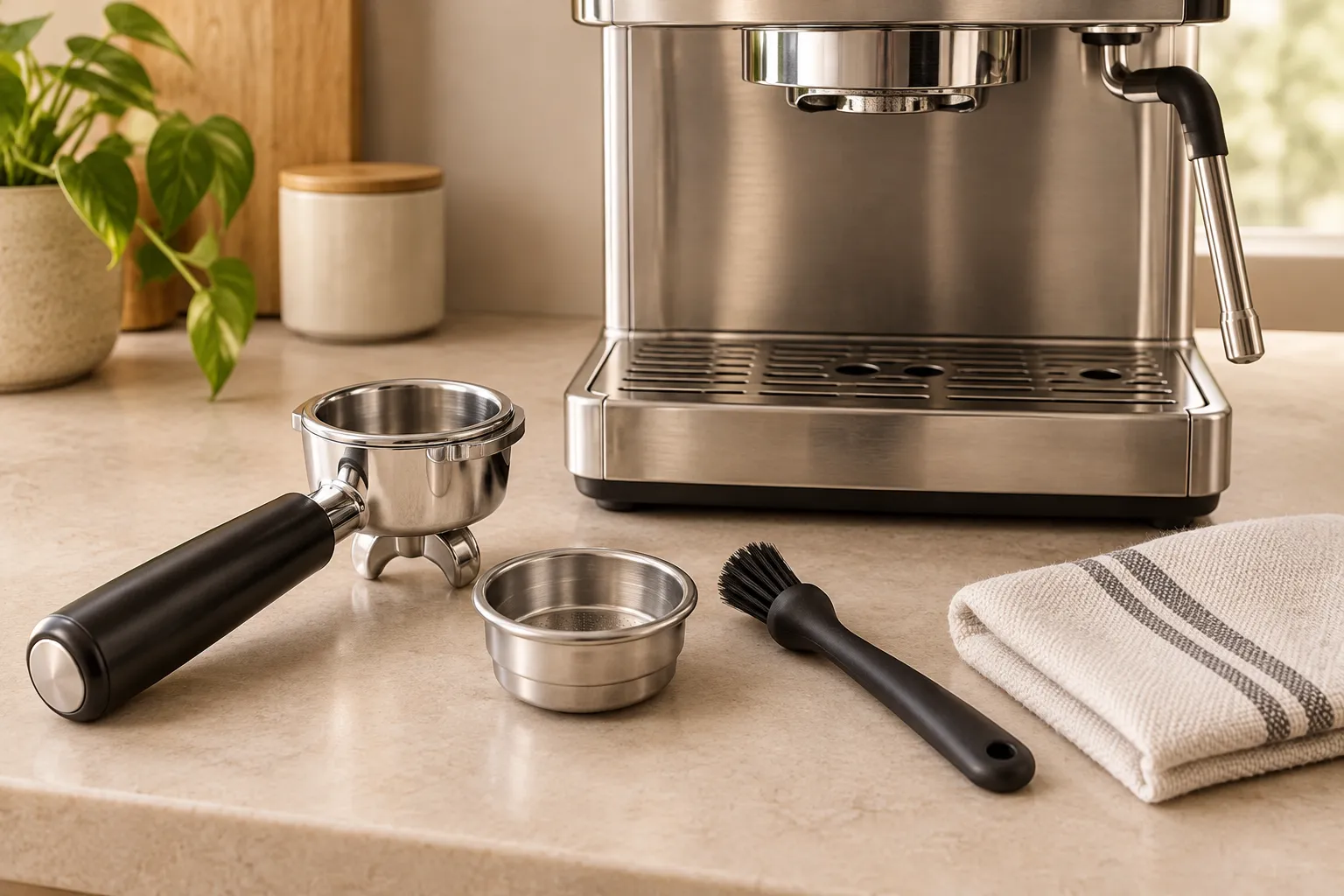
Remove only the components designed to come out. Wash the reservoir, drip tray, lids, baskets and other approved parts with mild dish soap and warm water. Rinse and air-dry them before reassembly. The manual should identify dishwasher-safe parts; use a soft brush on seams and dried coffee rather than an abrasive pad on plastic, finishes or seals.
For a drip brewer, a weekly wash gives the brew basket more attention than its quick daily rinse. Wipe the accessible spray head and cooled hotplate. A soft bottle brush can reach stains inside a narrow carafe; keep water away from the electrical housing.
On a manual espresso machine, deep clean the baskets and portafilter where coffee oils accumulate. Brush the accessible group head and shower screen. Some machines support a water backflush or a cleaning-agent backflush with a blind basket; others do not support backflushing. Follow the process for yours. Backflushing removes coffee residue from the brew circuit, not limescale.
A bean-to-cup machine may prompt you to clean the brew unit, coffee circuit and milk circuit separately. Rinse a removable brew unit if the instructions call for it. If the unit stays inside, use the cleaning program rather than forcing a panel open. Keep grinder burrs and electrical parts out of the sink.
Descaling and water filters: the slower-moving jobs
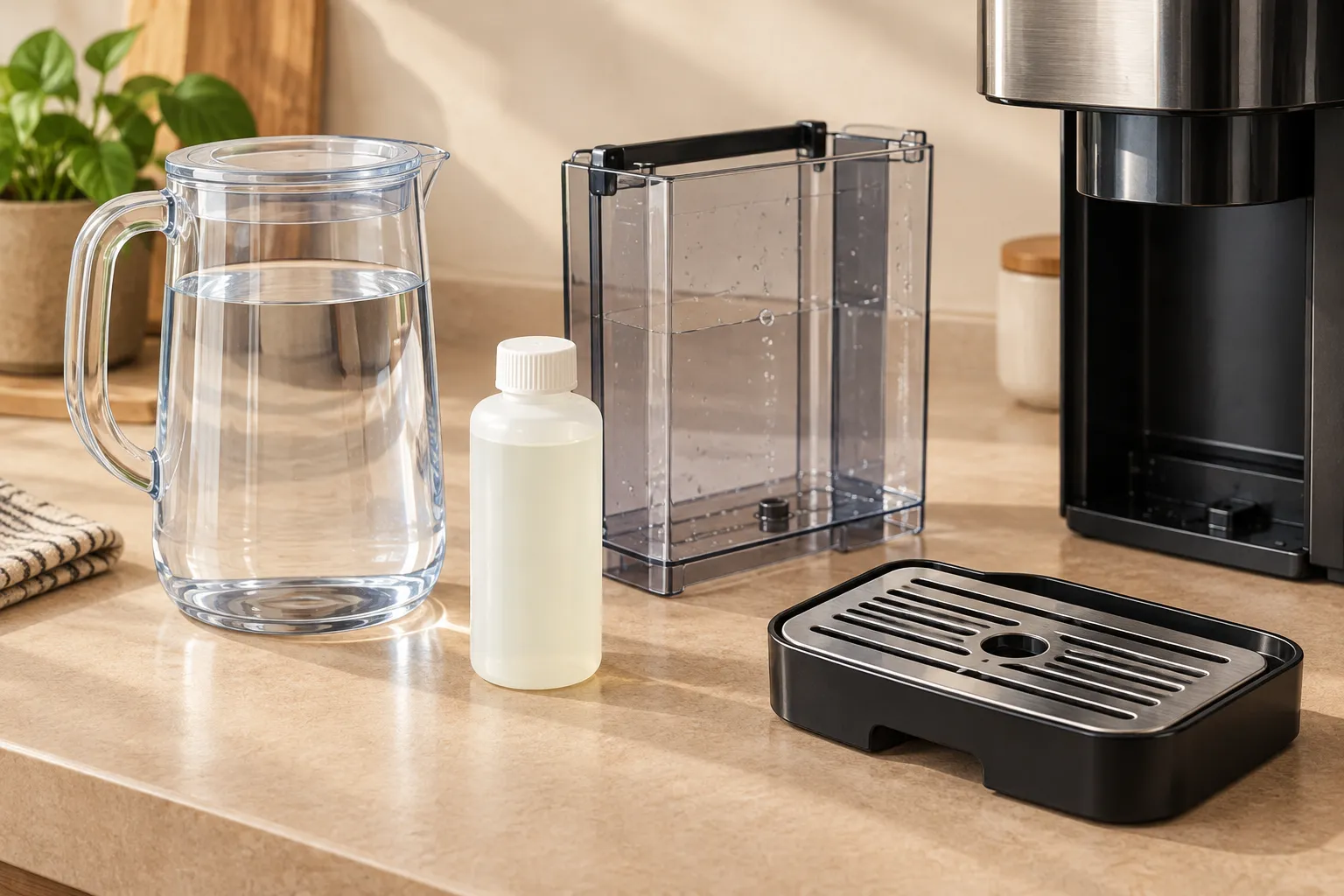
As water heats, minerals can collect inside the machine. A brew that takes longer than usual, slower flow or extra steaming may point to scale. Follow the descaling alert or the interval in your manual, especially if you brew often with hard water. Write down when you descale and change the filter; it makes the next round easier to plan.
How to descale without improvising a recipe
Empty the drip tray and remove or prepare the water filter as your manual directs.
Add the specified descaler at the dilution stated for your model. Use its dedicated descaling mode if it has one.
Complete the full cycle, including any pauses and clean-water rinse stages. Discard the liquid collected during the process.
Rinse and refill the reservoir, then run any additional clean-water cycles required before brewing coffee.
Use vinegar only if the manufacturer permits it. De'Longhi's fully automatic machine guidance, for example, says to use its descaler instead. A generic vinegar ratio may not suit your machine. Descaler will leave oily baskets, a soiled milk line and a dirty carafe untouched. If your bean-to-cup machine calls for both a cleaning tablet and a descale, run both programs as directed.
Choose water for taste and for the machine
Filtered water can reduce scale from hard tap water, but you still need to clean and descale. Replace built-in filters on the manufacturer's schedule and reset the filter setting if required. Distilled water is not suitable for every espresso machine, particularly one with water-sensing or boiler requirements. Use the water specified for yours, and refill the reservoir with fresh water rather than leaving it standing for days.
Five maintenance mistakes that cost time
Using descaler as an all-purpose cleaner. Descaler targets minerals. Wash the coffee-contact pieces and clean the milk system separately.
Backflushing every espresso machine. A blind basket belongs only in equipment designed for backflushing. If yours is not, use its stated group-cleaning method.
Leaving milk on a steam wand until the weekend. Wipe and purge after steaming; the weekly clean is additional care.
Putting every loose part in the dishwasher. Heat and detergents can damage pieces that are hand-wash-only. Wash by hand unless the manual identifies the part as dishwasher-safe.
Stopping a descale before the rinse finishes. An incomplete cycle can leave cleaning solution in the water path. Finish the machine's rinse sequence before making a drink.
Which brewing setup asks the least upkeep?
Before buying, picture the cleanup after your usual drink. A milk drink from a bean-to-cup machine asks more of you than black coffee from a dripper, because milk touches another set of parts.
Setup |
Routine work |
Extra care to plan for |
|---|---|---|
Drip coffee maker |
Rinse basket, wash carafe, empty grounds |
Clean spray head and reservoir; descale water path |
Manual espresso machine |
Clean portafilter and baskets; wipe and purge wand if used |
Clean group; backflush if supported; descale as directed |
Bean-to-cup machine |
Empty pucks and tray; clean milk parts if used |
Follow separate automated cleaning and descaling prompts; tend brew unit as designed |
Manual pour-over with electric kettle |
Wash dripper and server, discard filter, wipe kettle exterior |
Remove kettle scale as its instructions direct; there is no internal coffee brew path to clean |
With pour-over, coffee grounds stay in the dripper rather than passing through an enclosed machine. Cocinare's gooseneck electric kettles give you pouring control in a design-forward setup. You still need to descale the kettle when needed and wash the dripper, but both jobs are easy to see.
When routine cleaning is not enough
If coffee tastes stale, wash the coffee-contact parts before changing beans. For slow flow or excessive steaming, run a descaling cycle if one is due. Contact the manufacturer about persistent leaks, electrical faults, heating failures or error messages that remain after the instructed cleaning cycle. Leave the powered housing closed.
Clear residue after use and wash removable parts weekly; let your water and machine instructions set the descaling schedule. For a hands-on ritual with no enclosed coffee path, explore Cocinare's gooseneck kettles and make pour-over at home.
FAQ
How can I descale my coffee maker?
Use the descaler and dilution approved for your model, run its descaling cycle, then complete every fresh-water rinse stage before brewing. Remove or handle any water filter as the manual directs; do not assume vinegar is safe for your machine.
How often should you clean a coffee machine?
Discard grounds and clean soiled coffee or milk-contact parts after use, then give approved removable parts a more thorough wash weekly. Descale when your machine prompts you or at the interval its manual sets for your water and usage.
What are some common coffee machine problems and how can I fix them?
Stale taste may improve after washing the basket, carafe or brew path; slow flow can signal that a prescribed descale is due. If leaks, electrical faults or heating failures persist, stop using the machine and contact the manufacturer rather than attempting internal repairs.


Share:
Best Quiet Coffee Grinders for Home
How to Choose a Pour-Over Hand Filter