

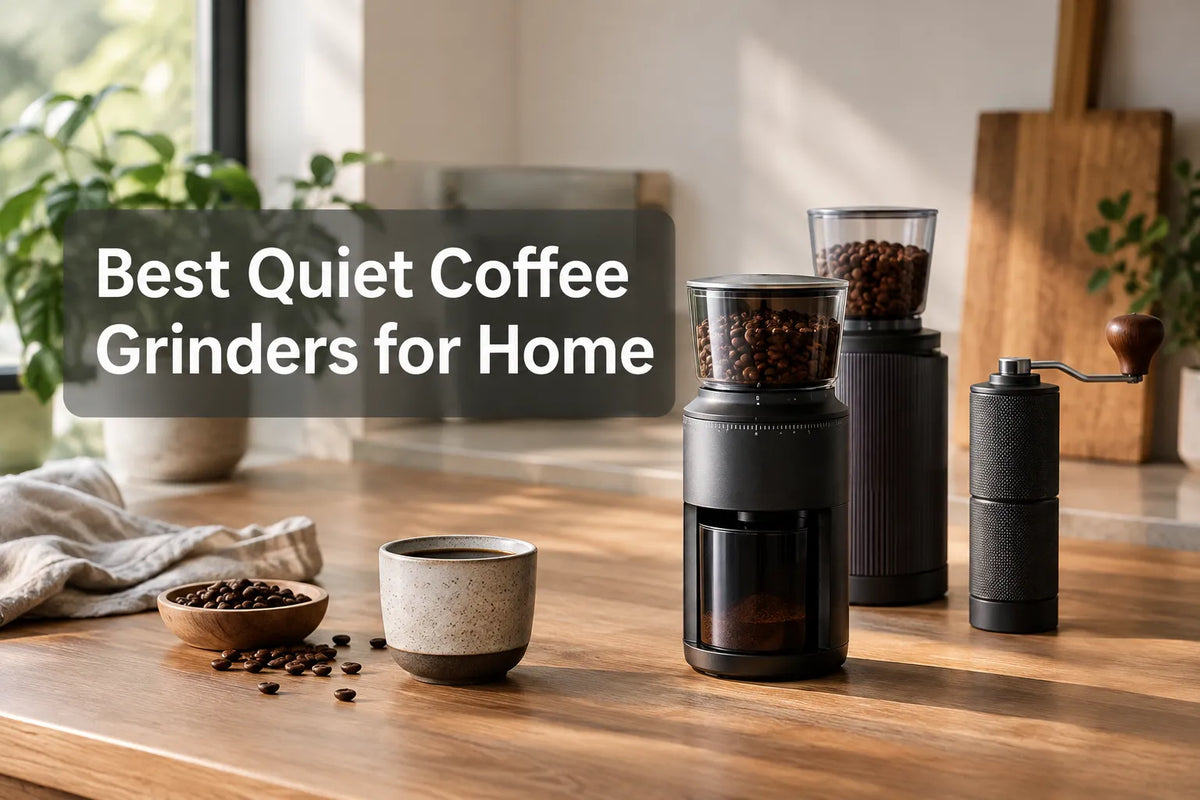
The best filter coffee grinder for an early morning makes a good cup without waking the household. Start with the Wilfa Uniform for a quieter electric grind, provided it is sold where you live. The Fellow Ode Gen 2 works better if you want a faster pour-over routine. A hand grinder removes motor noise, though you will still hear the beans break. Cup rattle and run time also shape what someone hears from the next room.
Best filter coffee grinder picks for a quieter routine
Grinder |
Best fit |
What you gain |
What you give up |
|---|---|---|---|
Wilfa Uniform |
Thin walls, primarily filter coffee |
Restrained sound, even filter grind, simple single-dose use |
Slower grinding; regional availability varies |
Fellow Ode Gen 2 |
Pour-over drinkers who value speed and a clean counter |
Filter-focused adjustment, compact form and quick dosing |
Audible grinding; not an espresso grinder |
DF54 |
Households making filter and espresso |
Broad brew range and a sturdy body |
Louder than the most subdued options; more involved single-dose routine |
Baratza Encore ESP |
Value-minded mixed-brew households |
Clearer filter and espresso adjustment zones |
Audible, hollow-sounding operation compared with quieter picks |
Mavo Phantox Pro |
One or two cups when motor noise is unacceptable |
No electric motor, capable filter grind, portable size |
Hand effort, especially with hard beans or larger batches |
The noise comparisons describe how these grinders fit a home routine. They are not decibel measurements made under identical conditions.
Quiet coffee grinders worth considering
Wilfa Uniform: the calm electric pick for filter
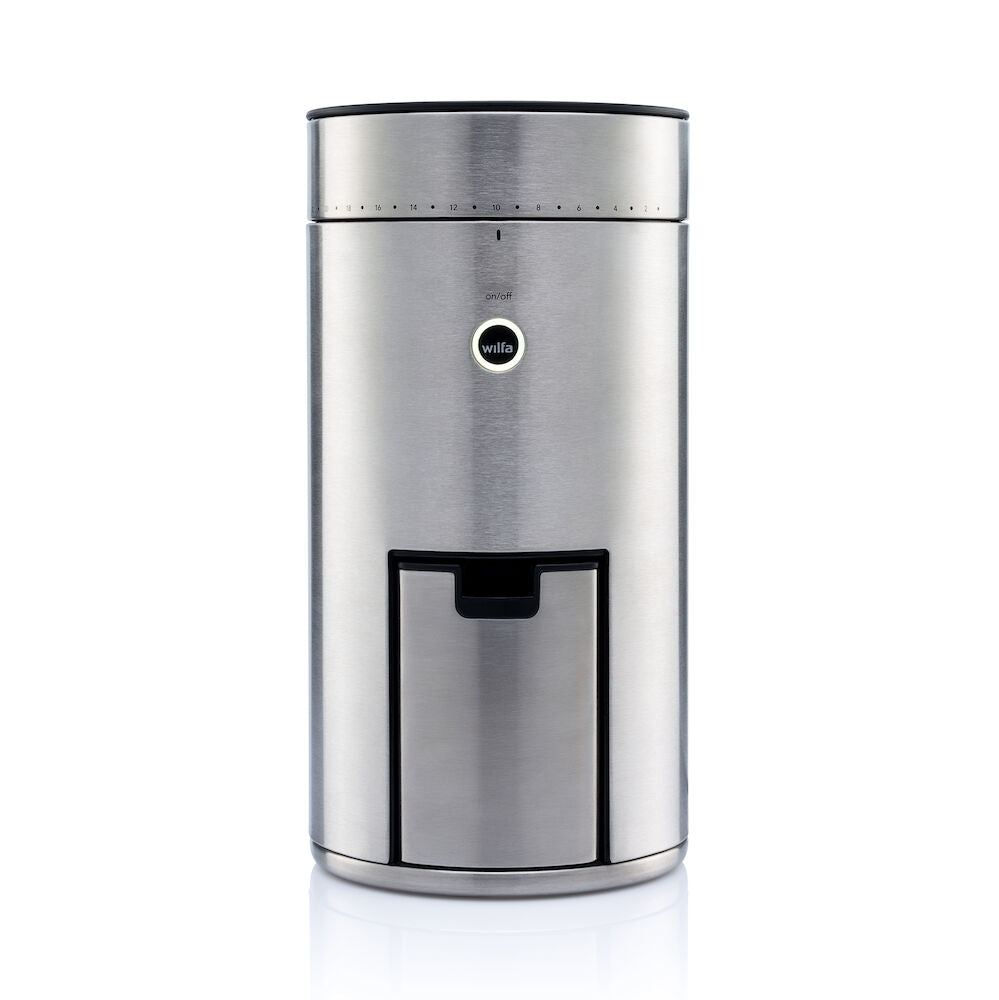
With a bedroom beside the kitchen, I would start with the Uniform. It grinds at a measured pace, and its solid build sounds less hollow than a typical entry-level electric grinder. The flat burrs and stepped dial cover pour-over and other filter brews. Weigh your beans into its small hopper one dose at a time.
That lower-key sound does last longer. If a steady hum wakes someone, the length of the cycle may matter more than its loudest moment. Availability varies by region, too.
Fellow Ode Gen 2: the faster filter specialist
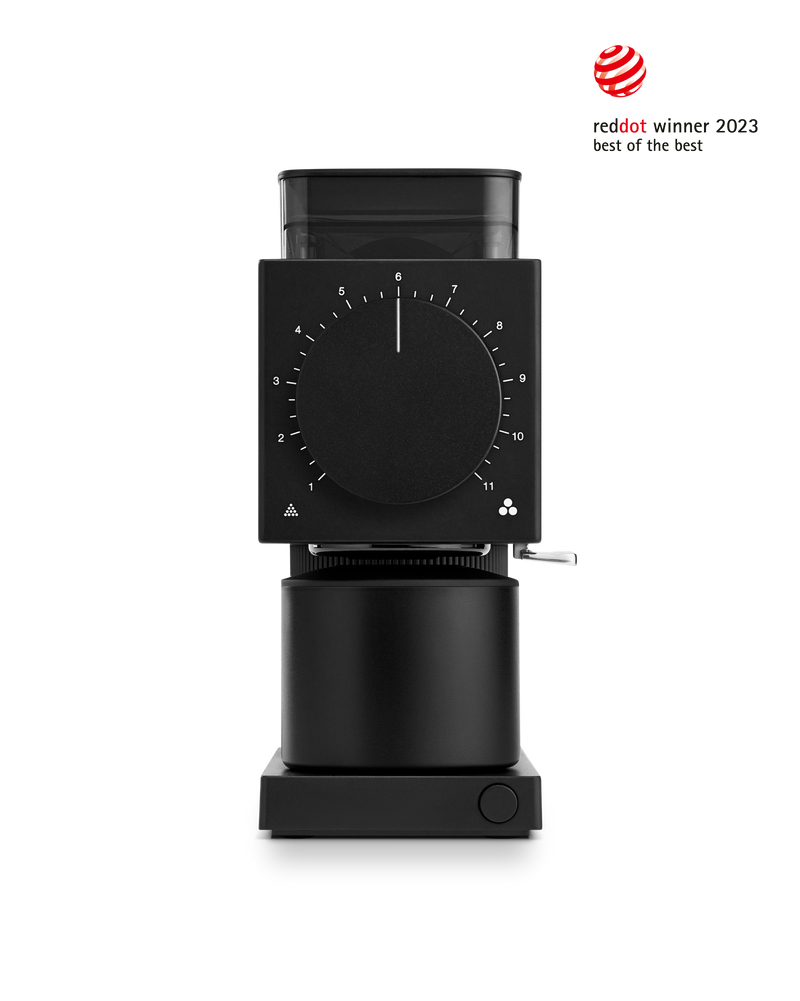
For a daily V60 or batch filter, the Ode Gen 2 gets the grinding done quickly. It has a low-profile bean entry and a catch cup that settles under the chute. The sound is audible, although it ends sooner than a slow grind.
It does not grind for espresso, which makes it an easy choice to rule out if someone at home pulls shots. Filter-only drinkers can make full use of its range.
DF54: a better match for mixed brewing
The DF54 keeps a mixed-brew household to one grinder: one person can make pour-over while another uses it for espresso. Its substantial housing sounds less hollow than a lightweight plastic body. Weighing each dose also lets you swap coffee beans between brews.
Expect brief sounds from the bellows, the last few bouncing beans and the catch cup. If you only brew filter and want a softer morning, the Uniform or a hand grinder is a better fit.
Baratza Encore ESP: useful range, obvious sound
The Encore ESP works for someone who brews through a dripper most days and may try espresso later. Its adjustment system uses finer steps in the espresso range and broader ones for filter; the conical burr set handles both. The original Baratza Encore serves filter drinkers, while the ESP gives you the finer espresso control the original lacks. Neither belongs on a shortlist based on low noise alone.
The plastic enclosure makes the ESP more audible in a quiet kitchen than the Wilfa Uniform. Its standard hopper setup also differs from a purpose-built single-dose grinder, though you can buy a separate accessory. If you prioritize low noise over espresso versatility, look elsewhere. Baratza’s service and parts availability appeal to owners who want to maintain their grinder over time.
Mavo Phantox Pro: the motor-free alternative
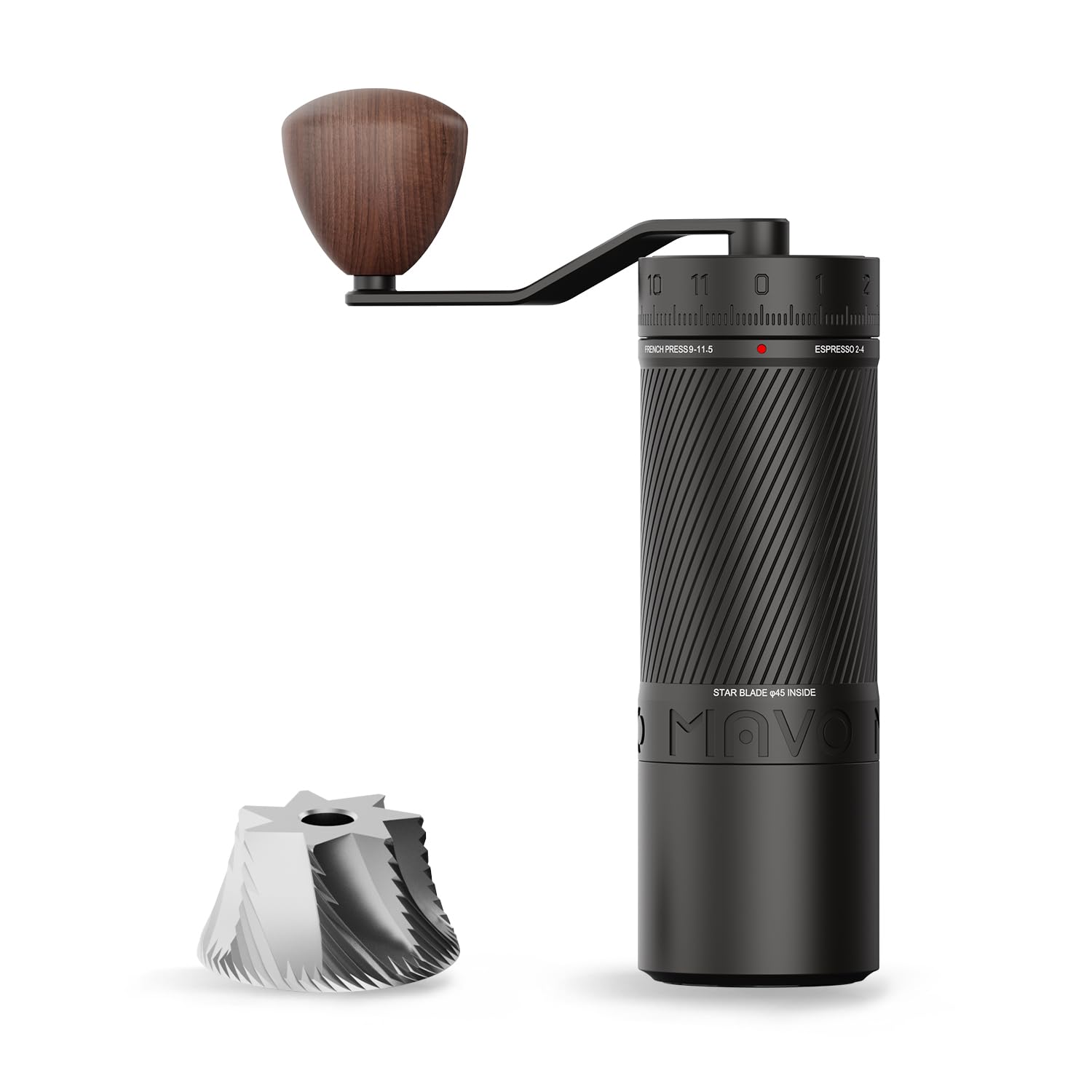
With the Phantox Pro, you hear the handle turn and beans crack instead of a motor. It fits a compact pour-over setup when you make one or two servings and have a minute to grind. Its capable filter grind and portable size also suit travel.
Hard light-roast beans and bigger batches take effort. Hand grinding still makes some noise and can feel like a chore when several people need coffee.
What actually makes a coffee grinder quieter?
Burr design affects the cup more predictably than volume
Choose burrs for the grind you need. Both flat and conical burrs crack beans, often the sharpest noise in the cycle. Their geometry and alignment affect particle consistency and fines, with consequences for filter clarity and drawdown. A well-designed conical grinder can outperform a flat-burr machine with poor alignment. A blade grinder gives you uneven pieces and a high-pitched racket.
Uniform grounds are no guarantee of a better cup. In a French-press study, researchers extracted more of certain compounds from mixed-size grounds than from sieved, uniform grounds. Their finding applies to the immersion conditions they studied; it does not tell pour-over drinkers to seek extra fines.
"The results have two important implications. The first concerns the superior extractive power of powder with a bimodal/plurimodal distribution" - European Food Research and Technology
Why a blade grinder is the wrong shortcut
A blade machine offers no stable burr gap. A longer run changes the mix of fine and coarse ground coffee rather than giving you a dependable filter setting. Your pour-over may drain at an unpredictable pace, while the sharp whir reaches anyone nearby. A manual burr grinder is the better budget route to consistent grind quality.
Motor speed changes the sound and its duration
A slower drive may soften the sound yet run longer for the same dose. A fast grinder makes a shorter burst. Torque, gears, bean feed and housing change what you hear as much as motor speed does. Pay attention from start-up through the last beans and shutoff.
Damping and loose parts matter
A substantial housing reduces hollow resonance. Rubber feet limit vibration through the counter, provided the lid and catch cup sit securely. Beans can still bounce in an empty hopper, and a metal cup can clink against its mount.
Decibel readings from different rooms, distances, coffee beans or doses cannot establish which grinder will sound quieter in your kitchen. Pitch matters too: a short, sharp burst can disturb someone more than a lower hum at a similar meter reading. Listen for counter vibration as well as airborne noise.
The workflow can be louder than the grinder
Single dosing can spare you a motorized purge, though forceful tapping or bellows may bring the noise back. Less retention and a clean route into the cup make the routine easier when others are asleep. Scale beeps, cupboard doors and the kettle contribute to the same morning soundtrack.
Choose by brew method, not just by noise
For pour-over or drip, look for repeatable medium-range grind settings and a catch cup you can pour from without a mess. French press needs a usable coarse setting; the number of positions on the dial means little if the coarsest ones produce both dust and boulders. Espresso adds a need for fine adjustment, usually at a cost in speed, price or simplicity.
Pay attention to how the dial moves, not only how many settings it has. Steps help you get back to yesterday’s filter setting after a bean change. A stepless dial allows smaller changes, though multiple turns can make the old setting hard to find. Note your DF54 positions for filter and espresso; the Ode’s visible steps are easier to revisit. The Encore ESP has distinct finer espresso and coarser brew ranges. Returning to your setting without grinding a string of trial doses saves coffee beans.
Think about what happens after the burrs stop, too. Static can leave grounds clinging to the chute or cup. Grounds left inside the grinder may mean another purge the next morning. A tidy catch cup and an easy single-dose routine are more useful here than another control-panel feature.
Your routine |
Sensible starting point |
Why |
|---|---|---|
Filter every day, nearby sleepers |
Wilfa Uniform |
Quiet-leaning electric operation with a filter-friendly range |
Quick solo pour-over |
Fellow Ode Gen 2 |
Short, straightforward single-dose routine |
Filter plus espresso |
DF54 |
One grinder can serve both, with a noise compromise |
Filter on a tighter budget, espresso later |
Baratza Encore ESP |
Broad adjustment range, but not a quiet-first buy |
Occasional filter, strictest noise limit |
Mavo Phantox Pro |
No motor, if hand grinding fits the batch size |
A quiet motor will be little consolation if you struggle to return an espresso-first grinder to your usual medium filter setting each morning.
Make any grinder less disruptive
Put it on a stable, level counter away from a shared bedroom wall. Make sure the catch cup is seated before starting.
Weigh beans first, grind one dose, and let the machine stop before moving the cup. Skip forceful tapping and repeated pulses.
Brush away accumulated grounds according to the grinder’s instructions. Old coffee around the chute can make dosing messier and prompt extra tapping.
If schedules clash, you can prepare a small portion of ground coffee the evening before. You lose some fresh-ground aroma, but the early riser need not run the grinder.
After grinding, a controlled pour helps wet the coffee bed evenly. The Cocinare Master Collection electric kettle has variable temperature control and a pour-over-friendly spout, alongside a design suited to a considered coffee counter. It will not make the grinder quieter.
The verdict
For a filter drinker who prizes a subdued electric grind, the Wilfa Uniform is the strongest starting point. The Ode Gen 2 finishes faster, the DF54 handles both filter and espresso, and the Phantox Pro lets you skip the motor. Batch size and the sound your household notices should settle the choice.
Pair that grinder with a Cocinare precision-pouring kettle if pour-over is your daily brew. The Artisan, Color-changing and Collab collections give you different looks without giving up controlled pouring. Cocinare offers free standard shipping in the contiguous U.S. and a 12-month limited warranty, extendable to 18 months with registration.
FAQ
What are some good coffee grinders for filter coffee?
The Wilfa Uniform and Fellow Ode Gen 2 are strong electric options for filter coffee. The DF54 suits a household that also makes espresso, while the manual Mavo Phantox Pro is a good fit when avoiding motor noise matters most.
Which brand of coffee grinder is considered the best?
No brand is best for every brewer. Wilfa offers a quieter filter-first choice here, Fellow makes a fast filter-focused grinder, and the right pick depends on whether you value low noise, fast dosing or espresso flexibility.
Share:
Best Coffee Grinders for Drip Coffee
Coffee Machine Maintenance Checklist