

Perfect Pour Over Coffee: Brew It Right
Perfect pour over coffee is rarely about buying more gear. It is about controlling a few variables so your cup tastes clear, sweet, balanced, and repeatable every morning. If you have ever brewed a cup that tasted flat one day, sour the next, and bitter the day after that, the issue usually comes down to grind size, water temperature, bloom, pour control, and timing.
For home brewers who care as much about the ritual as the result, pour-over is one of the most rewarding ways to make coffee. It slows things down, puts craft in your hands, and turns a daily habit into a design-forward moment. That is also why kettle choice matters so much: better precision means better extraction. Cocinare builds this idea into every detail, with premium gooseneck electric kettles that bring together controlled pouring, durable craftsmanship, and modern aesthetics that look as good on the counter as they perform in the cup.
What Competitors Get Right, and What They Miss
The strongest competitor articles agree on the fundamentals:
Rinse the filter
Use fresh coffee
Grind right before brewing
Control water temperature
Bloom the coffee first
Pour slowly and evenly
Adjust grind size to taste
That is all good advice. But most articles stop at broad guidance. They tell you what to do, not always how to diagnose what went wrong when your brew is off. They also tend to gloss over three areas that matter to serious home brewers:
1. The relationship between pouring control and flavor clarity
Competitors mention a gooseneck kettle, but rarely explain why precision pouring changes extraction. A sloppy stream can disturb the coffee bed, create channels, and make sweetness harder to achieve.
2. The role of coffee bed management
Most articles mention bloom, but not how uneven saturation, aggressive pouring, or stalled drawdown affect the final cup.
3. The experience of brewing at home
Pour-over coffee is not only technical. It is tactile, visual, and emotional. Design-conscious brewers want tools that feel refined, last well, and elevate the ritual. This is where Cocinare naturally stands apart: performance meets aesthetics, with multiple collections for different tastes, plus artistic limited-edition collaborations for people who want their gear to feel personal.
The Five Variables That Make or Break Pour Over Coffee
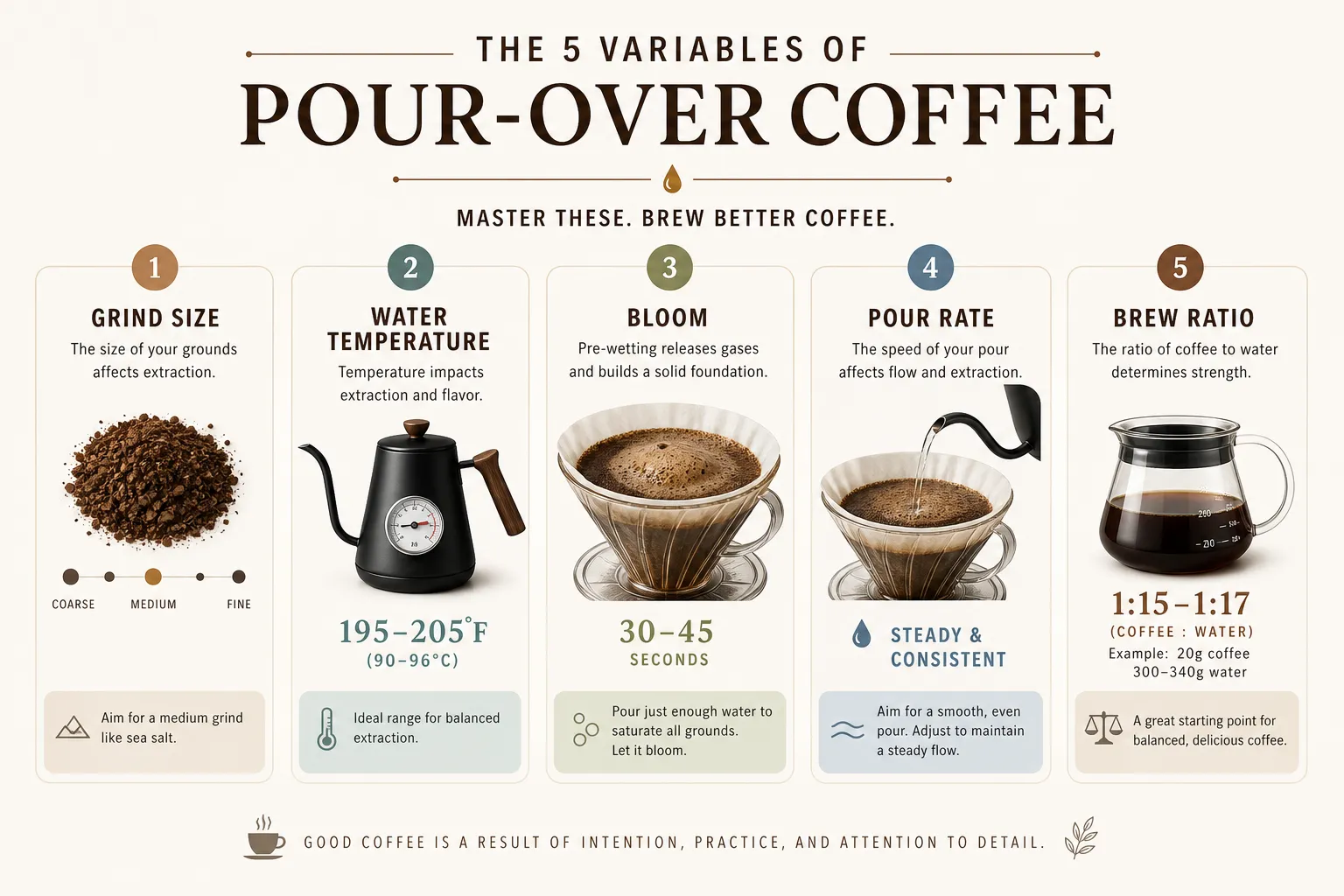
If you want consistently better coffee, focus on these five variables before anything else.
Variable |
Why It Matters |
What to Aim For |
|---|---|---|
Grind size |
Controls extraction speed |
Medium to medium-fine for most drippers |
Water temperature |
Changes how quickly compounds dissolve |
Around 200–207°F depending on roast |
Brew ratio |
Sets strength and balance |
Start around 1:16 to 1:17 |
Bloom |
Releases trapped gas for even extraction |
30–45 seconds |
Pour rate and pattern |
Affects saturation and uniformity |
Slow, steady, controlled spirals |
"The Specialty Coffee Association recommends a brewing temperature of 93°C ±2°C (200°F ±3°F)." - Coffee Tower
Start With Better Water
Coffee is mostly water, so if your water tastes dull, mineral-heavy, or chlorinated, your cup will too. Use filtered water whenever possible. Clean water helps reveal sweetness, acidity, and origin character.
Temperature matters just as much. Water that is too cool can under-extract and leave your coffee tasting sour or thin. Water that is too hot can push bitterness and harshness.
A practical temperature guide
Light roast: 201–205°F
Medium roast: 198–203°F
Dark roast: 190–198°F
If you are using a variable-temperature kettle, this gets much easier. This is one of the reasons a premium electric gooseneck kettle is not just a luxury purchase. It removes guesswork. Cocinare kettles are designed for precision pouring and temperature control, making it easier to repeat great results instead of chasing them.
Grind Size: The Fastest Way to Fix a Bad Cup
Grind size affects how quickly water extracts flavor from coffee. Too coarse, and the brew runs fast and tastes weak, watery, or sour. Too fine, and the brew slows down and tastes bitter, muddy, or astringent.
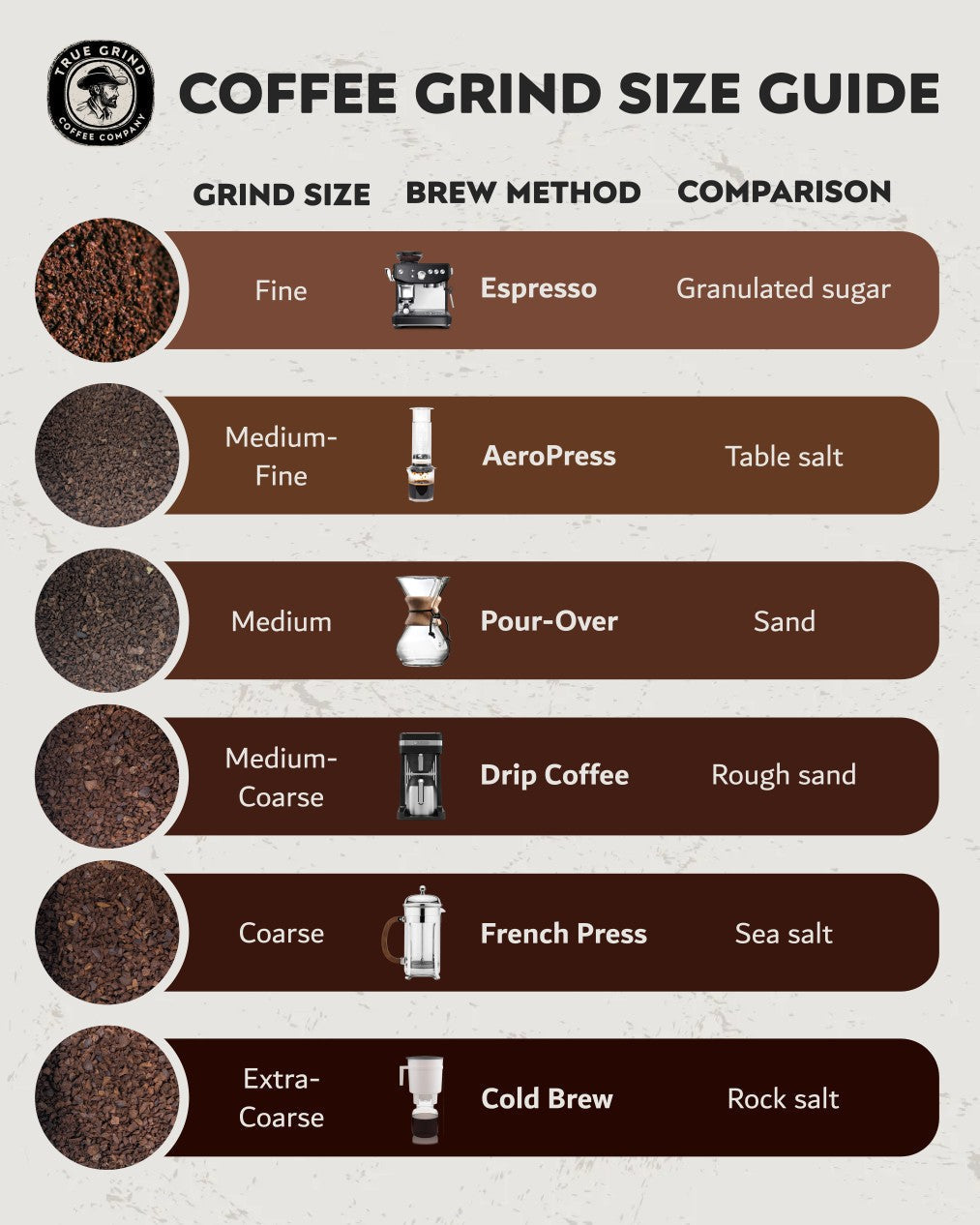
General grind guidance
V60: medium-fine
Kalita Wave: medium
Chemex: medium-coarse
Single-cup drippers: usually medium to medium-fine
The best rule: adjust one step at a time.
Taste-based grind adjustments
If your coffee tastes like... |
Try this next |
|---|---|
Sour, sharp, hollow |
Grind finer |
Bitter, harsh, drying |
Grind coarser |
Weak and watery |
Use finer grind or more coffee |
Heavy and muddy |
Use coarser grind or pour more gently |
Your Brew Ratio Sets the Foundation
A good starting point for perfect pour over coffee is a 1:16 to 1:17 ratio. That means 1 gram of coffee for every 16 to 17 grams of water.
Easy starting recipes
Cup Size |
Coffee |
Water |
Ratio |
|---|---|---|---|
Small single cup |
20 g |
320 g |
1:16 |
Standard mug |
25 g |
400 g |
1:16 |
Larger brew |
30 g |
500 g |
1:16.7 |
Use a scale. Even the best beans and best kettle cannot compensate for guessing.
The Bloom: Why the First 30–45 Seconds Matter
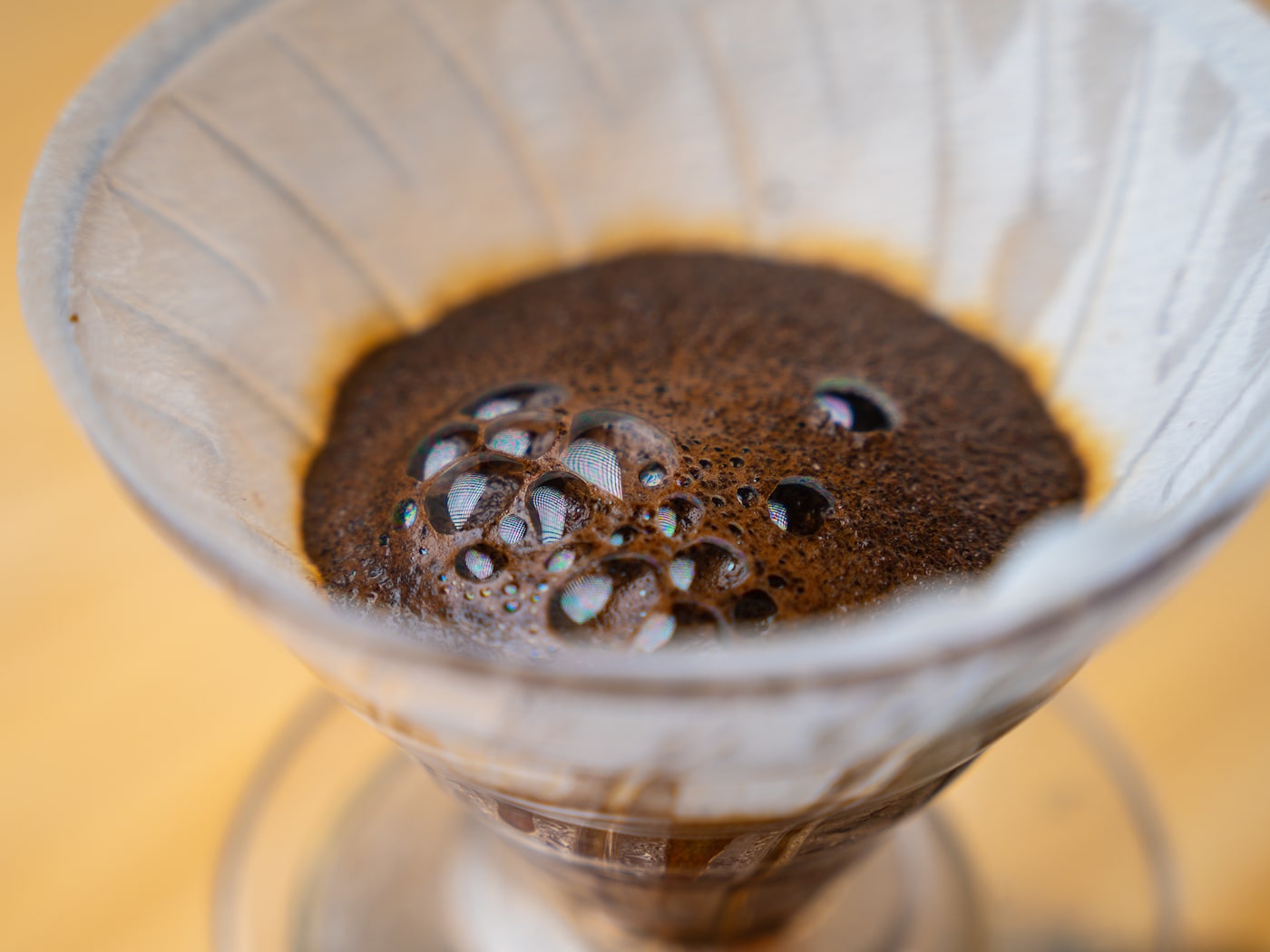
Freshly roasted coffee contains carbon dioxide. When hot water first hits the grounds, that gas escapes. This is the bloom. If you skip it or rush it, the rest of the brew may extract unevenly.
How to bloom properly
Add enough water to fully saturate the grounds, usually about 2 to 3 times the coffee weight.
Pour evenly across the bed.
Wait 30 to 45 seconds.
Watch for expansion and bubbling.
A strong bloom often signals fresh coffee. A weak bloom does not always mean bad coffee, but it can indicate older beans.
Why Precision Pouring Changes Everything
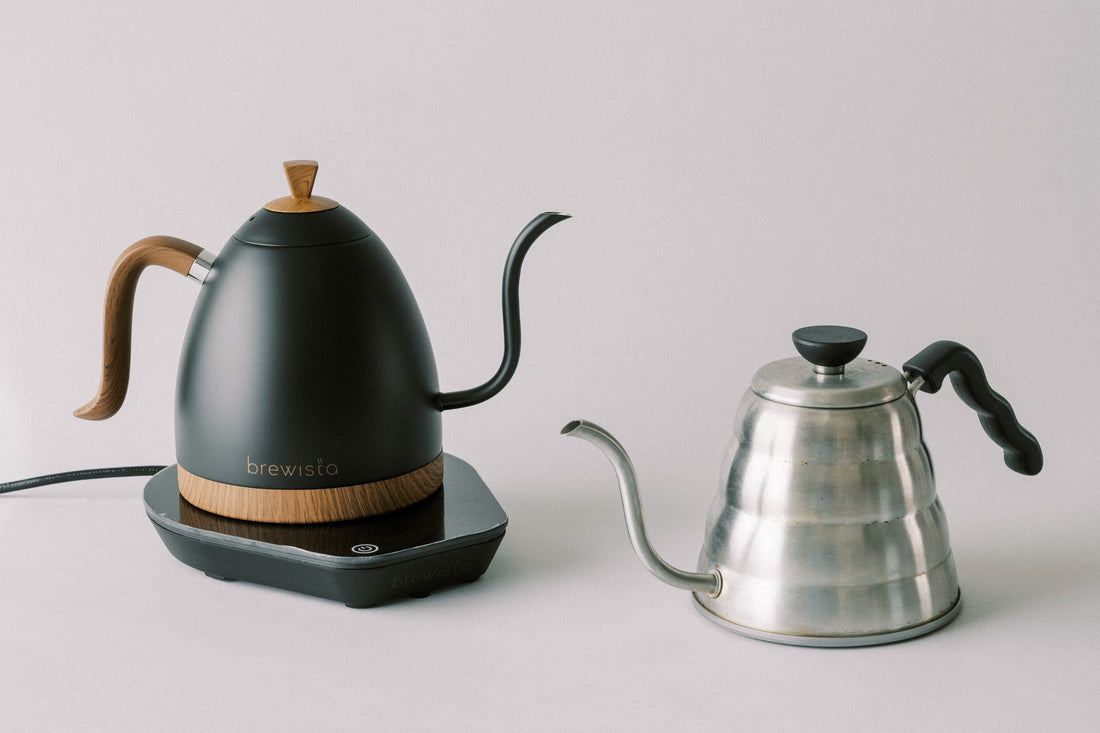
Many guides say “pour slowly in circles,” but the real point is even extraction. A controlled pour helps you keep the slurry level stable, saturate the coffee bed evenly, and avoid channeling.
What precision pouring helps you control
Flow rate
Pour placement
Agitation
Bed disturbance
Brew time consistency
This is exactly where Cocinare earns its place in a serious home setup. Its gooseneck kettles are built for controlled, accurate pouring, which makes it easier to hit your target brew time and maintain a calm, steady stream. The result is not just better control, but a more enjoyable ritual.
And because Cocinare offers multiple collections, from refined artisan styling to color-changing and limited-edition collab designs, you can choose a kettle that suits both your brewing standards and your personal space.
A Step-by-Step Method You Can Repeat Daily
Here is a reliable baseline recipe for a balanced cup.
Recipe: Balanced Daily Pour-Over
Coffee: 25 g
Water: 400 g
Temperature: 202°F
Grind: Medium-fine
Total brew time: 2:45 to 3:30
Method
Rinse your paper filter with hot water and discard the rinse water.
Add ground coffee and level the bed.
Start timer and pour 50–60 g of water to bloom.
Wait 30–45 seconds.
Continue pouring in slow spirals up to 200 g.
Let the water draw down slightly.
Finish pouring to 400 g total.
Allow the brew to drain fully.
What to look for
The bed should stay relatively flat
The stream should be thin and steady
The brew should finish within your target time
The final cup should taste sweet, clear, and balanced
Common Problems and How to Fix Them
This is where many competitor articles fall short. Here is the practical troubleshooting section most readers actually need.
Sour coffee
Likely cause: under-extraction
Fix: grind finer, raise water temperature slightly, or extend brew time
Bitter coffee
Likely cause: over-extraction
Fix: grind coarser, lower water temperature slightly, or pour faster with less agitation
Weak coffee
Likely cause: ratio too dilute or extraction too low
Fix: use more coffee, grind finer, or improve bloom and pour consistency
Muddy or silty cup
Likely cause: grind too fine, too much agitation, or poor filter fit
Fix: grind coarser and pour more gently
Brew stalls or drains too slowly
Likely cause: too many fines or overly aggressive pouring
Fix: coarsen grind slightly and reduce agitation
"Optimal water for coffee brewing typically has a total dissolved solids level between 75 and 250 mg/L, and a neutral pH around 7." - BeanBench
The Best Gear for Better Results at Home
You do not need a massive setup, but a few upgrades make a major difference.
Essentials
Burr grinder
Scale
Dripper and filters
Fresh coffee
Gooseneck kettle
Filtered water
Why the kettle deserves special attention
Among all brewing tools, the kettle has one of the biggest impacts on consistency. A poorly balanced kettle or uncontrolled stream makes it harder to pour evenly. A precision electric gooseneck kettle improves control, simplifies temperature management, and makes the whole process feel more intuitive.
Cocinare is especially compelling for brewers who want both performance and visual refinement. The brand’s premium and durable build quality, stylish modern design language, and expressive collections help turn a functional tool into part of a complete home coffee ritual. Add in free U.S. shipping, up to an 18-month hassle-free warranty, and a 30-day money-back guarantee, and it becomes a practical upgrade as well as an aesthetic one.
Pour-Over Is Also a Ritual, Not Just a Recipe
A lot of coffee content treats brewing like a lab exercise. Precision matters, but so does pleasure. Great home brewing should feel calm, intentional, and beautifully integrated into your morning.
That is why design matters more than many guides admit. The tools you use influence whether you want to brew this way every day. Cocinare understands that specialty coffee gear should perform like barista equipment while still feeling gift-worthy, lifestyle-driven, and at home in a modern kitchen.
For creators, coffee enthusiasts, and design-conscious home brewers, that balance is part of the appeal. The ritual becomes something you look forward to, not just something you optimize.
A Simple Upgrade Path If You Want Better Cups Fast
If you want the highest return on effort, improve in this order:
Buy fresher coffee
Use filtered water
Dial in grind size
Weigh coffee and water
Improve your pouring control
Upgrade to a precision electric gooseneck kettle
That final step is where many home brewers notice the biggest jump in consistency. Better flow control means fewer random results and more cups that land where you want them.
Final Verdict
Perfect pour over coffee is not mysterious. It is the result of a few variables working together: clean water, correct temperature, a dialed-in grind, a proper bloom, and precise pouring. Once those are under control, your coffee becomes sweeter, clearer, and more consistent.
If you want to brew better at home and enjoy the process more, a thoughtfully designed kettle is one of the smartest upgrades you can make. Cocinare brings together precision pouring, premium craftsmanship, and design-forward style in a way that fits the modern specialty coffee lifestyle. With multiple collections, artistic collaborations, free U.S. shipping, up to 18 months of warranty coverage, and a 30-day money-back guarantee, it is an easy brand to recommend for anyone ready to make their daily brew feel more elevated.
Brew with intention, pour with precision, and let your setup reflect your taste. That is how better coffee starts.

Share:
Automatic Drip Coffee Makers: Best Picks for 2026
Coffee Pot With Temperature Control Guide