

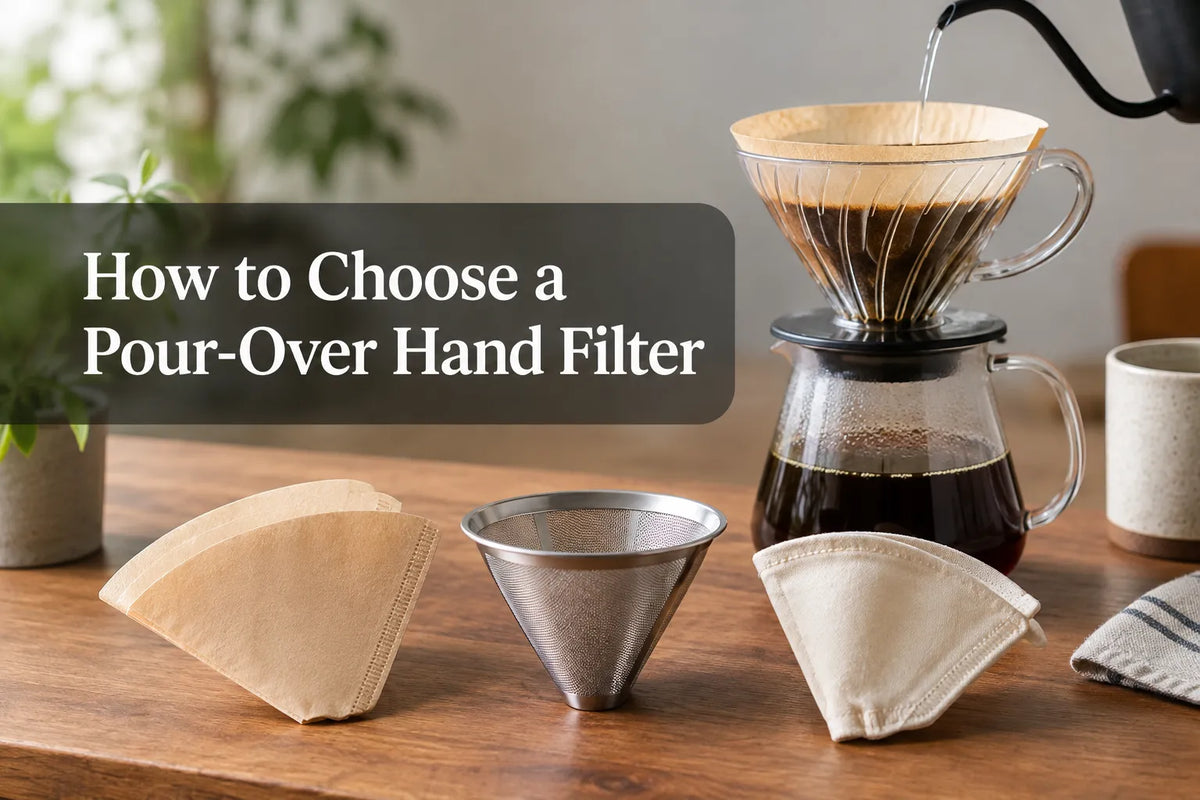
For a pour over coffee strainer, fit comes first: the dripper’s shape and size decide which filter will stay in place. Paper gives you a crisp, low-sediment cup and quick cleanup. Reusable metal makes a fuller cup without disposable filters; cloth gives some of that body but needs more care afterward.
You will see “hand filter” used for both the insert that catches grounds and the whole device that sits on a mug. Check which one the seller means before you order.
What is a pour-over coffee strainer?
Hot water passes through ground coffee and a filter into your mug or carafe. The dripper holds everything in place; the filter keeps the grounds out of the drink. Some reusable metal designs do both jobs in one piece and sit right over the cup. Sellers may call those a coffee hand filter, pour-over hand filter, or coffee strainer.
Paper needs a stable dripper or another suitable holder. A standalone mesh strainer, meanwhile, needs a rim or base that sits securely on your cup or carafe. The kettle directs the water; the filter decides what ends up in the drink.
Choose the filter material by the cup you like
Once you have a brewer in mind, choose the filter material. Paper catches most fine particles and oils; metal mesh lets more into the cup. Cloth sits somewhere in between, depending on the fabric and how you care for it.
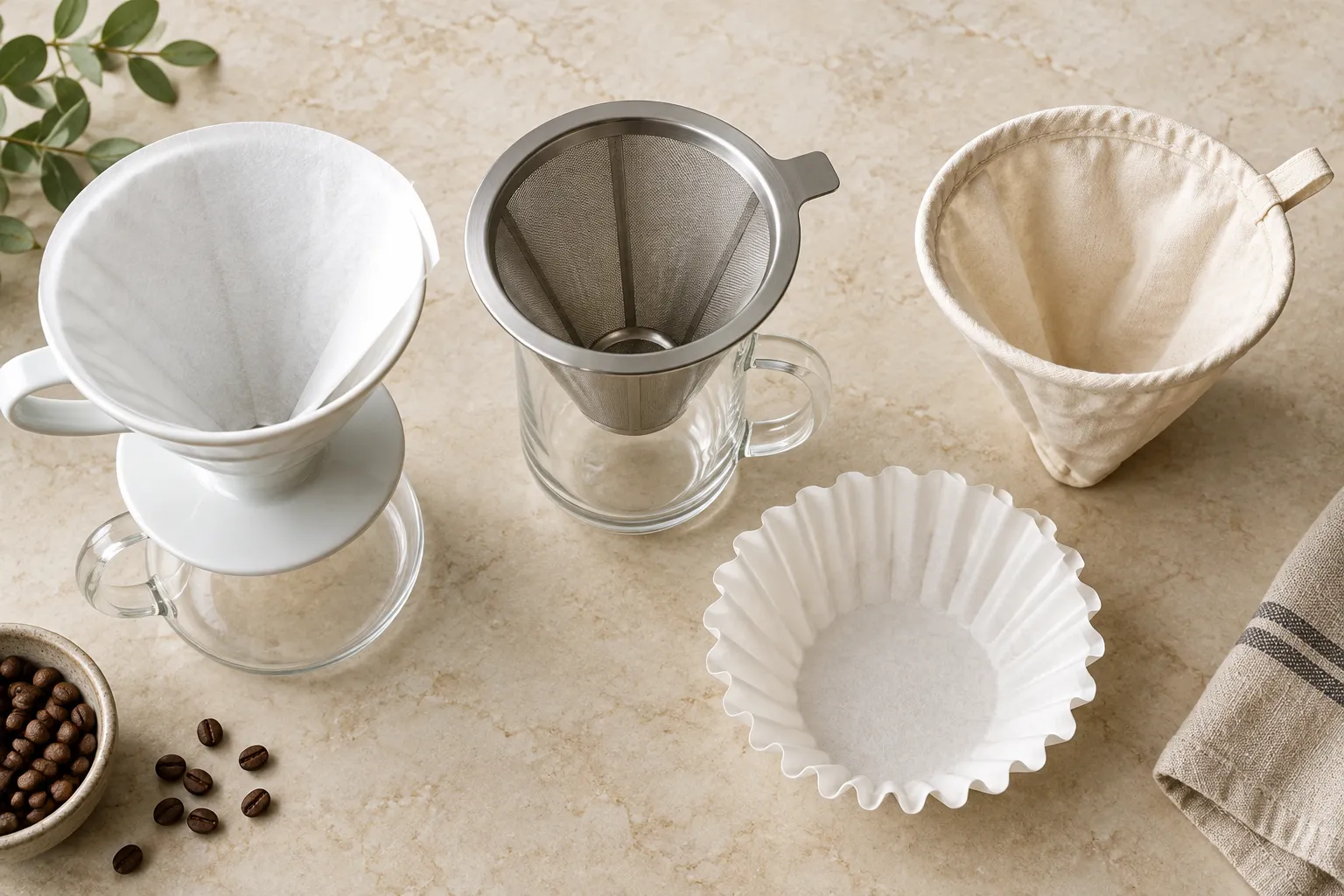
Filter |
Cup character |
After brewing |
Main tradeoff |
|---|---|---|---|
Paper |
Clear, lighter body, little sediment |
Lift out and dispose of the used filter and grounds |
Need a fresh filter for each brew |
Reusable metal mesh |
Fuller body, more oils, possibly fine sediment |
Empty grounds, rinse mesh, and wash away oils |
More cleaning and a less clear cup |
Reusable cloth |
Soft texture with more body than paper and less sediment than many metal filters |
Rinse promptly and store clean so it does not develop odors |
Most demanding care routine |
"In a 20-person crossover study, boiled coffee produced higher total and LDL cholesterol than the same coffee passed through a paper filter; filtering removed more than 80% of the brew’s lipid-soluble substance." - Journal of Internal Medicine study
Paper: clean flavor, easy mornings
If you like distinct flavors and dislike grit at the bottom of the mug, start with a paper pour over coffee filter. You can lift out the paper and grounds together, with little left to scrub. Just keep a supply of filters that fits your brewer.
Thickness and texture affect how paper drains, and thicker sheets may catch more oils. White and brown papers can taste different straight out of the pack. If you notice a papery taste, rinse the filter with hot water before adding coffee, then discard that water.
Metal: reusable, with more texture
A fine-mesh metal coffee hand filter takes the place of disposable paper and, in some designs, the dripper too. Its openings let oils and tiny grounds through. The resulting cup feels heavier, with sediment that a change in pouring style may not keep out.
The base should sit firmly on your mug, and you should be able to reach the mesh when you wash it. Tip out the grounds after brewing and remove trapped oils; buildup can slow the next brew and leave a stale taste.
Cloth: a softer cup, more upkeep
Cloth gives you some of metal’s body with less grit. It also asks for prompt, thorough washing and clean storage between uses. Paper will feel easier if your coffee routine ends with a rush out the door. Choose cloth when that extra care sounds manageable.
Match the shape before choosing the size
An awkward fold, a filter that sticks up over the rim, or paper slumping toward the drain can turn a pour over with filter into a fiddly job. Match the filter to the specific brewer you have, as well as the amount of coffee you make.
Brewer or holder |
Filter shape to look for |
Fit question |
|---|---|---|
Pointed cone dripper |
Pointed cone paper made for that dripper, or a compatible reusable insert |
Does the tip sit properly without blocking the outlet? |
Flat-bottom dripper |
Flat-bottom, often wave-shaped paper |
Does its base sit flat without crushed folds? |
Wedge-shaped dripper |
Wedge or trapezoid paper with a folded seam |
Does the folded base match the brewer? |
Standalone metal strainer |
Its own built-in mesh |
Does its support ring sit firmly on your mug or server? |
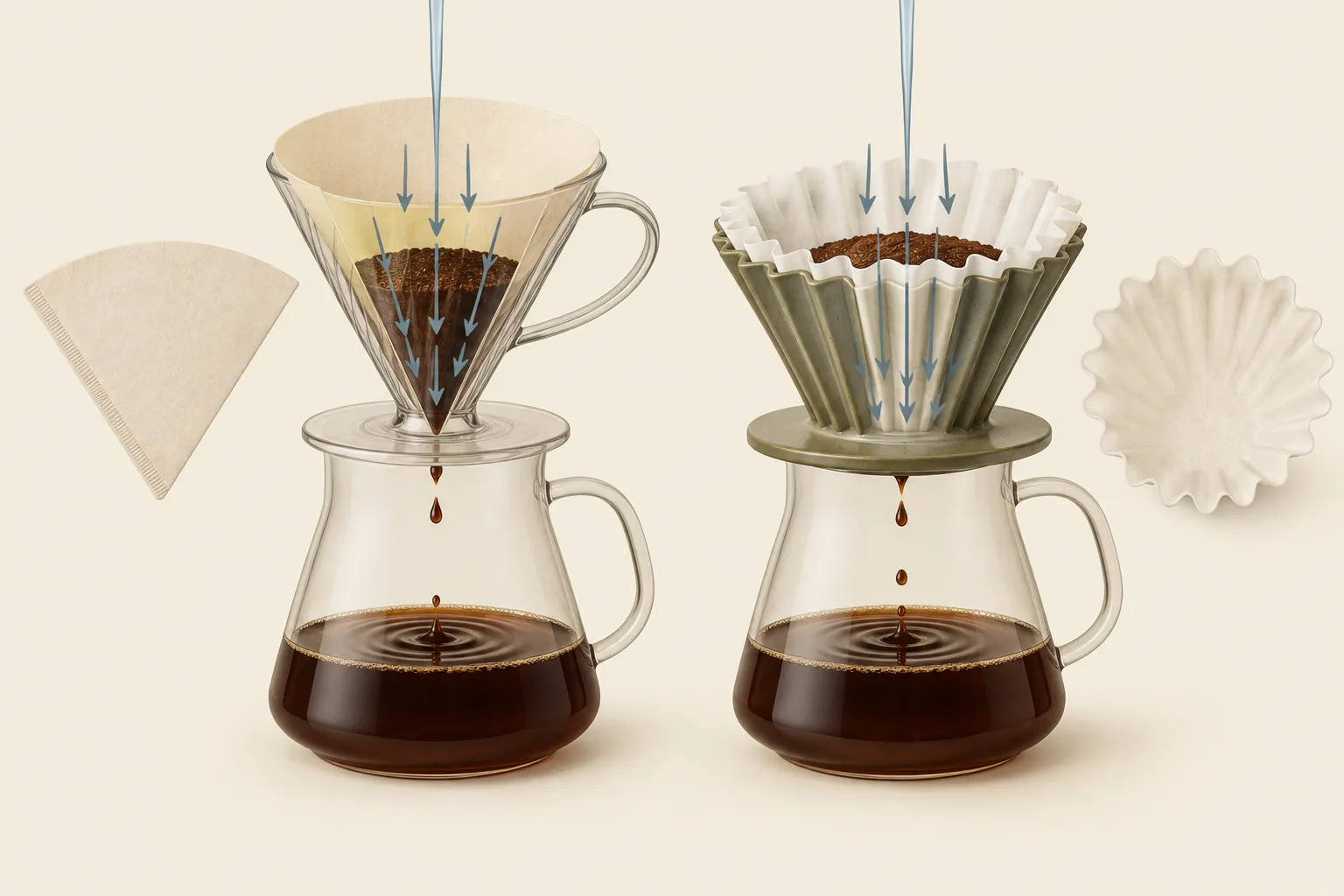
Cone versus flat-bottom: what changes?
A pointed cone draws the coffee bed toward its tip. In a flat-bottom brewer, the bed spreads across a wider base, so water may move through it differently. Paper, outlet design, grind, and your pour all affect the cup too. Pick a shape with filters you can find and use consistently.
Those shapes are easy to confuse in product photos. Wedge-shaped paper will not sit like a pointed cone, and a wave-shaped flat-bottom filter differs from an ordinary basket filter. Use the filter style named by the dripper maker.
Which size fits?
Find the size marking on the brewer and buy from its matching filter series. Some pointed-cone systems use 01, 02, and 03, while other cone and wedge filters use #2 and #4. The numbering systems are not universal equivalents: #2 paper will not necessarily fit a dripper marked 02.
If you are buying both, choose a dripper sized for your usual mug or server and order its matching filters with it. For a dripper already in your kitchen, use its model or size marking. Get that fit right before deciding between bleached and unbleached paper.
A quick decision for your home setup
Want a clear cup with the least washing? Choose a dripper and matching paper filters.
Want a fuller cup without buying paper repeatedly? Choose a washable metal strainer with a base that fits your vessel.
Want a reusable filter with less sediment than mesh? Try cloth if its cleaning routine fits your day.
Already own a dripper? Decide shape and size from that brewer before deciding between compatible filter materials.
You can try hand filter coffee with a fine-mesh kitchen sieve lined with paper and rested over a mug. Make sure the paper covers the sieve and the sieve stays steady when you pour. Leave the paper out and more fine grounds may slip into the cup. For everyday use, a dedicated dripper or self-supporting strainer is easier to set up.
Think about cleanup too. Paper lifts out with the grounds; reusable filters need to be emptied and washed. When you brew into a single cup, leave enough room between the bottom of the filter and the rising coffee.
Put the filter in a comfortable pour-over setup
You can begin with a fitting filter, a stable dripper or strainer, ground coffee, a mug, and hot water. Pouring with control helps wet the grounds evenly without splashing past the filter or pressing paper against the sides. A gooseneck kettle makes that easier, though the filter still has to fit.
Cocinare’s electric gooseneck kettles pair pouring control with a considered countertop design. Once you know which filter fits and how you want the cup to feel, you can give the water side of brewing more attention. Cocinare’s guide to gooseneck kettles with thermometers is a place to start.
The takeaway
Start with a stable dripper and matching paper if this is your first pour-over hand filter. It makes a clear cup and cleanup takes little effort. Metal suits a fuller cup and a reusable routine; cloth makes sense if you do not mind tending to it. For more control over the pour, try a Cocinare gooseneck kettle that also looks at home on your counter.
FAQ
What are some good coffee filters?
Look for a filter that fits your brewer and makes the cup you like. Paper gives a clear cup and easy cleanup. Metal adds body and can be washed and reused; cloth sits between them but needs more care.
What is the pour-over coffee thing called?
The holder above your cup is usually called a dripper or pour-over brewer. Paper, cloth, or mesh catches the grounds inside it. A standalone metal strainer may do both jobs.
Which size coffee filter for pour-over?
Use the size and shape specified for your dripper model. The numbers alone can mislead: pointed-cone paper marked 02 will not automatically fit a wedge dripper that takes #2. Match the brewer’s filter series.
Can you use paper towels as coffee filters?
A clean, unscented paper towel can hold grounds in a stable dripper in a pinch. It may tear, drain slowly, or give the coffee a papery taste because it is not made for that brewer. For regular pour-over, use its matching paper or a reusable filter that fits.
Share:
Coffee Machine Maintenance Checklist