

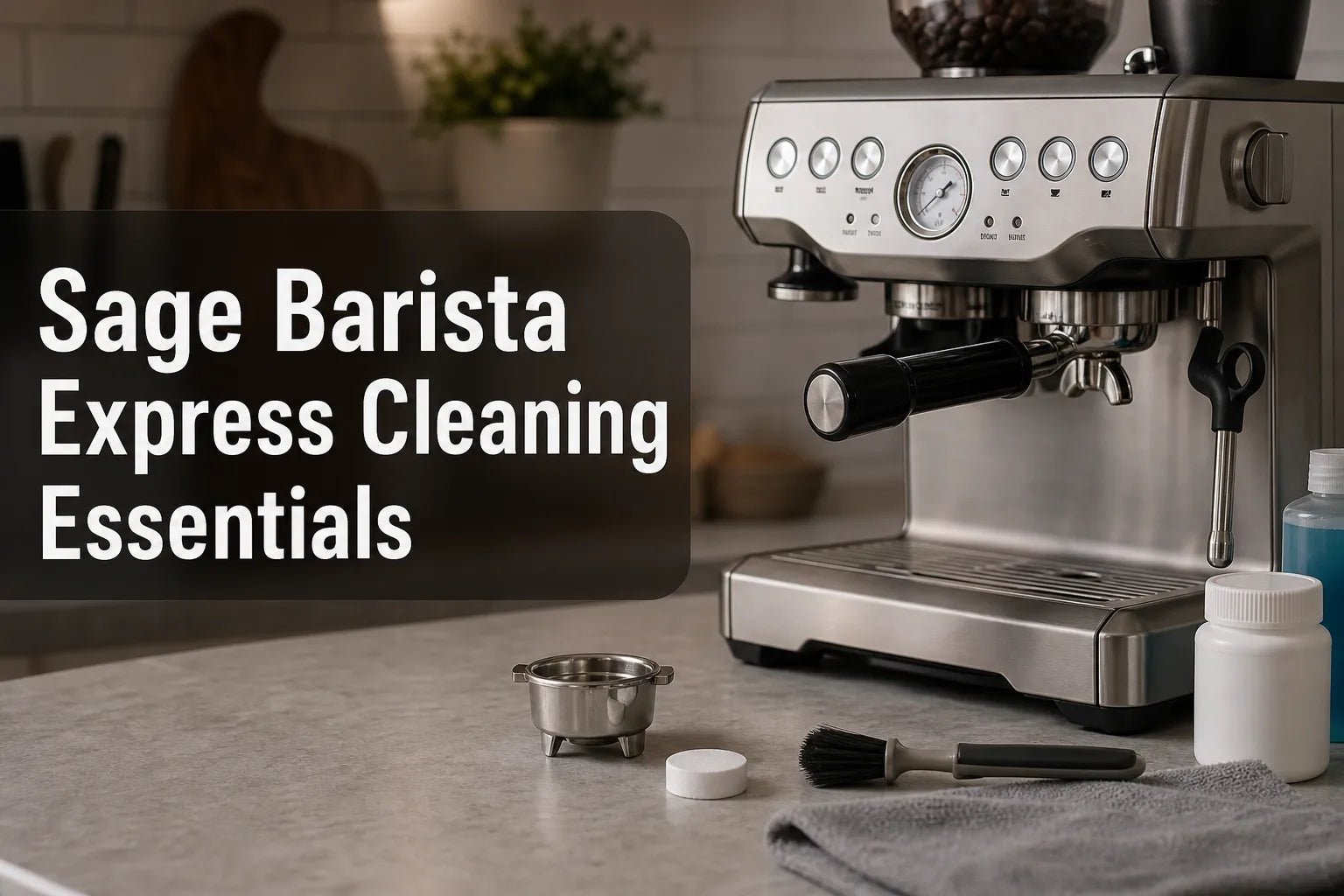
Sage Barista Express Cleaning Essentials
If your shots are tasting flat, your steam feels weaker than usual, or the Clean Me light has started flashing, your machine is not being dramatic. It is asking for care. Proper Sage Barista Express cleaning is one of the simplest ways to protect espresso quality, preserve temperature stability, and keep your machine working beautifully for years.
For home brewers, this is about more than maintenance. It is about ritual. A clean machine gives you sweeter extraction, cleaner aromatics, better crema, and a more reliable morning workflow. And if you care about the visual pleasure of brewing at home, it also keeps your setup feeling as polished as it looks.
Cocinare understands that great coffee lives at the meeting point of precision, performance, and design. While our gooseneck kettles are crafted to elevate pour-over with exact pouring control, premium materials, and a refined countertop presence, the same philosophy applies here too: care for your tools, and your tools reward you. That is true whether you are dialing in a V60 or maintaining a beloved espresso machine.
Why this guide is better than the usual cleaning checklist
Most articles stop at “use a tablet and press the buttons.” That is useful, but incomplete. This guide goes further by explaining:
what each cleaning product actually does
the difference between backflushing and descaling
when to use tablets vs water filters vs descaler
how to avoid common cleaning mistakes
how to build a realistic cleaning routine around daily use
What “cleaning” really means on a Sage Barista Express
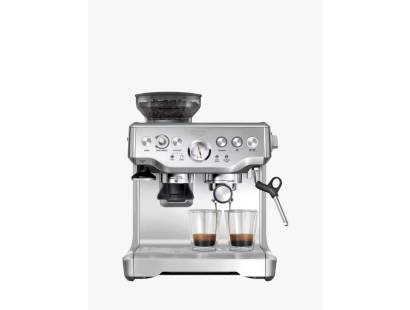
When people search for sage coffee machine cleaning, they are often mixing together several different tasks. On the Barista Express, these are separate jobs:
Task |
What it removes |
Typical product |
How often |
|---|---|---|---|
Backflush cleaning cycle |
Coffee oils and residue in the group head |
Cleaning tablet or espresso machine cleaner |
When “Clean Me” appears or every few months |
Descaling |
Mineral buildup from water |
Descaler |
Based on water hardness and machine prompts |
Steam wand cleaning |
Dried milk residue |
Steam wand cleaner or immediate purging/wiping |
After every milk drink |
Water filtration |
Reduces scale-forming minerals and odours |
Water filter |
Replace on schedule |
Daily wipe-down |
Grounds, splashes, and stale residue |
Warm water and cloth |
Daily |
The big takeaway: cleaning tablets are not descaler, and descaler is not a substitute for backflushing.
The cleaning essentials you actually need
To clean a Sage Barista Express properly, you do not need a huge kit. You need the right kit.
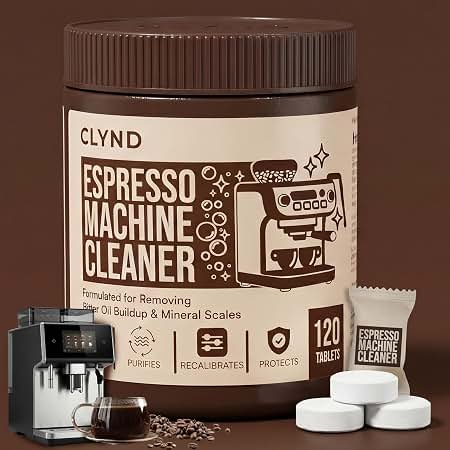
1. Cleaning tablets or espresso machine cleaner
These are used during the backflush cycle. They dissolve coffee oils and residue inside the brew path. If you are looking for sage barista cleaning tablets, sage espresso cleaning tablets, or a compatible espresso machine cleaner, this is the category that matters for the “Clean Me” cycle.
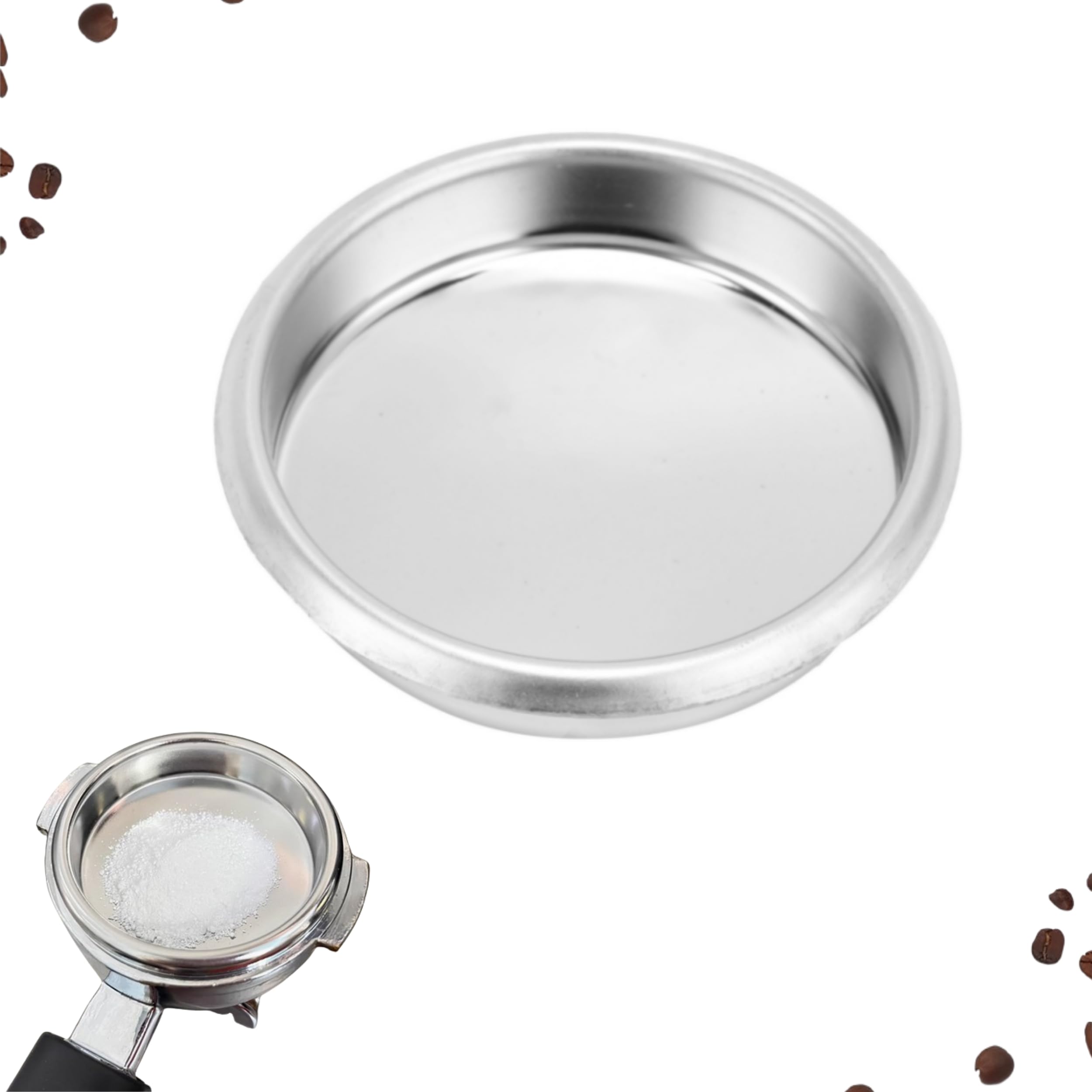
2. Blind filter or cleaning disc
The Barista Express uses a silicone cleaning disc or blind basket to block the outlet so the machine can build pressure and backflush internally.
3. Descaler
This removes limescale from the thermocoil, valves, and internal water pathways. If you skip this for too long, performance drops gradually, then suddenly.
4. Water filter
A fresh filter helps reduce scale buildup and can improve flavour clarity. It does not eliminate the need to descale, but it can reduce how often you need to.
5. Soft cloths and a group head brush
These are for the parts you touch and see every day: portafilter, shower screen area, steam wand exterior, drip tray, and bean chute surroundings.
What competitor guides commonly miss
After reviewing top-ranking content on this topic, a few patterns stand out. Most guides correctly explain the button sequence, but they often gloss over:
the difference between brew-path cleaning and descaling
why coffee oils can affect taste even before the machine displays a warning
how water hardness changes your descaling frequency
why weekly water backflushing is smart even when the machine seems fine
how proper maintenance improves not just longevity, but cup quality
That final point matters. Espresso is sensitive. Tiny shifts in cleanliness can show up as bitterness, muddiness, unstable crema, and unpredictable shot times.
How to run the Sage Barista Express cleaning cycle
This is the core process most owners need.
What you need
1 cleaning tablet or measured dose of espresso cleaner
blind filter or Sage cleaning disc
portafilter
enough water in the tank
empty drip tray with room to catch waste water
Step-by-step
Insert the blind filter or cleaning disc into the portafilter.
Place the cleaning tablet in the disc or basket.
Lock the portafilter into the group head.
Make sure the machine is powered off.
Press and hold Power, 1 Cup, and 2 Cup together for about 3 seconds.
The cleaning cycle begins and the Clean Me light flashes.
Let the cycle finish completely. This usually takes around 5 minutes.
Remove the portafilter and rinse it thoroughly.
Run one or two plain water cycles afterward to flush away any cleaner residue.
Pro tip
If your cleaning disc is the newer solid style, do not worry if the solution does not drain through the basket the way older tutorials show. On newer setups, much of the waste ends up directed to the drip tray instead.
How often should you clean the Barista Express?
A good routine is more effective than panic-cleaning once the machine feels off.
Daily
knock out the puck promptly
rinse and wipe the basket
purge and wipe the steam wand immediately after milk use
empty standing water from the drip tray if needed
refill with fresh water
Weekly
remove and wash the drip tray
clean the shower area and group head gasket zone
backflush with water only
wipe hopper and exterior surfaces
Every time the machine prompts you, or roughly every 200 shots
run a full backflush cycle with a cleaning tablet
Every 2 to 3 months, depending on water hardness
descale the machine
replace the water filter if due
Backflushing vs descaling: the difference that saves machines
This is where many owners get confused.
Backflushing cleans coffee residue
Backflushing removes oils and fine coffee particles left behind by extraction. These residues can turn rancid, affect flavour, and clog internal brew components.
Descaling removes mineral buildup
Descaling tackles calcium and magnesium deposits from hard water. These deposits can reduce flow, interfere with temperature stability, and weaken steam output.
If you only descale and never backflush, the machine can still taste dirty. If you only backflush and never descale, the internals can still clog with mineral deposits.
Which cleaner should you buy?
You can use official sage coffee machine cleaning tablets, but compatible cleaners can work as well if they are designed specifically for espresso machines.
Choose a cleaner that is:
intended for espresso backflushing
safe for coffee machine internals
easy to rinse
available in tablets or measured powder doses
Choose a descaler that is:
specifically designed for espresso machines
non-corrosive when used correctly
suitable for thermoblock or thermocoil systems
Avoid
dish soap inside the machine
random multi-purpose kitchen descalers
strongly scented cleaners
improvised solutions unless the manufacturer explicitly approves them
Do you need Sage-branded tablets?
Not necessarily. Many owners search for sage barista express cleaning tablets, espresso cleaner Sage, or the espresso cleaner Sage because they want a perfect match. That is understandable. But what matters most is product type and compatibility.
If the cleaner is designed for espresso machine backflushing and is safe for Sage/Breville-style home espresso machines, it can do the job well. The key is to use the right cleaner for the right task.
How to descale a Sage Barista Express
Descaling instructions can vary slightly by model revision, so your manual should always be your final reference. But the general process looks like this:
Empty the drip tray.
Dissolve the descaling solution according to instructions.
Fill the tank with the prepared descaling mix.
Enter the descaling mode using the machine’s controls.
Run the descaling process through brew, steam, and hot water paths as prompted.
Rinse the tank thoroughly.
Refill with fresh water and run a full rinse cycle.
A better rule than “every 3 months”
If your water is soft and you use a filter consistently, you may need to descale less often. If your water is hard, your machine may need descaling more frequently. The smartest approach is to combine:
your machine’s prompts
your local water hardness
your actual usage volume
Signs your Sage needs cleaning sooner than the prompt
Do not wait blindly for the light if you notice:
espresso tasting bitter, flat, or stale
inconsistent shot times
reduced flow from the group head
weaker steam pressure
sour and bitter swings despite a stable grind setting
odours from the group head or drip tray
These are often subtle maintenance signals, not just recipe problems.
The best maintenance rhythm for better-tasting coffee
For specialty coffee lovers, maintenance is part of flavour control. A clean brew path helps your beans express more sweetness and clarity. A scale-free water path helps temperature and pressure behave more consistently. That means your dial-in efforts actually pay off.
This is the same reason design-minded brewers invest in better gear. Precision matters. At Cocinare, we build that idea into every kettle: accurate pouring, durable craftsmanship, and elevated visual design that make coffee preparation feel intentional. Espresso maintenance may not be as glamorous as a sculptural gooseneck kettle on your counter, but it belongs to the same ritual of better brewing.
Common mistakes to avoid
Using tablets when the machine really needs descaling
If the issue is mineral buildup, no amount of backflush cleaner will solve it.
Forgetting to rinse after the cleaning cycle
Residual cleaner can spoil the next shot and create unnecessary chemical taste.
Neglecting the steam wand
Milk residue hardens fast. If left alone, it becomes more difficult to remove and can affect hygiene and steam performance.
Waiting too long because the machine still “works”
Machines often decline gradually. By the time performance is obviously worse, buildup has usually been accumulating for a while.
Treating maintenance as separate from flavour
It is not. Cleanliness is part of extraction quality.
Quick reference cleaning schedule
Frequency |
Task |
Product needed |
|---|---|---|
After each use |
Purge and wipe steam wand, rinse basket |
Cloth, water |
Daily |
Empty puck, wipe portafilter, refresh water |
Cloth, water |
Weekly |
Water-only backflush, wash tray and accessories |
Blind filter, water |
Every 200 shots or when prompted |
Full clean cycle |
Cleaning tablet / espresso machine cleaner |
Every 2–3 months or as needed |
Descale |
Espresso machine descaler |
On filter schedule |
Replace water filter |
Compatible water filter |
If you love brewing, maintenance should feel good too
This is where product design matters more than people think. Tools you enjoy using get used properly. Beautiful objects invite better habits. That applies to a clean-lined espresso station, a well-made tamper, and a precision kettle that feels balanced in hand.
Cocinare was built for coffee lovers who care about that blend of function and form. Our collections are created for different tastes and lifestyles, from timeless modern minimalism to expressive limited-edition collaborations. You get a brewing experience that looks exceptional, performs with precision, and fits naturally into everyday ritual. Add free U.S. shipping, an up to 18-month hassle-free warranty, and a 30-day money-back guarantee, and the experience feels as considered as the product itself.
Final verdict
If you want your Sage Barista Express to keep producing rich, balanced espresso, proper cleaning is non-negotiable. Use the right espresso machine cleaner for backflushing, descale on a schedule that reflects your water, and stay ahead of residue before it affects taste.
A clean machine is not just a maintenance win. It is a flavour upgrade.
And if you are building a home coffee ritual that feels as good as it tastes, Cocinare is the natural next step. Our precision kettles bring barista-level pouring control, premium durability, and design-forward beauty to the counter, helping every brew moment feel more intentional.
FAQ
What cleaning accessories are available for the Breville Barista Express?
The essentials are a blind filter or cleaning disc, cleaning tablets or espresso machine cleaner, descaler, a water filter, and a soft cloth or brush for daily care. These cover backflushing, descaling, steam wand hygiene, and general upkeep.
What are the common problems with Sage Barista Express?
Common issues include scale buildup, stale coffee oils in the brew path, reduced steam power, inconsistent shot timing, and off flavours. Many of these are maintenance-related and improve with regular cleaning, rinsing, and descaling.
Are Sage cleaning tablets the same as descaler?
No. Cleaning tablets are for removing coffee oils and residue during the backflush cycle, while descaler removes mineral deposits from water pathways. You need both as part of proper machine care.
How do I deep clean my Breville Barista Express?
Start with a full backflush cycle using a blind filter and cleaning tablet, then rinse thoroughly with plain water. After that, clean the steam wand, drip tray, portafilter, shower area, and descale the machine if mineral buildup is due.
How to deep clean sage barista express?
Use the machine’s Clean Me cycle with the proper cleaning disc and espresso cleaner, then flush the system well. For a complete deep clean, also descale, wash removable parts, and replace the water filter if needed.
Can I use white vinegar to descale my Breville Barista Express?
It is generally better to use a proper espresso machine descaler instead of white vinegar. Vinegar can leave odours and may not be the best choice for long-term care of internal components.



Share:
Best Manual Coffee Grinder for Better Brews
Electric Temperature Control Kettle Benefits