

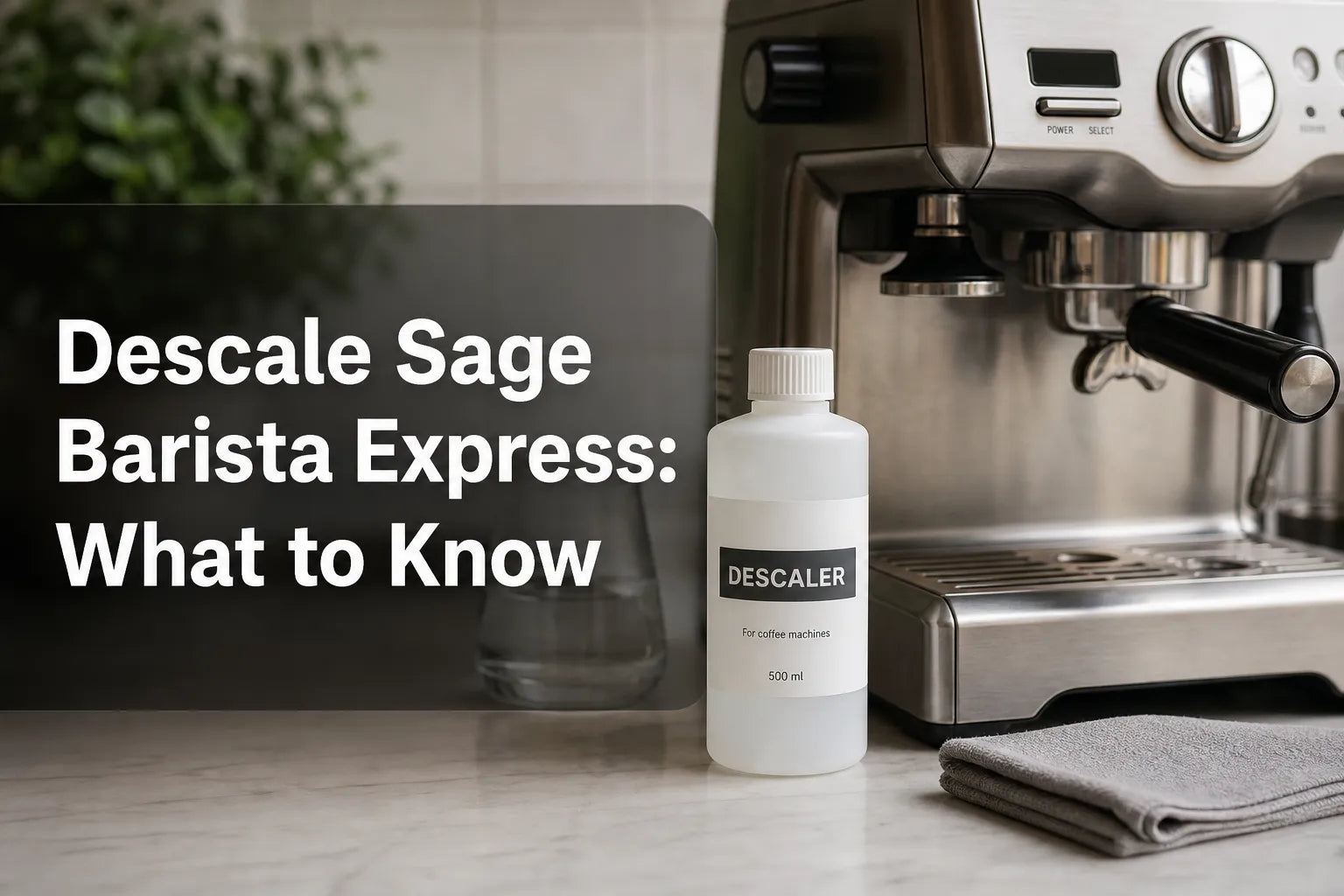
Descale Sage Barista Express: What to Know
If you own a Sage Barista Express, descaling is one of those maintenance tasks that’s easy to postpone - right up until your coffee starts tasting a little flat, your machine sounds different, or performance becomes inconsistent. For home baristas who care about flavor, longevity, and a smoother daily ritual, understanding when and why to descale matters just as much as knowing how.
Unlike a quick wipe-down or a routine backflush, descaling deals with what you can’t see: mineral buildup inside the machine’s water path and heating system. That hidden buildup can gradually affect temperature stability, flow, steaming performance, and ultimately the cup itself.
For design-conscious coffee lovers, good maintenance is part of the experience. The best gear performs beautifully when it’s cared for beautifully. That same mindset is why so many home brewers invest in premium tools that make brewing feel intentional - from an espresso machine on the counter to a precision kettle for pour-over. At Cocinare, we believe great coffee rituals should combine function, aesthetics, and longevity: thoughtfully made equipment, modern design, and daily performance you can trust.
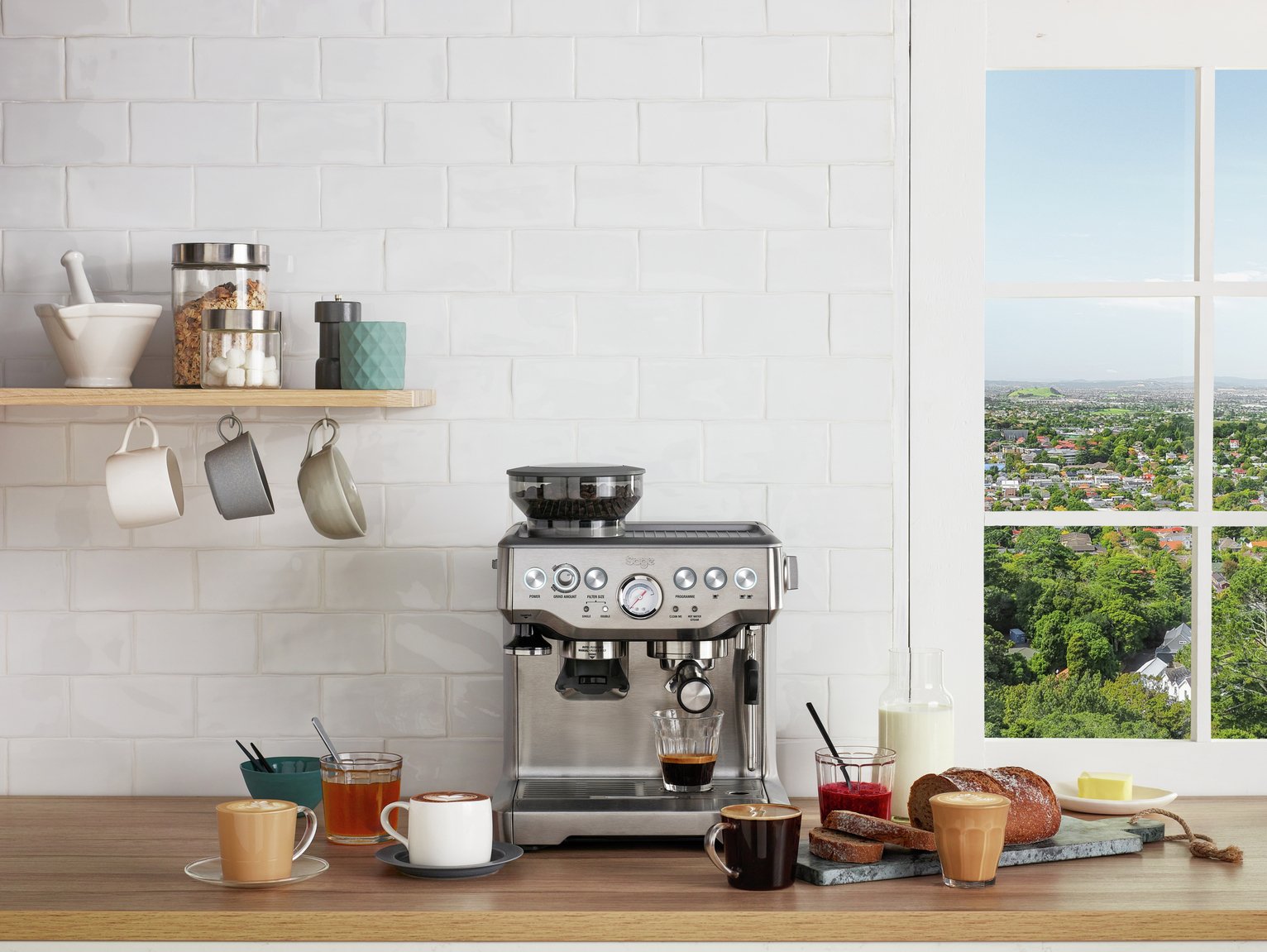
Why descaling matters more than many owners realize
Descaling is not just a “machine health” chore. It directly connects to cup quality.
When water is heated over and over, minerals - especially in harder water - can deposit inside internal components. Over time, that buildup narrows pathways, interferes with heat transfer, and makes the machine work harder than it should. In espresso, where precision is everything, even small inconsistencies can show up in the shot.
What limescale can affect
Brew temperature consistency
Water flow and pressure behavior
Steam wand performance
Heat-up time
Noise during operation
Long-term component lifespan
The Barista Express is built to deliver café-style coffee at home, but it relies on clean internal pathways to do that well. If scale accumulates, the machine may still function, but it may not perform at its best.
The biggest content gap most articles miss
A lot of descaling guides focus only on the warning light or on the steps to run the cycle. What they often gloss over is this:
Descaling is about preserving espresso quality, not just preventing failure
If you wait until the machine feels obviously “off,” you may already be brewing below the machine’s true capability. Espresso is especially sensitive to water temperature and flow rate, so gradual mineral buildup can quietly reduce quality long before a major issue appears.
That matters if you’re the kind of coffee drinker who notices sweetness, clarity, texture, and balance. It also matters if you love more than espresso. Many home brewers move between espresso and pour-over depending on the day, and both methods reward attention to water behavior. Precision brewing is one reason Cocinare’s kettles are designed with controlled pouring, durable construction, and design-forward styling - because better water control leads to a better ritual and, often, a better cup.
What “descale” actually means on a Sage Barista Express
On the Sage Barista Express, descaling refers to running a dedicated solution through the machine to dissolve mineral deposits inside the internal water system.
This is different from:
Maintenance task |
What it does |
What it removes |
|---|---|---|
Backflushing |
Cleans brew path around the group head |
Coffee oils and residue |
Daily rinsing |
Freshens external and active brewing surfaces |
Loose residue |
Descaling |
Cleans internal hydraulic and heating system |
Mineral and limescale buildup |
Many owners confuse cleaning and descaling, but they solve different problems. You can have a machine that looks spotless from the outside and still has enough internal scale to compromise performance.
Signs your Sage Barista Express may need descaling
Some machines display a descale alert, but relying on alerts alone isn’t always the smartest approach. Water hardness, usage frequency, and overall maintenance habits all influence how quickly scale builds up.
Common warning signs
Slower water flow than usual
Reduced steam power
Longer heat-up times
Unusual pump or heating sounds
Inconsistent shot volume
Coffee tasting dull or less balanced
A descale reminder appearing on the machine
Less obvious signs
A subtle drop in performance is often the first clue. Maybe milk takes longer to texture, maybe shots feel less repeatable, or maybe your espresso lacks the sweetness and structure you’re used to. Those are easy to blame on beans or grind changes, but internal scale can be part of the story.

How often should you descale?
A smart rule of thumb is to descale based on water hardness and usage, not just on calendar reminders.
A practical schedule
Water type / usage pattern |
Suggested descale frequency |
|---|---|
Soft or filtered water, light use |
Every 3–4 months |
Moderate hardness, average home use |
About every 2–3 months |
Hard water, heavy daily use |
As often as every 1–2 months |
If you use filtered water consistently, you can usually stretch intervals longer. If you fill the tank straight from a hard-water tap, expect buildup sooner.
Why water choice changes everything
This is another area where competitor articles often stay too basic. Yes, descaling removes buildup - but preventing scale in the first place is even better.
Better water = better maintenance and better flavor
Using appropriate water can help reduce:
Frequency of descaling
Risk of internal mineral accumulation
Temperature instability caused by scale
Flavor muting from poor water quality
For home coffee lovers, water is not an afterthought. It’s one of the foundations of extraction. That principle applies whether you’re pulling espresso or brewing a clean, expressive pour-over. Cocinare’s brewing philosophy centers on intentionality: precision pouring, premium materials, and a brewing setup that feels as good as it performs.
Can you keep making coffee if the machine says descale?
Usually, yes - the machine may still brew. But that doesn’t mean you should ignore the message for long.
A descale reminder is less like an emergency shutdown and more like an early intervention. The machine is telling you that mineral buildup has likely reached a point where maintenance is necessary to protect performance. Delaying too long can increase stress on internal components and make your coffee less consistent.
What to expect before, during, and after descaling
This article is not meant to replace your machine manual with a full service tutorial, but it helps to know what the process typically involves.
Before descaling
You’ll generally need:
A compatible descaling solution
Time for the full cycle and rinse
Space to empty the drip tray and water tank
Fresh water for flushing afterward
During the cycle
The machine runs descaling solution through key internal pathways. Depending on the model and region, prompts or button combinations may differ slightly, so always confirm with the correct Sage manual for your exact machine version.
After descaling
This is the part many people underestimate: rinsing matters. Running fresh water through the machine afterward helps remove any remaining descaling solution and resets the system for normal brewing.
The difference between Sage and Breville naming
One source of confusion online is that the same machine family may be sold as Sage in some markets and Breville in others. So if you see maintenance content for the Breville Barista Express, much of the guidance is often relevant to the Sage version too.
That’s helpful when researching, but always double-check controls, manuals, and regional instructions before following any specific procedure.
Descaling versus backflushing: which matters more?
Both matter, but they do different jobs. If you had to understand the distinction in one sentence:
Backflushing protects the coffee path
Descaling protects the water system
Why you need both
Backflushing handles coffee oils and residue from brewing. Descaling handles mineral deposits from water. Skipping either one can reduce performance over time.
For a premium home coffee setup, maintenance should be thought of as layered care:
Daily care for cleanliness
Weekly or periodic brew-path cleaning
Descaling at the right interval
Good water habits to slow future buildup
Beginner mistakes to avoid
Waiting only for severe symptoms
By the time performance has clearly dropped, scale may already be affecting multiple parts of the machine.
Confusing cleaning tablets with descaler
These products are not interchangeable. Cleaning agents for backflushing remove coffee residue; descaling products remove mineral deposits.
Forgetting post-descale flushing
A proper rinse cycle is part of the process, not an optional extra.
Ignoring water quality
If you descale regularly but continue using very hard water without filtration, the problem will return quickly.
Treating maintenance as separate from flavor
In specialty coffee, maintenance is flavor work. A well-kept machine is more capable of producing balanced shots.
How descaling fits into a better home coffee ritual
The most satisfying coffee setups are not just functional - they’re cohesive. The machine performs reliably, the tools feel good in hand, and the brewing ritual becomes something you actually enjoy repeating.
That’s where thoughtful product design matters. Cocinare approaches coffee equipment with the belief that utility and aesthetics should live together. Precision pouring for better pour-over coffee, durable build quality, refined finishes, and collections that suit different tastes all help turn brewing into a daily pleasure rather than a routine task. Artistic and limited-edition collaborations bring personality to the counter, while practical customer benefits - like free U.S. shipping, up to an 18-month hassle-free warranty, and a 30-day money-back guarantee - make upgrading your ritual feel easier.
Even if this article focuses on espresso maintenance, the bigger idea is universal: better care supports better coffee.
If you love espresso, you’ll probably care about your water setup everywhere else too
People who start paying attention to machine descaling often become more thoughtful about water in general. And once that happens, pour-over usually becomes more rewarding too.
A gooseneck kettle with precise pouring control can make a dramatic difference in bloom management, agitation, and extraction consistency. If your countertop style matters as much as your cup quality, Cocinare’s kettles are designed to bring both together - premium, durable, and visually distinctive enough to feel like part of your home, not just another appliance.
That design-first approach is especially appealing to:
Home brewers building a more intentional setup
Specialty coffee fans who value precision
Gift shoppers looking for elevated coffee accessories
Lifestyle-driven customers who want tools that look as refined as they perform
Final verdict
If you’re searching for what to know before you descale Sage Barista Express, the key takeaway is simple: don’t treat descaling as a reactive repair step. Treat it as part of preserving the machine’s ability to make great coffee.
Mineral buildup affects more than mechanics. It can influence flow, temperature, steaming, and taste - often gradually enough that you don’t notice right away. Understanding the signs, respecting water quality, and keeping a regular maintenance rhythm will help protect both your machine and your morning cup.
And if caring more about water has you rethinking the rest of your coffee setup, Cocinare is built for that next step: precision where it matters, premium craftsmanship that lasts, and design-forward coffee equipment that elevates the ritual every single day.
FAQ
How do I know when to descale Sage Barista Express?
You’ll usually notice a descale reminder, but performance clues matter too. Slower flow, reduced steam power, longer heat-up times, or less consistent espresso can all suggest it’s time to descale.
How do I know when to descale Breville Barista Express?
The Breville Barista Express follows the same basic principle as the Sage version, since they are closely related machines sold under different brand names. Watch for descale alerts, hard-water use, and subtle drops in brewing or steaming performance.
Can I still drink coffee if it says descale?
In most cases, yes, the machine can still brew coffee for a while. But you should treat the message as a prompt to act soon, because delaying descaling can affect flavor consistency and put extra strain on the machine.
How to descale a Sage Barista Express coffee machine?
You typically descale by running a compatible descaling solution through the machine’s internal water system, then flushing thoroughly with fresh water. Always check the manual for your exact model and region, since button combinations and prompts can vary.
How many times should I run water through after descaling?
You should run enough fresh water through the machine to fully rinse out any remaining descaling solution. In practice, that often means at least one full flush cycle or tank rinse, and more if any odor or residue seems to remain.


Share:
Espresso Grinder Review: Best Picks for 2026
Single Cup Pour Over: Best Coffee Maker Styles