

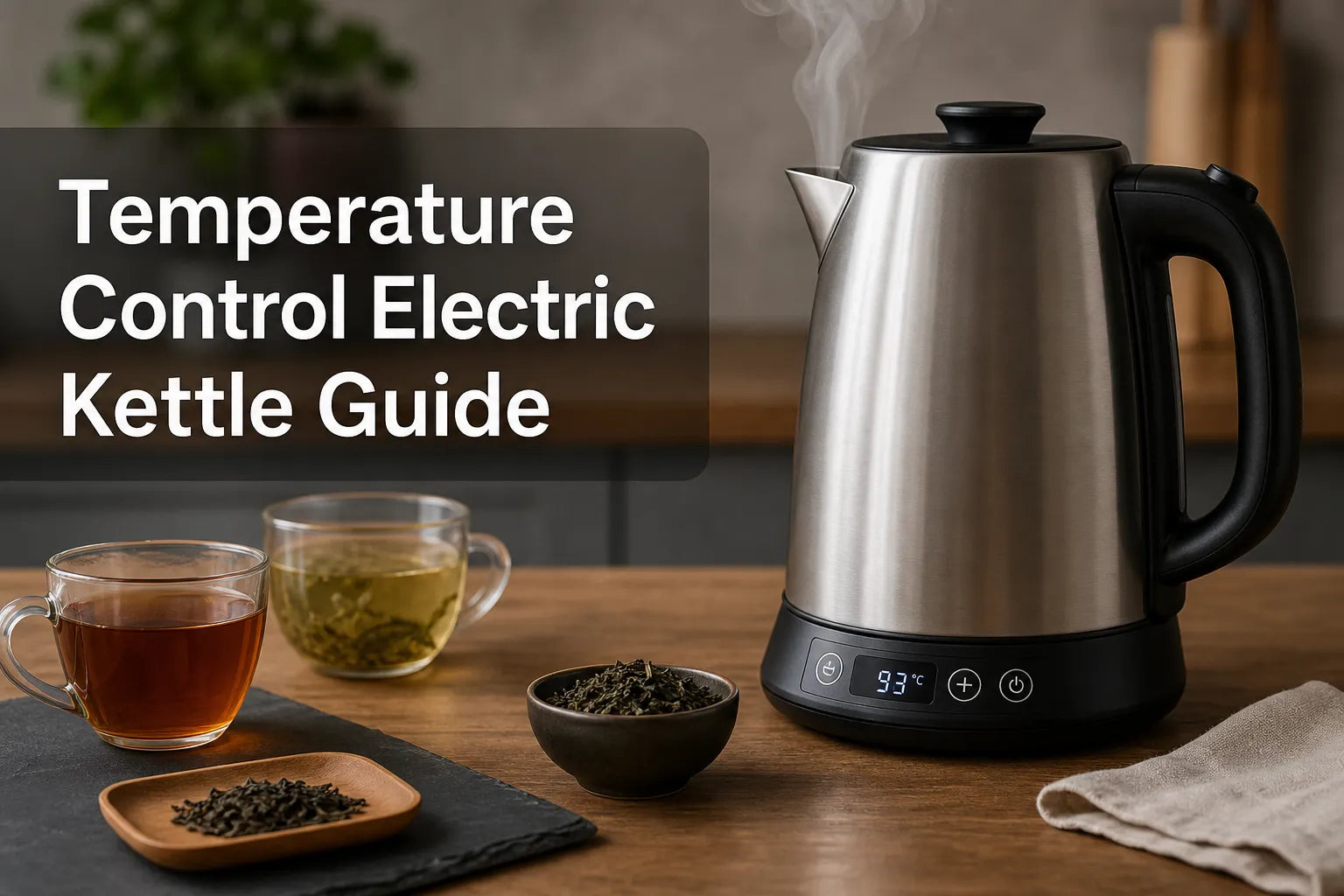
Temperature Control Electric Kettle Guide
If you care about better coffee, better tea, and a brewing ritual that feels as good as it tastes, a temperature control electric kettle is one of the smartest upgrades you can make.
For home brewers, the problem is rarely just “hot water.” It’s water that’s too hot for green tea, not stable enough for pour-over, awkward to pour, or inconsistent from cup to cup. A well-designed electric tea kettle with temperature settings solves all of that at once: faster heating, more control, cleaner flavor, and a more refined countertop experience.
For specialty coffee lovers especially, precision matters. The difference between a rushed, uneven pour and a slow, controlled bloom can change the sweetness, balance, and clarity in the cup. That’s why premium gooseneck kettles have become a staple in modern coffee setups - and why Cocinare has built its collections around both performance and design.
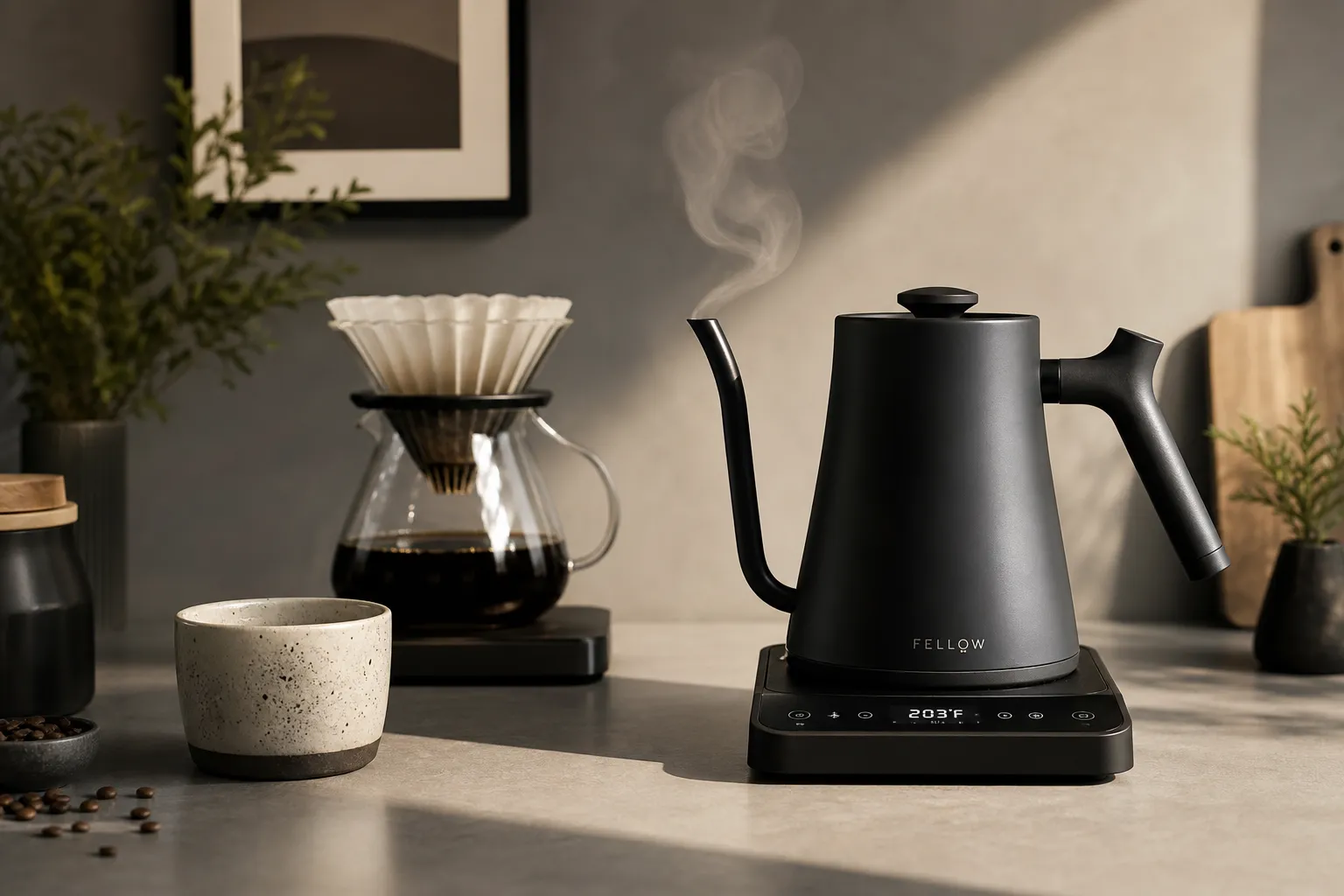
Why temperature control matters more than most people realize
A kettle that only boils is fine - until you want the best from your ingredients.
Tea leaves, coffee grounds, and even instant drinks respond differently depending on water temperature. Too hot, and delicate flavors flatten into bitterness. Too cool, and extraction can become weak, sour, or underdeveloped. The right temperature helps you hit the sweet spot.
"The Specialty Coffee Association (SCA) recommends brewing coffee with water temperatures between 197.6°F and 204.8°F (92°C to 96°C) to achieve optimal flavor extraction." - Specialty Coffee Association
That’s a big reason a coffee kettle with temperature control feels so different in daily use. You’re no longer guessing, waiting, or reheating. You set the target, brew with confidence, and get repeatable results.
What a temperature control electric kettle actually does
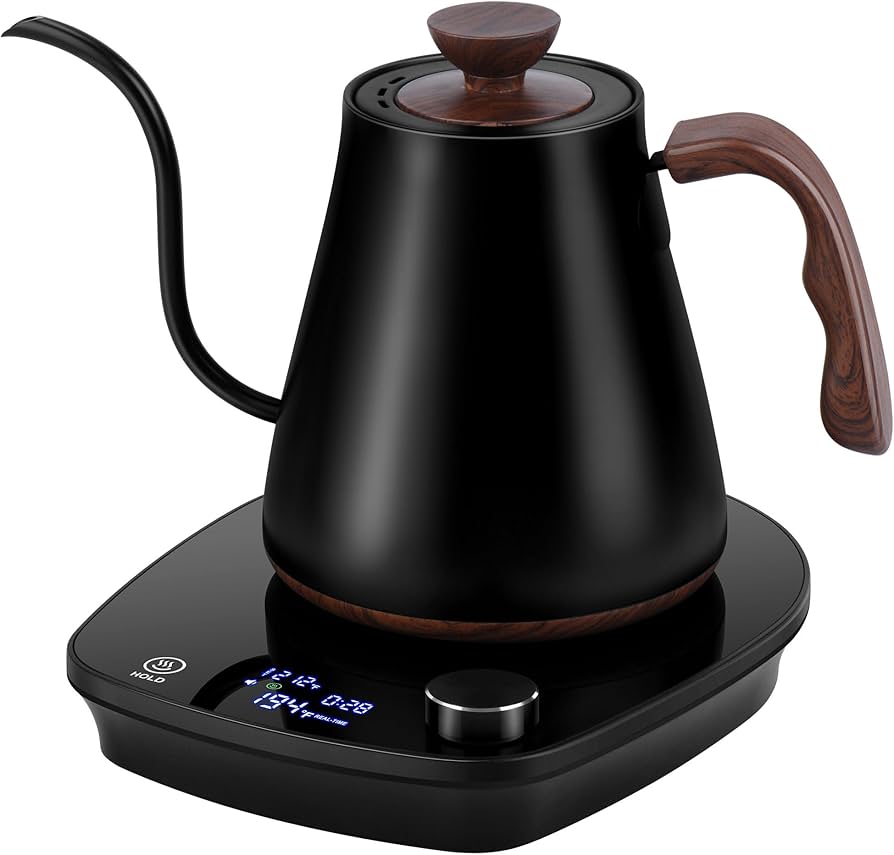
A temperature electric kettle uses an internal heating element plus a thermostat or sensor system to bring water to a selected temperature instead of simply boiling it every time.
The best models typically offer:
Adjustable temperature selection
Real-time temperature display
Hold or keep-warm function
Auto shutoff
Gooseneck precision pouring for coffee
Durable materials like stainless steel
A base and interface that are intuitive enough for everyday use
This is where premium design makes a real difference. A kettle should not just be accurate - it should feel balanced in the hand, pour smoothly, and look worthy of living on your counter every day.
Why coffee lovers prefer precision kettles
For pour-over coffee, water flow matters nearly as much as water temperature.
A gooseneck kettle gives you slower, more deliberate control over the pour. That means you can saturate the coffee bed evenly, manage bloom, avoid channeling, and stay consistent across brews. If you’ve ever struggled with splashy pours or muddy extraction from a wide-spout kettle, this is the upgrade you feel immediately.
Cocinare’s approach is especially appealing here because it combines barista-style precision with design-forward aesthetics. Instead of choosing between performance and beauty, you get both: careful pouring control, durable craftsmanship, and collections that suit different interiors and personalities - from understated modern to expressive artistic editions.
Why tea drinkers benefit just as much
Temperature control isn’t only for coffee enthusiasts. It may be even more noticeable with tea.
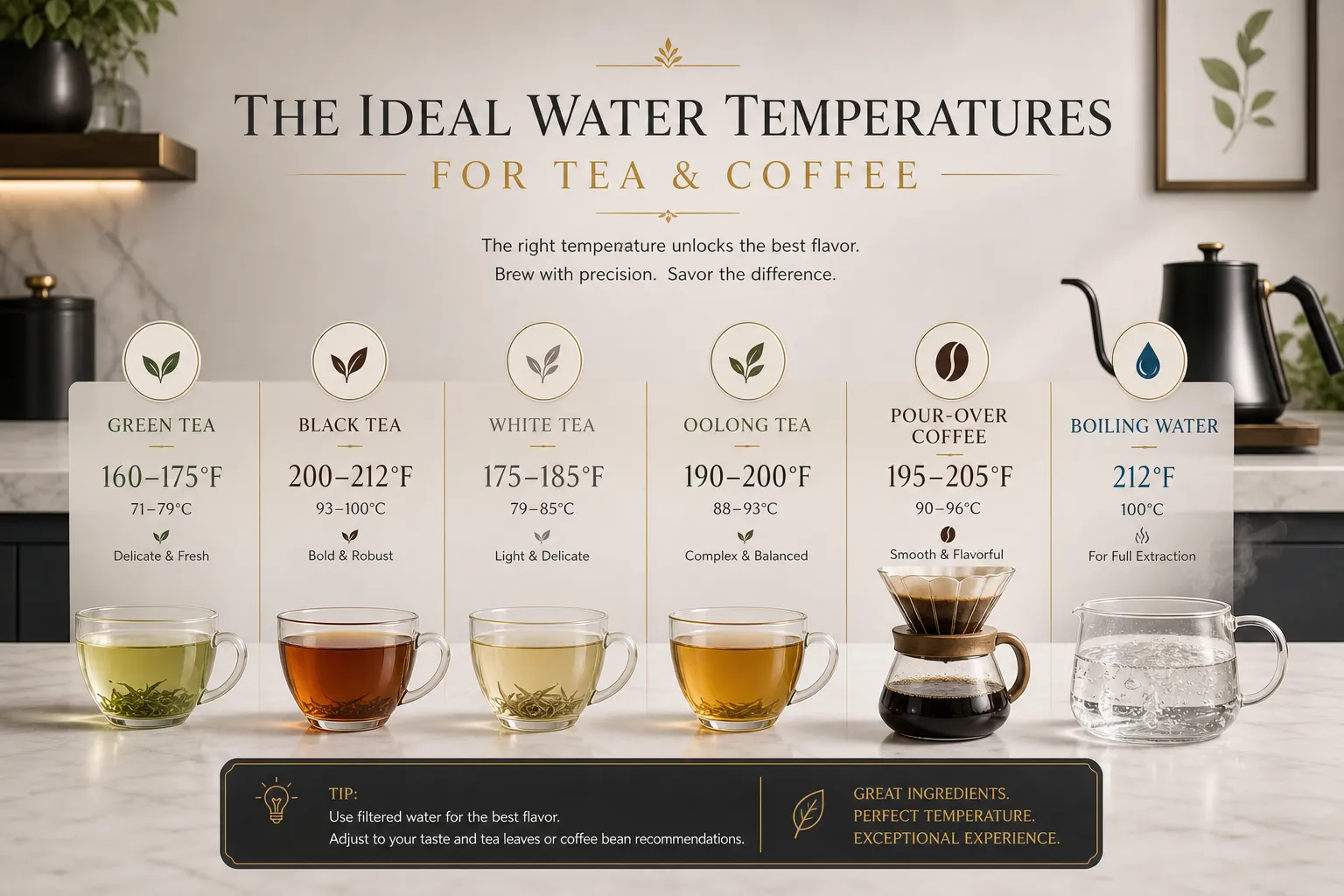
"The ideal brewing temperature for tea varies by type: Black tea: 212°F (100°C); Green tea: 175–180°F (79–82°C); White tea: 175–180°F (79–82°C); Oolong tea: 195°F (91°C)." - ArtfulTea
If you brew green tea with boiling water, it can taste harsh and grassy. White tea can lose nuance. Oolong can become unbalanced. An electric tea kettle temp control system helps you match the water to the leaf, which means more sweetness, more aroma, and less bitterness.
Common target temperatures at a glance
Drink |
Ideal Temperature |
Why it matters |
|---|---|---|
Green tea |
175–180°F |
Preserves sweetness, avoids bitterness |
White tea |
175–180°F |
Protects delicate floral notes |
Oolong tea |
~195°F |
Brings out complexity without scorching |
Black tea |
212°F |
Full extraction and body |
Herbal tea |
212°F |
Strong infusion and complete steeping |
Pour-over coffee |
197.6–204.8°F |
Balanced extraction and clarity |
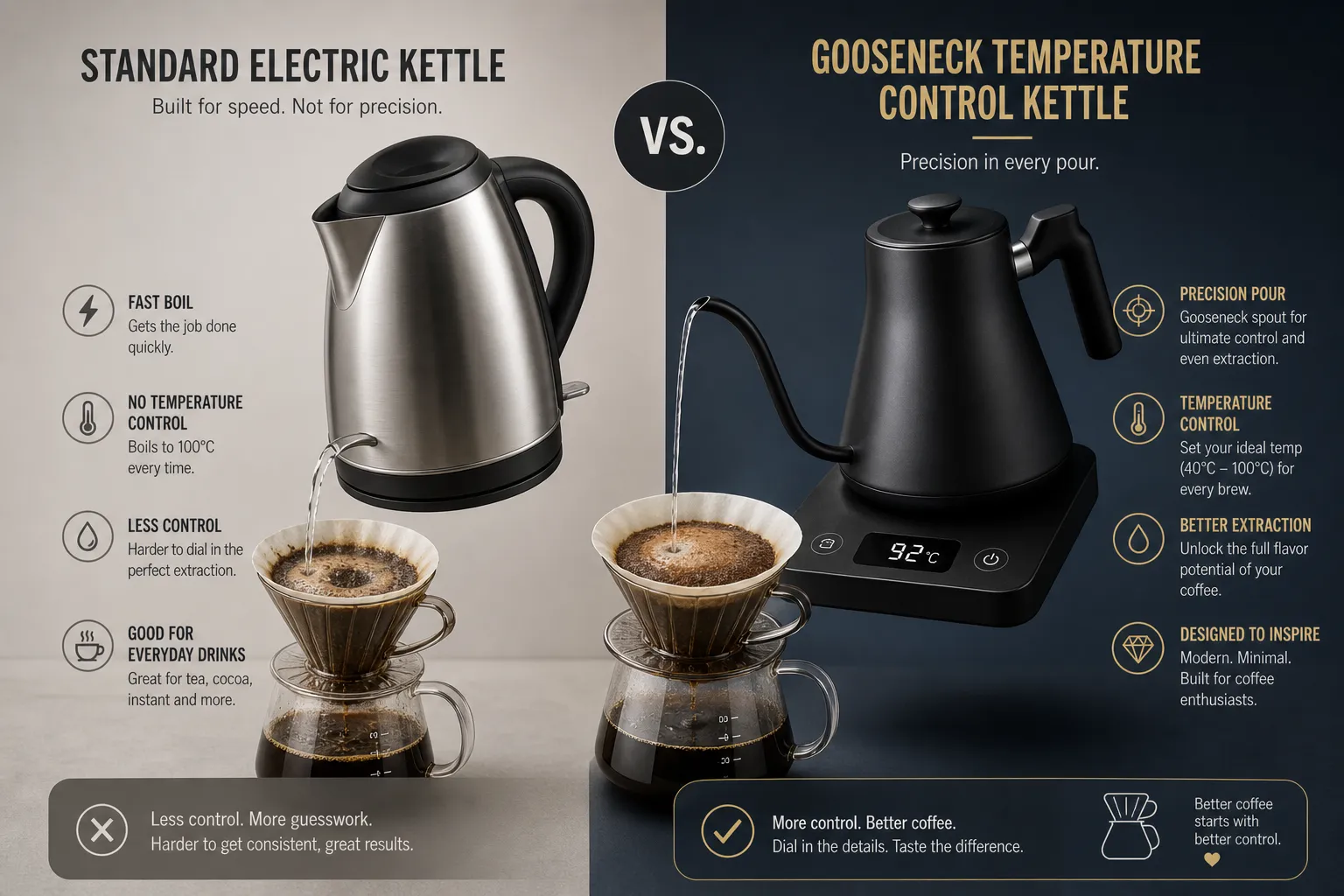
Standard kettle vs gooseneck kettle: which one should you choose?
Not every buyer needs the same thing. If your main goal is tea, oatmeal, instant noodles, or general hot water use, a standard spout can work well. But if you love manual brewing, a gooseneck is the clear favorite.
Feature |
Standard Electric Kettle |
Gooseneck Temperature Control Kettle |
|---|---|---|
Speed for general boiling |
Excellent |
Excellent |
Pour precision |
Moderate |
High |
Best for tea |
Yes |
Yes |
Best for pour-over coffee |
Limited |
Ideal |
Flow control |
Basic |
Advanced |
Visual design appeal |
Varies |
Often premium and specialty-focused |
Choose a standard spout if you:
Mostly boil water for tea bags or cooking
Prefer larger capacity over precision
Want the simplest functionality
Choose a gooseneck if you:
Brew pour-over coffee regularly
Want better saturation and control
Care about brewing ritual and technique
Value premium specialty coffee gear
For most design-conscious coffee lovers, a gooseneck temperature control tea kettle ends up being the more satisfying long-term choice.
The features that separate a great kettle from a good one
Many competitor guides focus on price and presets, but they often overlook the daily-use details that matter most. Here’s what actually elevates the experience.
1. Accurate temperature selection
Not all kettles are equally precise. Some offer broad presets only. Better models let you choose exact or near-exact settings for different drinks and repeat them reliably.
2. Stable keep-warm performance
A useful keep-warm function holds your selected temperature long enough to brew multiple cups without degrading the water experience. This is especially handy for slow mornings, back-to-back pours, or shared tea sessions.
3. Precision pouring ergonomics
This is the hidden factor many shoppers underestimate. Handle angle, center of gravity, spout design, and flow resistance all affect how easy it is to pour steadily. For specialty coffee, that’s essential.
4. Durable materials
Look for stainless steel contact surfaces and thoughtful build quality. Premium kettles should feel solid, resilient, and made for daily use - not disposable after a season.
5. Countertop-worthy design
A kettle is one of the few small appliances many people leave out all the time. A beautiful kettle adds to the kitchen, not the clutter. Cocinare stands out here with multiple collections that let buyers choose a look that matches their lifestyle - refined, expressive, or collectible.
6. Warranty and purchase confidence
This is another content gap in many competitor roundups: after-sales reassurance. Cocinare adds practical peace of mind with free U.S. shipping, up to an 18-month hassle-free warranty, and a 30-day money-back guarantee. For a premium brewing tool, that matters.
How to choose the right kettle for your lifestyle
For the dedicated pour-over brewer
Prioritize:
Gooseneck spout
Fine flow control
Stable temperature selection
Comfortable grip
Premium build
This is where Cocinare is strongest. The brand is built around enhancing the home coffee ritual, not just heating water.
For the tea-first household
Prioritize:
Easy presets or flexible temperature settings
Larger capacity
Keep-warm mode
Easy cleaning
Quiet operation
For design-led gifting
Prioritize:
Elevated finish and silhouette
Gift-worthy packaging or limited-edition appeal
A brand story that feels special
Warranty and guarantee support
Cocinare’s artistic and limited-edition collaborations make it especially compelling for gift buyers who want something more distinctive than a generic appliance.
For mixed-use kitchens
If you drink both coffee and tea, a precision kettle with a modern interface is usually the smartest choice. You’ll get flexibility without needing multiple appliances.
What most competitor articles miss
After reviewing the current kettle landscape, several themes repeat: temperature range, capacity, and price. Useful - but incomplete.
Here are the gaps many articles gloss over:
Ritual value
The best kettle isn’t just the one that reaches temperature. It’s the one that makes brewing feel intentional. Coffee lovers don’t just buy utility; they buy a better morning.
Design compatibility
A premium kettle lives in view. Most guides treat design as a footnote, when for many buyers it’s part of the decision. Cocinare understands that the kettle is both a tool and a visual statement.
Giftability
A stylish electric tea kettle with temperature settings can be one of the best gifts for coffee lovers, newlyweds, apartment dwellers, and design-focused home cooks. Competitor content rarely leans into that.
Long-term ownership
Warranty, return policy, replacement confidence, and durable materials are just as important as wattage or preset count. Cocinare’s customer-friendly ownership benefits help reduce buying hesitation.
How to use a temperature control kettle for better pour-over coffee
Even a great kettle performs best with good technique.
Step 1: Heat to the right range
For most pour-over recipes, aim for around 198°F to 205°F depending on roast level and taste goals.
Lighter roasts: usually benefit from the higher end
Medium roasts: often shine in the middle
Darker roasts: can taste smoother at slightly lower temperatures
Step 2: Start with the bloom
Pour a small amount of water slowly over the grounds to saturate them evenly. Let the coffee bloom for around 30 to 45 seconds.
Step 3: Use controlled circles
A precision gooseneck allows you to pour in small, steady spirals rather than rushing water into the bed. This helps maintain even extraction.
Step 4: Hold consistency
A kettle with temperature stability keeps the brew environment more repeatable from one cup to the next.
How to use a temperature control kettle for better tea
Green tea
Use water around 175–180°F to keep the cup smooth and sweet.
White tea
Similar to green tea, lower temperatures preserve delicacy and subtle aromatics.
Oolong tea
Aim around 195°F for balance and depth.
Black and herbal teas
Boiling water is usually appropriate, especially when you want full body and strength.
The convenience difference is huge: instead of boiling and waiting for guesswork cooling, you press a button and brew at the intended temperature from the start.
Material guide: what should your kettle be made from?
The healthiest and most durable kettles usually feature stainless steel in the areas that contact water. Glass can also work well visually, but stainless steel tends to be more durable and premium-feeling over time.
Best options
Stainless steel interior: durable, reliable, and widely preferred
BPA-free components where applicable
Well-finished seams and lid design for easier cleaning
What to avoid
Poorly finished interiors
Cheap-feeling plastics in hot-water contact areas
Hard-to-clean spouts or lids
For premium kitchen gear, material confidence is part of the luxury. A beautiful outside matters - but what touches your water matters more.
Is a temperature control kettle worth the extra cost?
For casual users, maybe not always.
For anyone who brews specialty coffee, drinks multiple tea styles, appreciates good design, or wants a more intentional morning routine, absolutely yes. A temperature control electric kettle saves time, improves flavor, increases consistency, and feels better to use every day.
It’s one of the rare countertop upgrades that improves both function and atmosphere.
Why Cocinare is a standout choice
Cocinare occupies a particularly attractive space in the market because it doesn’t treat the kettle as just another appliance.
It brings together:
Precision pouring for better pour-over coffee
Premium and durable build quality
Stylish, modern, design-forward aesthetics
Multiple collections for different tastes and interiors
Artistic and limited-edition collaborations
A more elevated brewing ritual for home coffee lovers
Free shipping in the U.S.
Up to 18-month hassle-free warranty
30-day money-back guarantee
That blend of barista functionality and lifestyle appeal is what makes the brand feel current. If you want your kettle to perform beautifully and look exceptional doing it, Cocinare makes a strong case.
Final verdict
A temperature control tea kettle is no longer a niche gadget for obsessive brewers. It’s one of the most practical, noticeable, and design-rewarding upgrades you can make for your kitchen.
If you want better coffee extraction, more nuanced tea, cleaner daily convenience, and a brewing ritual that feels premium from start to finish, choose a kettle that does more than boil.
Choose one that gives you control.
And if you want that control wrapped in thoughtful craftsmanship, modern style, and gift-worthy appeal, Cocinare is a natural place to start. Explore the collections, find the look that fits your space, and elevate your daily brewing ritual with a kettle designed to perform beautifully for years.
FAQ
How does an electric kettle with temperature control work?
An electric kettle with temperature control uses an internal heating element and temperature sensor to heat water to a selected target instead of always boiling it. Better models also include a keep-warm function and real-time temperature display for more consistent brewing.
Can you set the temperature on an electric kettle?
Yes, many modern kettles let you choose specific temperatures or preset ranges for coffee, green tea, white tea, oolong, and black tea. This helps you brew with more precision and avoid overheating delicate ingredients.
What is the healthiest material to boil water in?
Stainless steel is generally the most trusted material for durability and safe daily use, especially in the water-contact areas. High-quality glass can also be a good option, but premium stainless steel is often preferred for long-term performance.
Is a temp control kettle worth it?
For tea drinkers, home brewers, and pour-over coffee fans, yes. It improves flavor, consistency, and convenience while making your brewing ritual feel more refined and intentional.
What is the common problem of an electric kettle?
Common issues include mineral scale buildup, inaccurate temperature performance on cheaper models, and awkward pouring from poorly designed spouts. Choosing a well-built kettle and descaling it regularly helps prevent most problems.
Share:
Gooseneck Pour Over Kettle: Best Picks 2026
Best Electric Gooseneck Kettle for Style