

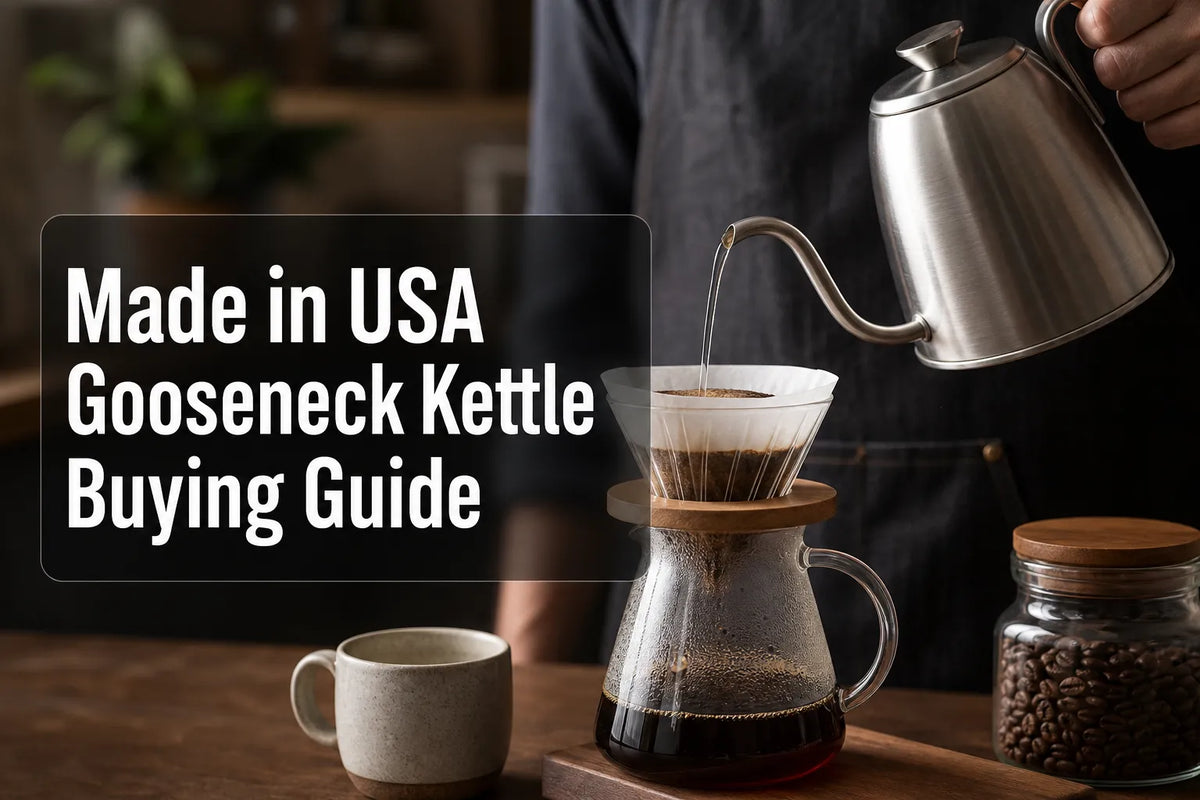
Made in USA Gooseneck Kettle Buying Guide
If you are searching for a made in USA gooseneck kettle, you are probably looking for more than a basic vessel that heats water. You want confidence in where it was made, how it was built, what materials touch your water, and whether it will actually improve your daily coffee or tea ritual.
That is where this category gets tricky. Many kettles are marketed with language that sounds reassuring - “designed in the USA,” “American brand,” “assembled domestically,” or “premium imported steel” - but that is not the same as a truly American-made kettle. For pour-over coffee lovers, tea drinkers, and design-conscious buyers, understanding those distinctions matters just as much as spout control, handle balance, and long-term durability.
This guide brings together what the best competitor articles usually cover, then goes further into the details they often skip: what “made in USA” really means, how to evaluate craftsmanship honestly, what trade-offs exist in the current kettle market, and how to choose a kettle that feels worthy of your countertop and your ritual.
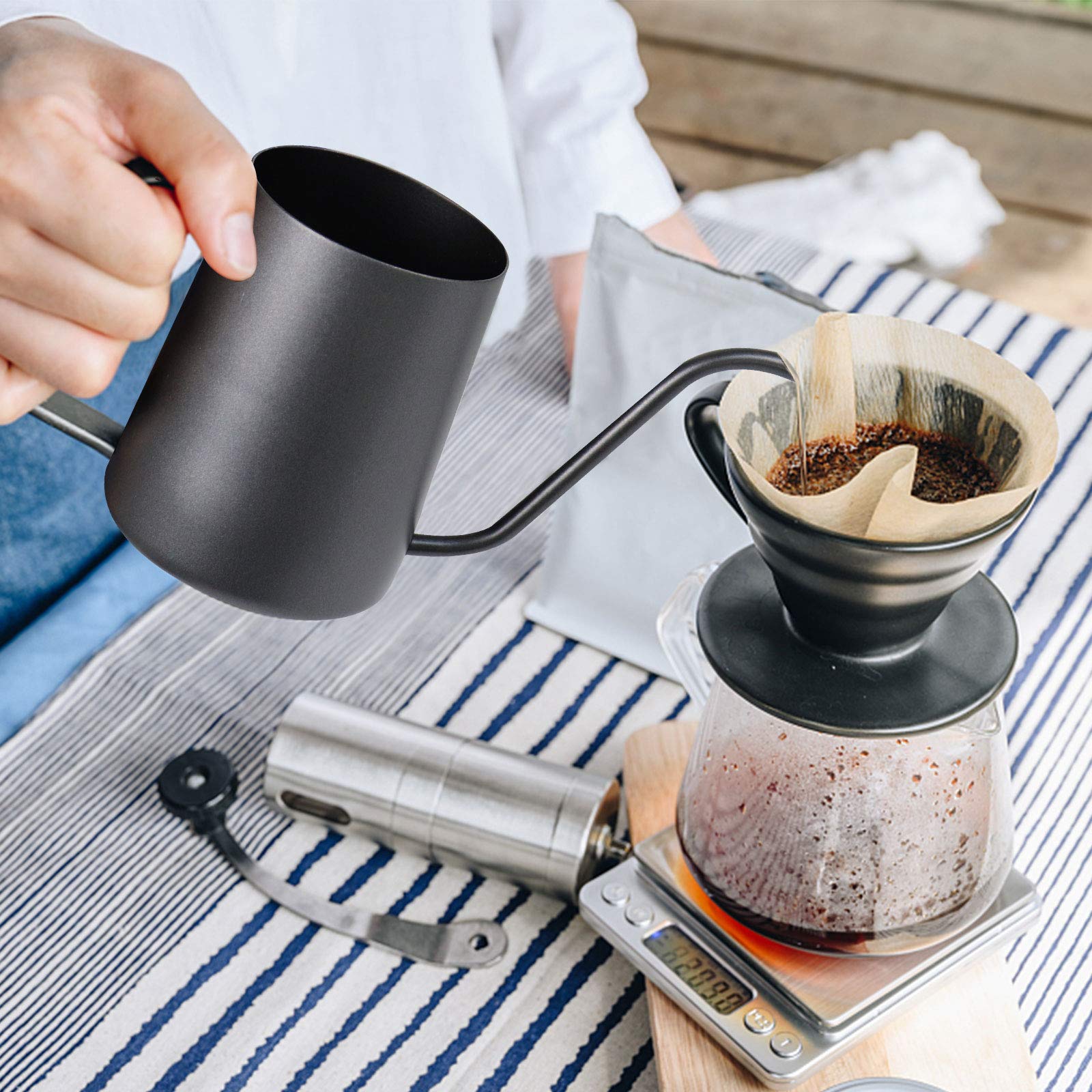
What Buyers Usually Want When They Search for a Made in USA Gooseneck Kettle
In most cases, buyers are trying to solve several questions at once:
Is the kettle actually made in the United States, or just sold by a U.S. company?
Will it pour precisely enough for V60, Chemex, or Kalita brewing?
Is the build quality genuinely premium, or just marketed that way?
Does it work on their stovetop, or do they need an electric base?
Is it beautiful enough to leave on display?
That last point matters more than some buying guides admit. Coffee gear now lives in open kitchens, home brew bars, studio apartments, and creator-friendly setups. A kettle is both a brewing tool and a visible part of your space. The right one should support precision and look intentional doing it.
What Competitor Content Gets Right - and What It Usually Misses
Most competing buying guides correctly emphasize a few points:
a gooseneck spout gives better pour control
stainless steel is generally the preferred material
stovetop compatibility matters
craftsmanship affects longevity and feel
All true. But many articles stop there, which leaves buyers without the context they actually need.
The biggest content gaps
“Made in USA” is rarely defined clearly
This is the most common weakness. Many articles use the phrase without explaining whether it means:
fully manufactured in the United States
assembled in the United States from imported parts
designed by a U.S. company
partially sourced domestically
Those are very different claims.
They overlook internal material transparency
Exterior beauty is easy to market. Interior construction is what matters to serious coffee and tea drinkers. Buyers should know whether water touches stainless steel only, or whether there are hidden plastics, coatings, or mixed materials inside the kettle.
They treat craftsmanship as a vague luxury concept
Real craftsmanship is not just “nice finish” language. It shows up in weld quality, spout consistency, lid fit, handle angle, weight distribution, and how the kettle behaves over hundreds of pours.
They ignore the modern reality of the market
The truth is that fully American-made gooseneck kettles - especially electric ones - are limited. Many excellent kettles are designed by global brands and manufactured overseas. So the best buying decision is often about balancing origin preferences with real-world performance, materials, precision, warranty support, and design quality.
What “Made in USA” Actually Means
If this is your primary buying criterion, do not rely on product titles alone.
The strict interpretation
In its strongest form, “Made in USA” usually implies that all or virtually all of the product was made in the United States. That means the product’s significant parts, processing, and labor are domestic.
Other phrases you may see
Label |
What it often means |
|---|---|
Made in USA |
Strongest claim, though buyers should still verify details |
Assembled in USA |
Final assembly happened domestically, but major parts may be imported |
Designed in USA |
Brand or product design is American, manufacturing may be overseas |
American brand |
Company is U.S.-based, product origin may be international |
Imported |
Manufactured outside the U.S. |
What to ask before buying
If a brand does not clearly explain origin, look for answers to these questions:
Where is the kettle body manufactured?
Where is the spout formed and attached?
Where do the heating components come from, if electric?
Is it assembled in the U.S. or fully manufactured there?
Are the water-contact materials disclosed?
If a company cannot answer these directly, that is a signal in itself.
Why a Gooseneck Kettle Matters for Coffee and Tea
A standard kettle can heat water. A gooseneck kettle helps you use water intentionally.
For pour-over coffee, that means:
even saturation during the bloom
better control over agitation
more consistent extraction
a smoother, steadier stream
less chance of disturbing the coffee bed
For tea, especially delicate green or white teas, a controlled pour and better temperature management can make the process feel calmer and more precise.
A well-designed gooseneck kettle is one of the rare pieces of brewing equipment that affects both flavor and ritual.
Why Material Quality Matters More Than Marketing Language
If you are comparing kettles at a premium price point, material honesty matters.
Stainless steel is still the safest default
A high-quality stainless steel gooseneck kettle is generally preferred because it offers:
durability under repeated heat cycles
resistance to corrosion
easy descaling
flavor neutrality
a premium hand-feel
What buyers should verify
Not all stainless steel kettles are equal. Look for:
stainless steel interior water-contact surfaces
sturdy welds around the spout and body
a lid that fits securely without rattling
a handle that stays comfortable during use
a finish that resists obvious wear
If a kettle is beautifully photographed but vague about internal construction, that is worth questioning.
The Key Features That Matter Most
Pour control
This is the single most important feature for coffee brewing. A good kettle should offer:
a narrow, stable stream
predictable flow at slow and moderate angles
minimal sputtering
a comfortable pour arc from full to nearly empty
Some spouts are extremely restrictive, which is great for meticulous bloom pours but less flexible for general use. Others allow a little more throughput. The best choice depends on your brewing style.
Balance and ergonomics
A kettle can have a beautiful spout and still feel awkward in use. Balance matters because precision pouring is not just about the spout - it is about how naturally the kettle moves in your hand.
Look for:
a handle angle that supports wrist comfort
enough clearance to avoid heat discomfort
stable feel when the kettle is full
confidence during slow circular pours
Lid design
This is underrated. A poor lid can drip, wobble, or feel flimsy. A thoughtful lid should be easy to remove, secure during pouring, and simple to clean around.
Capacity
For most home brewers, 0.8L to 1.0L is the sweet spot. It is enough for one to three cups without making the kettle feel bulky or sluggish.
Stovetop compatibility
If you want a stovetop model, verify compatibility with your cooktop:
Cooktop Type |
What to Check |
|---|---|
Gas |
Most stovetop kettles work well |
Electric coil |
Usually compatible |
Glass/ceramic |
Check base flatness and brand guidance |
Induction |
Only works if the kettle is induction-compatible |
Do not assume all stainless steel kettles work on induction. They do not.
Stovetop vs. Electric: Which Is Better?
For buyers who specifically want domestic craftsmanship, the search often starts with stovetop models. That is because electric kettles involve more complex supply chains, electronics, temperature sensors, and certification requirements.
Stovetop gooseneck kettles
Best for buyers who want:
mechanical simplicity
classic design
broader origin possibilities
fewer electronic failure points
a timeless countertop feel
Pros
simple to maintain
often lighter and visually cleaner
can last for years with good care
well-suited to coffee and tea
Cons
no built-in temperature precision
slower workflow
easier to overshoot target brewing temperatures
less convenient for repeatable daily brewing
Electric gooseneck kettles
Best for buyers who want:
temperature control
faster heating
keep-warm convenience
repeatable results
a more refined specialty coffee workflow
Pros
more precise brewing
easier experimentation across roast styles and teas
smoother daily ritual
ideal for frequent pour-over brewing
Cons
more electronics
more complex sourcing and manufacturing
fully American-made options are harder to find
usually higher price
For many coffee enthusiasts, the best real-world choice is an electric gooseneck kettle from a trusted premium brand, even if it is not fully manufactured in the U.S.
The Reality of the American-Made Electric Kettle Market
This is where honesty matters.
There are far fewer truly American-made electric gooseneck kettles than many shoppers expect. Precision electric kettles require thermostats, heating elements, circuit boards, displays, safety systems, and production efficiencies that are often tied to international manufacturing.
That means buyers usually have three realistic paths:
Prioritize strict domestic origin, usually with stovetop models and narrower selection.
Choose assembled or partially domestic products, after verifying what that actually means.
Prioritize performance, design, and transparency, even if manufacturing is global.
For many design-focused home brewers, option three is the most practical. It allows you to choose a kettle that actually elevates your daily brewing instead of chasing a label that may be inconsistently defined.
Why Precision Still Wins the Buying Decision
Even if domestic manufacturing is important to you, your kettle still has to perform. A beautiful kettle with vague origin claims and mediocre pour behavior is not a great buy.
"Brewed coffee is approximately 98.5% water by weight, with the remaining 1.5% consisting of dissolved coffee solubles - the compounds that create flavor." - BrewFYI
That is why water control matters so much. The kettle is not a side accessory. It directly shapes extraction and cup quality.
For electric kettles, temperature matters too - especially with lighter roasts and more delicate teas. A kettle that lets you pour smoothly and hit target temperatures consistently will almost always create a better ownership experience than one chosen on country-of-origin language alone.
What Craftsmanship Looks Like in Real Use
Craftsmanship should be visible in the details you feel every day.
Signs of a well-made kettle
smooth, coherent body construction
a spout that pours cleanly without stutter
a handle with confident attachment and comfortable geometry
a lid that fits with intention
quality finish that does not feel thin or cheap
overall balance that makes controlled pouring feel easy
Signs to be cautious about
vague wording about materials
decorative finishes hiding weak construction
unstable lids
hot or cramped handles
drippy spouts
no meaningful warranty or return policy
This is also where brand philosophy matters. Companies that care about the full brewing ritual usually design better products than those chasing commodity volume alone.
A Better Framework for Evaluating Value
Price is only one part of value. A kettle earns its place when it improves your mornings repeatedly.
Use this framework:
Value Factor |
Why It Matters |
|---|---|
Pour precision |
Directly affects coffee extraction |
Material quality |
Impacts safety, durability, and taste neutrality |
Ergonomics |
Determines how enjoyable daily use feels |
Temperature control |
Critical for enthusiasts and tea drinkers |
Aesthetic longevity |
Keeps the kettle feeling premium over time |
Warranty support |
Reduces purchase risk |
Brand transparency |
Builds trust around sourcing and construction |
A cheaper kettle that frustrates you every morning is not actually the better value.
For Design-Conscious Buyers, Aesthetics Are Not Superficial
This is one area where the best buying guides still underplay reality. If a kettle sits on your counter every day, design is part of the ownership experience.
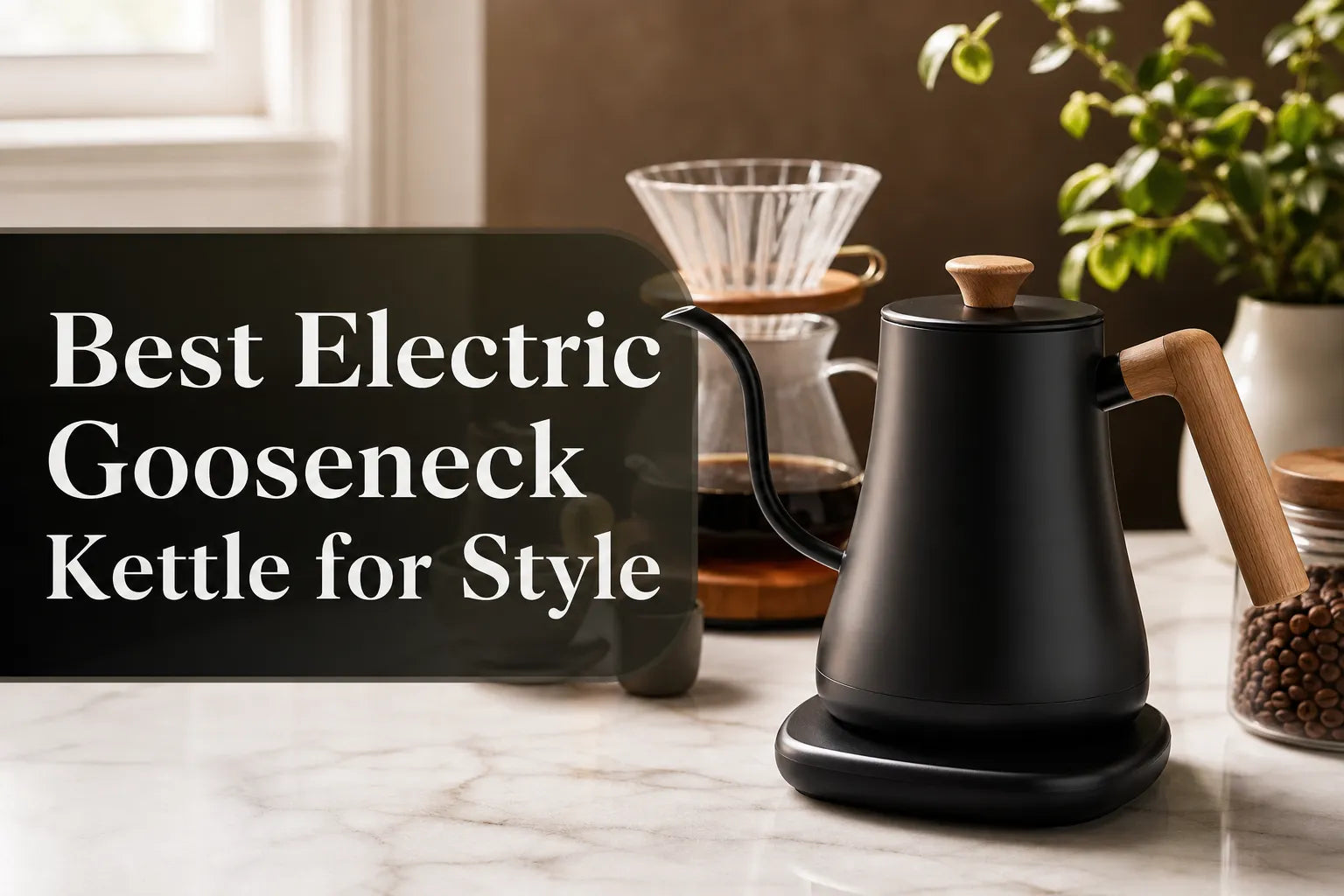
A premium kettle should feel at home in:
a minimalist kitchen
a warm wood-and-ceramic coffee corner
a modern apartment setup
a content-creator brew bar
a thoughtful gift unboxing
This is exactly why Cocinare resonates with modern home brewers. The brand approaches the kettle not just as equipment, but as part of a beautiful, intentional routine. That means barista-minded control, durable construction, and elevated visual identity can coexist.
Whether your taste leans refined, expressive, or artistic, Cocinare’s collections make it easier to choose a kettle that fits both your brewing method and your lifestyle.
Where Cocinare Fits Into the Conversation
If your initial search begins with a made in USA gooseneck kettle, it is worth stepping back and asking the bigger question: what will actually make you happiest over the next 500 brews?
Cocinare is especially compelling for buyers who care about:
precision pouring for pour-over coffee
premium, durable build quality
stylish and modern aesthetics
multiple collections for different tastes and interiors
artistic and limited-edition collaborations
a more elevated home brewing ritual
That blend is difficult to find. Many kettles are technical but visually forgettable. Others are attractive but underperform in real use. Cocinare sits in the middle ground that discerning buyers actually want: functional enough for serious coffee, beautiful enough for everyday display.
The value proposition is strengthened further by practical peace of mind:
free shipping in the U.S.
up to 18-month hassle-free warranty
30-day money-back guarantee
For premium kitchen gear, that matters.
How to Choose the Right Kettle for Your Priorities
If strict domestic manufacturing is non-negotiable
Focus on verifying exact origin claims, and expect a narrower field - especially for electric models. Be prepared to compromise on features, finish variety, or temperature control.
If you want the best pour-over experience
Choose a kettle based on stream stability, balance, temperature precision, and comfort. In practice, a premium electric gooseneck kettle will often be the strongest choice.
If you care about coffee and design equally
Choose a kettle that performs with intention and looks exceptional on the counter. This is where a design-forward brand like Cocinare becomes an easy shortlist.
If you are buying a gift
Prioritize presentation, user-friendliness, and visible quality. A kettle should feel special before the first brew even happens.
If you are influenced by coffee creators and lifestyle content
Look for a kettle that is visually distinct but still grounded in real brewing function. A photogenic product that pours poorly loses its charm fast.
Common Mistakes to Avoid
Assuming “American brand” means American-made
It does not. Always verify the actual manufacturing claim.
Overvaluing origin while ignoring performance
A kettle should serve your brewing. Precision and usability still matter most in day-to-day life.
Forgetting stovetop compatibility
Always confirm induction compatibility, base construction, and care guidance.
Ignoring warranty support
A premium kettle should come with strong customer support and a fair return window.
Choosing purely on appearance
Design matters, but only when paired with real craftsmanship and a controlled pour.
Final Verdict
A great gooseneck kettle should do more than check a manufacturing-origin box. It should help you brew with confidence, pour with precision, and enjoy the quiet ritual that makes home coffee feel meaningful.
If you are specifically looking for a made in USA gooseneck kettle, define the term carefully and verify exactly what the brand means. In today’s market, truly American-made options - especially electric ones - can be limited, and that makes honest evaluation even more important.
The smartest buyers look at the full picture:
pour control
material quality
stovetop or electric workflow
craftsmanship
aesthetic fit
transparency
long-term value
And if your goal is to elevate your brewing ritual with a kettle that feels modern, premium, and beautifully considered, Cocinare is a standout alternative to put at the top of your list. With precision-focused pouring, design-forward collections, artistic collaborations, durable construction, free U.S. shipping, up to 18 months of warranty coverage, and a 30-day money-back guarantee, it brings together the things that matter most: performance, beauty, and confidence.
FAQ
Who makes the best gooseneck kettle?
The best gooseneck kettle depends on your priorities, but for most home brewers, the strongest option combines precise pouring, durable materials, temperature control, and thoughtful design. Brands like Cocinare stand out by blending barista-style performance with modern aesthetics and customer-friendly support.
What is the best American-made tea kettle?
The best American-made tea kettle is the one with clearly verified domestic manufacturing, solid material quality, and dependable everyday usability. For strict origin-focused shoppers, stovetop options are usually easier to find than electric kettles, though selection is more limited.
What kettle brands are not made in China?
Some kettle brands manufacture in countries other than China, but the only reliable way to know is to check each product’s stated origin directly. Brand nationality alone is not enough, since a U.S. or European brand may still manufacture globally.
Are any electric kettles made in the USA?
They exist, but they are far less common than many buyers expect. A truly made in USA electric gooseneck kettle is harder to find because electric kettles rely on complex components and global supply chains.
What are some electric kettles that are not made in China?
There are electric kettles made or assembled in other countries, but availability changes often and product lines vary by market. The best approach is to verify the exact model’s manufacturing origin, materials, and warranty before buying.
Are there kettles in the USA?
Yes - both stovetop and electric kettles are widely sold in the United States, including premium gooseneck models for coffee and tea. The key difference is whether they are sold in the USA, designed in the USA, assembled in the USA, or fully made in the USA.
Share:
Pour Over Coffee Ceramic: Best Brewers in 2026
Coffee Temperature Kettle: What Matters Most