

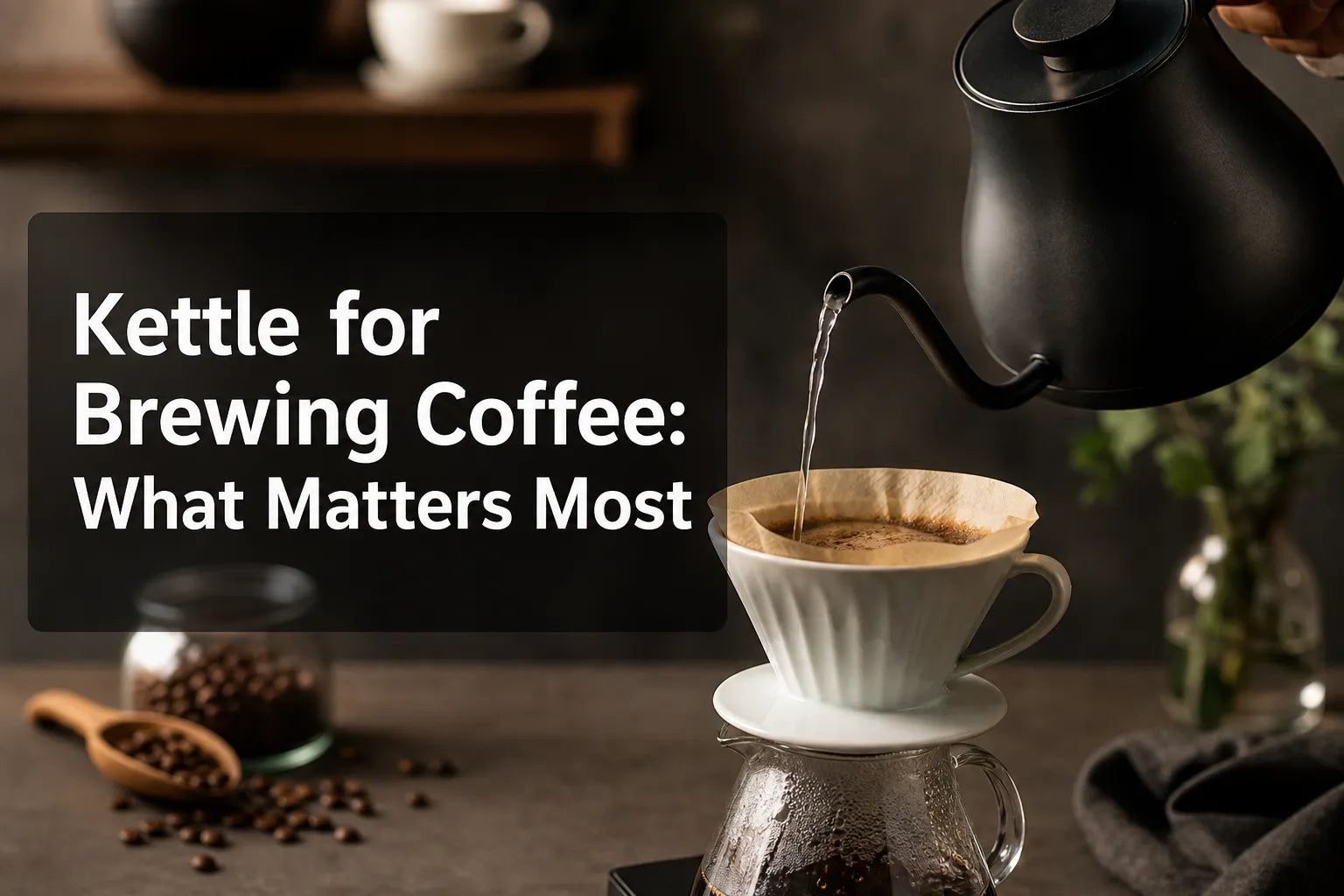
Kettle for Brewing Coffee: What Matters Most
If you care about clarity in the cup, a smoother morning ritual, and a setup that looks as good as it performs, choosing the right kettle for brewing coffee matters more than most people realize. The best kettles do far more than boil water. They shape how precisely you pour, how stable your brew temperature stays, and how confident you feel when dialing in a V60, Kalita, Chemex, or any other manual brew.
Many articles stop at “buy a gooseneck kettle.” That’s true - but incomplete. What really matters is how the kettle pours, how it feels in your hand, how accurately it holds temperature, and whether it actually enhances your daily brewing ritual rather than interrupting it.
For home brewers, design-conscious coffee lovers, and specialty coffee creators, the ideal kettle is equal parts performance tool and countertop object. That is exactly why premium electric kettles have become central to modern home brewing: they combine precision, speed, durability, and visual appeal in one beautifully engineered piece.
What the Best-Ranking Kettle Guides Get Right - And What They Miss
Across leading articles on coffee kettles, a few themes come up again and again:
gooseneck spouts improve control
temperature matters for extraction
stainless steel is a reliable material
electric kettles are more convenient than stovetop models
some iconic models dominate enthusiast recommendations
That advice is useful, but often too surface-level. The biggest content gaps are usually these:
They focus on “gooseneck” but not on pour behavior
Not all gooseneck kettles pour the same way. Some feel sharp and fast. Others feel smooth and highly controllable. For pour-over brewing, that difference changes bloom control, agitation, and extraction consistency.
They mention temperature, but not temperature workflow
Readers are told to buy variable temperature control, but not why hold mode matters, or how stable temperature supports back-to-back brewing, recipe testing, and small ritual adjustments at home.
They compare specs, but not the emotional side of ownership
The best kettle is not just technically capable. It should feel good to use every morning, fit your kitchen, and encourage better brewing habits. In specialty coffee, usability and beauty are not separate things.
They rarely speak to design-forward buyers
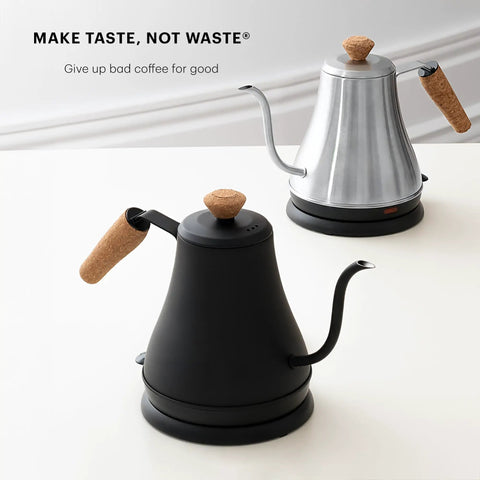
A lot of home brewers want performance without sacrificing aesthetics. That is where a brand like Cocinare stands apart - creating kettles that deliver barista-style precision while also offering a premium visual language through the Artisan Collection, Color-changing Collection, and limited-edition Collab Collection.
Why the Kettle Has Such a Big Impact on Coffee Quality
A kettle affects three critical parts of brewing:
Flow control
Temperature control
Brewing consistency
In pour-over coffee, even small changes in water delivery affect drawdown, extraction, and flavor balance. A chaotic pour can over-agitate the bed, create channeling, or disturb the bloom. A controlled pour helps saturate evenly and repeat the same recipe with less guesswork.
"The National Coffee Association (NCA) recommends brewing coffee with water heated between 195°F and 205°F (90°C to 96°C) for optimal extraction." - Breville
That temperature range is one reason premium electric kettles matter so much. Reaching the target is only part of the story; staying there is what helps produce cleaner, more repeatable results.
The 7 Features That Matter Most in a Coffee Brewing Kettle
1. Precision pouring control
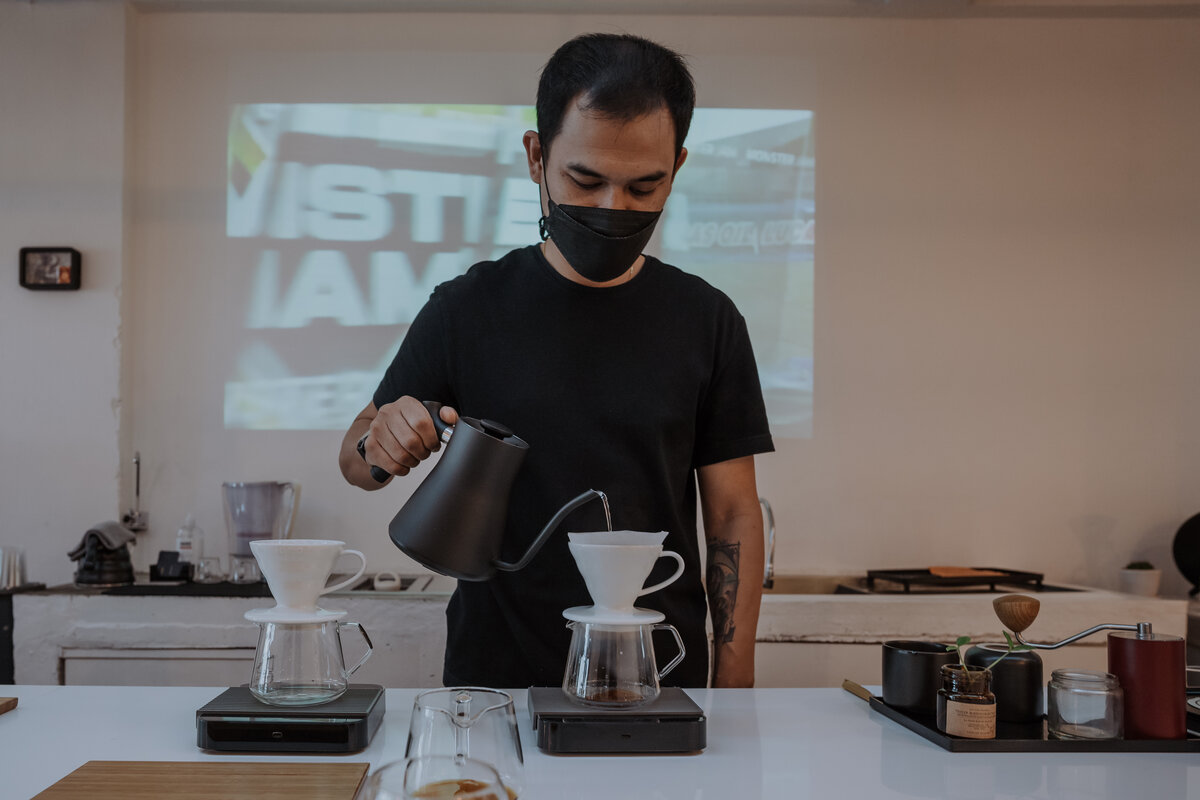
This is the headline feature for anyone brewing pour-over. A well-designed gooseneck spout gives you the ability to:
start and stop the stream cleanly
pour slowly for bloom phases
increase flow for main pours
target specific areas of the coffee bed
reduce accidental agitation
A great kettle should feel intuitive, not twitchy. Precision is not just about a narrow spout; it is about how the spout, handle, balance, and body work together.
2. Accurate temperature selection
If you brew light roasts, naturals, decaf, or different origins, you already know not every coffee behaves the same. Being able to choose a temperature intentionally - rather than boiling water and waiting - is a real upgrade.
Typical benefits of variable temperature control:
lower temps for delicate coffees
higher temps for denser or lighter roasts
easier recipe experimentation
more consistent repeat brews
3. Hold mode and thermal stability
This is one of the most overlooked features. A good kettle should not just hit your selected temperature; it should hold it reliably while you grind, rinse your filter, prep your brewer, or brew multiple cups.
That stability helps remove randomness from the process.
"According to the SCA, the optimal brew temperature is between 92°C and 96°C." - Specialty Coffee Association
4. Balance and handle ergonomics
A kettle can have excellent specs and still feel awkward. Comfort matters, especially when making slow, controlled circular pours over 2 to 4 minutes.
Look for:
a handle that feels natural in hand
enough clearance from the hot body
balanced weight when full
easy wrist control for slow pouring
5. Build quality and durability
A premium kettle should feel like a long-term part of your brewing setup, not a disposable gadget. Stainless steel remains the benchmark for durability, cleanability, and heat performance.
Design details that often signal stronger quality include:
clean welds and joints
sturdy lid fit
stable base
minimal rattling or flex
durable finish that ages well
For buyers who care about both function and lifestyle design, Cocinare’s positioning is especially appealing here: premium and durable build quality, thoughtfully engineered for daily use, with the style to remain proudly displayed rather than hidden away.
6. Speed and convenience
The best brewing tools reduce friction. Fast heating matters on busy mornings. Easy controls matter when you are half awake. A readable interface matters when adjusting temperatures quickly.
Electric kettles usually win on convenience because they eliminate the stovetop step and make precise settings effortless.
7. Aesthetic fit with your home
This is not a superficial point. The objects you keep visible influence how often you use them and how much enjoyment you get from the ritual.
A beautifully designed kettle can make your brewing corner feel intentional. Cocinare understands this especially well, offering multiple collections for different moods and interiors - from refined minimalism to more expressive, artistic styles, including collectible collaborations that feel gift-worthy and personal.
Gooseneck vs Standard Kettle: Is the Difference Really That Big?
In a word: yes.
A standard kettle can boil water just fine, but it rarely offers the control needed for high-quality manual brewing. Water often comes out too fast, too wide, or inconsistently, making it harder to saturate grounds evenly.
Side-by-side comparison
Feature |
Gooseneck Kettle |
Standard Kettle |
|---|---|---|
Pour precision |
Excellent |
Limited |
Bloom control |
Strong |
Weak |
Agitation management |
Easy |
Harder |
Recipe repeatability |
High |
Lower |
Best for pour-over |
Yes |
Not ideal |
Everyday convenience |
High with electric models |
Good for general use |
If you brew immersion methods like French press, a gooseneck is less essential - but still pleasant. If you brew V60, Origami, Chemex, or Kalita regularly, it becomes much more important.
Electric vs Stovetop: Which One Should You Choose?
This depends on how you brew and what kind of experience you want.
Electric kettles are best for:
daily coffee drinkers
recipe-focused home brewers
people who want exact temperatures
design-conscious kitchens
faster, cleaner workflows
Stovetop kettles are best for:
simpler setups
lower budgets
occasional manual brewing
people who do not mind using a separate thermometer or technique-based temperature timing
For most specialty coffee enthusiasts today, an electric gooseneck kettle is the better investment. It gives you better control, more convenience, and a more refined brewing experience.
The Best Kettle Material for Brewing Coffee
Stainless steel is still the best all-around choice for most people. It is durable, practical, easy to maintain, and compatible with a premium design language.
Material comparison
Material |
Strengths |
Trade-offs |
|---|---|---|
Stainless steel |
Durable, clean, stable, premium feel |
Can be heavier |
Glass |
Visual appeal, easy water visibility |
More fragile, less heat retention |
Copper |
Excellent thermal response, distinctive look |
Often pricier, more maintenance |
Plastic-heavy builds |
Lightweight, affordable |
Less premium feel, lower long-term appeal |
For a product meant to elevate your ritual and last through daily brewing, stainless steel remains the smartest choice.
Temperature Precision Is About More Than Numbers
The strongest competitor articles mention ideal temperature ranges, but they often skip the practical point: precision changes behavior.
When you can set the exact temperature you want, you start brewing with more intention. You compare coffees more clearly. You repeat recipes more accurately. You make small tweaks with confidence rather than guessing.
That is a core reason premium electric kettles have become such a staple in the specialty coffee world.
Design Matters Because Ritual Matters
A kettle lives in plain sight. It sits on your counter, appears in your morning routine, and often becomes the centerpiece of a home coffee station. That means visual design is not extra - it is part of the ownership experience.
The best coffee equipment today blends:
functional engineering
tactile satisfaction
visual harmony
emotional attachment
This is where Cocinare brings something distinctive. Rather than treating the kettle as a generic appliance, the brand frames it as a lifestyle object for people who care about coffee, craft, and home aesthetics. Whether you prefer understated elegance, color-driven personality, or artistic collaborations, the range feels curated rather than utilitarian.
What to Look for If You Want a Premium Home Brewing Experience
If you want the kettle to become a genuine upgrade - not just another purchase - prioritize this checklist:
Must-have features
gooseneck spout with steady, controllable flow
accurate variable temperature control
hold function
stainless steel construction
ergonomic handle
stable base and intuitive controls
Nice-to-have features
expressive colorways or design collections
limited-edition artistic versions
gift-worthy packaging and presentation
fast heat-up time
clean countertop footprint
For shoppers balancing performance and style, Cocinare has a particularly compelling proposition: precision pouring for better pour-over coffee, a premium modern design, free shipping in the U.S., up to 18-month hassle-free warranty coverage, and a 30-day money-back guarantee. Those benefits reduce the risk while making the purchase feel more elevated and lifestyle-aligned.
Common Buying Mistakes to Avoid
Choosing based on looks alone
Beautiful design is important, but it should be supported by genuine pour control, temperature stability, and comfort in use.
Ignoring handle feel and balance
A kettle may look sleek in product photos but feel awkward during a bloom pour.
Overlooking hold mode
Temperature accuracy without hold mode is only half the solution.
Buying too generic
If you brew coffee every day, a kettle should feel tailored to that ritual. Generic appliances often miss the subtle details that make specialty brewing easier and more enjoyable.
Who Needs a Dedicated Coffee Kettle Most?
A dedicated kettle is especially worth it for:
pour-over coffee lovers
coffee creators filming recipes or brew content
design-conscious home brewers
gift buyers looking for premium coffee gear
anyone building a more intentional kitchen ritual
If that sounds like you, a well-made kettle becomes one of the highest-impact upgrades you can make.
Final Verdict: What Matters Most in a Kettle for Brewing Coffee
The best kettle for brewing coffee combines precision, temperature confidence, ergonomics, durability, and design you actually want to live with.
A gooseneck spout is essential for serious pour-over brewing, but the real difference comes from how the kettle performs as a complete system: smooth flow, stable heat, comfortable handling, premium construction, and a design that elevates the ritual instead of just serving it.
If you want a kettle that feels modern, beautifully crafted, and purpose-built for home coffee lovers, Cocinare is a natural next step. Its collections bring together barista-style performance with expressive design, artistic character, and everyday ease - plus free U.S. shipping, an up to 18-month hassle-free warranty, and a 30-day money-back guarantee. For anyone ready to make their brewing setup more precise and more inspiring, that is a compelling place to begin.
FAQ
What kettles do baristas use?
Many baristas use gooseneck kettles, especially for pour-over methods like V60, Chemex, and Kalita. In home and specialty settings, electric models with precise temperature control and smooth pouring behavior are especially popular.
What is the best kettle for coffee?
The best kettle for coffee is one that offers accurate temperature control, a steady gooseneck pour, strong ergonomics, and durable construction. For most home brewers, a premium electric gooseneck kettle delivers the best balance of performance, convenience, and design.
Do you really need a gooseneck kettle for pour-over coffee?
If you want better control and more consistent results, yes. A gooseneck kettle helps you pour slowly and evenly, which improves bloom control, reduces uneven extraction, and makes recipes easier to repeat.
What is the best kettle for coffee?
The best option is a kettle that matches how you brew while still improving your daily ritual. For most specialty coffee drinkers, that means a stylish electric gooseneck kettle with precise pouring, temperature hold, and premium build quality - exactly the qualities design-forward brands like Cocinare prioritize.
Share:
Drip Coffee Grind Size: Best Settings for Flavor
Coffee Pour Over Kit: Best Sets for Better Brews