

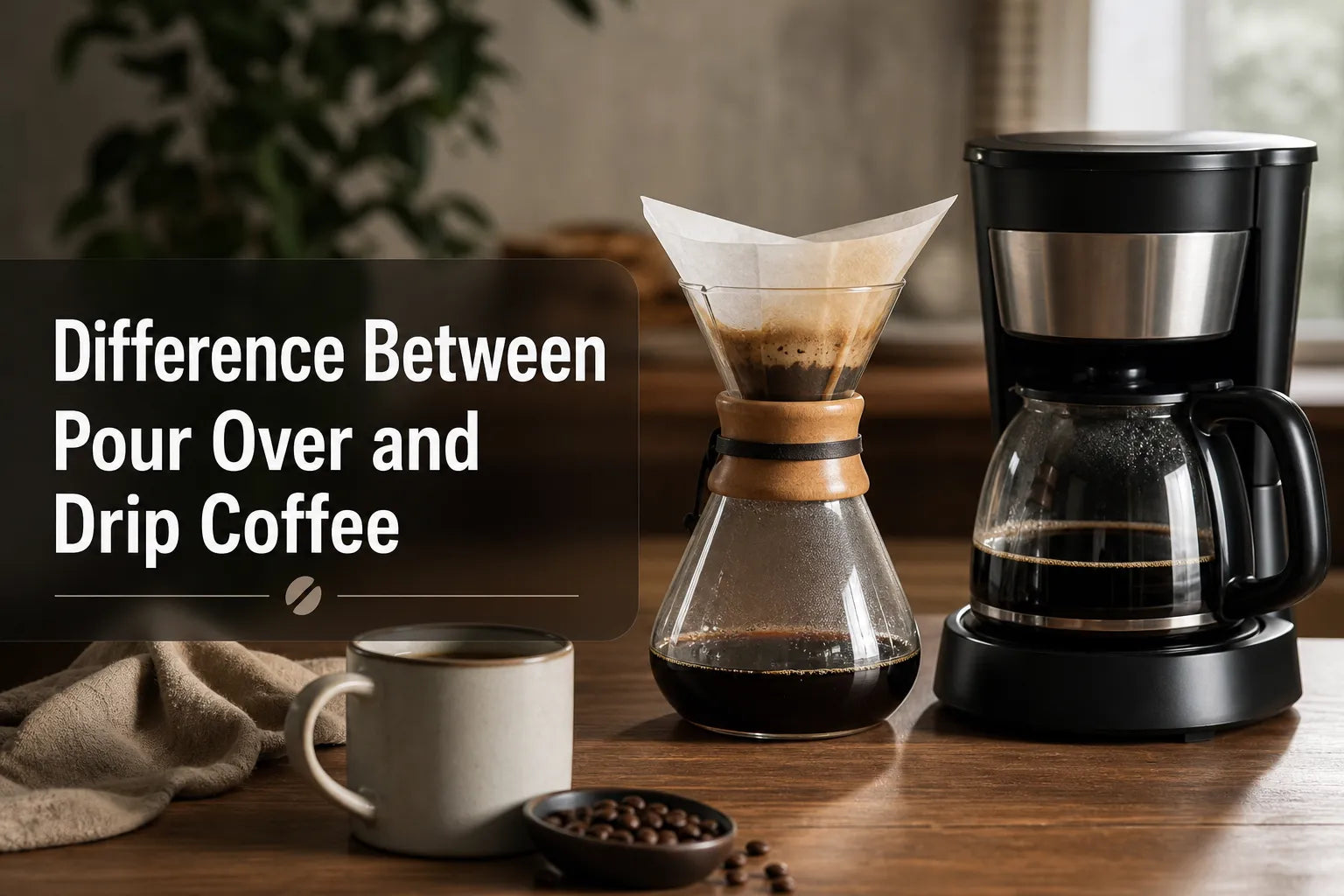
Difference Between Pour Over and Drip Coffee
If you’ve ever stood in your kitchen wondering whether to reach for a dripper or simply press the brew button, you’re asking the right question. The difference between pour over and drip coffee isn’t just about manual versus automatic brewing - it affects flavor clarity, body, convenience, consistency, equipment, and the overall ritual of making coffee at home.
For some people, coffee is a fast daily essential. For others, it’s a creative ritual shaped by precision, craft, and beautiful tools. This guide breaks down both methods clearly, so you can choose the one that fits your taste, schedule, and style.
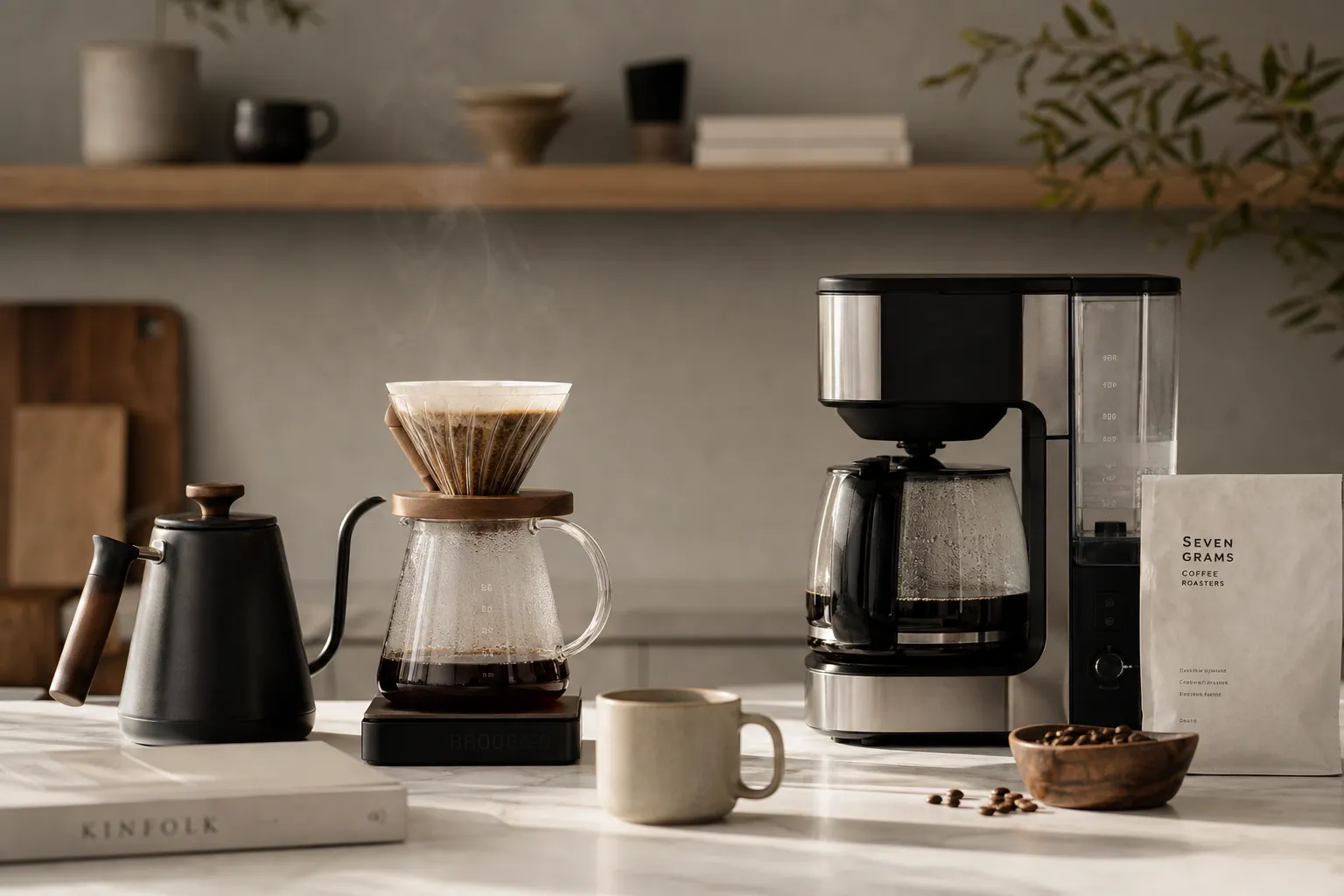
"66% of American adults drink coffee each day, with 82% of these individuals preparing their coffee at home." - National Coffee Association
That says a lot about the modern coffee drinker: people want café-worthy results without leaving the house. And that’s exactly where the pour over vs. drip conversation matters.
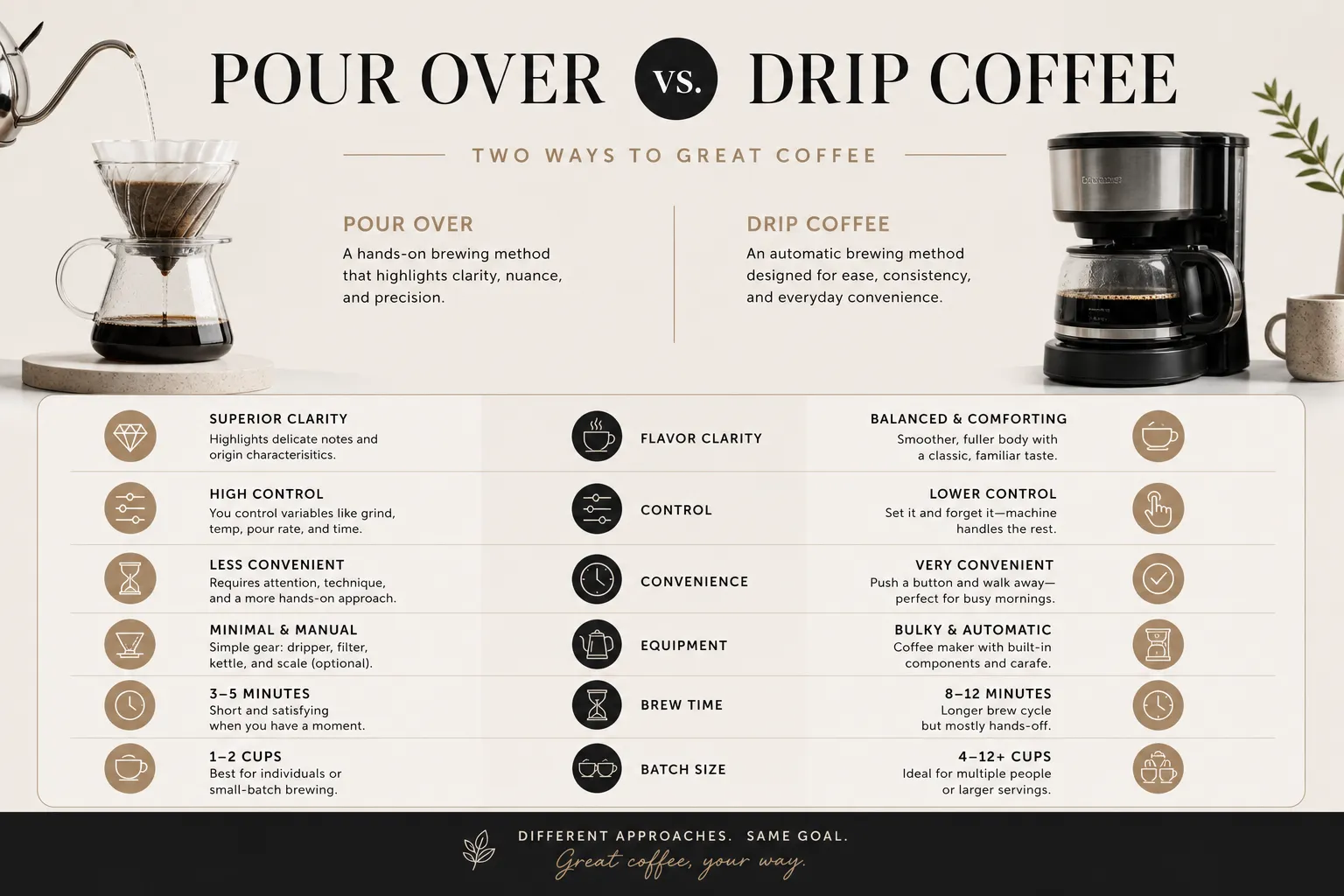
Pour Over vs. Drip Coffee at a Glance
Here’s the quick answer:
Pour over coffee is a manual brewing method where you control water flow, timing, and saturation.
Drip coffee is usually made by an automatic machine that heats water and distributes it over coffee grounds for you.
Both methods brew coffee by passing hot water through grounds and a filter. The difference lies in how much control you have, how the extraction happens, and what kind of cup you want.
Quick Comparison Table
Feature |
Pour Over |
Drip Coffee |
|---|---|---|
Brewing style |
Manual |
Automatic |
Flavor profile |
Cleaner, more nuanced, more expressive |
Balanced, dependable, often fuller and broader |
Control |
High |
Low to moderate |
Batch size |
Best for 1–2 cups |
Best for multiple cups |
Effort required |
More hands-on |
Minimal |
Consistency |
Depends on technique |
Depends on machine quality |
Equipment |
Dripper, filter, kettle, grinder, mug/carafe |
Coffee maker, filter, grinder optional |
Best for |
Coffee enthusiasts, ritual lovers, specialty beans |
Busy mornings, families, offices, convenience |
What Is Pour Over Coffee?
Pour over is a manual filter coffee method where hot water is slowly poured over coffee grounds in a cone-shaped dripper. The brewed coffee passes through the filter and collects in a mug or carafe below.
What makes pour over special is control. You decide:
water temperature
pouring speed
bloom time
total brew time
agitation
dose and ratio
This level of precision can unlock more delicate flavor notes in the coffee, especially when using fresh beans and a consistent grinder.
Why Coffee Lovers Choose Pour Over
Pour over is often favored by home brewers who want to taste more of the bean’s character. Floral Ethiopians, juicy Kenyans, or elegant washed Colombians tend to shine when brewed this way.
Common reasons people prefer pour over:
More flavor clarity
Better control over extraction
A slower, more intentional ritual
Easier experimentation
Beautiful brewing tools that elevate the countertop
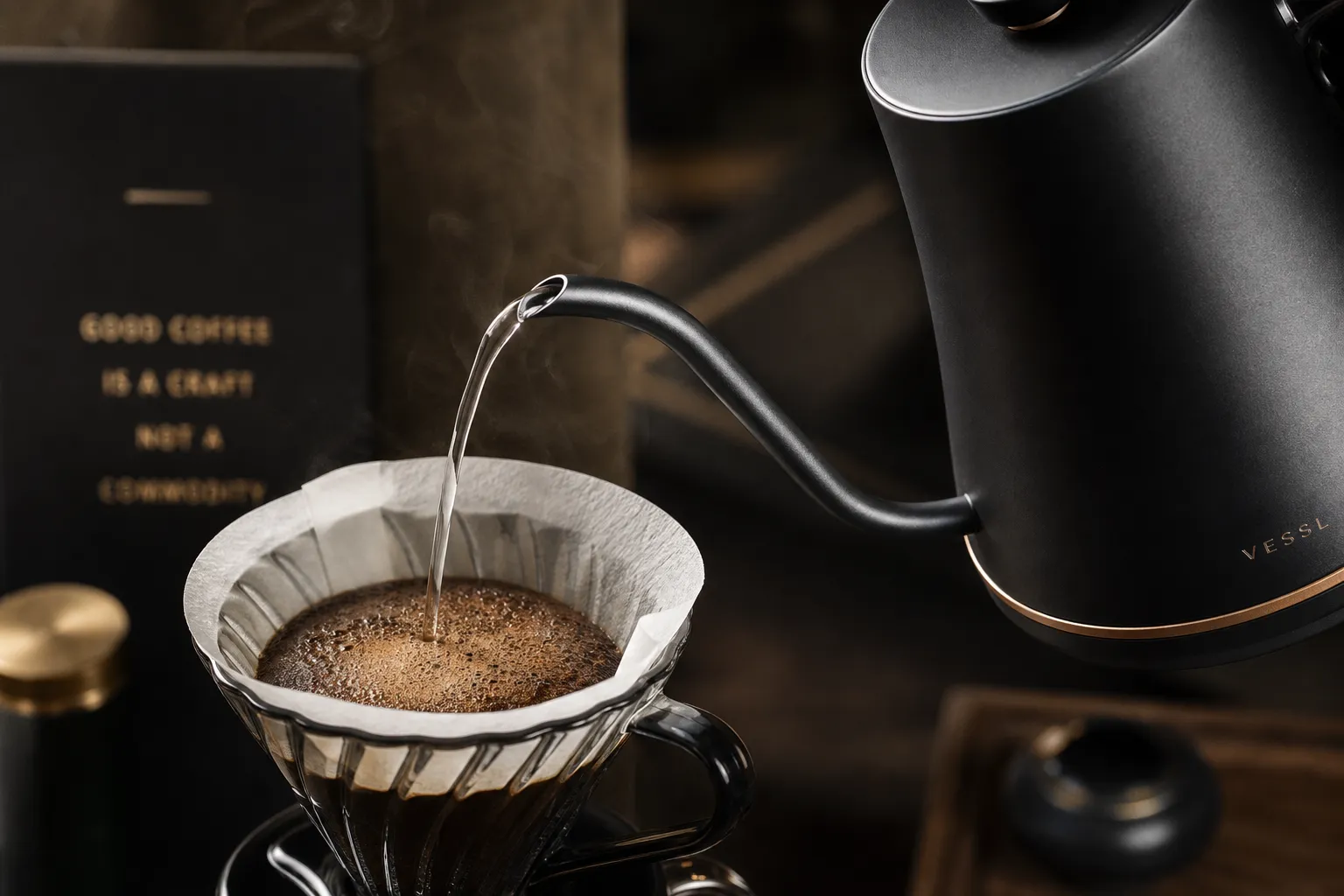
For this kind of brewing, the kettle matters more than most people realize. A precision gooseneck kettle gives you the ability to pour exactly where and how you want, which improves even saturation and helps you avoid channeling or uneven extraction. That’s why design-forward home brewers often invest in a premium kettle first.
At Cocinare, this is where performance meets ritual: precision pouring for better pour-over coffee, paired with durable craftsmanship and a refined visual language that feels at home in a modern kitchen.
What Is Drip Coffee?
Drip coffee is typically brewed by an automatic machine. You add water to the reservoir, place coffee grounds in a filter basket, and let the machine handle the rest.
It’s one of the most common home brewing methods because it’s:
easy
fast
repeatable
ideal for larger batches
Good drip coffee makers can produce excellent coffee, especially when they maintain stable brewing temperatures and distribute water evenly across the grounds.
Why People Love Drip Coffee
Drip coffee wins on simplicity and practicality. If you want a reliable morning cup without babysitting the brew, it’s hard to beat.
Drip coffee is ideal when you want:
coffee ready for multiple people
less effort on busy mornings
consistent results day after day
programmable brewing
a warming function for longer sipping windows
The Real Difference Between Pour Over and Drip Coffee
The competitor articles mostly agree on the basics: pour over offers more control, drip offers more convenience. But the real choice goes deeper than that. Let’s break it down by the factors that actually change your cup.
1. Flavor: Clarity vs. Comfort
One of the biggest differences between pour over and drip coffee is flavor presentation.
Pour Over Flavor
Pour over coffee tends to taste:
cleaner
brighter
more transparent
more expressive of origin
Because you can control flow rate and saturation, it’s easier to highlight acidity, sweetness, and subtle aromatics. This makes pour over especially appealing for specialty coffee drinkers.
Drip Coffee Flavor
Drip coffee often tastes:
rounder
more familiar
slightly heavier
less individually expressive, depending on the machine
A high-quality drip brewer can absolutely make delicious coffee. But budget machines often struggle with water temperature, saturation, or evenness, which can flatten flavor.
Which Tastes Better?
Not automatically one or the other.
If you value clarity and nuance, pour over often wins.
If you value comfort, ease, and consistency, drip may feel better day to day.
2. Control: Who’s in Charge of the Brew?
Control is where pour over clearly stands apart.
With Pour Over, You Control
the kettle flow
the bloom
the pulse pours
the brew time
the temperature
the total agitation
This means you can adjust the cup based on the coffee itself. If a coffee tastes too sharp, you can slow the flow or change the grind. If it tastes hollow, you can push extraction slightly further.
With Drip, the Machine Controls
how fast the water moves
how hot it gets
how evenly it saturates
how long the contact time lasts
That can be a limitation, but also a relief. You don’t have to think about every variable every morning.
3. Convenience: Speed, Effort, and Routine
This is where drip coffee usually wins.
Drip Is Better for Convenience
You can often:
load it in under a minute
program it in advance
brew several cups at once
walk away while it works
For households, shared kitchens, or weekday routines, this convenience matters.
Pour Over Is Better for Ritual
Pour over demands your presence. You’ll need to:
heat water
rinse the filter
bloom the coffee
pour in stages
monitor timing
That may sound like extra work, but to many people it’s the whole point. It transforms coffee from a task into a creative daily pause.
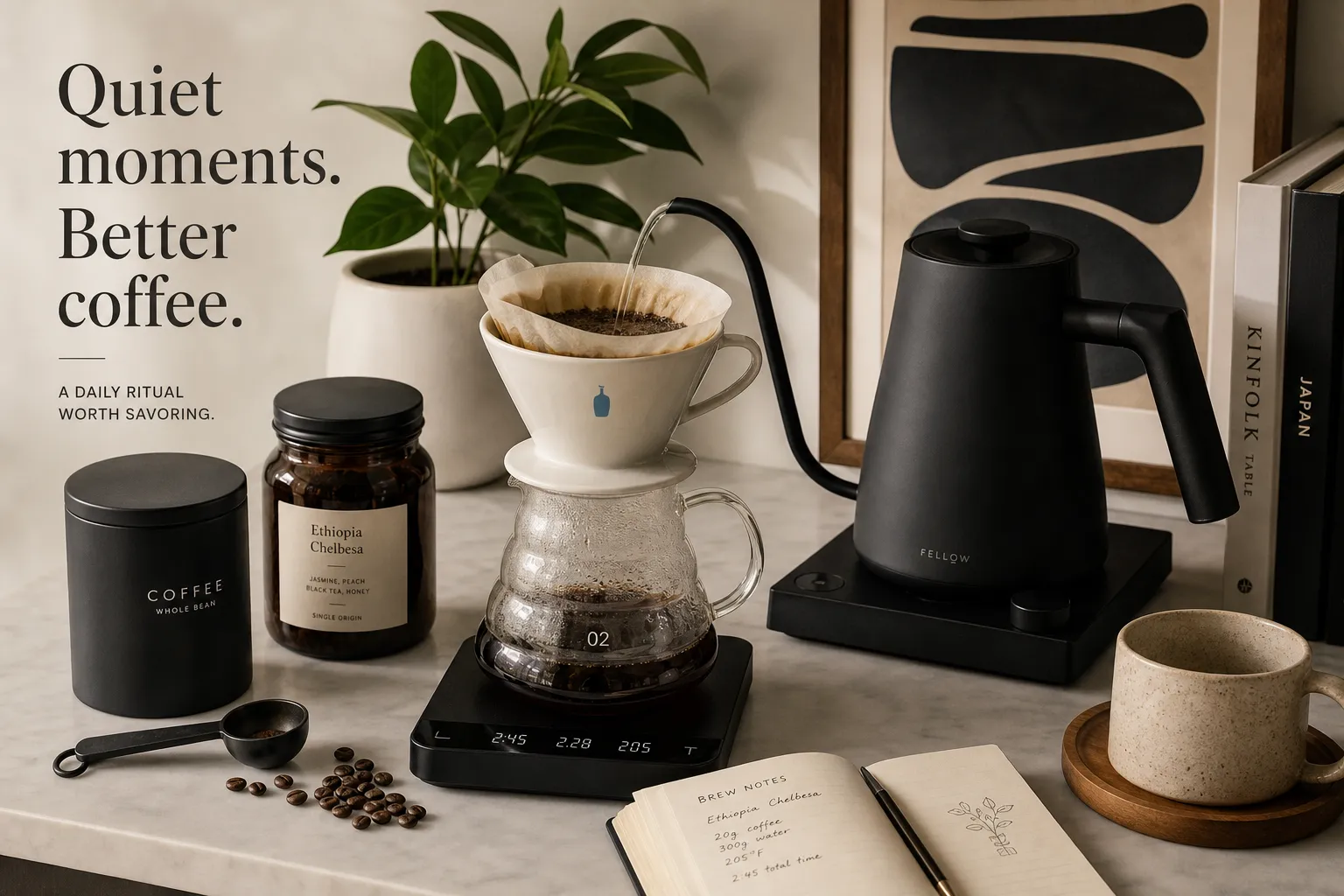
For design-conscious coffee lovers, the ritual matters visually too. Beautiful equipment changes how a space feels. Cocinare’s collections lean into that idea - offering modern silhouettes, expressive finishes, and even artistic limited-edition collaborations for people who want their brewing gear to feel as intentional as the coffee itself.
4. Consistency: Human Skill vs. Machine Stability
A common misconception is that pour over always makes better coffee. In reality, it makes more variable coffee.
Pour Over Consistency
Your result depends on:
your grinder quality
your pouring technique
your timing
your water temperature
your repeatability
A skilled brewer can make an extraordinary cup. A rushed or inconsistent brewer can make a disappointing one.
Drip Consistency
A good drip machine can produce highly repeatable results. Once you dial in your dose and grind, it can be easier to get the same cup every morning.
So if you care most about predictability, drip has a strong advantage.
5. Equipment: Simple Machine vs. Precision Setup
The equipment gap is more interesting than competitors usually explain.
Basic Drip Setup
You need:
a drip coffee maker
filters or reusable basket
coffee
water
Optional upgrades:
burr grinder
scale
filtered water
Basic Pour Over Setup
You need:
a dripper
paper or metal filters
a mug or carafe
a grinder
a kettle, ideally gooseneck
optionally a scale and timer
The kettle is not just a nice extra. For pour over, it’s part of the brewing engine. A well-designed electric gooseneck kettle gives you precision, temperature stability, and a more enjoyable workflow.
That’s why Cocinare’s approach feels so relevant here: premium electric kettles built for precision brewing, durable enough for everyday use, and elevated enough to feel gift-worthy on the counter. With multiple collections - from understated and crafted to expressive and collaborative - the brand fits different lifestyles without compromising function.
6. Brew Time and Batch Size
Pour Over
Best for 1–2 cups
Usually takes 3–5 minutes to brew, plus setup time
Less practical for larger groups
Drip
Best for multiple cups
Often brews 4–12 cups efficiently
Better for families, entertaining, and shared spaces
If you brew for a crowd, drip is the natural choice. If you brew for yourself and care about detail, pour over is often more satisfying.
7. Clean-Up and Maintenance
Competitor posts mention cleanliness, but often skip the practical distinction between daily cleanup and long-term maintenance.
Pour Over Cleanup
Daily cleanup is simple:
discard filter and grounds
rinse dripper and server
wipe kettle exterior as needed
Long-term maintenance is also light, though kettles still benefit from descaling.
Drip Cleanup
Daily cleanup is easy enough, but long-term care is more involved:
wash basket and carafe
clean lid and showerhead
descale the machine regularly
keep internal water paths clean
So while drip feels easier during brewing, a machine brings more maintenance over time.
8. Cost Over Time
Most articles compare gear but not ownership experience.
Drip Coffee Cost
Your costs may include:
coffee maker
replacement filters
cleaning products
possible machine replacement after a few years
Pour Over Cost
Your costs may include:
dripper
kettle
filters
grinder
scale, optional
The upfront cost for a refined pour over setup can be higher, but the tools can also be longer lasting - especially if you choose quality pieces built to stay beautiful and functional for years.
That’s part of the appeal of investing in well-made brewing gear: it’s not just equipment, it becomes part of your daily environment.
The Most Overlooked Factor: Water Distribution
One major content gap in many competitor articles is how water actually hits the coffee bed.
This matters because extraction depends on even saturation. If water rushes one side of the bed or creates channels, some grounds over-extract while others under-extract.
In Pour Over
You control saturation directly. A precision spout helps you:
pour more evenly
target dry pockets
maintain a gentle flow
reduce turbulence when needed
In Drip
You rely on the machine’s spray head design. Better machines have more even water distribution. Poorer ones can leave parts of the bed under-saturated.
This is one reason a precision kettle isn’t just aesthetic. It’s a performance tool.
Ideal Brewing Temperature Matters for Both
"The National Coffee Association recommends brewing coffee with water between 195°F and 205°F for optimal extraction." - National Coffee Association
Temperature affects whether coffee tastes flat, sour, sweet, balanced, or bitter.
If Water Is Too Cool
You may get:
under-extraction
sourness
weak body
dull sweetness
If Water Is Too Hot
You may get:
bitterness
harshness
excessive extraction
muddier flavor
With drip, your machine’s design determines whether it hits the right range. With pour over, a temperature-controlled electric kettle gives you more confidence and repeatability.
Which Method Is Better for Different Coffee Drinkers?
Best for Busy Professionals: Drip
If your mornings are fast and you want coffee without friction, drip is probably the better fit. It’s especially helpful if you want to set up the night before and brew multiple cups.
Best for Coffee Enthusiasts: Pour Over
If you love origin character, tasting notes, and brewing technique, pour over offers a more rewarding path. It gives you space to experiment and improve.
Best for Design-Conscious Home Brewers: Pour Over
If your kitchen is curated and you care about the feel of the ritual, pour over has a strong lifestyle advantage. A beautiful kettle, dripper, and server can make the brew station feel intentional rather than purely utilitarian.
Best for Entertaining: Drip
If guests are over and you need volume, drip wins. Brewing one cup at a time with pour over is charming until five people are waiting.
Best for Gifting: Premium Pour Over Gear
A thoughtfully designed kettle or brewing accessory makes a more memorable gift than a generic coffee machine. Cocinare’s mix of premium build quality, artistic collaborations, and modern styling makes especially strong sense for gift-worthy coffee gear - backed by free U.S. shipping, up to an 18-month hassle-free warranty, and a 30-day money-back guarantee.
Can Drip Coffee Taste as Good as Pour Over?
Yes - with an important caveat.
A high-quality drip machine, fresh beans, a burr grinder, and good water can produce excellent coffee. For many drinkers, it’s more than good enough.
But pour over usually gives you:
more flexibility
more precision
more transparency in the cup
So the better question isn’t “Can drip be good?” It can. The question is whether you want coffee to be automated or authored.
If You Want Better Coffee at Home, Start Here
If you’re deciding where to invest first, these upgrades usually make the biggest difference:
For Drip Drinkers
Use fresher beans
Grind just before brewing
Use filtered water
Clean and descale the machine regularly
Measure your coffee consistently
For Pour Over Drinkers
Get a quality burr grinder
Use a precision gooseneck kettle
Control your water temperature
Practice a consistent pouring pattern
Use a scale for dose and water
Final Verdict: Should You Choose Pour Over or Drip?
The difference between pour over and drip coffee comes down to what you value most.
Choose drip coffee if you want:
convenience
larger batch brewing
easy consistency
a simpler morning routine
Choose pour over if you want:
more flavor clarity
more control
a richer brewing ritual
beautiful, intentional equipment
For many modern home brewers, the ideal setup is actually both: a drip machine for busy weekdays and a pour over setup for slower mornings when coffee becomes something to savor.
If you’re ready to elevate that ritual, Cocinare offers a compelling place to start. Its premium electric kettles are designed for precision pouring, durable everyday performance, and standout aesthetics - available in multiple collections to suit different tastes, from quietly refined to artistically expressive. Add free U.S. shipping, up to an 18-month hassle-free warranty, and a 30-day money-back guarantee, and the upgrade feels as practical as it is beautiful.
FAQ
Is pour over really better than drip?
Not always - it depends on what you value. Pour over is often better for flavor clarity, control, and ritual, while drip is better for convenience, batch brewing, and consistency. A great drip machine can still make an excellent cup.
What is the disadvantage of pour over coffee?
The main disadvantage is that it takes more time, attention, and technique. Because it’s manual, your results can vary more from cup to cup if your grind, pour speed, or temperature are inconsistent.
What is the healthiest coffee method?
In general, filtered coffee methods like pour over and drip are often considered a smart choice because the filter removes many fine particles and oils. The healthiest option also depends on what you add to the cup, such as sugar or cream.
Can I use regular ground coffee for pour over?
Yes, but results are best when the coffee is ground to a medium-fine size suited to your dripper. If regular pre-ground coffee is too coarse or too fine, the brew may taste weak, bitter, or uneven.
What is the disadvantage of pour over coffee?
Pour over requires hands-on brewing and usually only makes one or two cups efficiently. It also benefits from extra gear, especially a precision gooseneck kettle and a good grinder.
What is the healthiest coffee method?
Both drip and pour over are filtered methods and can fit well into a balanced lifestyle. If you want a cleaner cup with fewer fine particles, either method can work well when brewed properly with quality water and fresh coffee.
Share:
Cocinare presenta la FLOW M900 Wave Edition
Temperature Control Pour Over Kettle Guide