

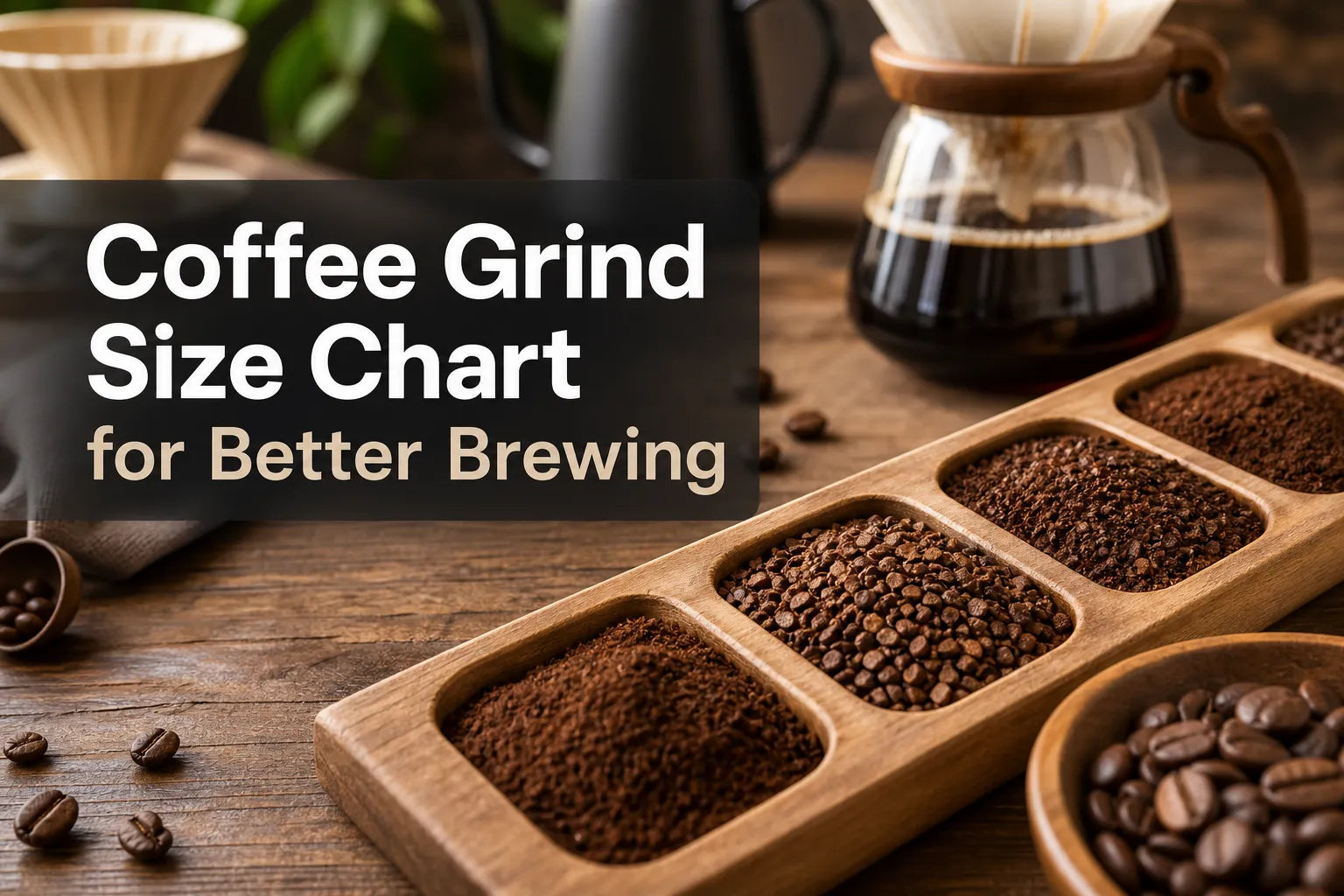
Coffee Grind Size Chart for Better Brewing
Getting your grind size right is one of the fastest ways to make better coffee at home. If your brew tastes sour, watery, bitter, or muddy, the issue often is not your beans at all - it is your grind. A well-built coffee grind size chart gives you a reliable starting point, whether you are pulling espresso, dialing in a V60, brewing drip, pressing AeroPress, or steeping a French press.
For home brewers who care about both flavor and ritual, grind size sits at the center of everything: extraction, brew time, clarity, body, and balance. And if you love pour-over in particular, grind size becomes even more powerful when paired with precise water control. That is where premium brewing tools make a visible difference. A thoughtfully designed gooseneck kettle from Cocinare helps you pour with more accuracy, more consistency, and more confidence - while also elevating the look and feel of your countertop.
The Quick Coffee Grind Size Chart
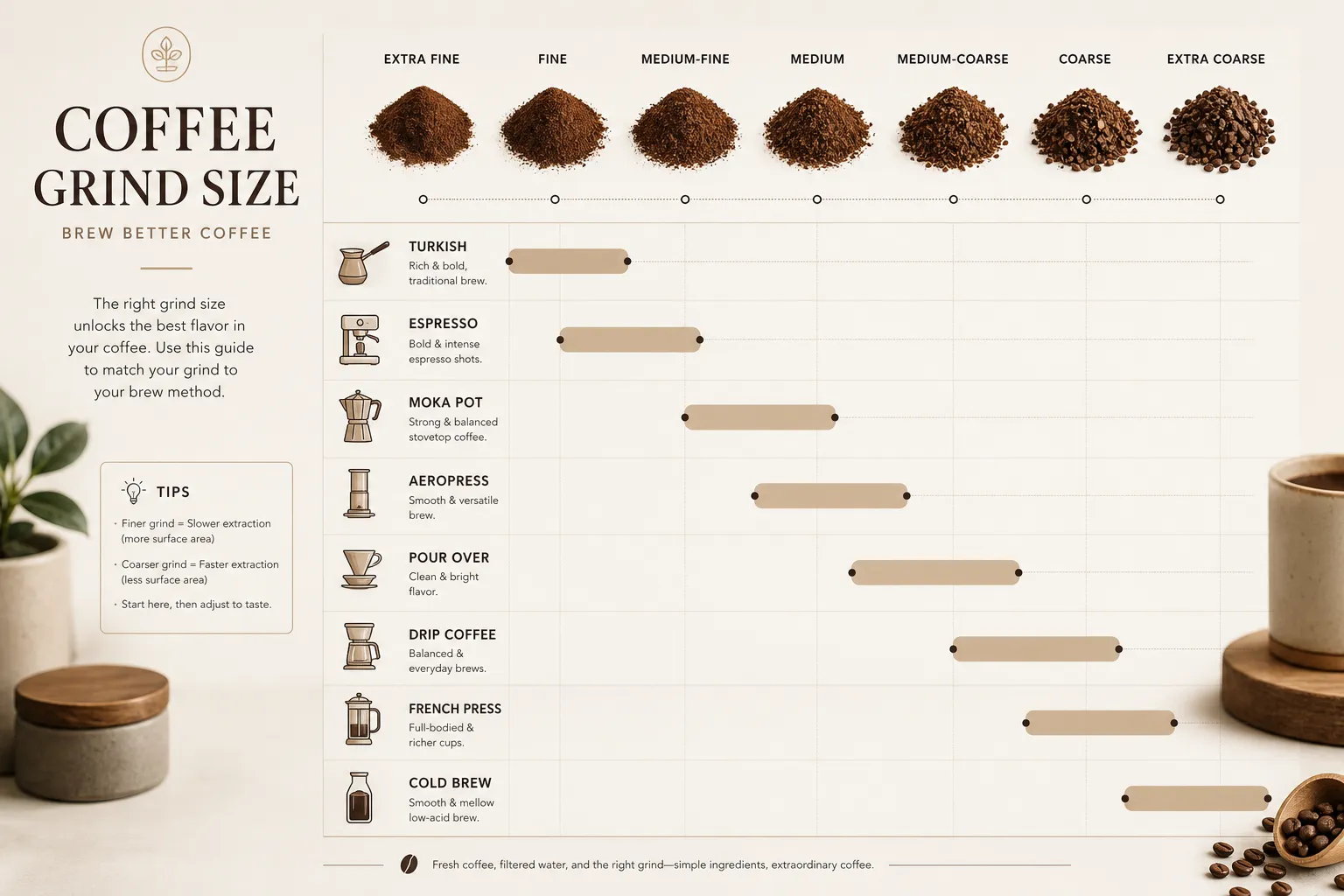
If you want the short answer first, use this chart as your starting point.
Brew Method |
Recommended Grind Size |
Texture Reference |
Typical Range |
|---|---|---|---|
Turkish Coffee |
Extra fine |
Flour or powdered sugar |
40–220 microns |
Espresso |
Fine |
Table salt |
180–380 microns |
Moka Pot |
Medium-fine |
Fine sand |
360–660 microns |
AeroPress |
Medium-fine to medium |
Salt to sand |
320–960 microns |
Pour Over / V60 |
Medium-fine to medium |
Sand |
400–930 microns |
Drip Coffee Maker |
Medium |
Beach sand |
300–900 microns |
French Press |
Coarse |
Sea salt |
690–1300 microns |
Cold Brew |
Extra coarse |
Crushed peppercorns |
800+ microns |
These ranges are not rigid rules. Different grinders produce different particle distributions, and even the same grinder can behave differently depending on bean density, roast level, humidity, and burr wear. Still, this chart will put you much closer to a balanced cup than guessing.
Why Grind Size Matters So Much
Coffee brewing is extraction. Water dissolves flavor compounds from ground coffee, and grind size controls how quickly that happens.
Finer grounds expose more surface area, so extraction happens faster.
Coarser grounds expose less surface area, so extraction happens more slowly.
That is why espresso needs a fine grind for a short, pressurized brew, while French press and cold brew need coarser grounds for longer contact times.
If your grind is off, the cup tells you quickly:
Taste Problem |
Most Likely Cause |
What to Do |
|---|---|---|
Sour, sharp, weak |
Grind too coarse |
Grind finer |
Bitter, dry, harsh |
Grind too fine |
Grind coarser |
Pour over drains too fast |
Grind too coarse |
Grind finer |
Pour over stalls |
Grind too fine |
Grind coarser |
French press tastes muddy |
Too many fines |
Use a coarser, more even grind |
Espresso gushes |
Grind too coarse |
Grind finer |
Espresso chokes |
Grind too fine |
Grind coarser |
"The Specialty Coffee Association (SCA) recommends using a grind size slightly coarser than that typically used for paper filter drip brewing when cupping coffee." - Specialty Coffee Association
That quote matters because it highlights an often-missed truth: there is no single “perfect” grind independent of brew style. Good coffee comes from matching particle size to method.
The Biggest Competitor Gap: Grind Size Is Only Half the Story
Most grind guides stop at “fine for espresso, coarse for French press.” Helpful, but incomplete.
What they often gloss over is this: grind size works together with water flow, agitation, brew ratio, and pouring control. This is especially true in pour-over coffee, where two brewers with the same beans and same grind can get very different results just because they pour differently.
That is where Cocinare naturally fits the conversation. A precision gooseneck electric kettle gives you:
More controlled water flow
More even saturation of the coffee bed
Better bloom management
Greater consistency cup after cup
For design-conscious home brewers, Cocinare also adds something most equipment ignores: visual pleasure. The brand’s modern silhouettes, artistic limited-edition collaborations, and premium finishes turn brewing into a ritual you want to repeat. You get barista-style control, durable construction, free U.S. shipping, up to an 18-month hassle-free warranty, and a 30-day money-back guarantee - all without sacrificing style.
Brew Method by Brew Method: What Grind Size to Use
Espresso: Fine and Precise
Espresso needs a fine grind because the brew time is very short and the water is forced through the coffee under pressure. A grind that is even slightly too coarse can make a shot run fast and taste sour. Slightly too fine, and the shot may stall and taste bitter.
Best starting point
Texture: table salt
Range: 180–380 microns
Signs to adjust
Shot too fast: grind finer
Shot too slow: grind coarser
Thin crema: often too coarse or uneven grind
Harsh bitterness: often too fine or over-extracted
For espresso, tiny adjustments matter. Move in small increments and keep your dose and yield consistent while testing.
Pour Over and V60: Medium-Fine With Precision Pouring
Pour-over coffee thrives on balance. Too fine, and the brew can stall and flatten. Too coarse, and it rushes through with weak sweetness and underdeveloped acidity.
Best starting point
Texture: sand
Range: 400–930 microns
For V60 specifically: often slightly finer than other pour-over brewers
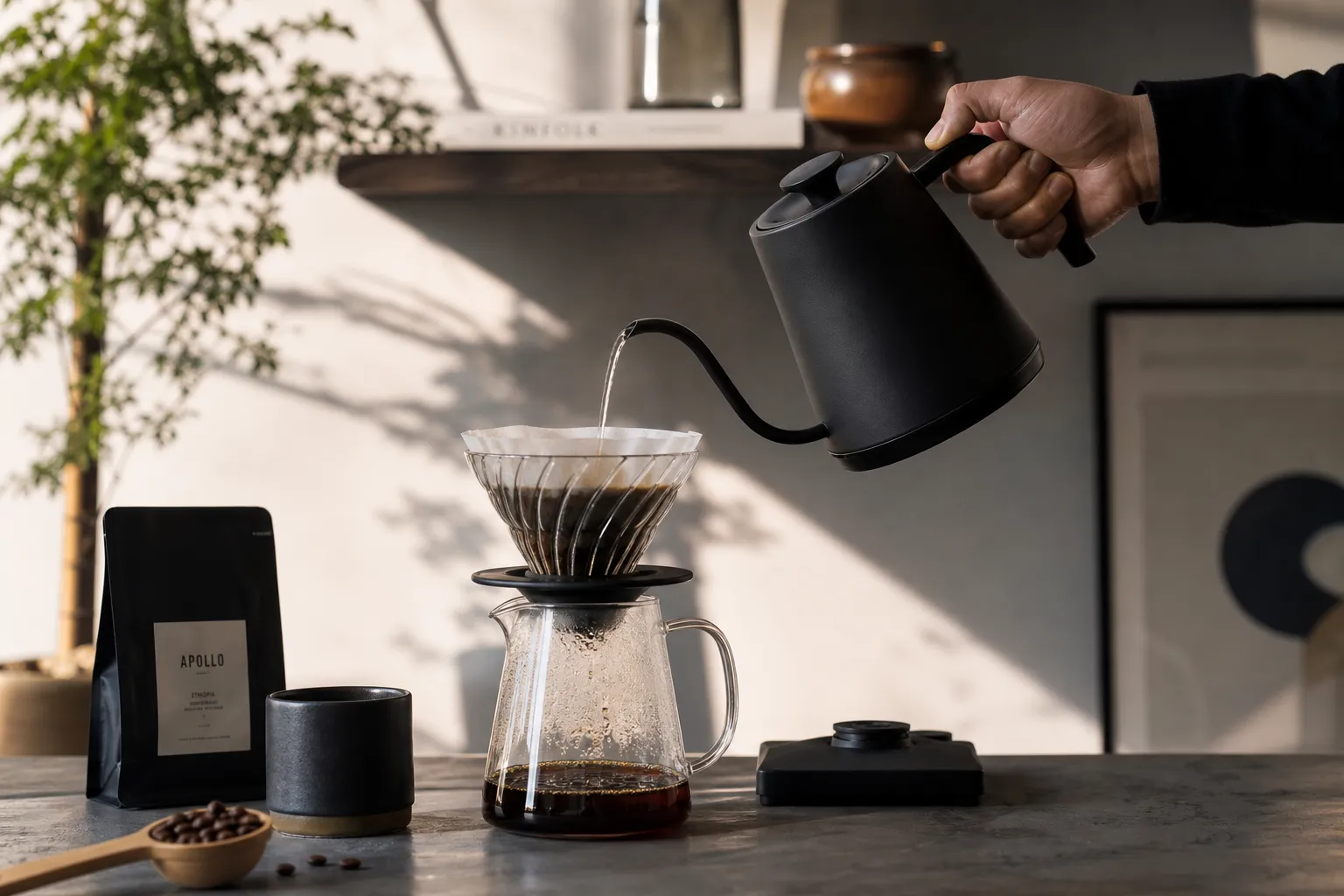
This is the method where kettle design matters most. A precision spout lets you control your bloom, spiral pours, pulse timing, and bed agitation. Cocinare’s premium electric kettles are especially well-suited to this kind of brewing because they combine controlled pouring with a design language that feels intentional, elevated, and highly giftable.
Drip Coffee Makers: Medium for Everyday Consistency
Automatic drip brewers usually perform best with a medium grind. Since most machines do not allow much control over flow rate, grind size becomes one of your main tuning tools.
Best starting point
Texture: beach sand
Range: 300–900 microns
If your machine overflows or tastes harsh, go slightly coarser. If the brew feels flat or weak, go slightly finer.
AeroPress: The Flexible One
AeroPress has the widest grind range because it supports many different recipes: short brew, long steep, inverted method, paper filter, metal filter, bypass recipes, and concentrated brews.
Best starting point
Texture: between table salt and sand
Range: 320–960 microns
General rule
Short, concentrated recipes: finer
Long steep recipes: coarser
If pressing feels difficult, grind coarser. If the cup tastes hollow or diluted, grind finer.
French Press: Coarse for Full Body
French press is an immersion method with a metal mesh filter, so you want a coarse grind that reduces sediment and over-extraction.
Best starting point
Texture: sea salt
Range: 690–1300 microns
A common mistake is grinding too fine because people want “stronger” coffee. That usually leads to muddy texture and bitterness. If you want more intensity, increase dose or steep time before making the grind significantly finer.
Moka Pot: Finer Than Drip, Coarser Than Espresso
Moka pot sits in the middle. It wants a medium-fine grind - fine enough for good extraction, but not so fine that it restricts flow and creates bitterness.
Best starting point
Texture: fine sand
Range: 360–660 microns
If the coffee tastes harsh or burnt, grind a bit coarser and use lower heat.
Cold Brew: Extra Coarse for Long Steeping
Cold brew needs time, not fineness. Because it steeps for many hours, extra coarse grounds help keep the cup cleaner and smoother.
Best starting point
Texture: crushed peppercorns
Range: 800+ microns
If your cold brew tastes weak, first adjust your ratio before dramatically changing grind size.
What Coffee Grounds Should Look and Feel Like
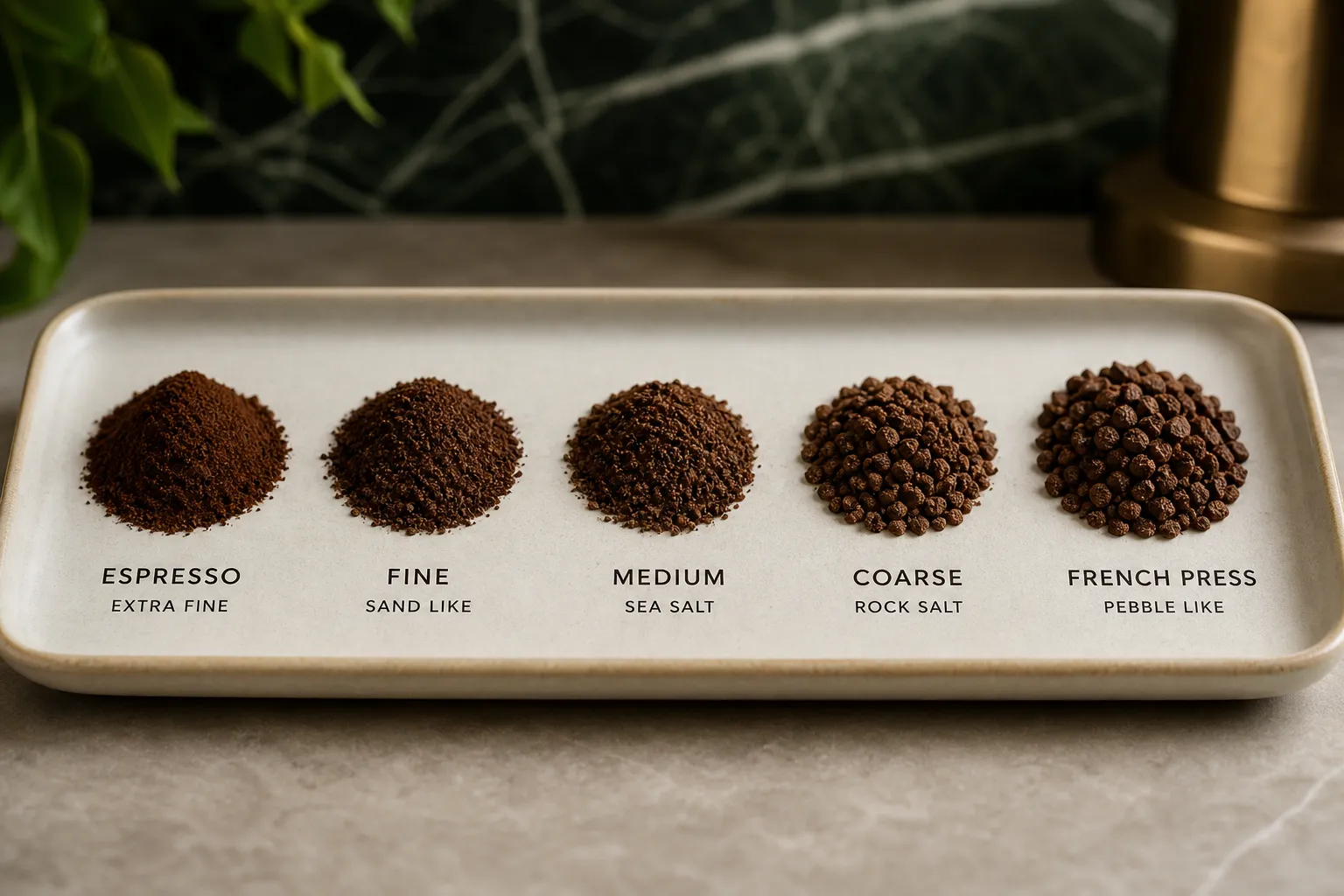
Visual comparisons are helpful, but they are not perfect. Different coffees grind differently, and burr geometry affects shape as much as size. Still, tactile cues can help.
Grind Category |
Feel |
Common Uses |
|---|---|---|
Extra Fine |
Powdery |
Turkish |
Fine |
Smooth, like table salt |
Espresso |
Medium-Fine |
Slightly gritty |
Moka pot, many AeroPress recipes |
Medium |
Sand-like |
Drip, pour over |
Medium-Coarse |
Rough sand |
Some Chemex and immersion hybrids |
Coarse |
Sea salt |
French press |
Extra Coarse |
Chunky |
Cold brew |
Microns, Grinder Numbers, and Why Charts Can Be Confusing
One of the biggest reasons coffee beginners get frustrated is that grinder numbers are not universal. Setting 15 on one grinder may be much finer than 15 on another. Even identical models can drift over time.
That is why many advanced guides use microns, a measurement of particle size. But even that has limits, because grinders do not produce one exact particle size - they create a distribution of larger and smaller pieces.
So what should you trust?
Use a method-based grind chart as your starting point.
Learn how your grinder behaves.
Taste and adjust based on the cup.
Micron ranges are useful for context. Flavor is the final judge.
Burr Grinders vs Blade Grinders
If you want more consistent coffee, a burr grinder is almost always worth it. Blade grinders chop randomly, creating both dust and boulders. That means some grounds over-extract while others under-extract, often giving you bitterness and sourness in the same cup.
"Burr grinders are designed to deliver precise and uniform grinds across various brewing methods." - Specialty Coffee Association
That consistency is what makes dialing in possible. If you are investing in better beans, a stylish kettle, or a refined home setup, your grinder should support that effort rather than undermine it.
How to Dial In Your Grind at Home
You do not need a lab to improve your coffee. You just need a repeatable process.
Step 1: Lock your recipe
Keep these steady:
Coffee dose
Water amount
Water temperature
Brew method
Filter type
Step 2: Start with the chart
Use the recommended grind size for your brew method.
Step 3: Brew and taste
Ask:
Is it sour or weak?
Is it bitter or drying?
Is the body right?
Did it brew too fast or too slow?
Step 4: Adjust one variable only
Usually:
Sour = finer
Bitter = coarser
Step 5: Take notes
Your grinder setting, brew time, coffee, and outcome should all be tracked. Over time, you will create your own personalized map.
Roast Level Changes How Grind Behaves
This is another area many competitor articles barely mention. Roast level affects brittleness and extraction.
Light roasts are denser and often need a slightly finer grind to extract well.
Dark roasts are more brittle and often extract faster, sometimes benefiting from a slightly coarser grind.
So if you switch from a light Ethiopian pour-over to a darker chocolatey blend, you may need to adjust your grind even if the brew method stays the same.
A Better Brew Ritual Is About More Than Utility
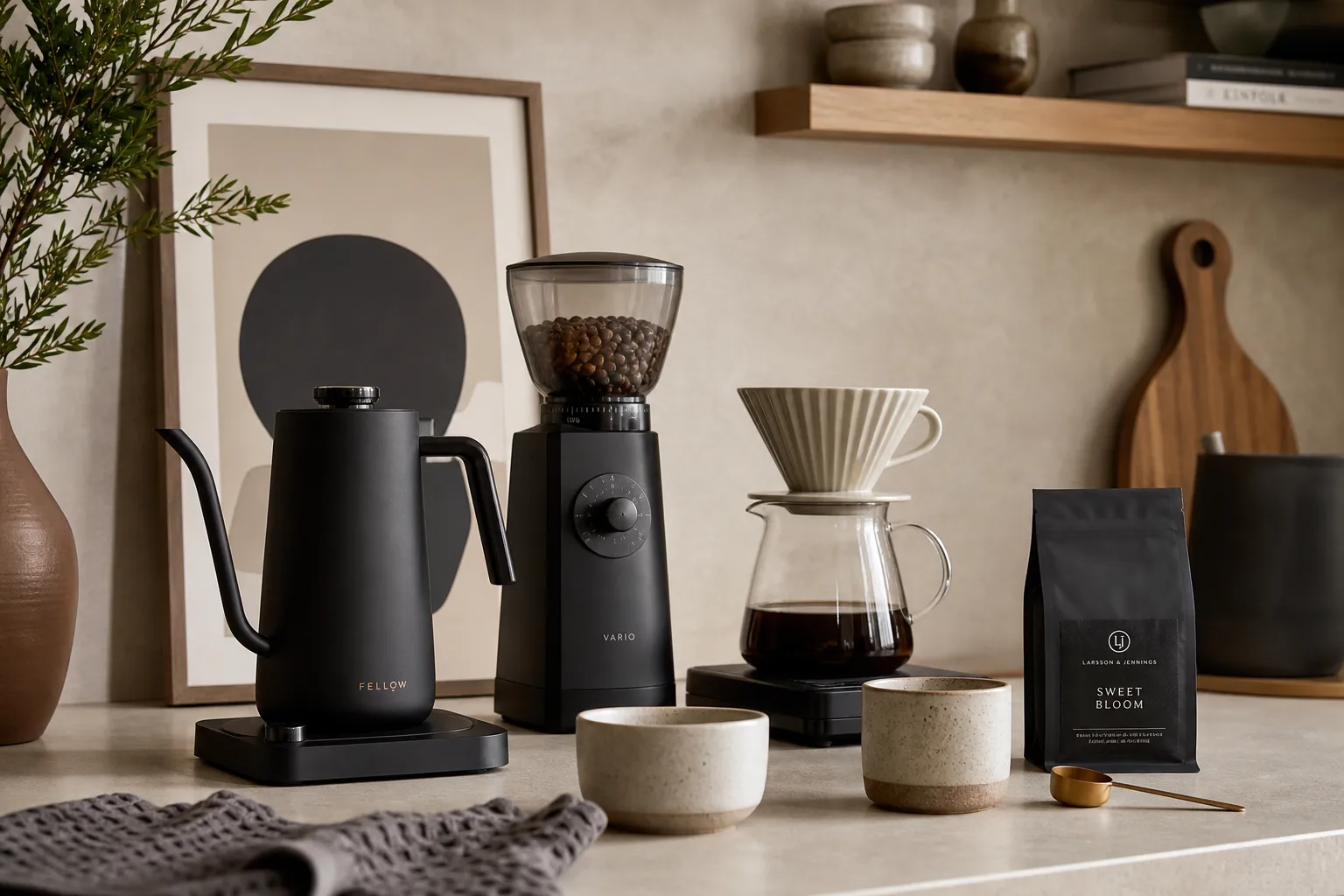
Home coffee lovers today want performance, but they also want beauty. The best brewing gear does not just work well - it makes the process feel better. That is where Cocinare stands out.
Instead of treating equipment as purely technical, Cocinare brings together:
Precision pouring for better pour-over coffee
Premium and durable build quality
Modern, design-forward aesthetics
Multiple collections for different personal styles
Artistic and limited-edition collaborations
A more elevated daily coffee ritual
If your kitchen is part of your lifestyle, not just a workspace, that matters. The right kettle can improve extraction and improve the look of your morning routine at the same time.
Common Grind Size Mistakes Beginners Make
Using pre-ground coffee for every method
Pre-ground coffee may be convenient, but it is not optimized for your specific brewer. Fresh grinding gives you far more control.
Changing too many variables at once
If you change grind, ratio, and water temperature all together, you will not know what fixed the cup.
Mistaking strength for extraction
A stronger cup is not always a better-extracted cup. Strength comes from ratio; extraction comes largely from grind and contact time.
Ignoring pouring technique
Especially for pour-over, your kettle and flow control matter. A precise gooseneck kettle can make your results more repeatable.
Relying only on grinder numbers
Numbers help you remember your own settings, but they do not translate universally.
Final Verdict
A great coffee grind size chart is not about memorizing one perfect answer. It is about understanding how grind size shapes flavor, then using that knowledge to brew with more confidence. Start with the method, taste carefully, and adjust in small steps.
If you are serious about brewing better coffee at home - especially pour-over - pairing the right grind with the right kettle is one of the smartest upgrades you can make. Cocinare brings that upgrade into a premium, design-led package: precise pouring, durable craftsmanship, artistic style, free U.S. shipping, up to 18 months of hassle-free warranty coverage, and a 30-day money-back guarantee.
For coffee lovers who care about both the cup and the ritual, Cocinare makes better brewing feel as good as it tastes.
FAQ
What coffee grind size is best?
There is no single best grind size for every brew method. Espresso usually needs a fine grind, pour over and drip work best around medium to medium-fine, and French press or cold brew need coarser grounds. The right choice depends on how long water contacts the coffee and how the brewer extracts flavor.
Which coffee roast is best for GERD?
People with GERD often prefer a lower-acid, darker roast, but tolerance varies from person to person. Brew method and strength also matter, so using the right grind size and avoiding over-extraction can help create a smoother cup.
What is the 80/20 rule for coffee?
In practical brewing, the 80/20 idea means a few variables create most of the result. Usually, grind size, water quality, coffee freshness, and brew ratio have the biggest impact on flavor, so getting those right delivers the fastest improvement.
Does grind size make coffee stronger?
Grind size changes extraction more than strength. A finer grind can make coffee taste more intense because it extracts faster, but true strength is mostly controlled by your coffee-to-water ratio. The goal is balanced flavor, not just a heavier cup.

Share:
Best Pour Over Coffee Maker Picks for 2026
Espresso Grind Size: Best Setting for Better Shots