

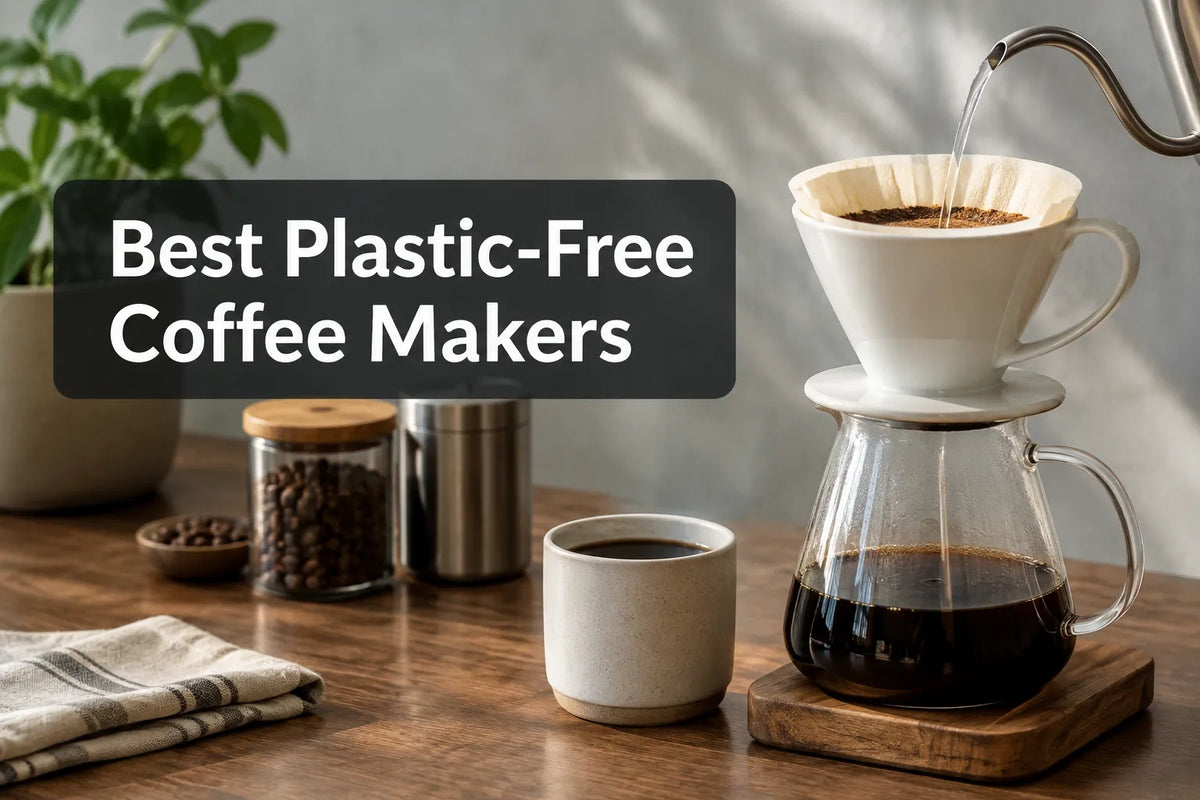
If you want automatic drip without plastic touching your water or coffee, SimplyGoodCoffee THE BREWER Plastic-Free is a place to start. Its stated contact materials are glass for the reservoir and carafe, stainless steel for the boiler, plumbing and basket, and silicone for the seals. If pouring by hand appeals more, a glass Chemex or ceramic Hario V60 leaves the route from kettle to cup in plain sight.
What touches the liquid matters more than the outer casing. A plastic switch need not touch the water; a machine with a metal exterior can still have a plastic basket.
What “plastic-free” actually means for coffee
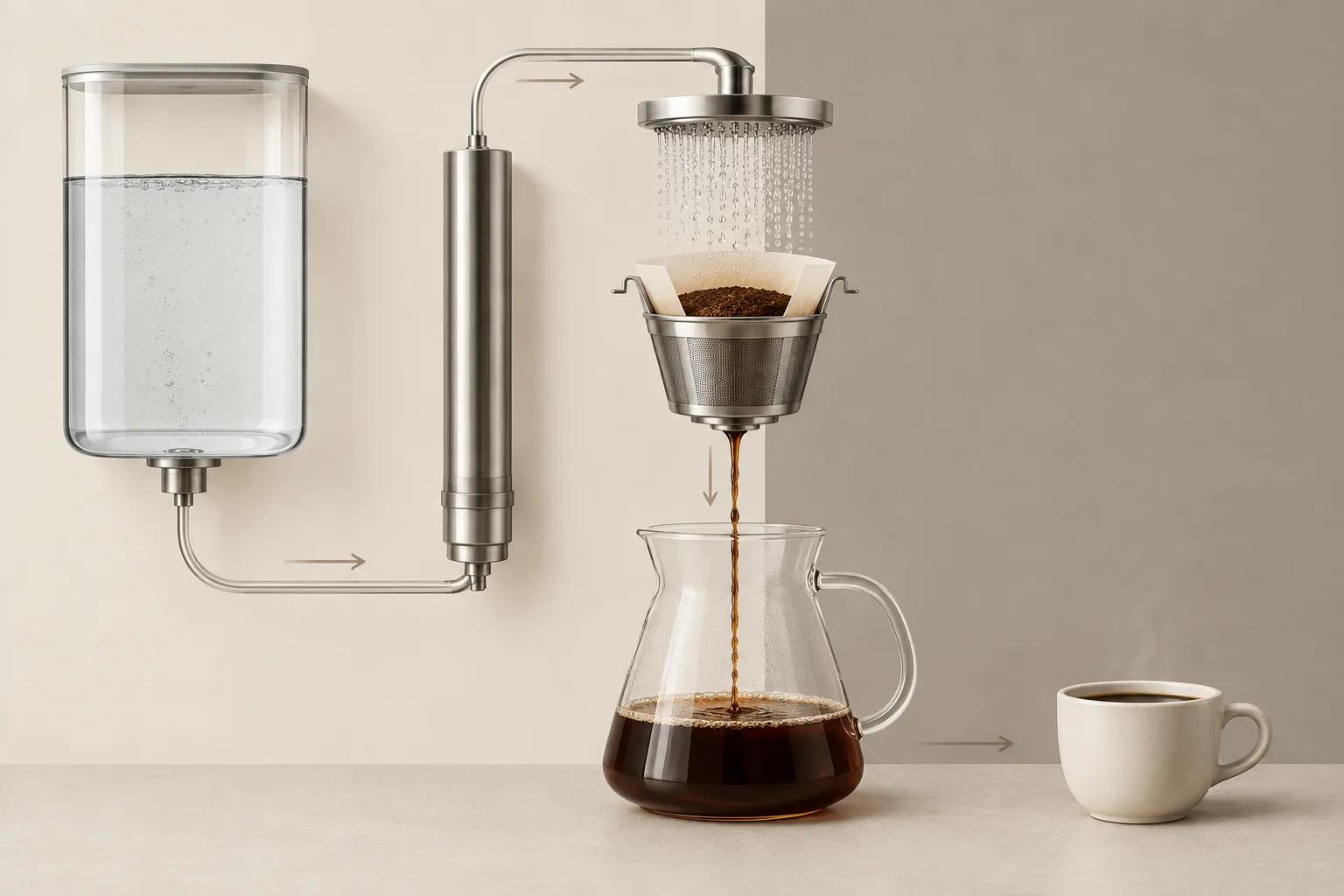
Follow the water from reservoir to internal tube, heater, showerhead, basket, filter and carafe. Any of those parts can touch water or finished coffee. A product description that names only the carafe leaves the rest of the route unclear.
Product descriptions use these terms differently:
No plastic parts anywhere: An especially demanding standard for an electric appliance, including its exterior and electrical controls.
Plastic-free liquid-contact path: No plastic touches the water or coffee; an automatic machine may still use silicone seals and external plastic components.
BPA-free plastic: Still plastic. The label says nothing by itself about whether a basket or tube touches hot water.
Silicone deserves its own mention. SimplyGoodCoffee describes its liquid-contact materials as glass, stainless steel and medical-grade silicone. If you want to exclude all polymers, those seals do not meet your standard. Manual brewers can have gaskets that deserve the same scrutiny.
You may want fewer plastic parts in contact with your coffee without making any claims about health. The component list cannot tell you the particle count in a brewed cup or what that count would mean for you.
What does BPA-free mean on a coffee maker?
BPA-free tells you the plastic lacks one compound. It tells you nothing about whether the filter basket, showerhead or tubing is plastic. Even a BPA-free basket meets hot water and wet ground coffee. A plastic control panel, by contrast, says little about the liquid path.
A useful product description names each part: glass reservoir, steel water line, steel showerhead and basket, silicone seals, glass carafe. If the maker does not publish the internal path, the machine's finish cannot fill in that blank.
Best plastic-free and lower-plastic coffee makers
Brewer |
What the drink touches |
Daily-use appeal |
Main compromise |
|---|---|---|---|
SimplyGoodCoffee THE BREWER Plastic-Free |
Glass, stainless steel and silicone seals, according to the maker |
Automatic drip for a household pot |
Silicone remains in the contact path; glass needs care |
Chemex Classic |
Glass vessel and paper filter |
Clear, filtered coffee with a sculptural countertop presence |
Manual pours and replacement paper filters |
Hario V60, ceramic version |
Ceramic cone and a separately chosen filter and server |
Precise single-cup pour-over |
Technique matters; the ceramic can chip |
Frieling stainless steel French press |
Stainless body and filter assembly |
Full-bodied coffee without paper filters |
Sediment and a hands-on steep-and-plunge routine |
An automatic machine handles water delivery when you are busy with breakfast. With a manual brewer, you can see the path and decide where the water goes, as long as you have a few minutes to stand at the counter.
SimplyGoodCoffee THE BREWER Plastic-Free: best automatic drip option
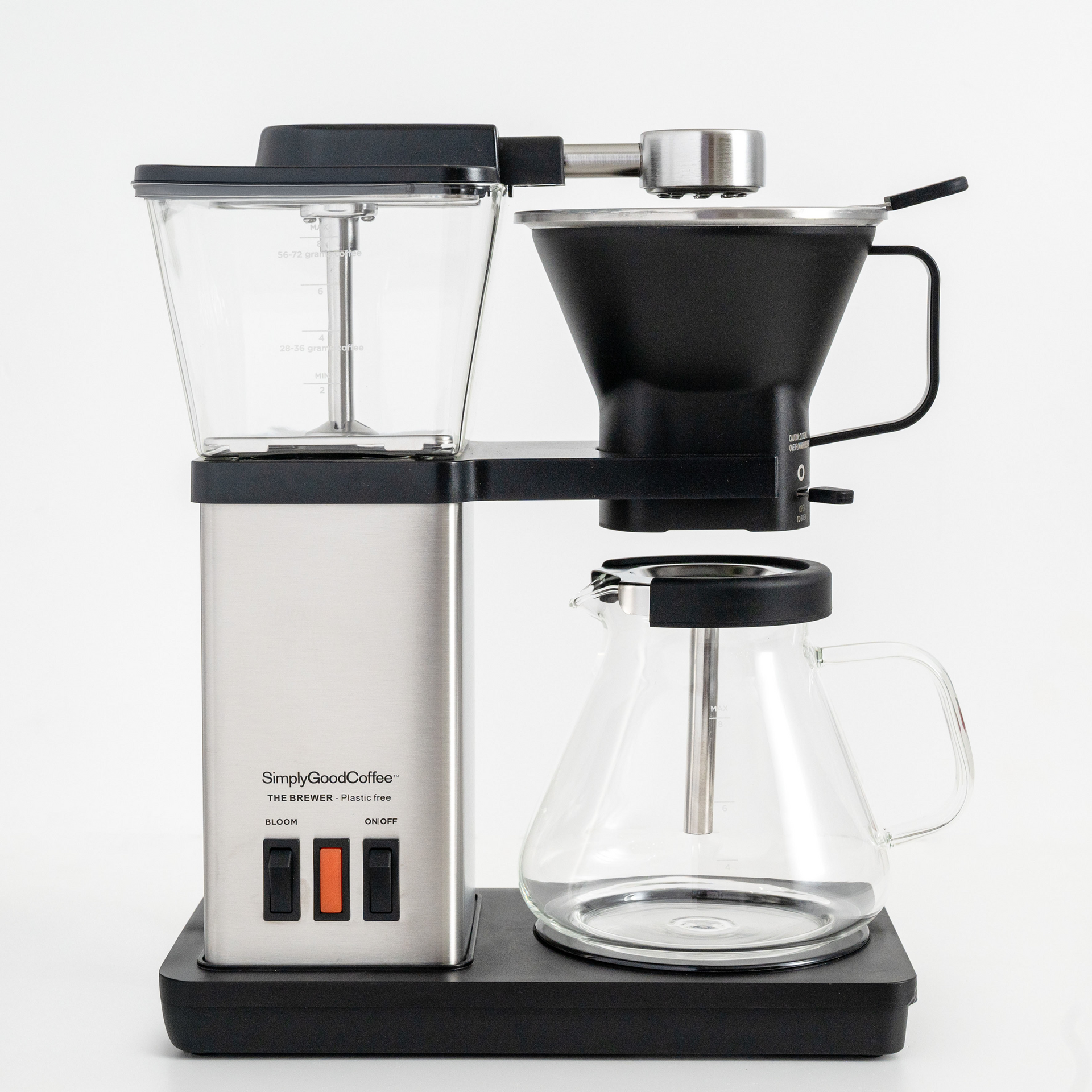
The manufacturer's stated path runs from a borosilicate-glass reservoir through a stainless steel boiler, plumbing, showerhead and basket into a glass carafe. Silicone handles seals and connectors. The machine uses a one-button brew process with an optional bloom feature and holds 8 cups, or 40 ounces. It takes standard #4 cone filters.
If you want a drip coffee maker without plastic touching cold water or brewed coffee, the maker provides a detailed account of this machine's materials. You can start a pot and get on with breakfast. Silicone still contacts liquid, and the two glass vessels need careful handling. You will also need permanent counter space for it, unlike a dripper you can put away.
Chemex Classic: best glass-first pour-over
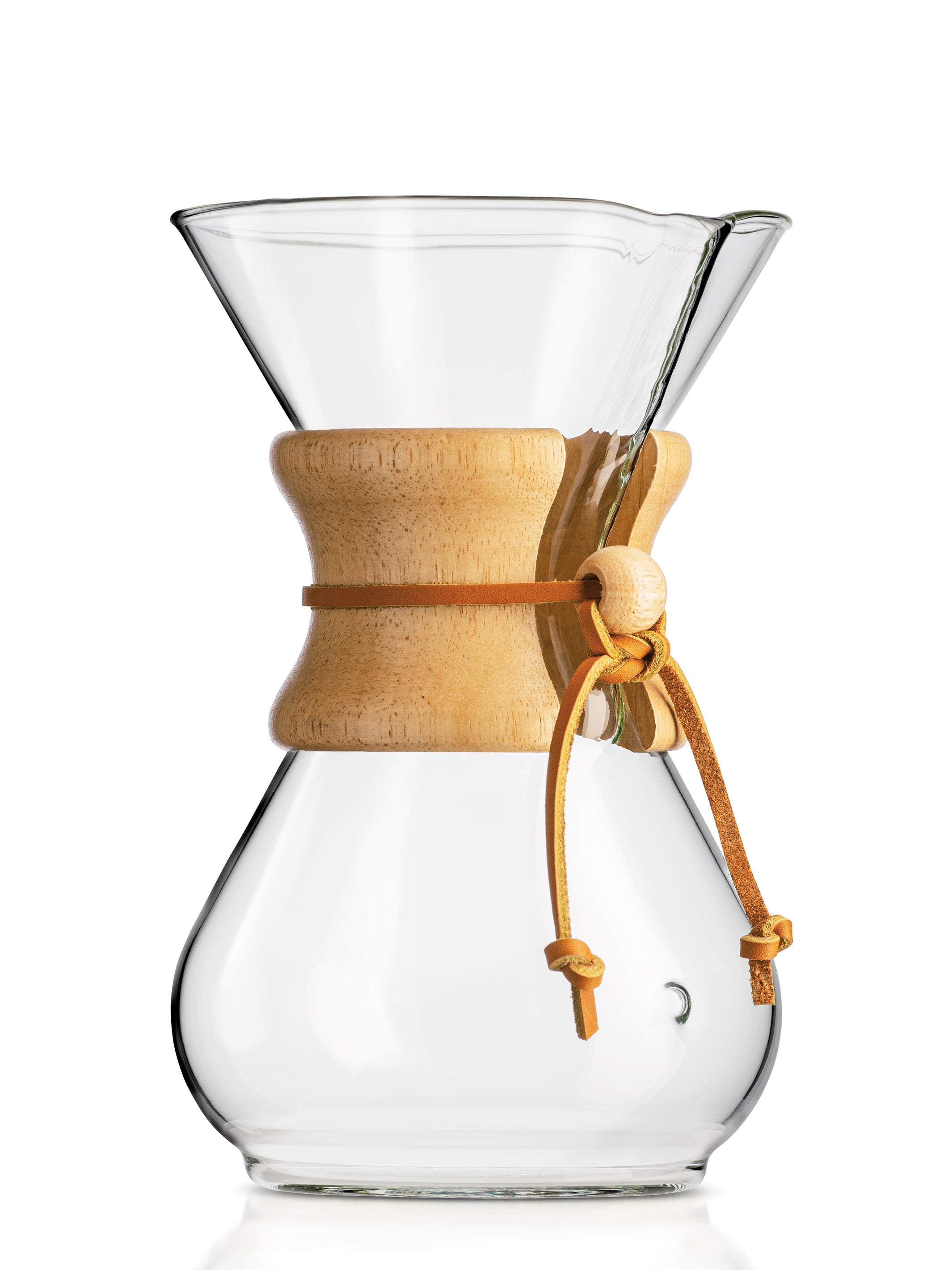
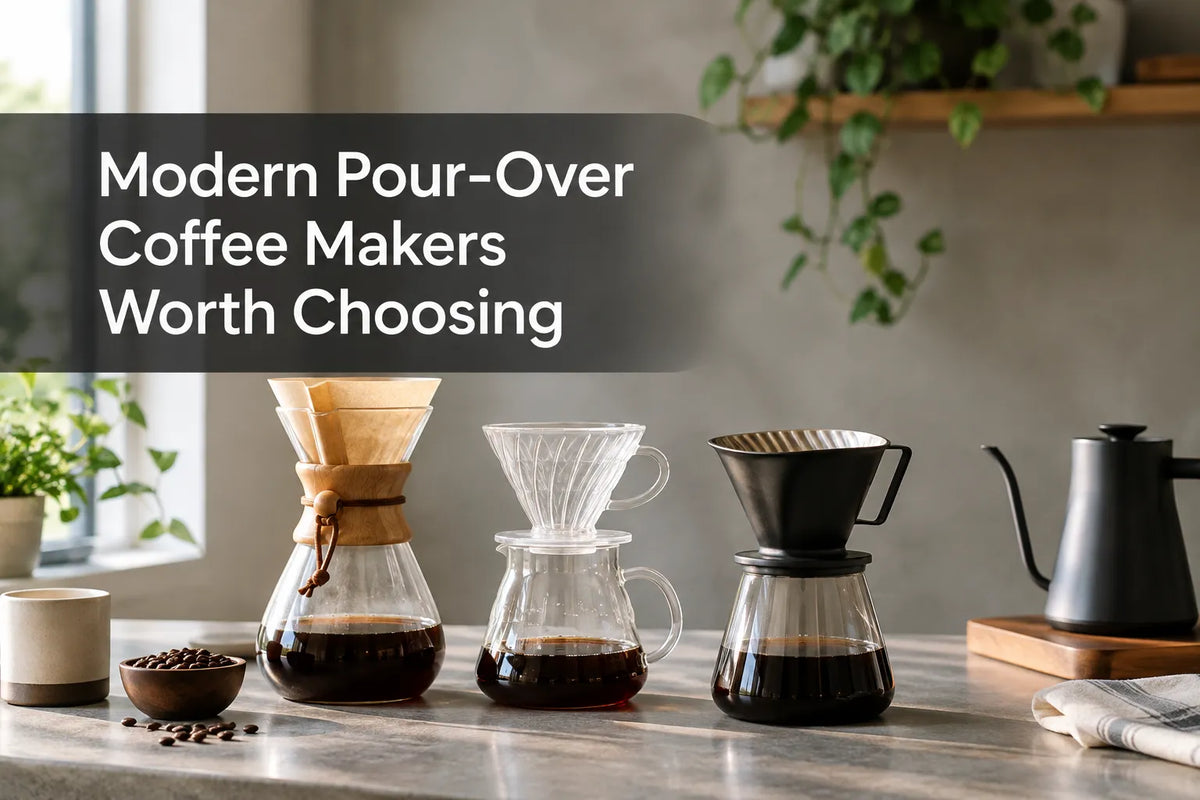
With a Chemex, the brewing cone and serving vessel are one piece of glass. Coffee passes through a paper filter into the vessel below. The wood collar sits outside the coffee path, making the hot brewer easier to hold and giving it its recognizable shape.
Choose it if you like a clean, paper-filtered cup and serving straight from the brewer. You will need matching filters and a kettle that pours steadily. Glass lets you see whether the vessel is clean, though you need to handle it with care. Plan to stay with the pot while it brews.
Hario V60, ceramic version: best for a controlled single cup
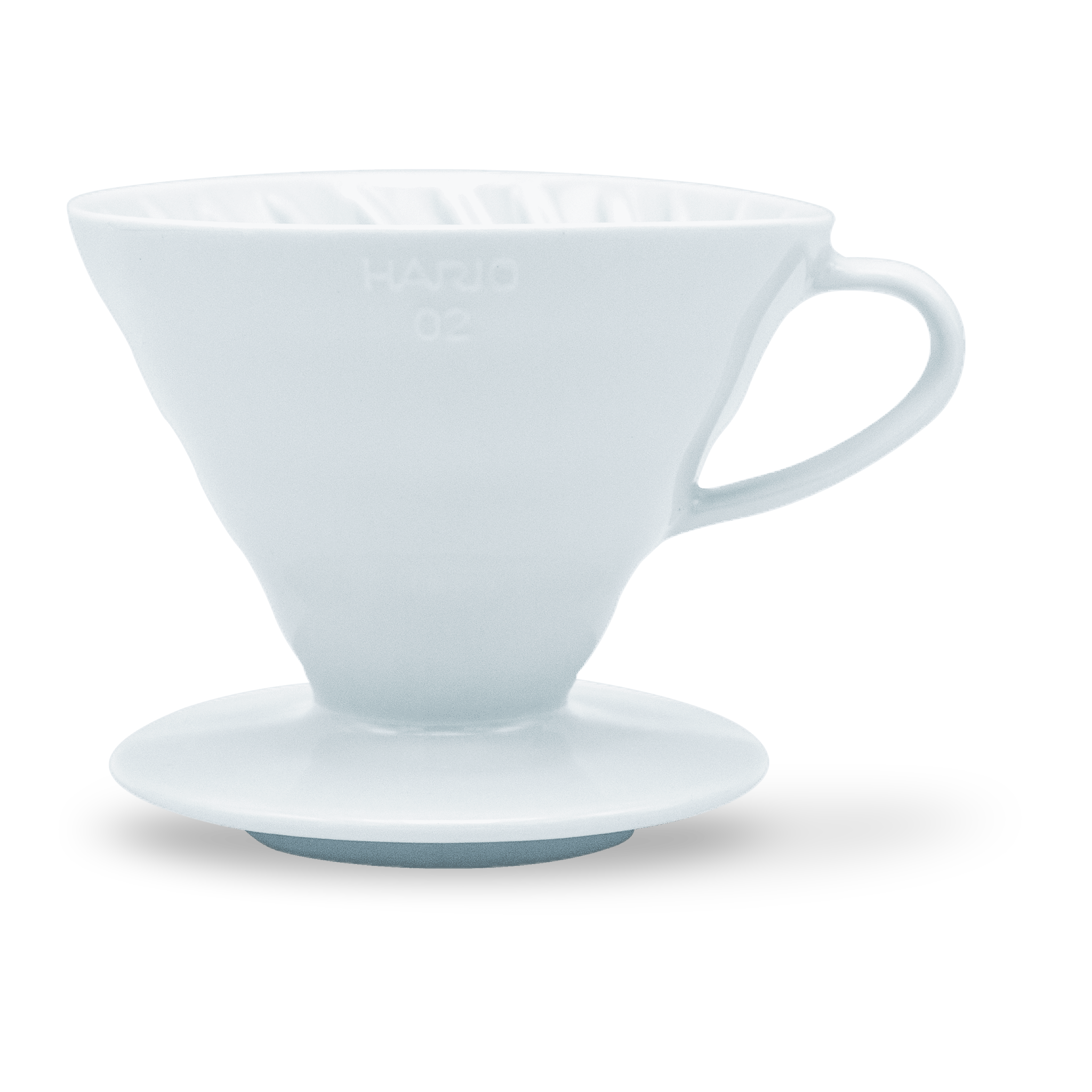
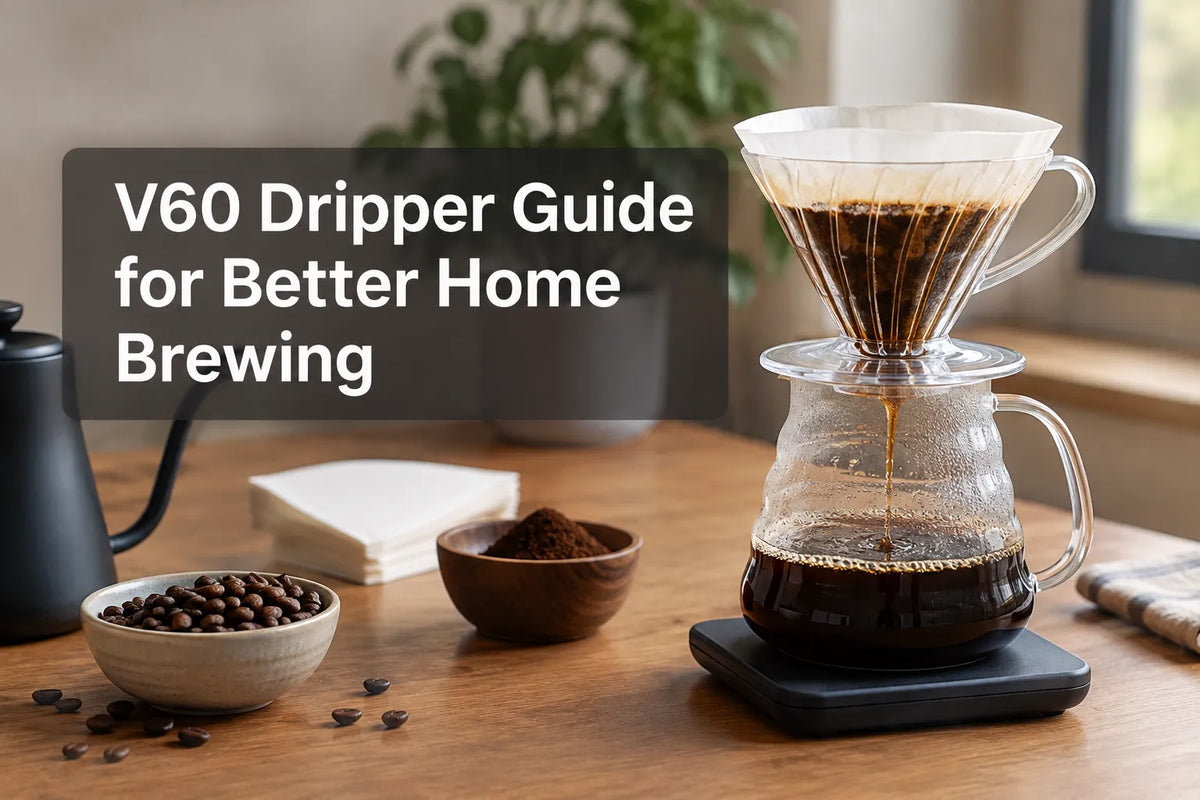
V60 drippers come in several materials, including plastic. For this setup, choose the ceramic version. Place it over a glass or ceramic cup and add a paper filter, so the water meets ceramic and paper before it reaches your cup.
The ribbed cone gives you room to fine-tune your pour. That suits a home brewer making one careful cup; it gets less appealing when several people are waiting. Ceramic looks right at home on a kitchen shelf, though its weight and fragility make it a poor travel companion.
Frieling stainless steel French press: best metal-forward option
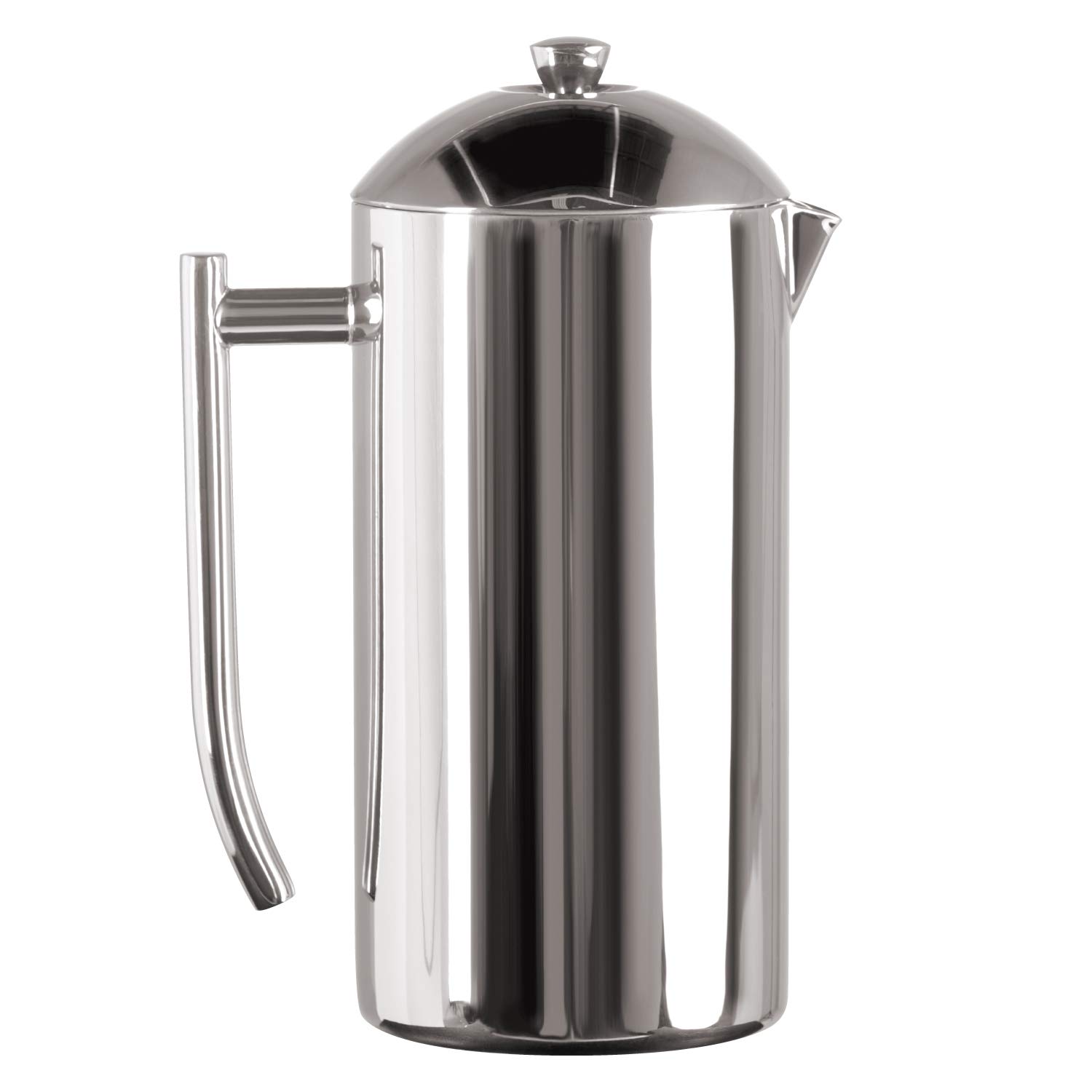
Frieling's stainless body and filter assembly make sense if you would rather not handle a glass brewer. Add water to the grounds, let them steep and press the metal filter down. You do not need paper filters, and the steel body suits a kitchen where equipment gets used hard.
Expect a fuller cup, sometimes with fine sediment. Coffee remains against the grounds until you pour it out; transfer leftovers to another vessel to stop the steep. A press calls for more attention than automatic drip and produces a different cup.
Choosing a drip coffee maker without plastic contact: automatic or manual?
Your priority |
Better fit |
Why |
|---|---|---|
Make a pot while doing something else |
Automatic drip |
The machine manages water delivery after you load it |
See and choose every liquid-contact surface |
Manual pour-over |
Dripper, filter, kettle and cup are all accessible |
Adjust flow and placement during brewing |
Manual pour-over |
Your pouring pattern sets the pace |
Serve several cups with little effort |
Automatic drip |
A carafe fills in one cycle |
Keep the setup compact between uses |
Manual dripper |
The brewer can be stored away |
Some high-end machines reduce plastic contact without eliminating it. Ratio's Eight Series 2, for example, pairs a glass-and-metal hot path with a Tritan plastic cold-water reservoir. That is a meaningful distinction if your rule is “no plastic touches the drink at any stage.” Likewise, a glass carafe alone does not make the machine a coffee maker without plastic in its basket.
The Technivorm Moccamaster KBGV Select pairs a copper heating element and glass carafe with a plastic reservoir and filter basket. If you value a familiar automatic drip routine and accept those contact points, it remains an option. If you want neither stored nor hot water to touch plastic, it falls short. Its basket holds wet grounds through the brew.
The Specialty Coffee Association's home-brewer certification concerns brewing performance, not whether a machine contains plastic. Its requirements specify the temperature of water as it reaches the grounds, not the material of the basket.
"Water must reach 92°C (197.6°F) where it contacts the grounds within the first minute and stay at or above 92°C for the rest of the brew, without exceeding 96°C (204.8°F)." - Specialty Coffee Association
Your kettle belongs on the materials list for a manual setup: water passes through its interior and spout before reaching the dripper. A gooseneck makes a slow, accurate pour easier than a wide kettle opening. Even with an electric kettle, you control the bloom and the pours that follow.
For a short, visible metal path, you could use a stainless steel moka pot on the stove. It produces a stronger, smaller serving than paper-filtered pour-over, so it will not replace a full carafe of drip coffee for everyone.
Stainless steel, glass or ceramic for everyday brewing?
Stainless steel suits busy counters. It resists the knocks that can end a glass brewer and appears in presses, filters and some machine plumbing. A metal filter changes the cup compared with paper: more oils and fine particles can pass through.
Glass makes the process visible. It works well for a reservoir, carafe or complete pour-over brewer and does not conceal the surfaces that meet the liquid. The price of that clarity is breakage risk, especially when washing or moving a full carafe.
Ceramic makes an especially pleasing dripper for a fixed spot at home. A ceramic V60 gives you a solid, easy-to-pair brewing piece, though it is heavier and more vulnerable to chips than a metal cone. None of these materials guarantees better coffee by itself. Filter choice, coffee, grind and how evenly you add water also shape the cup.
How to keep the routine lower-plastic
Before replacing an automatic machine, look at the parts your water passes through. A glass carafe does not change a plastic filter basket. If the maker sells a compatible metal basket, replacing that one part may be enough for your preferred setup. A third-party insert can interfere with the drip stop even if it fits inside the machine.
With pour-over, pay attention to the cup under the cone. If you brew into a plastic travel cup, hot coffee still meets plastic after leaving the ceramic dripper. A glass server or ceramic mug keeps the receiving side consistent. Paper filters give you a cleaner cup; stainless mesh saves paper but lets more oils and fine particles through.
After brewing, empty the grounds, wash the coffee-contact parts and let them dry. SimplyGoodCoffee says its removable parts are dishwasher-safe and sells replacement carafes, baskets, showerheads and seals, useful if glass breaks. With a manual dripper and server, you can see where grounds or coffee oils remain. Ease of cleaning matters when you use the same equipment each morning.
Build a lower-plastic coffee station that looks good in use
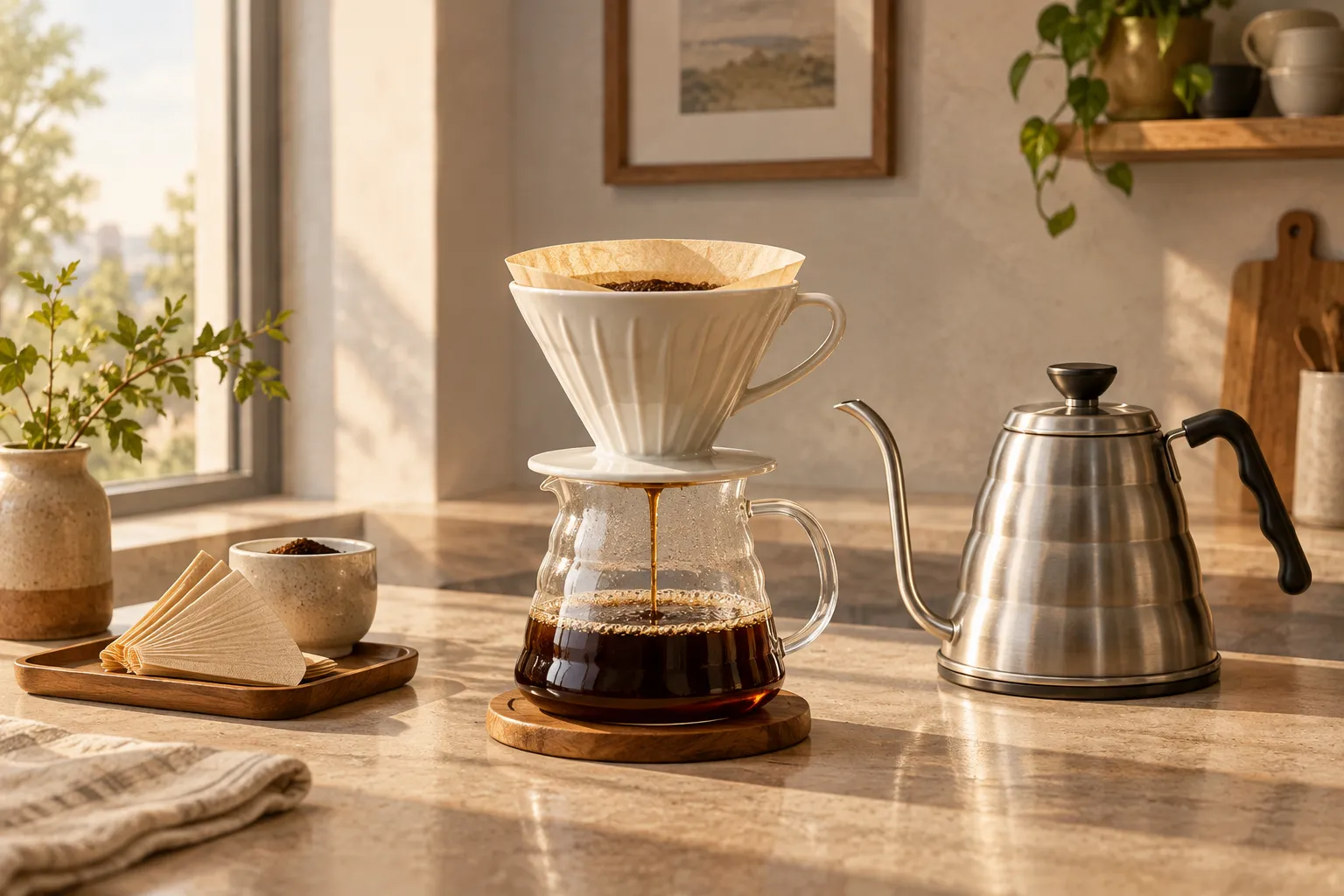
Build around the method you use in the morning. An automatic station needs THE BREWER, its glass carafe, paper filters and your cup. For pour-over, put the dripper beside a glass or ceramic receiving vessel and a kettle you can pour from comfortably. A small tray gives the used filter somewhere to go while you drink.
Cocinare's electric gooseneck kettles belong in a pour-over station when you want more control over where the water lands. The Artisan, Color-changing and Collab collections offer different looks for the counter. These are kettles, not coffee makers: assess the kettle's contact materials separately from the dripper's. Cocinare offers free U.S. shipping, a 30-day money-back guarantee and up to 18 months of warranty coverage.
Keep the practical details aligned with the aesthetics: select the ceramic, not plastic, version of a dripper; use a glass or ceramic server if you are avoiding plastic in the receiving cup; and choose your filter deliberately. If you already own a brewer you like, replacing only a plastic dripper with a ceramic one may be a simpler move than replacing the whole station.
The verdict
For automatic drip with a documented plastic-free water and coffee path, choose SimplyGoodCoffee THE BREWER Plastic-Free, while accepting its silicone seals and glass-handling tradeoffs. For the most transparent brewing route and a polished ritual, choose a Chemex or ceramic V60 with a suitable kettle. Pick the Frieling press if sturdy stainless steel and a richer cup matter more than a paper-filtered drip profile.
If pouring is the part of coffee you look forward to, pair a glass or ceramic brewer with a Cocinare gooseneck kettle. Its controlled stream and design-led collections turn a low-plastic manual setup into something you will want to use every morning.
FAQ
Which coffee maker has the least amount of microplastics?
There is no comparable particle-count result here that establishes a winning maker. For a setup with no plastic in the brewer's liquid-contact path, choose a glass Chemex, ceramic V60 with a nonplastic cup, or an appropriate stainless steel press; consider the kettle and any seals as well.
Should I worry about plastic in a coffee maker?
A materials list alone cannot establish your personal health risk. If you prefer less plastic touching the drink, focus on the reservoir, internal tubing, showerhead, basket and carafe rather than relying on a BPA-free label.
What is the best plastic-free coffee maker in 2026?
For automatic drip, SimplyGoodCoffee THE BREWER Plastic-Free has a maker-documented glass, stainless steel and silicone liquid-contact path. For manual pour-over, the Chemex or ceramic Hario V60 gives you an accessible path without a machine's hidden plumbing.
Is there an automatic drip coffee maker without plastic parts?
An automatic brewer may use plastic outside the brew path even when no plastic touches the drink. SimplyGoodCoffee says THE BREWER Plastic-Free keeps its water and coffee path to glass, stainless steel and silicone; it is not a claim that every part of the appliance is metal or glass.
Share:
How to Choose a Coffee Hand Filter
Best Pour Over Grinders for Clean Cups