

Best Method for Pour Over Coffee in 2026
If you care about flavor clarity, ritual, and consistency, the best method for pour over coffee in 2026 is no longer just about choosing a famous dripper. It’s about matching the right brewer, grinder, and kettle control to the kind of cup you actually want to drink.
Most guides stop at “use a V60” or “buy a Kalita.” That’s not enough. Great pour-over lives in the details: heat retention, flow control, grind uniformity, filter choice, and how forgiving your setup is at 7 a.m. before your first sip. For most home brewers, the winning approach today is a precision-controlled hybrid of good gear and simple technique: a quality burr grinder, a precise gooseneck kettle, and a brew method that fits your taste and skill level.
At Cocinare, we believe pour-over should feel as beautiful as it tastes. The ideal setup combines barista-level precision with a modern, design-forward brewing ritual you actually want to return to every day.
The Short Answer: What Method Is Actually Best?
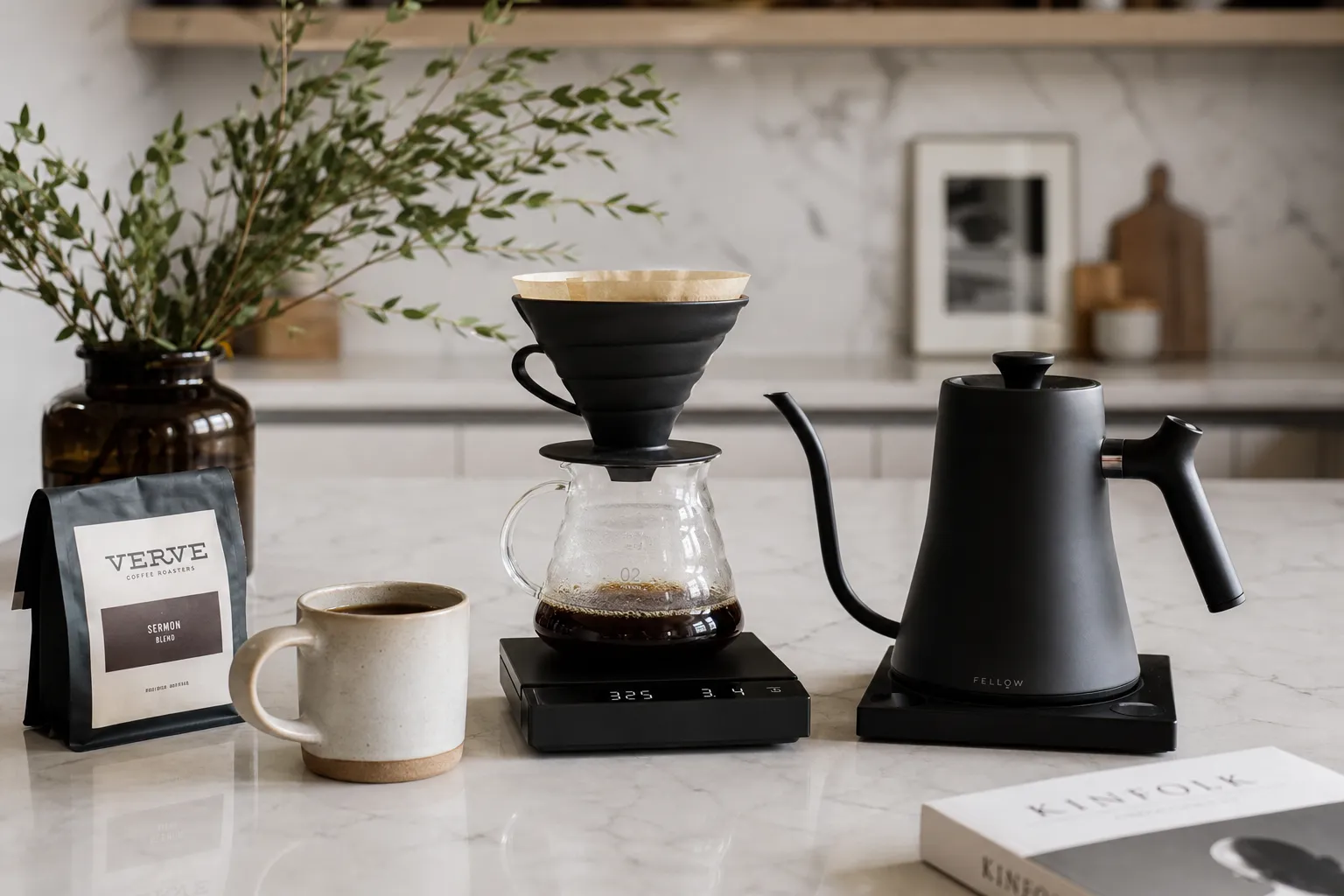
For most people, the best method is this:
A flat-bottom or hybrid dripper if you want easy consistency
A plastic conical dripper if you want the highest ceiling for flavor clarity
A precision gooseneck electric kettle if you want repeatable results
A burr grinder if you want your coffee to taste sweet instead of harsh or hollow
In plain terms:
Choose V60 if you love bright, layered, transparent cups.
Choose Kalita Wave if you want sweet, balanced, low-stress brewing.
Choose Hario Switch if you want the smartest all-around method for home use in 2026.
For many home brewers, the hybrid pour-over style offered by the Switch is arguably the most practical answer. It gives you much of the elegance of classic pour-over with less penalty for imperfect pouring.
What the Top-Ranking Guides Get Right - and What They Miss
After reviewing leading articles on pour-over brewing and dripper recommendations, a few consistent themes stand out:
What competitors consistently get right
The dripper shape matters: cone vs. flat bottom
Material affects performance: plastic usually beats ceramic for thermal stability
A gooseneck kettle improves accuracy
A burr grinder matters more than most people think
V60, Kalita, Clever, Chemex, and Switch are the main methods worth discussing
The content gaps they often miss
Most competitor articles gloss over a few crucial realities:
1. “Best” depends on forgiveness, not just flavor potential
Many brewers can produce an amazing cup once dialed in. Fewer produce a good cup when your pour is slightly off, your grind is not perfect, or you skipped preheating.
2. Kettle control is usually under-explained
People say “use a gooseneck kettle,” but the real issue is flow stability and directional control. Better pouring changes agitation, extraction, and repeatability.
3. Ritual matters for real-world use
A brewer that makes excellent coffee but feels annoying, fragile, or messy often gets abandoned. In real homes, beautiful, durable equipment gets used more often.
4. Few guides connect performance with aesthetic ownership
Specialty coffee has become part of the home lifestyle space. A premium kettle or brewer should not only brew well; it should elevate the counter, the morning routine, and the overall experience.
That last point is where Cocinare stands apart: precision performance meets craft-led design, with collections that fit minimalist, artistic, and expressive kitchens alike.
What Actually Determines the Best Pour-Over Cup?
1. Grind Consistency
A poor grinder creates too many boulders and fines at the same time. That leads to a cup that tastes both sour and bitter - an unpleasant sign of uneven extraction.
If you improve only one variable besides your coffee beans, improve your grinder.
Ideal takeaway
Use a burr grinder
Grind just before brewing
Adjust grind size based on brew time and taste, not guesswork
2. Pour Precision
This is why kettle choice matters so much. A precise pour controls:
Agitation
Bed saturation
Water distribution
Flow rate
Contact time
A premium gooseneck kettle makes it easier to pour slowly, stay centered, and repeat the same movement daily.
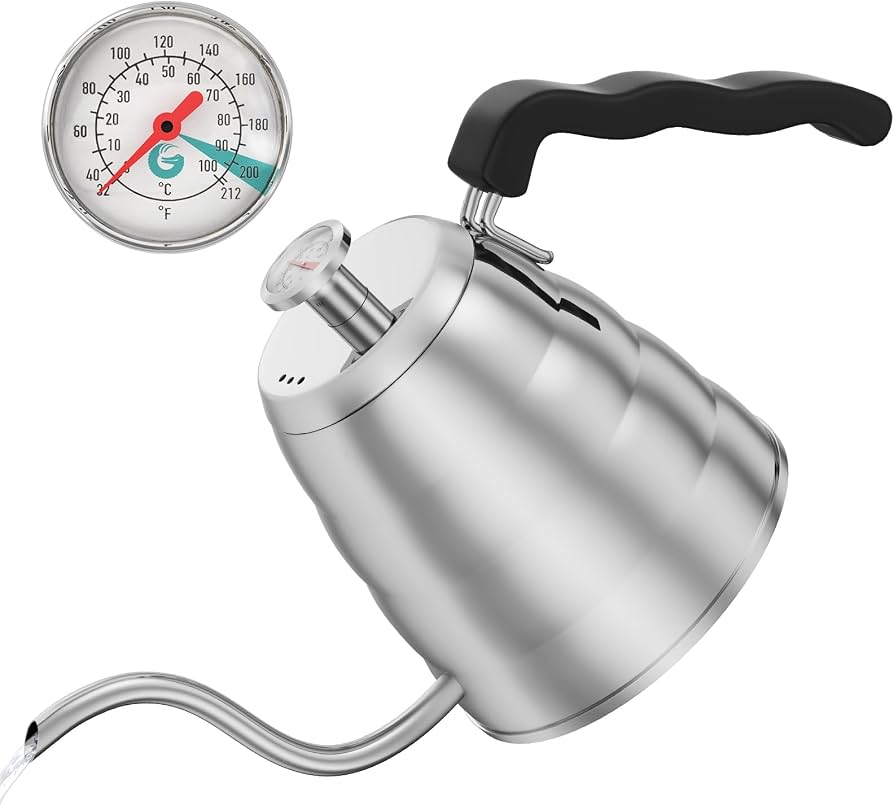
At Cocinare, this is the heart of the experience: precision pouring for better pour-over coffee in a form that feels refined, durable, and deeply considered. A kettle should not feel like lab equipment alone - it should feel like a premium object you enjoy using every morning.
3. Thermal Stability
A lot of brewing mistakes are really temperature mistakes in disguise.
Plastic brewers often outperform ceramic because they absorb less heat from the slurry. That means better extraction, especially with lighter roasts.
4. Brewer Geometry
The shape of the brewer changes flow and extraction pattern.
Conical brewers tend to highlight acidity and separation
Flat-bottom brewers tend to increase sweetness and balance
Hybrid brewers reduce technique sensitivity and increase consistency
5. Filter Type
Filters influence clarity, body, and drawdown speed.
Paper filters = cleaner cup, more clarity
Thicker filters = less oil, lighter body
Metal filters = more body, more sediment
The Best Pour-Over Methods in 2026
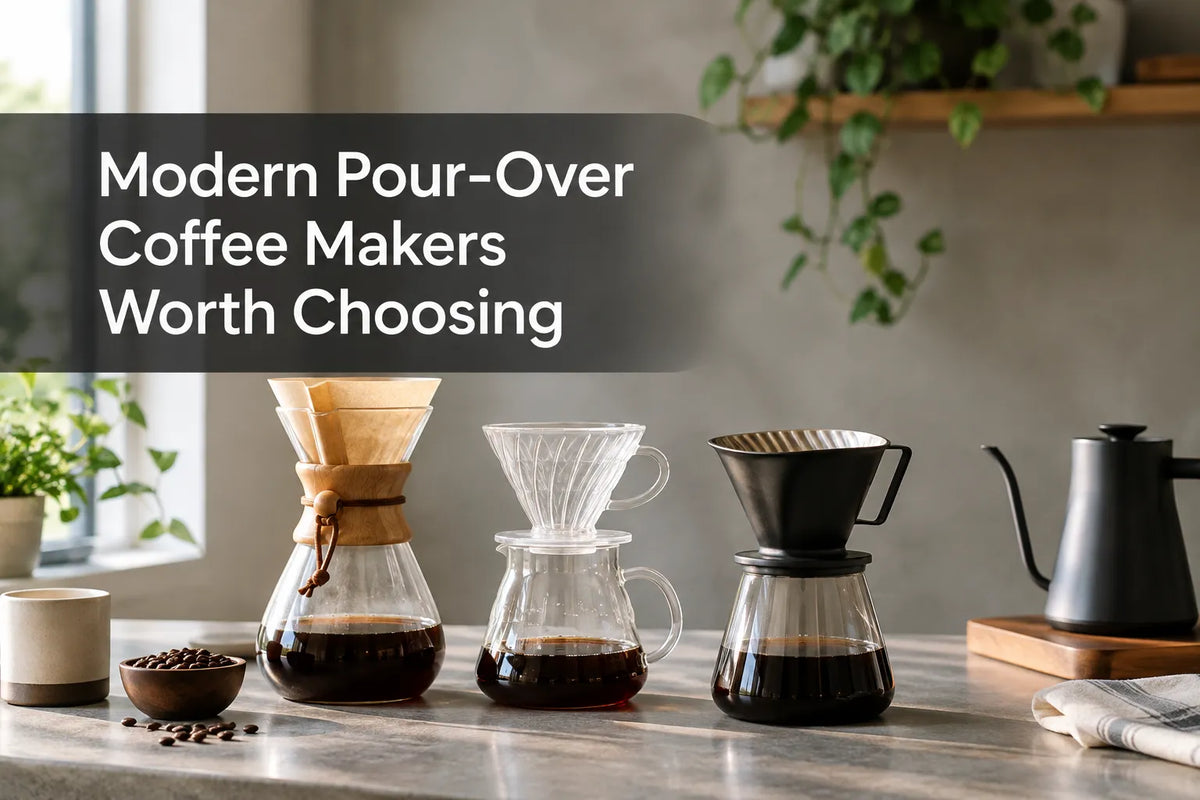
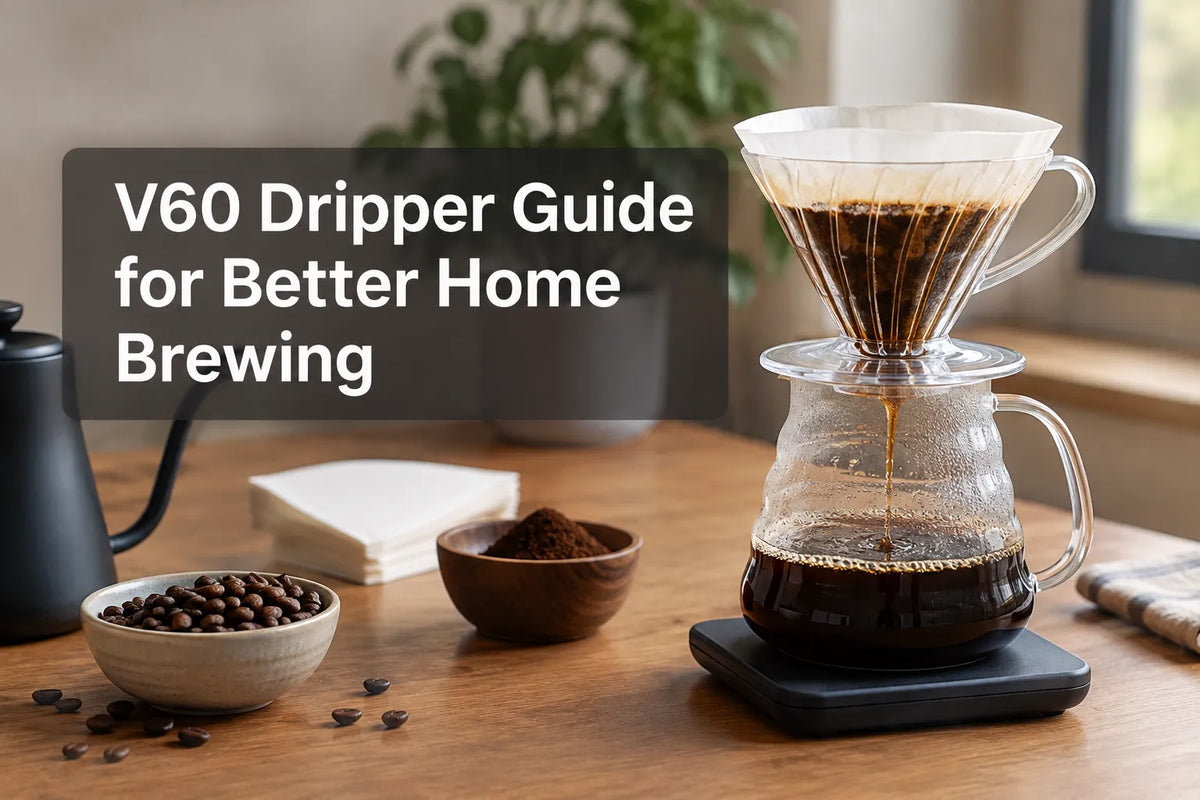
1. Hario V60: Best for Clarity and Skill Growth
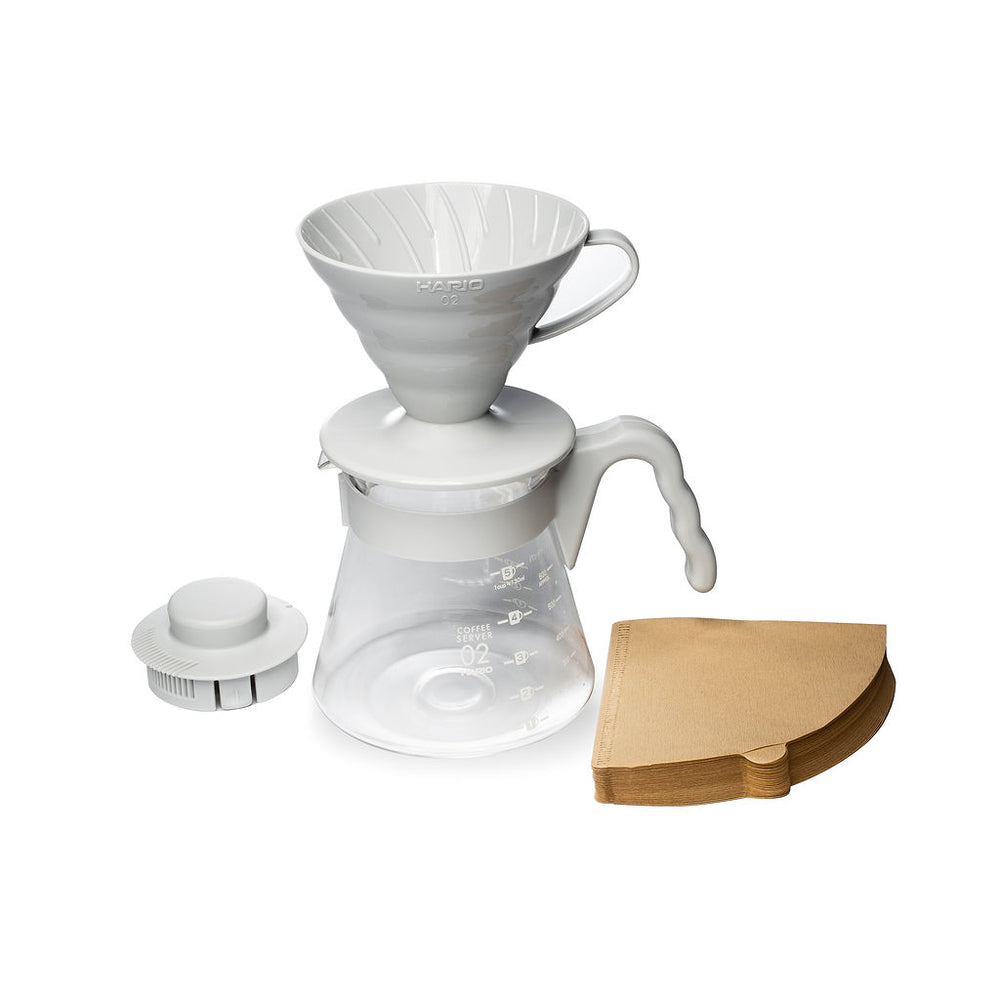
The V60 remains the icon for a reason. It rewards precision with cups that feel articulate, bright, and highly expressive. If you love washed Ethiopians, floral coffees, and nuanced light roasts, this method still shines.
Why it works
Fast flow potential
Excellent flavor separation
Highly responsive to grind and pour adjustments
Best for
Coffee enthusiasts
Light roast drinkers
People who enjoy dialing in technique
Watch-outs
Less forgiving with inconsistent pouring
Can taste thin or sour if under-extracted
Benefits heavily from a quality kettle
Best practice
Choose the plastic V60 over ceramic for better heat retention and simpler daily use.
2. Kalita Wave: Best for Balanced, Forgiving Brewing
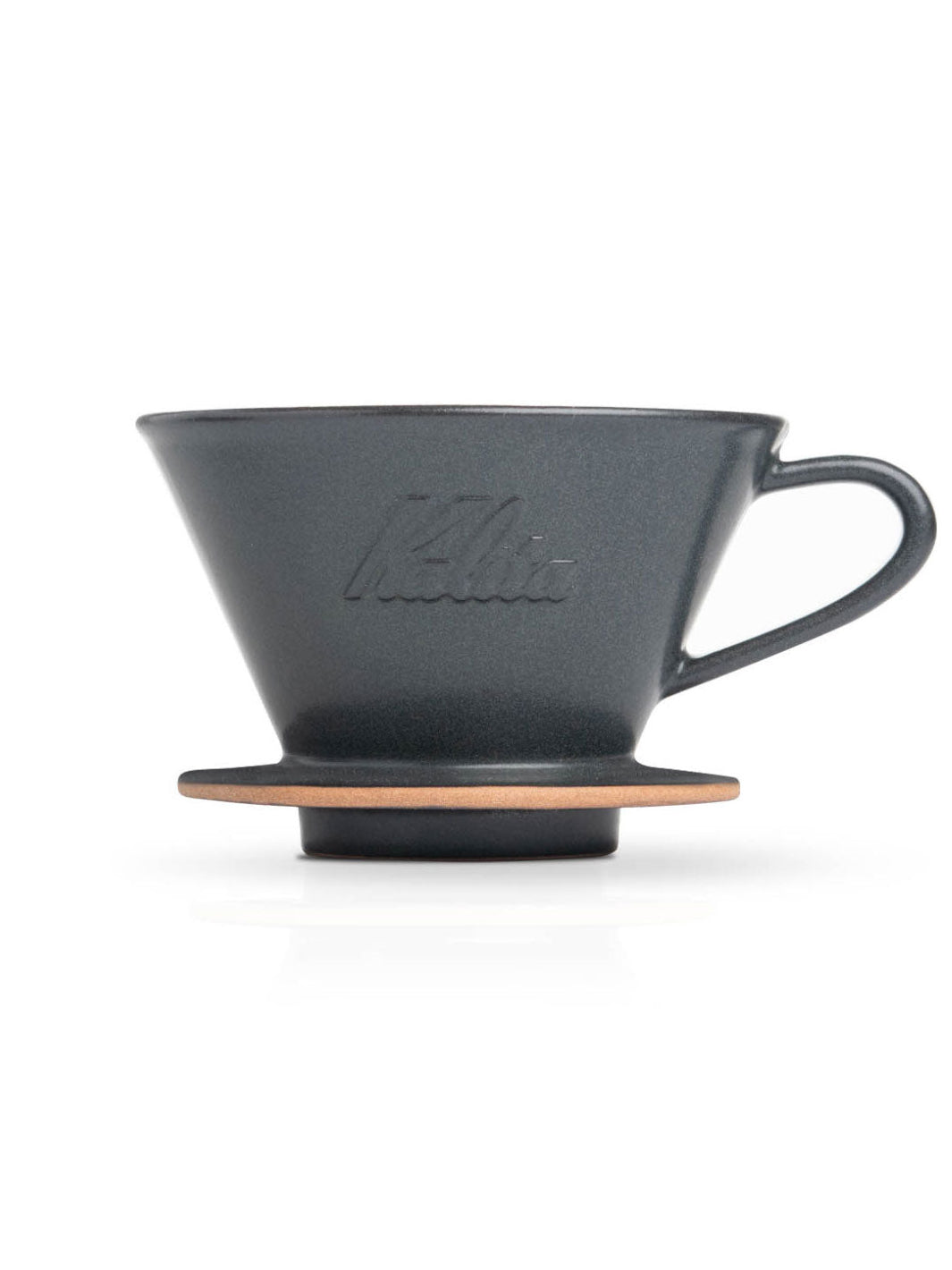
The Kalita Wave is still one of the easiest ways to make genuinely delicious pour-over at home. It is friendlier, rounder, and more stable than the V60 for many users.
Why it works
Flat bottom encourages even extraction
Easier to achieve sweetness and body
More tolerant of imperfect pours
Best for
Daily brewing
Medium roasts
People who want consistency without fuss
Watch-outs
Proprietary filters
Some versions are more fragile or finicky than others
Best practice
If you value dependable results over experimentation, the Wave is one of the smartest choices you can make.
3. Hario Switch: Best Overall Method for Most Home Brewers
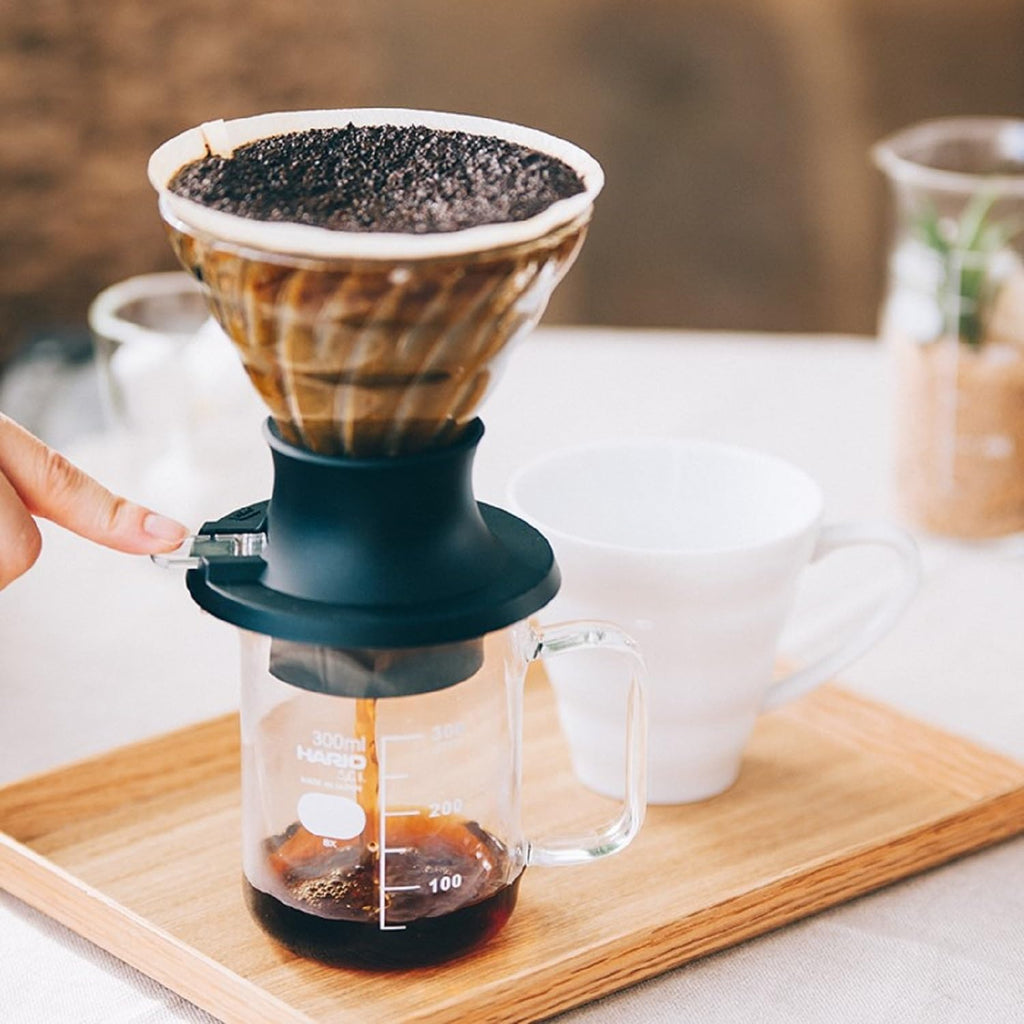
If one method deserves the “best overall” title in 2026, it’s the Hario Switch.
It gives you access to classic percolation, full immersion, and hybrid brewing. That flexibility solves the biggest issue in home pour-over: inconsistency.
Why it works
Easier than a standard V60
More dynamic than a Clever Dripper
Lets you blend immersion sweetness with pour-over clarity
Best for
Beginners who want better coffee quickly
Enthusiasts who want flexibility
People who want one dripper that can do more
Watch-outs
Slightly more expensive than a basic V60
Some recipes can taste flat if you over-rely on immersion
Best practice
Use a hybrid recipe: bloom or steep briefly, then open the valve for controlled drawdown. This creates one of the sweetest, most repeatable cups you can make at home.
4. Chemex: Best for Elegant Batch Brewing and Clean Cups
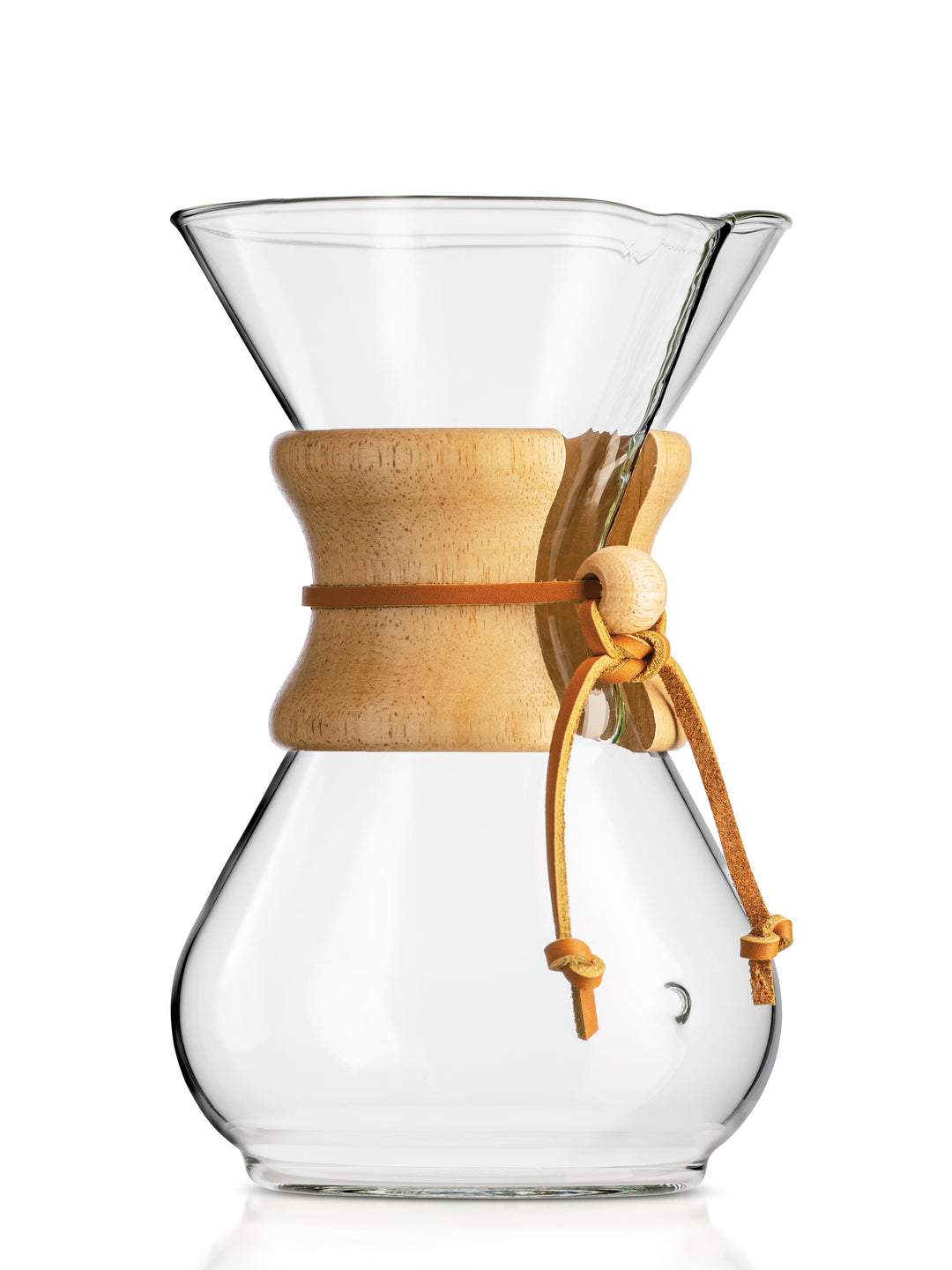
The Chemex remains the design classic of the category. It makes exceptionally clean, tea-like coffee and looks beautiful doing it.
Why it works
Thick filters create impressive clarity
Great for serving multiple cups
Strong visual presence on the counter or table
Best for
Hosting
Design-conscious homes
Drinkers who prefer delicate body
Watch-outs
Slower drawdown
More expensive filters
More glass to clean and handle carefully
Best practice
Treat the Chemex as both brewer and serving piece. It is ideal when the ritual and presentation matter just as much as the cup.
Cone vs. Flat Bottom vs. Hybrid
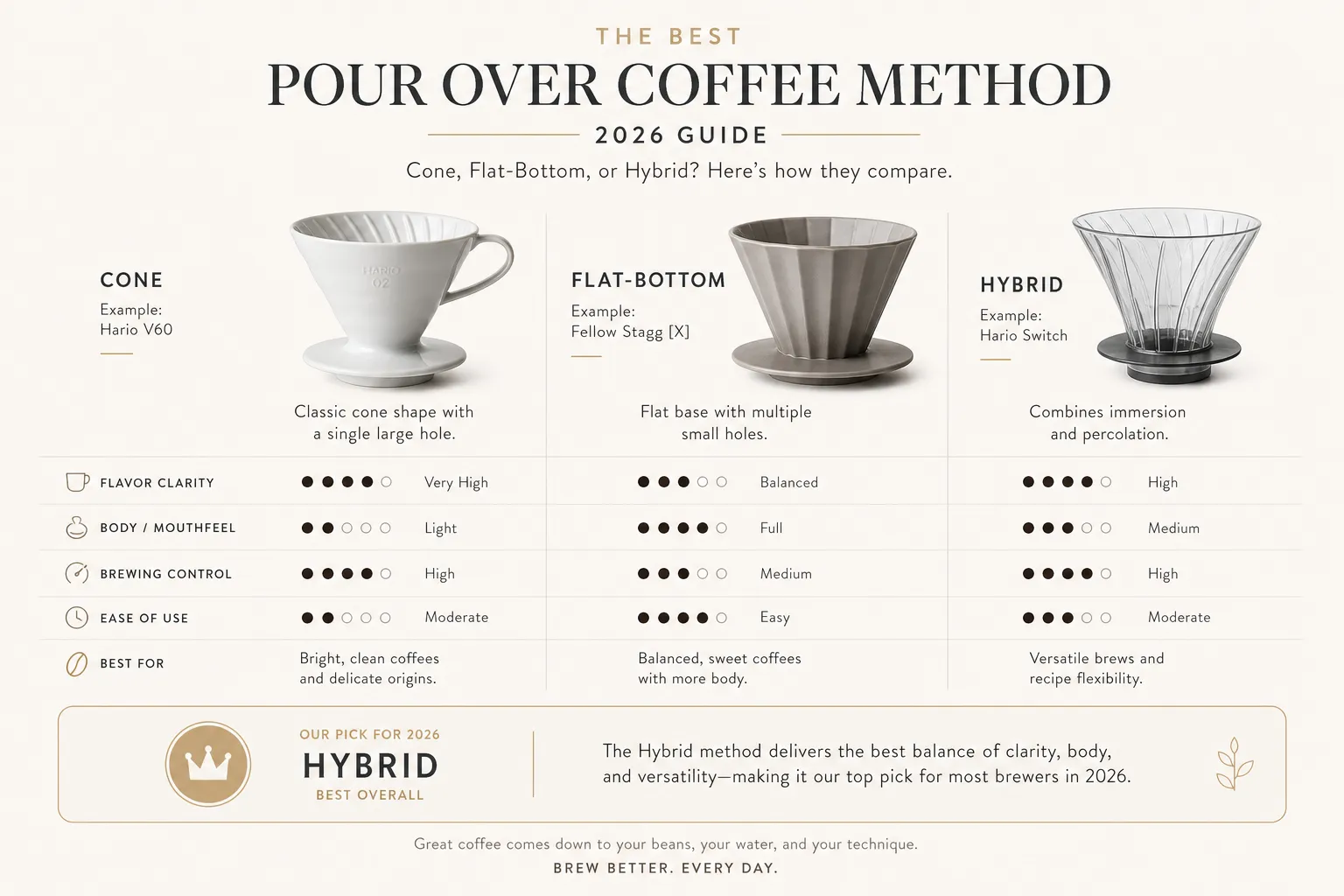
Style |
Flavor Profile |
Forgiveness |
Best For |
|---|---|---|---|
Cone |
Bright, layered, transparent |
Medium-Low |
Light roasts, technique lovers |
Flat Bottom |
Sweet, round, balanced |
High |
Everyday brewing, medium roasts |
Hybrid |
Smooth, clear, consistent |
Very High |
Most home brewers |
Best recommendation by user type
User Type |
Best Method |
|---|---|
Beginner |
Hario Switch or Kalita Wave |
Intermediate home brewer |
Kalita Wave or Switch |
Flavor-focused enthusiast |
Plastic V60 |
Host or design lover |
Chemex |
Low-stress everyday brewer |
Switch |
The Best Recipe Framework for 2026
No single recipe fits every coffee, but this framework works exceptionally well as a modern starting point.
Recommended baseline recipe
Coffee: 20 g
Water: 320–340 g
Ratio: 1:16 to 1:17
Water temp: just off boil for most coffees
Bloom: 40–60 g for 30–45 seconds
Total brew time: around 2:30 to 3:30, depending on brewer
Pulse-pour version
Rinse filter
Add coffee and level the bed
Bloom with 2–3x coffee weight
Pour in 2 to 4 controlled stages
Keep the bed evenly saturated
Let drawdown finish naturally
Hybrid version for the Switch
Add coffee
Bloom or steep briefly with valve closed
Add remaining water
Open valve after controlled contact time
Adjust steep time for more body or more clarity
Brew Variables That Matter Most
Water temperature
Freshly boiled or just-off-boil water works well for most medium and light roasts. Slightly lower temperatures can help with darker coffees or highly delicate coffees that become sharp easily.
Brew time
Brew time is a symptom, not a goal on its own.
Too fast often means the grind is too coarse or pouring is too aggressive
Too slow often means the grind is too fine or the filter is clogging
Agitation
More agitation can increase extraction, but too much can lead to harshness and uneven drawdown. Controlled pouring is usually better than dramatic swirling.
Ratio
A stronger cup is not always better extracted. Keep ratio and extraction separate in your thinking.
Lower ratio = stronger body
Higher ratio = lighter, more transparent cup
Gear That Makes the Biggest Difference
1. The kettle
A precision kettle is the control center of pour-over. This is where Cocinare naturally earns its place. A thoughtfully designed electric gooseneck kettle helps you brew better because it improves the variables that matter most:
Steadier flow
More accurate pouring
Better control near the center and edges of the bed
A more enjoyable, premium brewing ritual
Cocinare kettles also fit the way people live now: they are not just tools, but design objects. Whether your taste leans minimalist, expressive, or collectible, the brand’s multiple collections make it easier to choose something that matches your kitchen and lifestyle. The Artisan Collection, Color-changing Collection, and limited-edition Collab Collection turn the daily brew into something more personal and visually rewarding.
And because premium gear should feel reassuring, Cocinare backs that experience with free U.S. shipping, up to an 18-month hassle-free warranty, and a 30-day money-back guarantee.
2. The grinder
If your grinder is inconsistent, your dripper choice matters less. A solid burr grinder is essential.
3. The scale
A digital scale keeps your ratio and pouring consistent. Precision does not have to mean complicated, but it does require repeatable inputs.
Common Mistakes That Ruin Pour-Over
Using a blade grinder
This creates wildly uneven particles and chaotic extraction.
Pouring with a standard kettle
Without a narrow spout, it is hard to control flow and agitation.
Chasing recipes instead of understanding taste
If your cup tastes sour, bitter, hollow, flat, or drying, that is better feedback than blindly changing to a new viral recipe.
Choosing ceramic for aesthetics alone
Ceramic can be beautiful, but if you do not preheat thoroughly, it may work against extraction.
Ignoring the experience of ownership
The best brewer is the one you actually want to use consistently. Beautiful, durable equipment changes that more than many people expect.
A Better Buying Philosophy for 2026
Too many people buy coffee gear in fragments: a trendy brewer here, a cheap kettle there, a weak grinder in the middle. The better approach is to build a setup that feels cohesive.
The ideal home setup
A forgiving or flexible dripper
A capable burr grinder
A precise gooseneck kettle
A digital scale
Filters you can easily repurchase
This is where Cocinare fits so naturally into the modern coffee home. Great brewing today is not just technical. It is also visual, tactile, and lifestyle-driven. When the kettle feels premium in the hand, looks beautiful on the counter, and performs with barista-friendly precision, the ritual gets better - and so does the coffee.
Final Verdict
So, what is the best method for pour over coffee in 2026?
For the broadest number of home brewers, the answer is a hybrid, precision-led approach: a forgiving dripper like the Hario Switch, paired with a quality burr grinder and a precise gooseneck electric kettle.
If your goal is the highest flavor clarity, choose the plastic V60. If your goal is sweet, dependable everyday coffee, choose the Kalita Wave. If your goal is the smartest all-around method, choose the Switch.
And if you want to unlock the full potential of any of them, start with the kettle. A better pour changes everything. Cocinare brings that precision to life with premium build quality, modern design-forward aesthetics, artistic collections, and customer-friendly peace of mind. For home coffee lovers who want brewing to feel as good as it tastes, it is a natural upgrade.
FAQ
What is the best pour-over coffee method?
The best method for most people in 2026 is a hybrid pour-over approach, especially with a brewer like the Hario Switch. It offers the clarity of pour-over with more consistency and forgiveness than a traditional cone brewer alone.
What is the best pour-over grinder for 2026?
The best pour-over grinder is a quality burr grinder that produces even particles and lets you make small adjustments easily. More than the brewer itself, grind consistency is what helps pour-over taste sweeter, cleaner, and more repeatable.
How long can brewed coffee sit before it goes bad?
Brewed coffee is best enjoyed within about 30 minutes for peak flavor, though it remains drinkable longer. As it sits, it loses aroma, clarity, and sweetness, especially if left on heat.
Share:
Coffee Temperature Kettle: What Matters Most
Best Drip Maker: Your Guide to Better Filter Coffee