

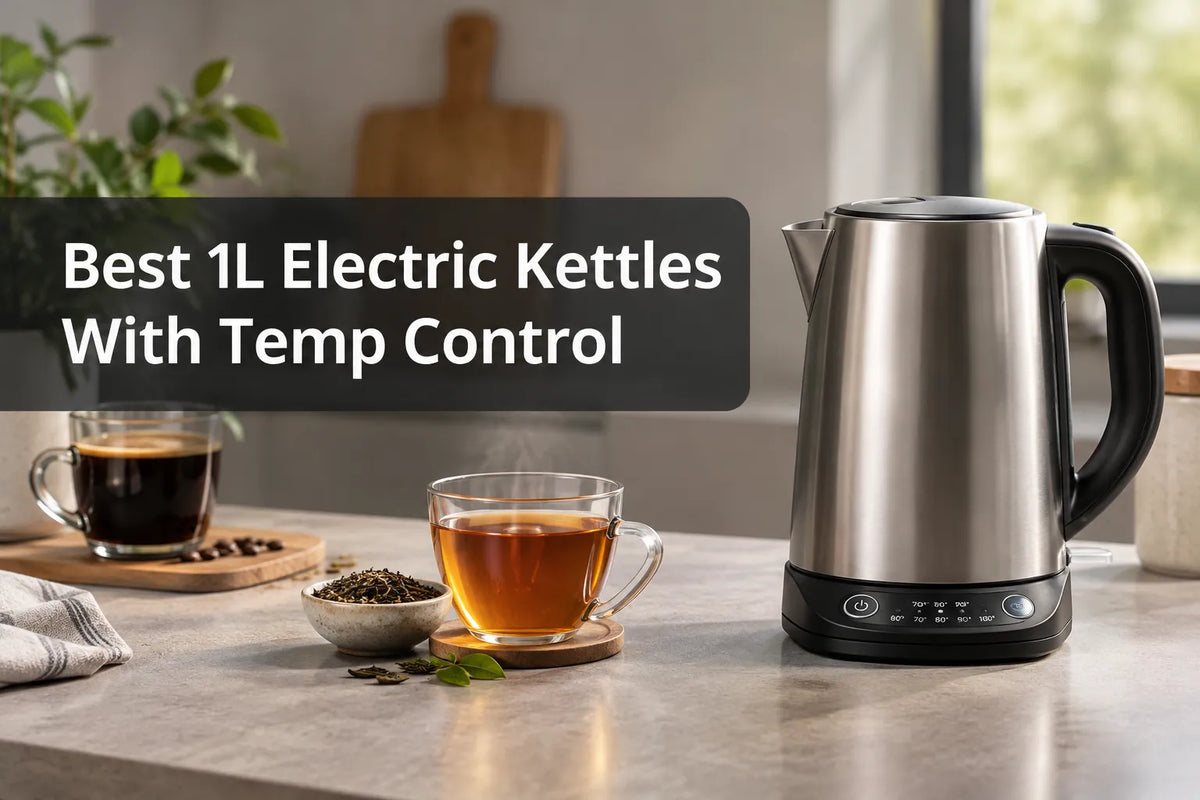
If you want a 1 liter electric kettle with temperature control for daily pour-over, start with the OXO Adjustable Temperature Pour-Over Kettle: it has a 1L capacity and a gooseneck spout. The 0.9L Fellow Stagg EKG Pro is worth considering if you can spare 100 mL of capacity for more temperature and hold options. Decide based on your water needs, how you like to pour, and the room available on your counter.
For tea, a variable-temperature kettle helps you heat water to your chosen setting without waiting for a full boil to cool. For pour-over, the shape and balance of the spout matter just as much as the display.
Quick comparison: 1L and near-1L temperature-control kettles
Kettle |
Capacity |
Temperature control |
Pour style |
Best fit |
Trade-off |
|---|---|---|---|---|---|
OXO Adjustable Temperature Pour-Over Kettle |
1L |
Adjustable temperature |
Gooseneck |
A true 1L pour-over setup |
Less room for a second large brew than a larger kettle |
Fellow Stagg EKG Pro |
0.9L |
Single-degree settings from 104°F to 212°F; selectable 15, 30, 45 or 60-minute hold |
Gooseneck |
Someone who wants fine control and a slow, deliberate pour |
Not a full liter; higher price than basic kettles |
The table compares capacity and controls. Neither model's single-degree settings, on their own, establish single-degree accuracy: a thermometer reading of the water would answer that question.
Both picks are gooseneck models. If you want an electric tea kettle mainly for filling mugs fast, a standard spout may make more sense than either one. The larger 1.75L OXO Variable Temperature Electric Kettle, for example, offers temperature selection but changes the footprint and pouring experience substantially. Do not confuse it with OXO's 1L pour-over model when comparing product listings.
The best choices for a compact brewing setup
OXO Adjustable Temperature Pour-Over Kettle: best if 1L is your requirement
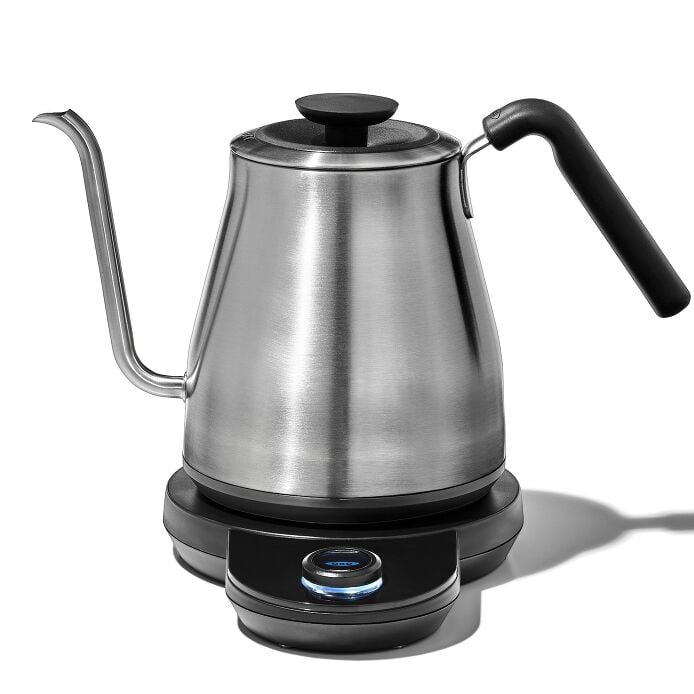
The OXO gives you a full liter, a narrow spout and single-degree temperature selection. That extra 100 mL over a 0.9L model comes in handy when you rinse a filter, bloom the grounds and brew from one fill. Several large mugs will still require a refill.
Choose it if you brew one or two pour-overs and do not want to compromise on the capacity label. If you mostly fill teapots or prepare several cups in quick succession, a larger standard-spout kettle may serve you better.
Fellow Stagg EKG Pro: best near-1L choice for granular controls
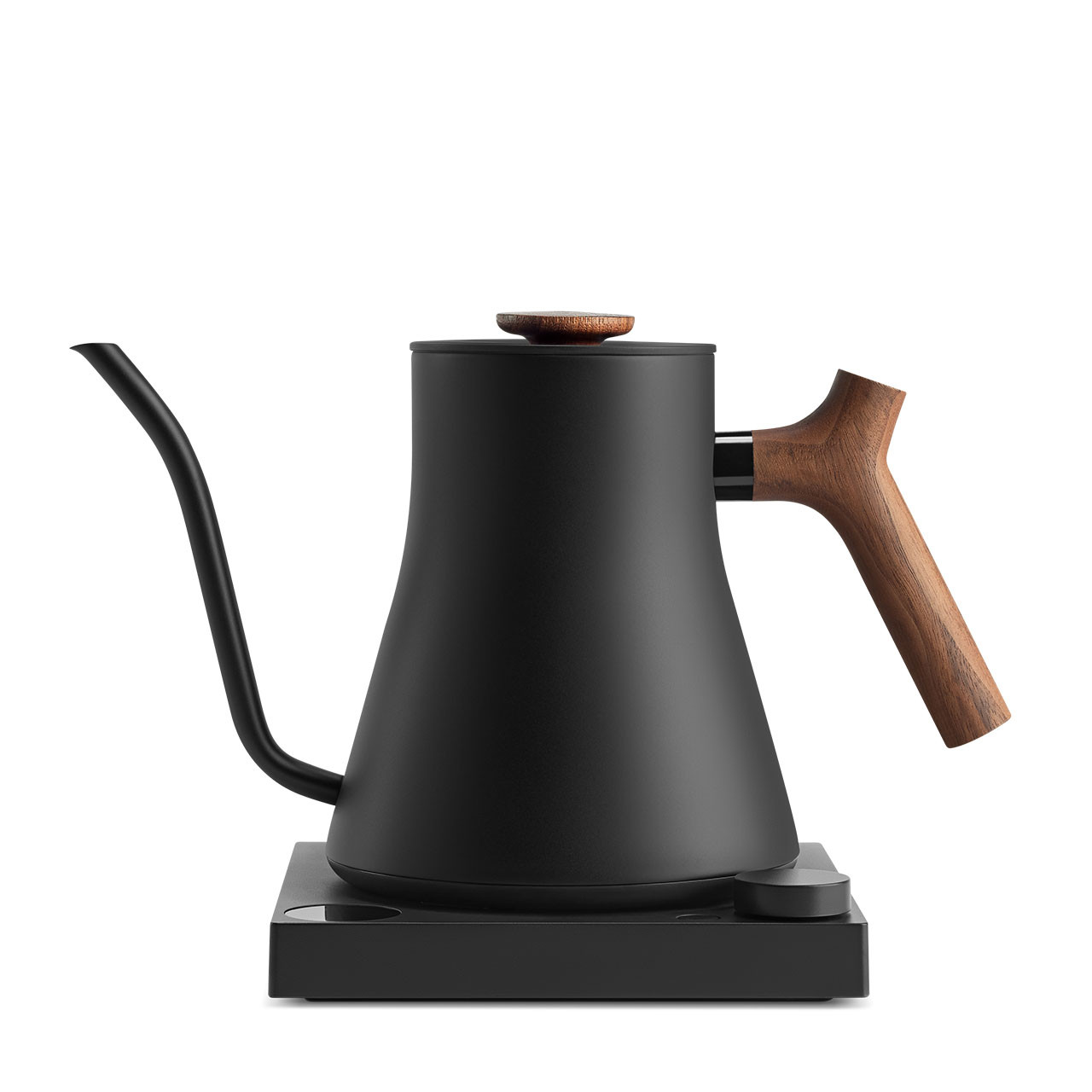
The 0.9L Stagg EKG Pro lets you choose a temperature in single-degree steps between 104°F and 212°F. Its gooseneck is built for measured pours, and its selectable hold periods are useful when you make another cup later. There is also a brew stopwatch on the base.
The trade-off is its smaller reservoir. If you make tea bags with hot water, you may find little use for its extra controls; a pour-over brewer has more reason to use the slow spout and adjustable temperature.
Where Cocinare fits
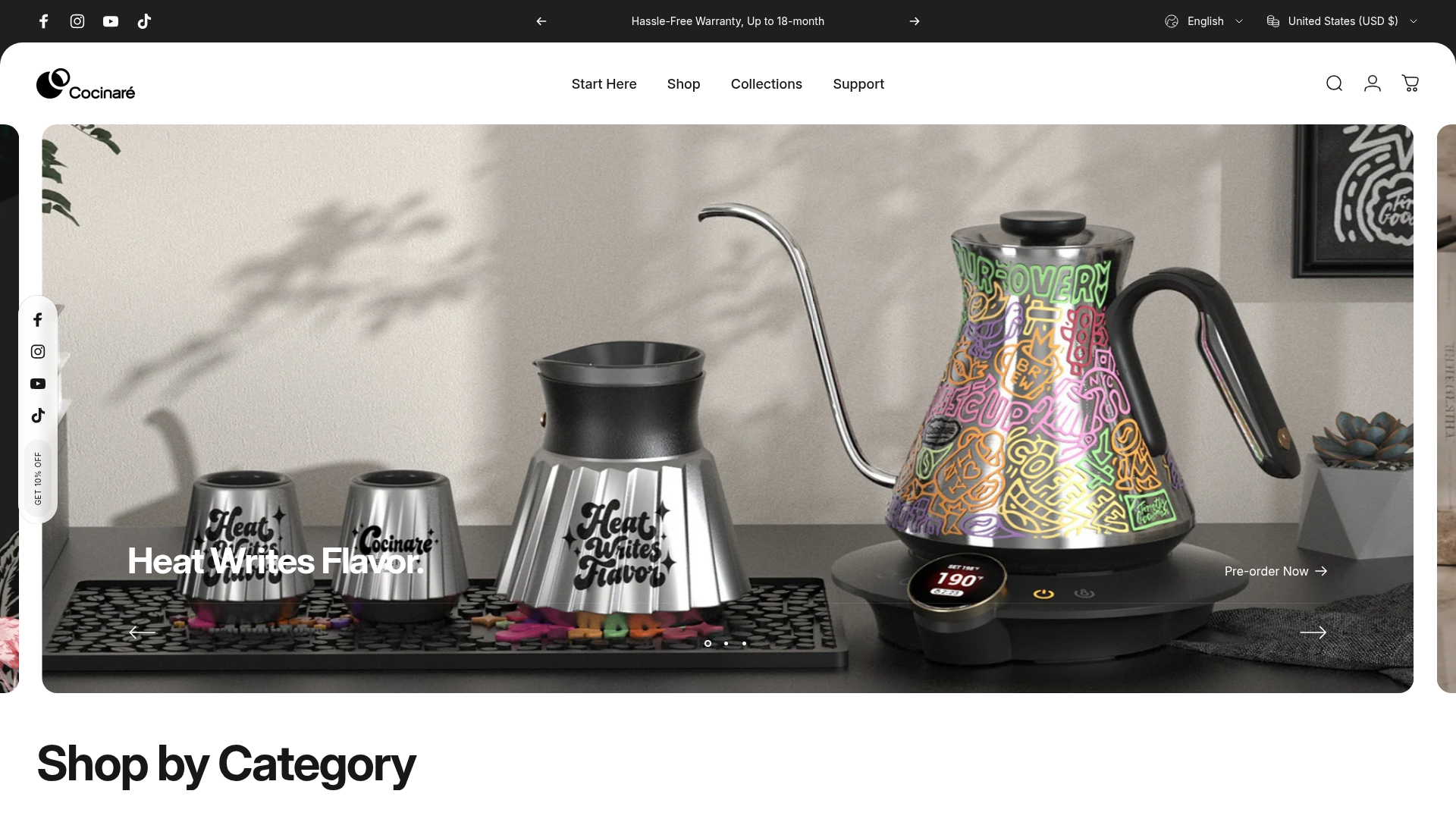
Cocinare's electric goosenecks bring a different look to a home coffee station. The Artisan, Color-changing and Collab collections range from restrained to expressive. If your kettle stays out on the counter, that choice of finish has real appeal. The collection overview does not give capacity and temperature settings for each model, though, so it would be misleading to put one in the exact-1L comparison without those specifications.
Cocinare also offers free U.S. shipping, up to 18-month warranty coverage and a 30-day money-back guarantee. Those terms make a design-led purchase easier to consider. You still need enough water in the reservoir for the way you brew.
Is a 1L kettle enough for your morning?
A liter is 1,000 mL before accounting for water you use to rinse a paper filter or warm a brewer. Sketch your routine in milliliters rather than counting cups, since mug sizes vary:
Routine |
Example water budget |
What it means for a 1L kettle |
|---|---|---|
One pour-over |
300 mL for brewing plus 100 mL for rinsing and warming |
Comfortable headroom |
Two modest pour-overs |
2 × 350 mL plus 100 mL for prep |
Possible in one fill if you do not overfill either brew |
Two larger brews |
2 × 450 mL plus 100 mL for prep |
Uses the entire nominal liter; another fill may be easier |
Treat these as water budgets, not recipes. The minimum-fill line matters for single cups: if it sits above the amount you want to heat, a small kettle loses some of its convenience. Two smaller brews can fit into 0.9L, with less room left for rinsing.
How to choose a 1 liter electric kettle with temperature control
Start with the biggest brew you make on a normal weekday. If your pot or two mugs need 800 mL, allow for preheating and water left behind in the kettle. If you need more than the rated 1L, plan on two heats or buy a larger kettle. You can heat less than a full kettle, though a larger model may crowd a small coffee station.
Next, decide what the controls should do for you. A selectable temperature is valuable if you alternate between coffee and tea; a display of the current water temperature helps you see what is happening during heating. A hold function matters most when the second pour happens after you have finished the first drink. If you pour everything immediately, it may rarely earn its place in your decision.
Picture the full kettle in your hand. The first pour carries the most weight, and a narrow stream that works well over a small dripper will take longer to fill a big teapot. Handle clearance and lid access matter if the kettle sits beneath wall cabinets; the display should also face you from where you brew.
Small details that change the daily experience
Tea, pour-over and mixed households
With pour-over coffee, the gooseneck helps you direct water onto the grounds rather than the paper. Tea drinkers may appreciate adjustable heat while wishing the spout poured faster. If your household makes both, think about which compromise you would notice each morning. A standard spout fills mugs easily; a gooseneck makes careful pours over coffee easier.
Materials and maintenance
Stainless steel is common in electric goosenecks; glass lets you see the water level. Either can be awkward to clean if the lid opening is narrow. Empty leftover water after use, descale according to the appliance's instructions when you see mineral buildup, and keep the electric base dry rather than immersing it.
Safety and a realistic footprint
Look for a marked fill limit and automatic shutoff. A cool-touch handle helps when you pour often, but the metal body and lid may still be hot. Measure the setup with its spout pointing outward, leaving enough room to move or unplug the base. The vessel alone will not tell you how much counter it needs.
What matters beyond the capacity label
Target temperature and real accuracy
Variable temperature lets you choose a target instead of boiling every time. Single-degree adjustment helps if you change brew settings often, although it says nothing by itself about the temperature of the water. Separate three questions: how finely can you set it, how close does the water get, and how long will the kettle hold it? At higher elevations, water boils below the sea-level boiling point, so under normal conditions the kettle cannot heat liquid water beyond its local boiling point.
"The two-cup pour-over guidelines specify brewing water at 200°F / 93.5°C." - Specialty Coffee Association
That is a useful starting point for coffee, not a rule that every bean or tea requires the same setting.
Pour control for coffee, speed for tea
A gooseneck gives you more control over where the water lands and how fast it reaches the coffee bed. Try to picture the actual motion: can you begin a thin stream without tipping the kettle so far that your wrist strains? A standard spout is quicker for filling a teapot or mug. If you almost never brew pour-over, the gooseneck's slower flow may be an inconvenience rather than an upgrade.
Hold settings and everyday controls
A hold feature helps when you brew in rounds, but its useful duration depends on your routine. Compare whether the hold starts automatically or needs to be selected and whether you can read the current temperature at a glance. For a single cup each morning, a simple dial may be more valuable than many menus.
Footprint, fill line and cleaning
The vessel capacity does not tell you how much counter space the handle, spout and base take up together. Measure the available width and depth where the kettle will live, including clearance for lifting the lid under a cabinet. Look at the lid opening and the inside of the spout, too: a beautiful kettle still needs to be easy to fill and descale.
Which kettle should you buy?
Choose the OXO for a true 1L reservoir and controlled pour. Choose the Fellow Stagg EKG Pro if you can give up 100 mL for more hold and temperature options. For a kettle you plan to leave on display, browse Cocinare's popular picks and find a model whose published capacity suits your water budget. Cocinare's distinctive designs, free U.S. shipping, warranty coverage of up to 18 months and 30-day money-back guarantee give you reasons to try the brand. Settle the capacity and controls before choosing a finish.
FAQ
What is the best electric kettle with temperature control?
For a compact pour-over setup that must hold a full liter, the OXO Adjustable Temperature Pour-Over Kettle is a practical choice. If 0.9L is enough, the Fellow Stagg EKG Pro adds single-degree selection and configurable hold times. Your best choice depends on how much water you brew and whether you need a gooseneck.
Is an electric kettle with temperature control worth it?
Yes, if you regularly brew coffee or teas at a chosen temperature instead of using boiling water every time. A variable setting saves you from waiting for boiled water to cool, though a precise-looking display alone does not guarantee accurate water temperature.
What is the best 1-liter electric kettle?
For temperature-controlled pour-over brewing, the OXO Adjustable Temperature Pour-Over Kettle matches the 1L requirement and has a gooseneck. If you would rather have more temperature and hold options than an exact 1L capacity, compare it with the 0.9L Fellow Stagg EKG Pro.
Share:
Plastic-Free Drip Coffee Guide
Best Stovetop Gooseneck Kettles