

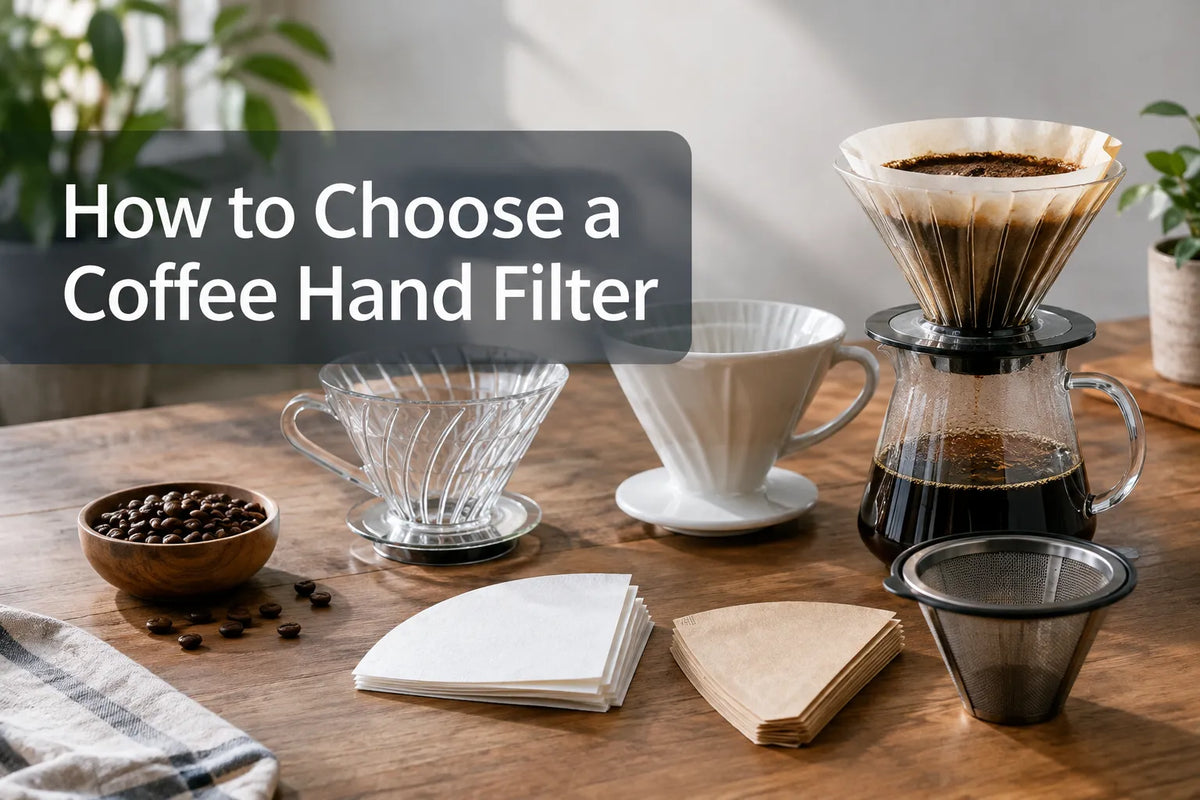
Start with the dripper, the holder above your mug or carafe. Then choose paper or a reusable filter made for it. A compact dripper that takes easy-to-find paper is a good first pour-over setup. Settle on size and shape before color or material; chasing down hard-to-find refills gets old fast.
“Coffee hand filter” might mean the pour-over dripper or the insert that catches the grounds, so read the product description before you buy. A hand grinder does another job: it turns coffee beans into ground coffee. The dripper and filter keep those grounds out of your cup. Pour-over is a type of filter coffee; a French press uses its own mesh plunger instead of a separate dripper.
How to choose a coffee hand filter shape
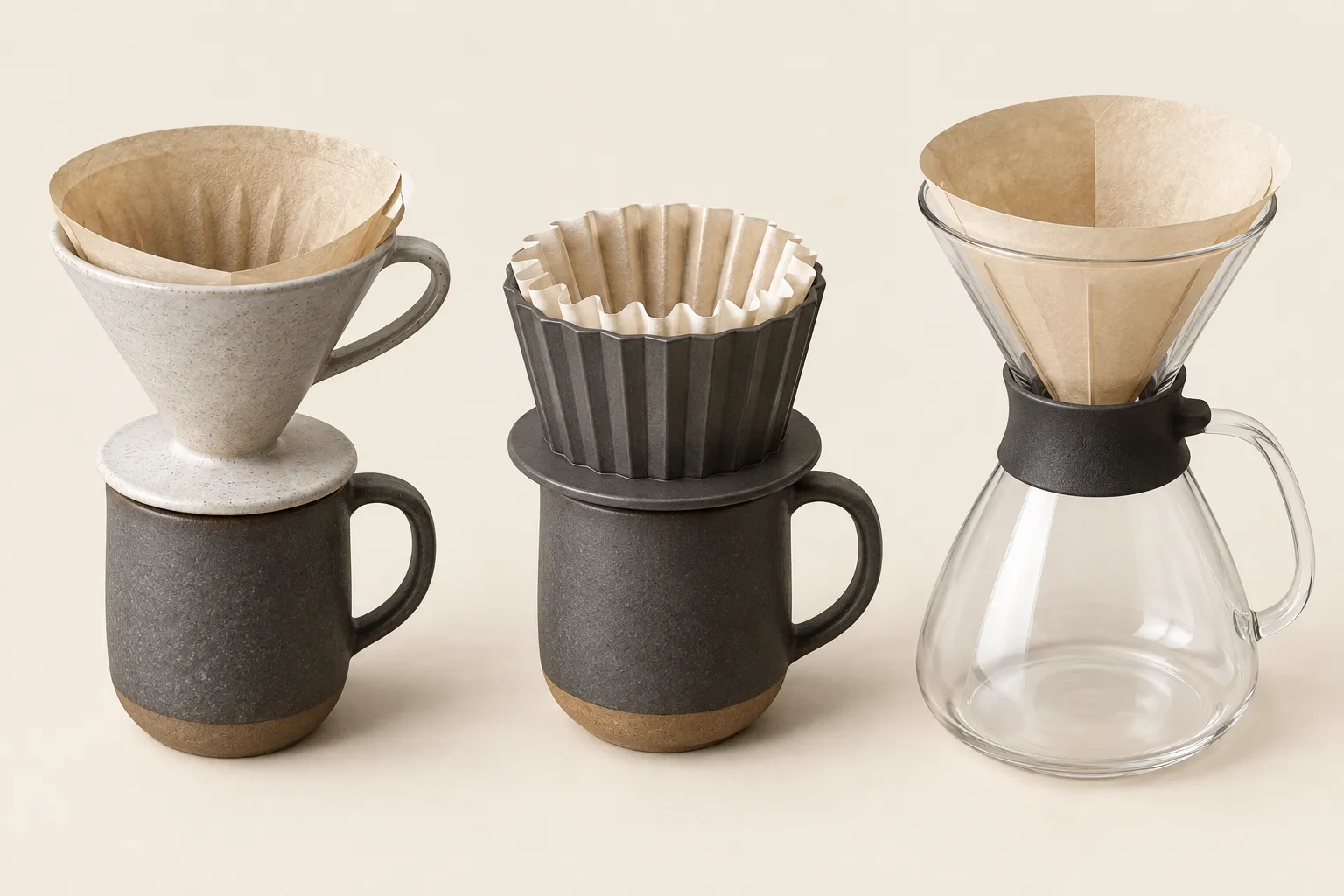
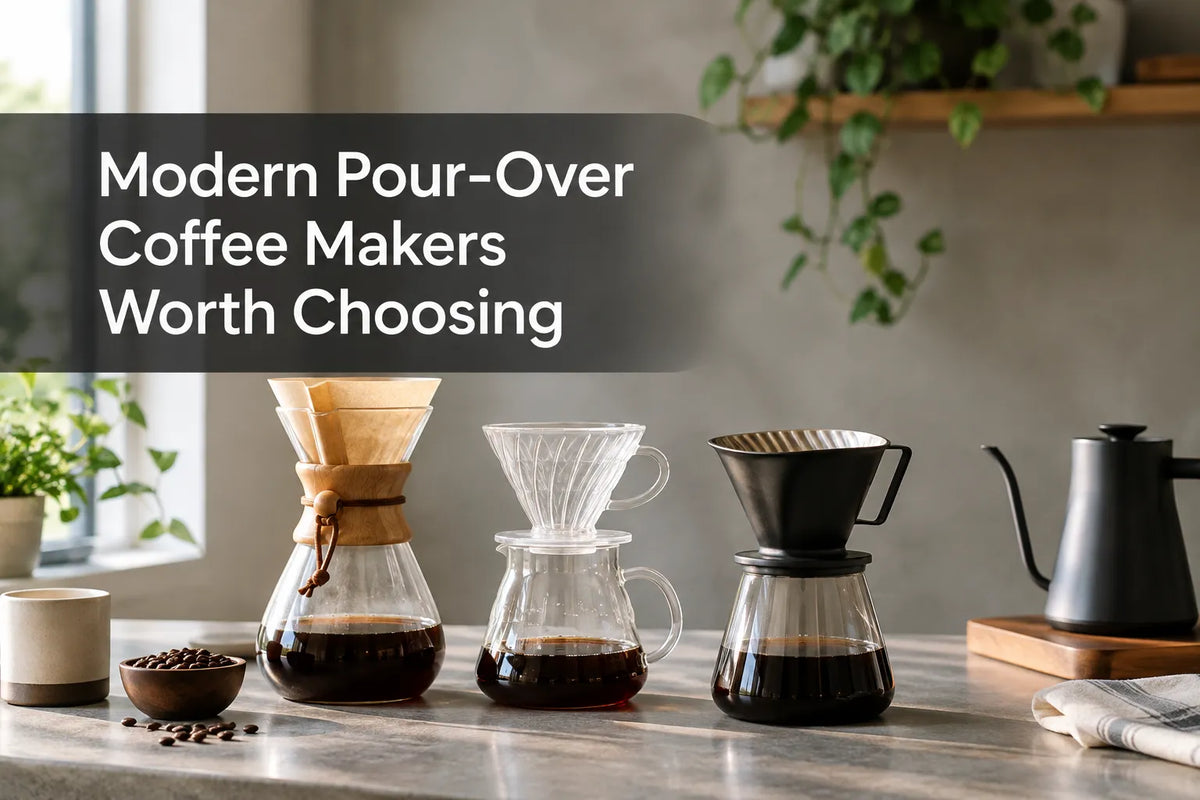
Your dripper determines which filter fits. Cone paper, flat-bottom paper and folded carafe paper may look similar in size, but each belongs in a different brewer. Shape affects how water moves through the coffee, along with the paper, grind and way you pour.
Setup |
Filter it needs |
What it feels like to own |
Good fit for |
|---|---|---|---|
Pointed cone dripper |
Matching pointed cone paper, or a compatible reusable insert |
Compact and hands-on; often brews directly into a mug |
One-cup rituals and limited storage |
Flat-bottom dripper |
The specified flat-bottom or wave-style paper |
Broad base for the coffee bed; still a small standalone brewer |
Someone who wants a relaxed introduction to pour-over |
Glass dripper-and-carafe brewer |
Its designated folded paper |
One vessel brews and serves; more room to display and store |
A gift or coffee for more than one person |
Cone-shaped and flat-bottom brewers can bring out different flavors. In a basket-geometry study published in the Journal of Food Science, shape influenced sensory results, with some differences depending on roast or grind. Neither shape tastes best to everyone. Give more weight to the one you will enjoy using and can buy paper for.
"In a blind test, 25 of 45 participants identified the different cup when comparing flat-bottom and semi-conical baskets at the same medium grind." - Specialty Coffee Association
What do the numbers on filters mean?
Numbered cone papers describe size rather than grade or flavor. #4 is larger than #2; #1 usually serves a small single-cup holder. You will see these numbers on Melitta-style cone filters, but other brewers use different sizing systems. A V60 marked 01 or 02, a wave-style dripper and a Chemex-style carafe may each need their own paper. Match the model and size on the dripper packaging to the paper rather than going by the number alone.
Your mug or server matters too. The dripper should sit securely on it, leave space for the coffee to drain and lift off without fuss. If you often brew for two, a tiny single-cup holder will feel limiting.
Paper or reusable: choose the cup and cleanup you want
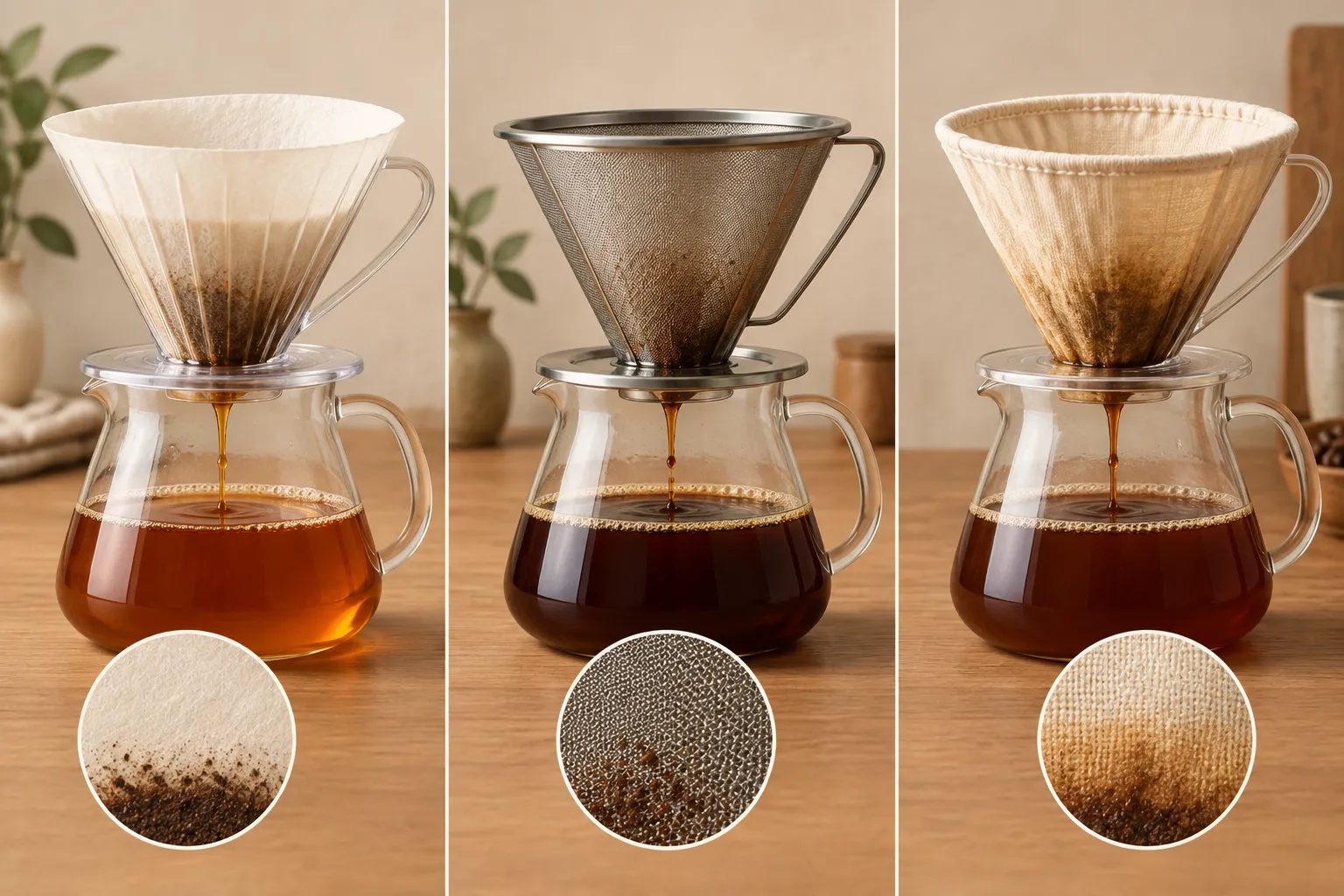
Paper makes a good first choice if you like a cleaner cup. It catches more oils and fine particles than metal mesh, which lets some through and can leave sediment in your mug. Cloth falls between the two for cup texture, though you need to wash and store it with care after each use.
Filter |
Cup character |
After brewing |
Trade-off |
|---|---|---|---|
Paper |
Clearer cup, less sediment |
Remove paper and grounds together |
You must keep buying the correct shape |
Metal mesh |
Fuller body, potentially more sediment |
Empty grounds and wash mesh thoroughly |
Fine particles and oils can build up in the mesh |
Cloth |
Some body with less sediment than coarse mesh |
Wash thoroughly and store carefully |
More maintenance than either paper or metal |
White and brown paper both work. Brown is generally unbleached and white has been bleached. Neither color promises a particular taste: composition, thickness and fit also affect the cup. If a new pack smells papery, rinse a sheet with warm water before adding coffee.
Metal saves you from buying more paper, but you will need to clean the mesh. Cloth takes more care still. On a rushed morning, throwing away a used paper may feel easier than washing either one; metal earns its place if you want a fuller cup.
Choose a dripper material you will like living with
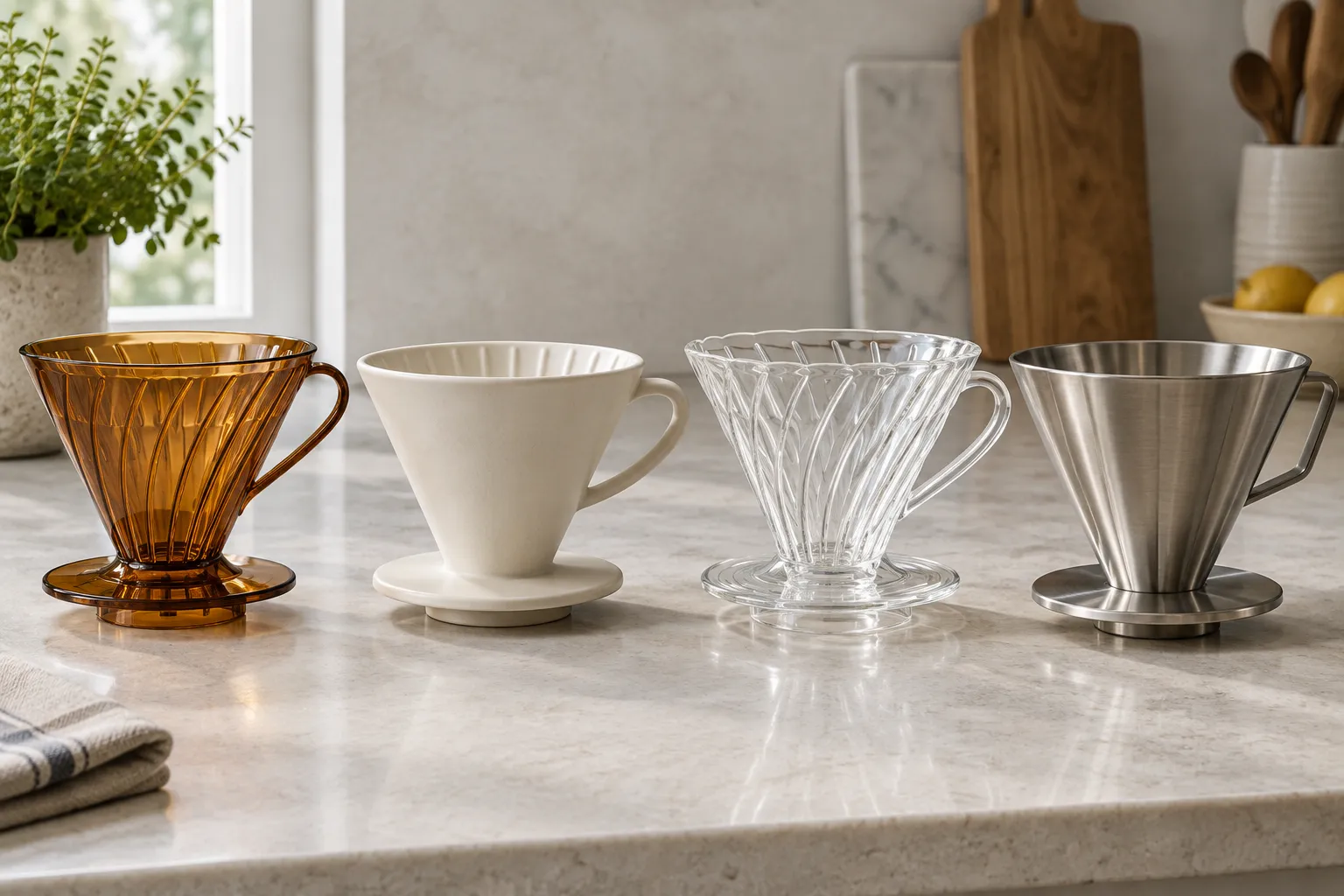
Material affects the dripper’s weight, handling and how much heat it draws from the brew. You still need the right filter for it. Think about the space it occupies and how securely it sits on your mug, as well as its finish.
Dripper material |
Main appeal |
Consider before buying |
|---|---|---|
Plastic |
Light, compact and less vulnerable to knocks |
Check the maker’s care instructions and whether you like its finish |
Ceramic |
Solid feel and an expressive range of finishes |
Heavier and breakable; a cold dripper can absorb heat |
Glass |
Makes the coffee ritual visible and looks at home on display |
Fragile and often more demanding to store |
Metal |
Durable-feeling, slim and suited to a modern setup |
Can become hot to handle; look for a comfortable grip or collar |
Short on counter space? A standalone dripper can go back in the cupboard after breakfast, unlike a large display carafe. If you keep your coffee gear out, ceramic or glass can look at home there.
Match the filter to your day
In a small kitchen, a one-cup dripper on a mug saves space. Choose paper you can find nearby or reorder. A light plastic holder slips into a cupboard, and a solo brewer has no need for a serving carafe.
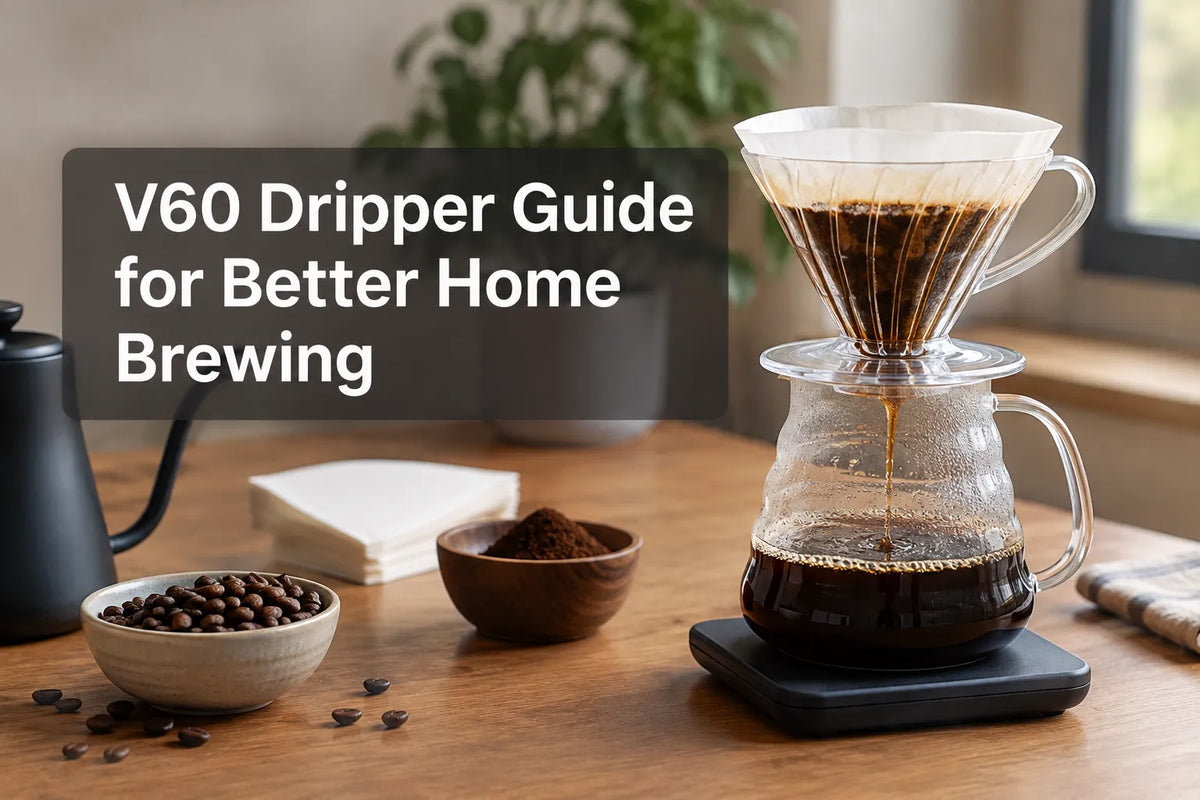
If coffee is your unhurried morning ritual, pick a dripper and mug or carafe that feel good to use. Paper gives you a clearer cup, while metal brings more body. A gooseneck kettle helps you wet the grounds with a controlled stream rather than sending all the water onto one spot.
For a gift, include the dripper’s papers and a mug or server that fits underneath. Nobody wants a lovely brewer that comes with an errand to find obscure refills. An integrated glass carafe suits someone with room to keep it and no qualms about handling fragile glass.
A short buying checklist
At the point of purchase, ask:
Am I buying the holder, the filter inserts, or both?
Does the filter package name the right dripper model, shape and size?
Will the dripper sit securely on my mug or server, and does it suit the amount of coffee I usually make?
Do I want the easy disposal and clearer cup of paper, or the fuller cup and washing routine of a reusable filter?
Is this piece meant to disappear into a cupboard, or be part of the counter?
A compatible dripper and filter, a mug, coffee and hot water will get you started. Later, a scale can help you repeat the cups you like, and a gooseneck kettle gives you more control over where the water lands. Cocinare’s design-led electric gooseneck kettles suit that hands-on part of pour-over; choose the dripper and filter as a matching pair first.
The right choice for a first hand filter
For most beginners, the easy choice is a compact, stable dripper with paper you can find again. Cleanup is quick. If you like a fuller cup and will wash the mesh, consider metal. Cloth is for someone willing to care for fabric after each brew. Choose for the mornings you actually have.
Once the dripper and paper are sorted, you can put more thought into the pour. Cocinare’s gooseneck kettles give you precise water control in a design-conscious piece you can leave on the counter if the pour-over ritual becomes part of your day.
FAQ
How do I know which coffee filter to buy?
Start with your dripper’s model, shape and size, then choose paper or a reusable filter specified to fit it. Cone, flat-bottom and carafe papers are not interchangeable simply because they look similar.
Is a #2 or #4 coffee filter bigger?
A #4 cone filter is bigger than a #2. These are common cone-paper sizes, not a universal scale for every pour-over dripper, so use the size specified for your holder.
Does it matter if you use white or brown coffee filters?
Both can make good coffee. Brown paper is generally unbleached and white paper has been bleached; fit and paper characteristics matter more than color alone. Rinsing the paper can help if you notice a papery aroma.
What is the best coffee filter for using at home?
For a low-maintenance first setup, use paper made for your dripper. If you prefer a fuller cup and are happy to clean a mesh after each brew, a compatible metal filter is another option.
What is a #1 coffee filter?
It is a small numbered cone paper generally intended for a single-cup holder. The number describes its size, not its quality, and does not mean it fits every one-cup pour-over dripper.

Share:
What Is a V60 Coffee Maker?
Best Plastic-Free Coffee Makers