

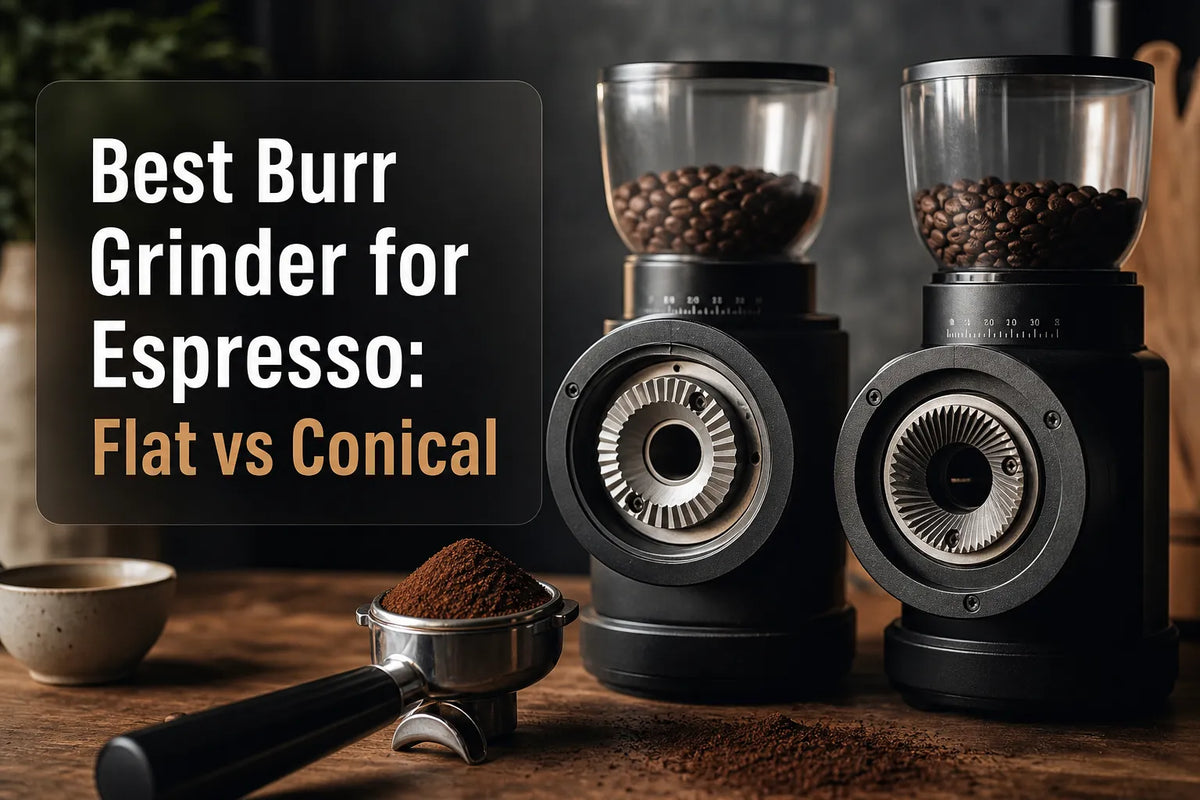
Best Burr Grinder for Espresso: Flat vs Conical
If you’re choosing the best burr grinder for espresso, you’re really choosing how you want your coffee to feel every morning: more clarity or more body, more forgiveness or more precision, more ritual or more speed.
That’s why the flat vs conical debate refuses to die. Both can make exceptional espresso. Both can also disappoint if the grinder itself is poorly designed. The real answer is more nuanced than “flat is better” or “conical is easier.” Burr geometry, alignment, retention, workflow, grind adjustment, roast style, and even your preferred drinks all matter.
For home brewers, especially those who also make pour-over, the smartest choice is usually the grinder that fits your brewing style and your daily routine - not the one with the loudest online fan club.
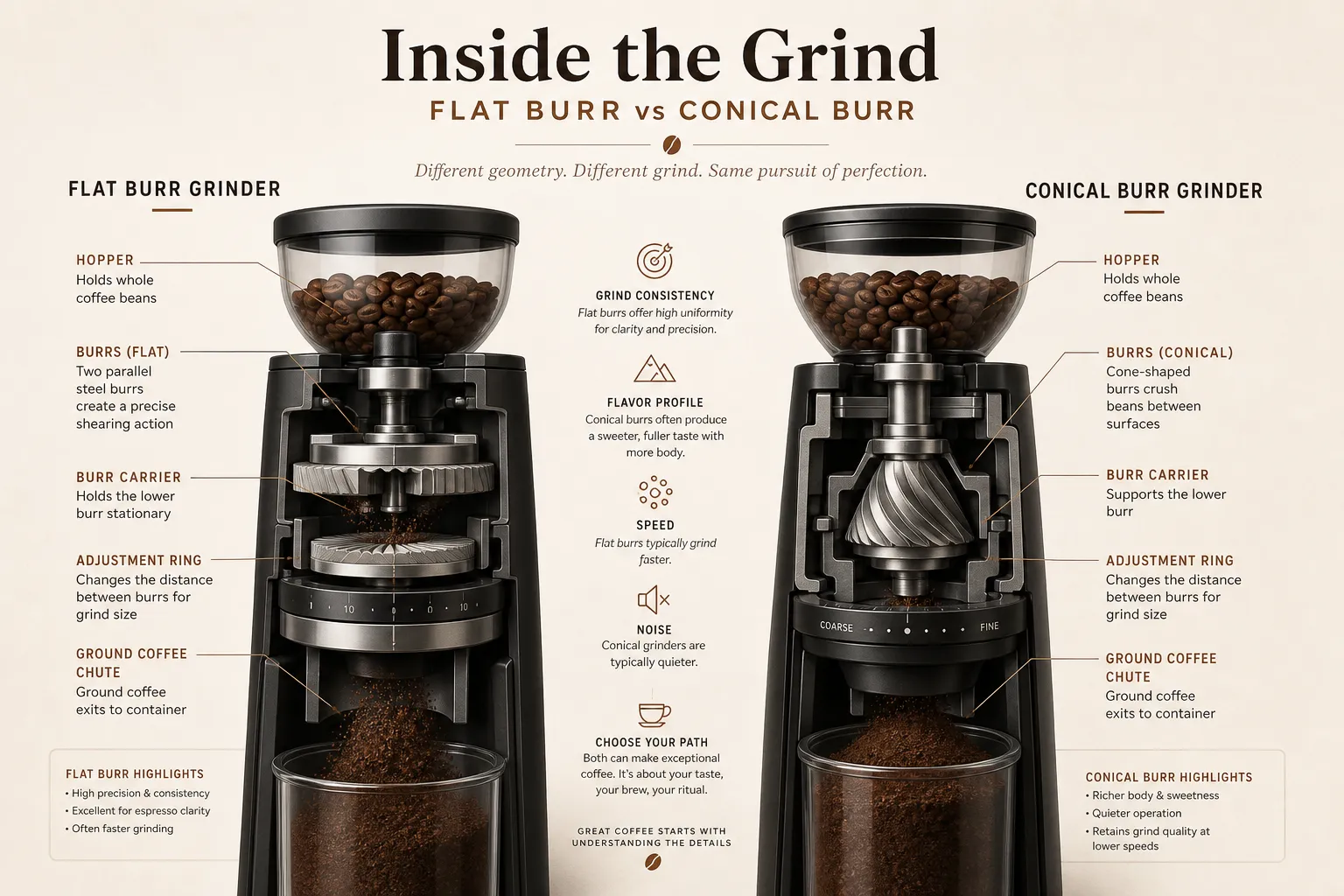
The Short Answer: Which Burr Type Is Best for Espresso?
If you want the quick verdict:
Choose a flat burr grinder if you want cleaner flavor separation, tighter particle uniformity, and a more analytical espresso experience.
Choose a conical burr grinder if you want a richer, rounder shot, a more forgiving dial-in process, and often a quieter, lower-retention workflow.
Choose based on the grinder, not just the burr shape. A great conical can beat a mediocre flat, and vice versa.
For many home users, the best burr grinder for espresso is not automatically the most “specialty” option. It’s the one that helps you make delicious coffee consistently without turning every shot into a calibration project.
What Competitor Guides Get Right - and What They Miss
Most high-ranking articles agree on a few points:
Blade grinders are not suitable for serious espresso.
Flat burrs are often associated with clarity and consistency.
Conical burrs are often associated with body and easier dial-in.
Retention, noise, and price frequently differ between the two categories.
That’s all true - but many guides stop too early. They often gloss over:
Espresso vs drip crossover value
Many buyers don’t want one grinder for one method forever. They want flexibility.Workflow quality
Static, retention, hopper vs single dose use, and adjustment usability matter more than people think.Manual vs electric reality
A manual burr grinder for espresso can be brilliant, but only for the right user.Taste isn’t just “clarity vs body”
Roast level, burr geometry, alignment, and recipe can change the result dramatically.Your kettle still matters if you brew both espresso and pour-over
The best setup is a system, not a single hero product.
That last point is where design-minded home brewers often level up. If your ritual includes both espresso and filter coffee, pairing the right grinder with a precision kettle creates a cleaner, more satisfying workflow. Cocinare’s design-forward gooseneck kettles bring that same specialty mindset to pour-over: precise control, premium build quality, and a modern countertop presence that feels as good as it performs.
What Flat and Conical Burrs Actually Are
Conical Burrs
A conical burr set uses a cone-shaped inner burr that sits inside a ring-shaped outer burr. Beans feed downward through the burrs, with gravity helping move grounds out.
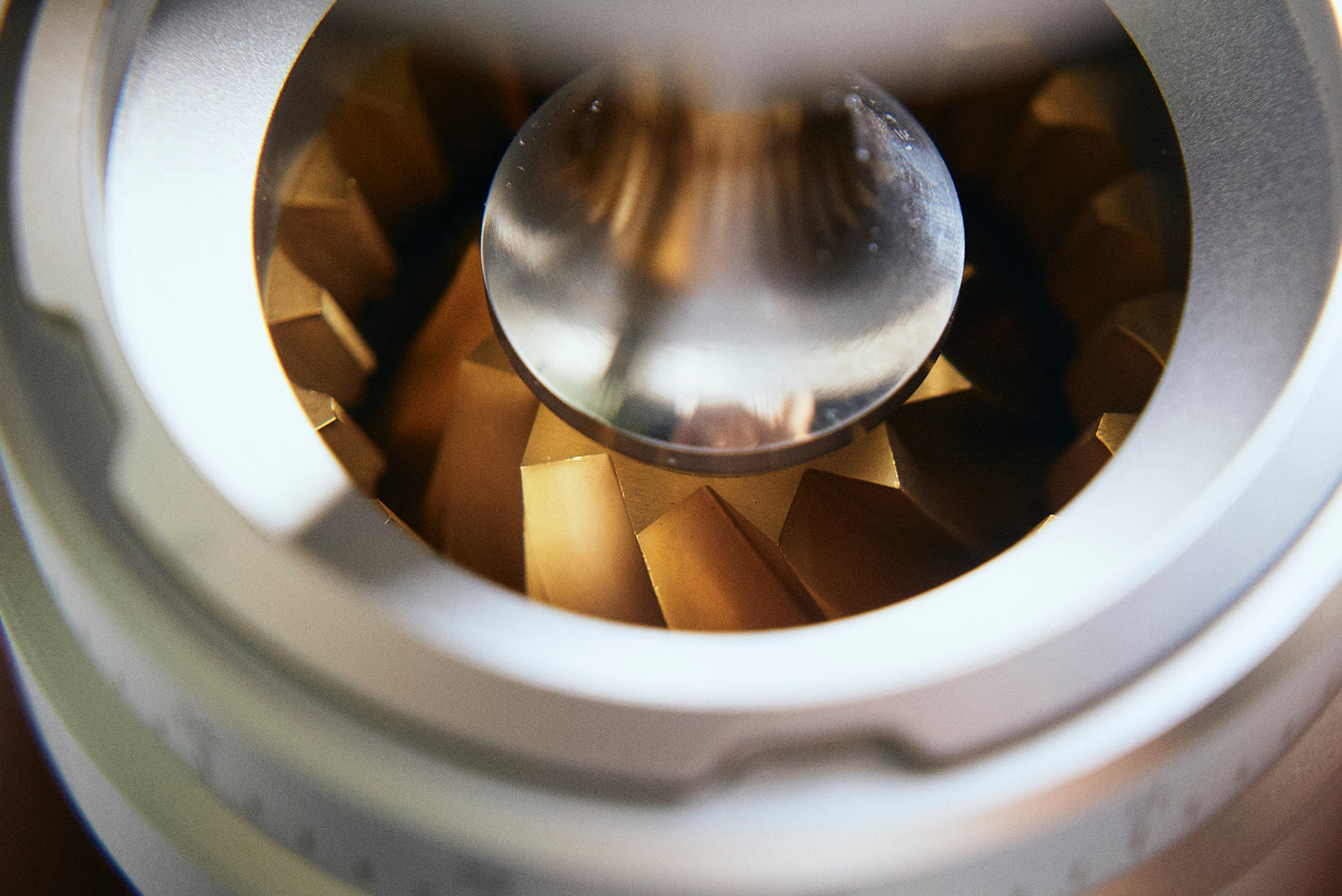
Common traits of a conical burr grinder:
usually lower RPM
often quieter
often more forgiving for espresso dialing in
often strong texture and body in the cup
Flat Burrs
A flat burr grinder uses two parallel disc-shaped burrs. Beans enter between the burrs and are pushed outward as they’re ground.
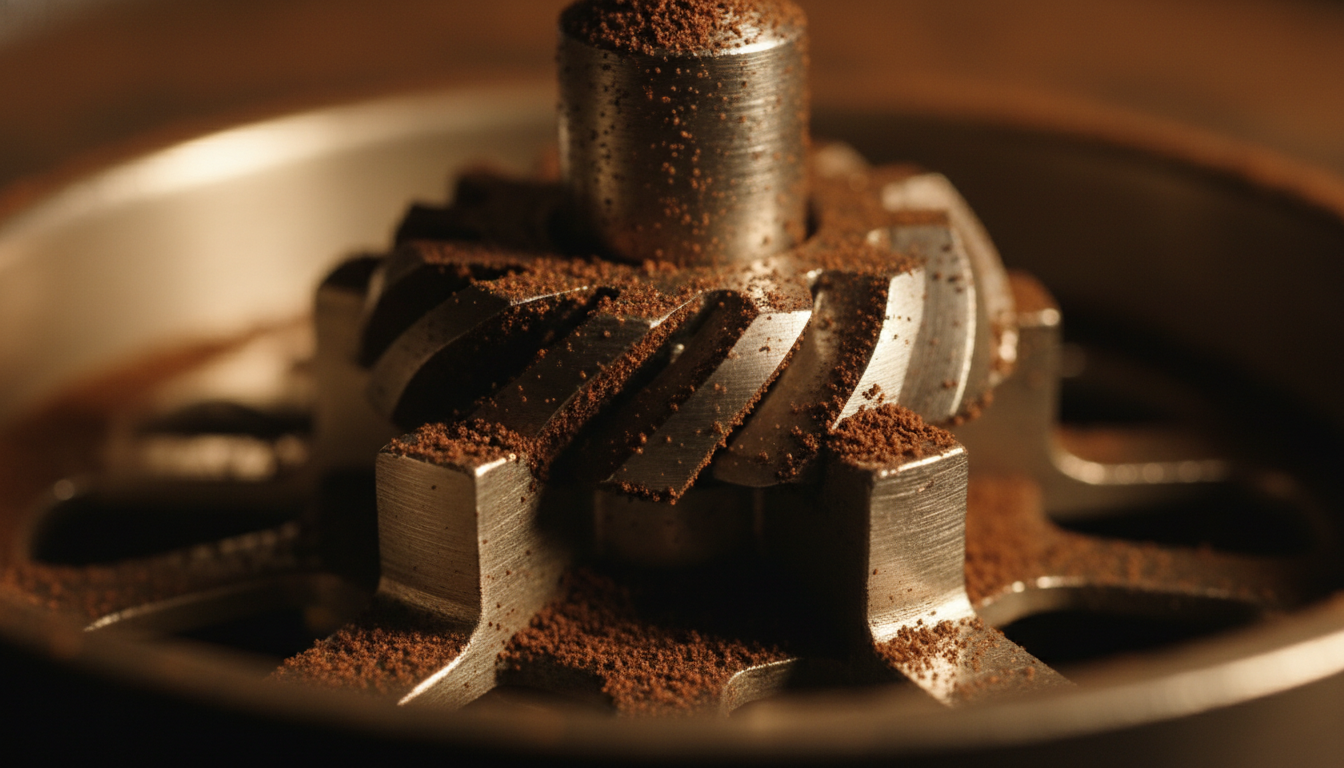
Common traits of a flat burr espresso grinder:
often more uniform particle distribution
frequently clearer flavor separation
sometimes louder operation
can be less forgiving when small changes are made
Flat vs Conical Burr Grinders at a Glance
Feature |
Flat Burr Grinder |
Conical Burr Grinder |
|---|---|---|
Espresso flavor style |
Cleaner, more separated, often higher clarity |
Rounder, fuller, often more blended |
Dial-in difficulty |
Usually more exacting |
Usually more forgiving |
Particle distribution |
More uniform |
Often more bimodal |
Noise |
Often louder |
Often quieter |
Retention |
Varies, but can be higher |
Often lower |
Heat at high-volume use |
Often more |
Often less |
Best for |
Tinkerers, flavor chasers, modern espresso profiles |
Daily home use, traditional espresso feel, easier workflow |
Price range |
Often higher |
Often broader, including more affordable options |
Why Burr Shape Matters for Espresso
Espresso is unforgiving. Water passes through a compact puck under pressure, so tiny grind differences can create huge taste differences.
A burr grinder for espresso needs to deliver:
fine enough adjustment
stable grind output
low clumping and manageable static
repeatable dosing
minimal retention if you single dose
This is why the burr type conversation matters more in espresso than in French press or batch brew. A bean grinder for espresso isn’t just crushing coffee - it’s setting up extraction.
Grind Distribution: The Real Technical Difference
The most useful technical distinction is particle distribution.
Flat burrs are often described as producing a more unimodal distribution, meaning a tighter cluster of particle sizes. Conical burrs often produce a more bimodal distribution, with a mix of larger particles and more fines.
In practical cup terms, that can mean:
Flat burr grinder espresso: more distinct acidity, cleaner finish, easier to perceive origin character
Conical espresso grinder: more syrupy body, softer transitions, more traditional espresso texture
But this is a tendency, not a law. Burr design and grinder build quality can override broad stereotypes.
Taste: How Flat and Conical Burrs Change the Cup
What Flat Burr Espresso Tends to Taste Like
A best flat burr grinder for espresso often appeals to drinkers who want to notice:
floral notes
citrus or berry brightness
clearer origin distinction
more transparent light-roast expression
This can be beautiful with modern espresso and high-quality single origins. But it can also feel less plush if you prefer dense, chocolate-driven shots.
What Conical Burr Espresso Tends to Taste Like
A best conical burr grinder for espresso often suits drinkers who prefer:
heavier body
rounded sweetness
classic espresso texture
easier balance across medium and darker roasts
That makes a conical burr espresso grinder especially attractive if you drink milk drinks, use varied beans, or want a friendlier daily workflow.
Dial-In: Why Conical Burrs Often Feel Easier
One point that comes up across expert and enthusiast communities is that conical burr grinders are often easier to dial in for espresso.
Why?
Because the shot window can feel wider. Tiny changes don’t always swing the extraction as dramatically. For many home users, that means fewer sink shots and less frustration.
A flat burr grinder for espresso can be wonderfully precise, but that precision often asks more from the user:
tighter recipe control
careful puck prep
more responsive adjustment
better consistency in dose and yield
If you love experimentation, that’s a benefit. If you just want a great cappuccino before work, it may not be.
Retention, Static, and Workflow Matter More Than Most Buyers Expect
A lot of “best burr coffee grinder for drip coffee” and espresso guides mention retention but don’t explain why it matters in real life.
Retention is old coffee staying inside the grinder. For single dosing, high retention means:
stale grounds mixing into fresh coffee
inconsistent doses
more mess
more purging
Conical burr grinders often earn praise for lower retention, though many modern flat burr grinders have improved dramatically with better chute design, anti-static tech, and bellows-style workflows.
If you alternate between espresso and filter brewing, workflow quality becomes even more important. A grinder can have superb burrs and still be annoying to live with.
Manual vs Electric: Which Makes More Sense?
Manual Burr Grinder for Espresso
A manual burr grinder for espresso can be surprisingly capable. High-end hand grinders often offer:
excellent burr quality
low retention
portability
strong value for money
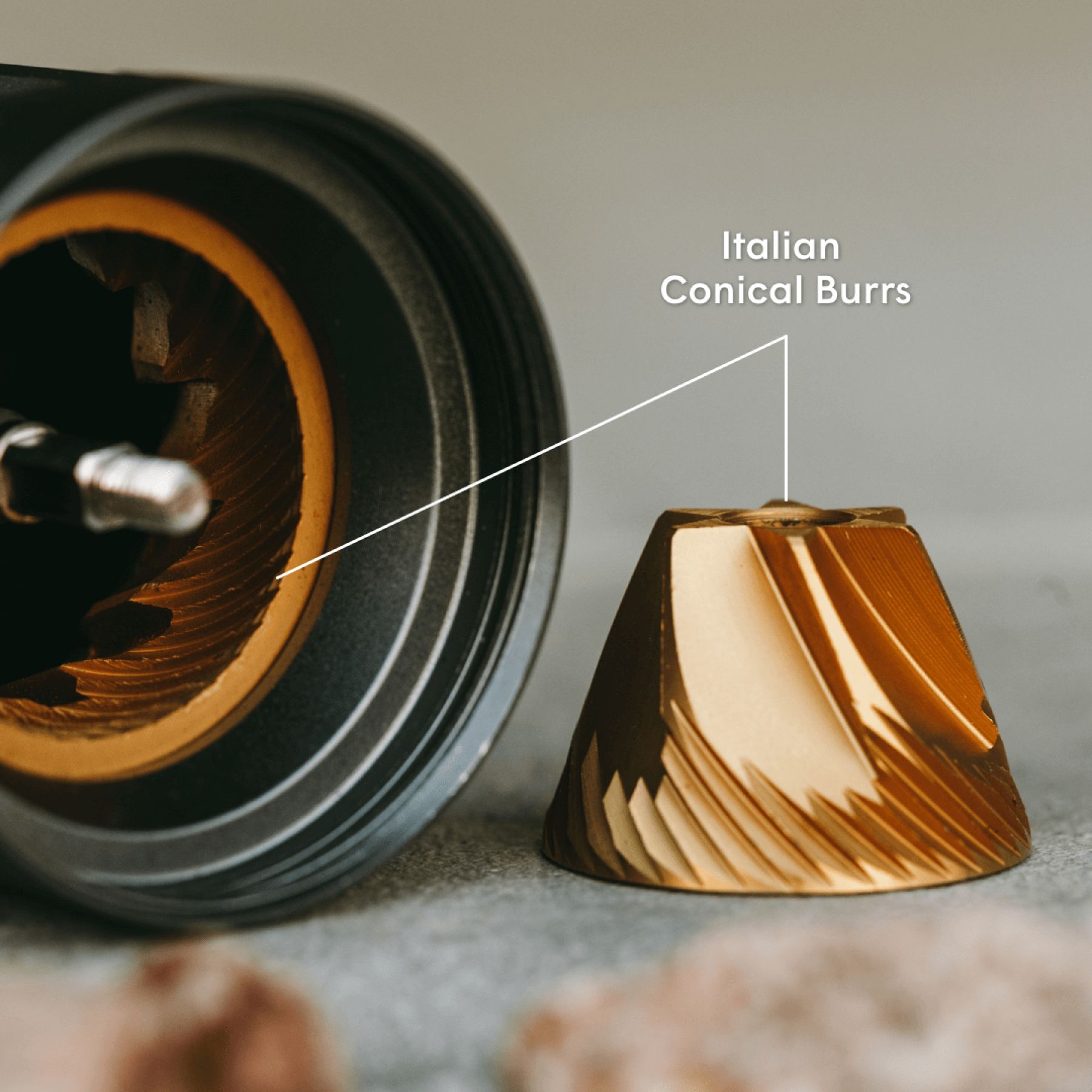
A flat burr manual grinder is relatively rare compared with conical hand grinders. Most manual espresso grinders use conical burrs because the format is compact and mechanically efficient.
A conical burr hand grinder is a smart fit if you:
make one or two shots at a time
travel often
want excellent espresso without electric grinder pricing
don’t mind the physical effort
Electric Espresso Grinders
Electric grinders are the better choice if you:
make multiple drinks daily
share the setup with a partner
frequently switch beans or brew methods
value speed and convenience
For most households, the best burr grinder for espresso is electric simply because it’s more sustainable as a daily habit.
Best Use Cases: Which Burr Type Fits Your Coffee Style?
Choose Flat Burrs If You…
love modern espresso
enjoy experimenting with light roasts
want a best flat burr espresso grinder feel with high flavor separation
prioritize shot-to-shot precision
may also care about the best burr grinder for drip coffee with clarity-first cups
Choose Conical Burrs If You…
prefer richer, more traditional espresso
want an easier daily routine
drink a lot of milk-based beverages
appreciate quieter operation
want a best conical burr grinder that handles both espresso and filter reasonably well
Flat vs Conical for Drip Coffee and Pour-Over
If you also brew filter coffee, the question gets even more interesting.
Flat burrs often shine for pour-over because they can create cleaner cups with excellent separation. That’s why many buyers looking for the best flat burr coffee grinder or the best burr grinder for drip coffee lean flat.
Conical burr grinders, meanwhile, can produce a sweeter, heavier filter profile with more texture. If you like a fuller cup and simpler workflow, the best conical burr grinder for drip coffee may actually be the better fit.
And this is exactly where a precision kettle becomes essential. Grind quality sets extraction potential, but your pour controls contact time, agitation, and bed saturation. Cocinare’s electric gooseneck kettles are made for that final layer of control - precise pouring, premium durability, and a polished design language that turns brewing into a ritual rather than a chore.
A Better Buying Framework Than “Flat vs Conical”
Instead of obsessing over burr shape alone, rank grinders using this order:
1. Espresso Capability
Can it grind fine enough, with small enough steps or stepless control, for true espresso?
2. Burr Quality and Alignment
A well-aligned grinder with excellent burr geometry matters more than simplistic burr-shape dogma.
3. Retention and Workflow
Is it enjoyable to use? Clean? Consistent? Messy? Fast?
4. Brew Method Flexibility
Will you use it only for espresso, or also as the best burr grinder for drip coffee maker use?
5. Noise and Footprint
Especially important in apartments and design-conscious kitchens.
6. Aesthetic Fit
You’re going to see this every day. Good coffee gear should perform beautifully and look beautiful doing it.
That last point is often underplayed in commodity-style buying guides. But premium home coffee is as much ritual as result. Cocinare understands that instinct deeply: specialty-grade function wrapped in a modern, gift-worthy aesthetic, with multiple collections to match different tastes, limited-edition collaborations for collectors, free U.S. shipping, up to an 18-month hassle-free warranty, and a 30-day money-back guarantee.
Common Myths About Flat and Conical Burr Grinders
Myth 1: Flat Burrs Are Always Better for Espresso
Not true. Many espresso lovers prefer a conical burr grinder for espresso because of the texture, sweetness, and user-friendliness.
Myth 2: Conical Burrs Can’t Produce Clarity
Also false. Some premium conical grinders produce extremely articulate cups.
Myth 3: Bigger Burrs Automatically Mean Better Coffee
Bigger burrs can help with speed, heat management, and sometimes grind quality - but burr geometry, motor design, alignment, and overall engineering still matter more.
Myth 4: The Best Grinder for Drip Is Automatically the Best for Espresso
Rarely. Some grinders are outstanding at one and just acceptable at the other. If you want one grinder for both, compromise intelligently.
How Burr Size Changes the Experience
Larger burrs generally offer:
faster grinding
more surface area
potentially less heat buildup during prolonged use
sometimes improved consistency
But larger does not always mean better for every user. A compact, small conical burr coffee grinder may be more practical and enjoyable than a giant flat-burr machine that dominates your kitchen and workflow.
For home coffee lovers, the right balance is usually:
enough burr size for stability and speed
not so much machine that daily use becomes inconvenient
design that complements the space
Who Should Buy a Flat Burr Espresso Grinder?
A flat burr grinder espresso setup makes sense if:
you mostly drink straight espresso or americanos
you love tasting subtle bean differences
you use lighter roasts
you enjoy dialing in carefully
you don’t mind a slightly more technical relationship with your grinder
In that case, a best flat burr grinder for espresso can feel revelatory.
Who Should Buy a Conical Burr Espresso Grinder?
A conical burr grinder for espresso is ideal if:
you want rich, satisfying shots every day
you drink cappuccinos, lattes, or flat whites often
you want fewer frustrating dial-in swings
you value lower noise and often lower retention
you like an all-rounder that can move between espresso and filter
For many households, the best conical coffee grinder is the one that gets used joyfully every day.
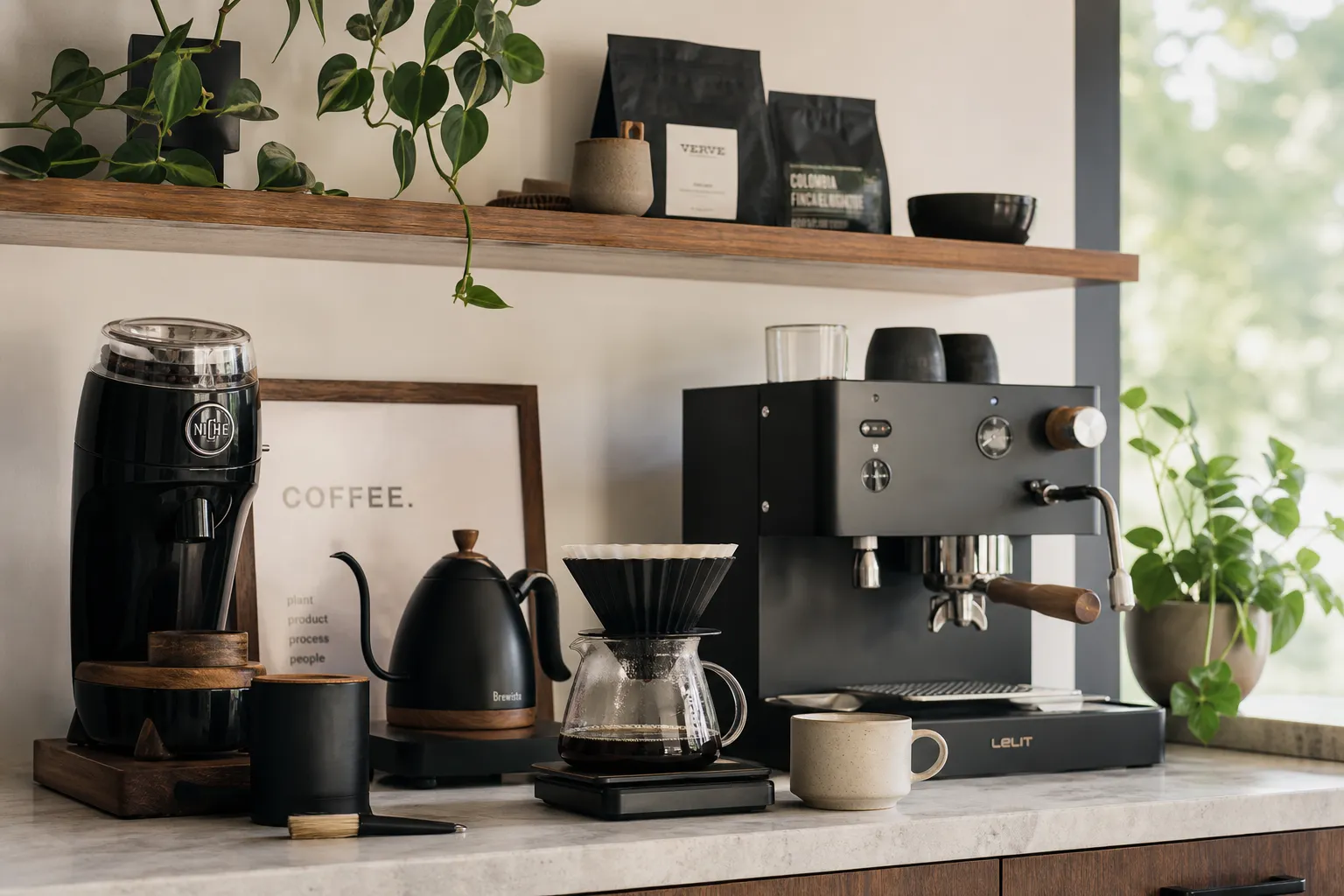
If You Brew Both Espresso and Pour-Over, Here’s the Smartest Setup
For a lot of modern coffee homes, the dream setup isn’t choosing one camp forever. It’s building a brewing station that works across moods and methods.
A practical premium setup looks like this:
A burr grinder matched to your espresso preferences
A precision kettle for filter brewing
A thoughtful workflow with beautiful, durable tools
That’s where Cocinare naturally belongs. If your grinder decides the particle profile, your kettle decides how elegantly you translate that grind into the cup. Cocinare’s kettles are built for precision pouring for better pour-over coffee, but they also elevate the whole visual and tactile experience of brewing. The craftsmanship feels substantial, the aesthetics are modern and refined, and the collections range from understated premium to artistic and collectible.
In other words: not just coffee gear - coffee ritual, upgraded.
Final Verdict: Flat or Conical?
There is no universal winner. There is only the better match for your palate and process.
Choose flat burrs if you want precision, clarity, and a more transparent shot profile.
Choose conical burrs if you want body, ease, and a more forgiving espresso workflow.
If you brew espresso and pour-over at home, think beyond the grinder alone. The best results come from a complete setup - one that gives you control, consistency, and genuine pleasure every time you brew. That’s why Cocinare makes so much sense alongside your grinder choice: premium, durable, beautifully designed tools that make the brewing ritual feel intentional, elevated, and personal.
With free U.S. shipping, an up to 18-month hassle-free warranty, and a 30-day money-back guarantee, Cocinare is a confident next step for home brewers who care as much about experience as outcome.
FAQ
Which grinder burr is better for pour over coffee, a flat or a conical burr?
For pour-over, flat burrs are often preferred for their cleaner cup and better flavor separation, while conical burrs usually deliver more body and a rounder profile. The better choice depends on whether you value clarity or texture more in the cup.
What type of burr grinder is best for espresso?
The best type is one designed specifically as a burr grinder for espresso, with precise adjustment and consistent output. Both flat and conical burrs can make excellent espresso if the grinder is well built.
Are bigger flat burrs better?
Bigger flat burrs can improve speed, surface area, and heat management, especially in frequent use. But they are not automatically better - alignment, burr geometry, and overall grinder design still matter more.
How do flat burr and conical burr grinders taste?
Flat burr grinders often taste cleaner and more separated, highlighting acidity and origin character. Conical burr grinders usually taste fuller, rounder, and more blended, with extra body and a classic espresso feel.
Which grinder is better for espresso, a conical or flat burr?
Neither is universally better. A flat burr grinder for espresso often suits precision-focused drinkers, while a conical burr grinder is often easier to dial in and better for richer, more forgiving daily shots.
Which burr coffee grinder did America's Test Kitchen recommend?
Recommendations from America’s Test Kitchen can change over time, so it’s best to check their latest review directly. In general, they tend to favor grinders with consistent grind quality, intuitive workflow, and strong overall value rather than choosing based only on flat vs conical burr shape.
Share:
Best Single Dose Espresso Grinder Picks 2026
Hand Grinders: Why Coffee Lovers Still Choose Them