

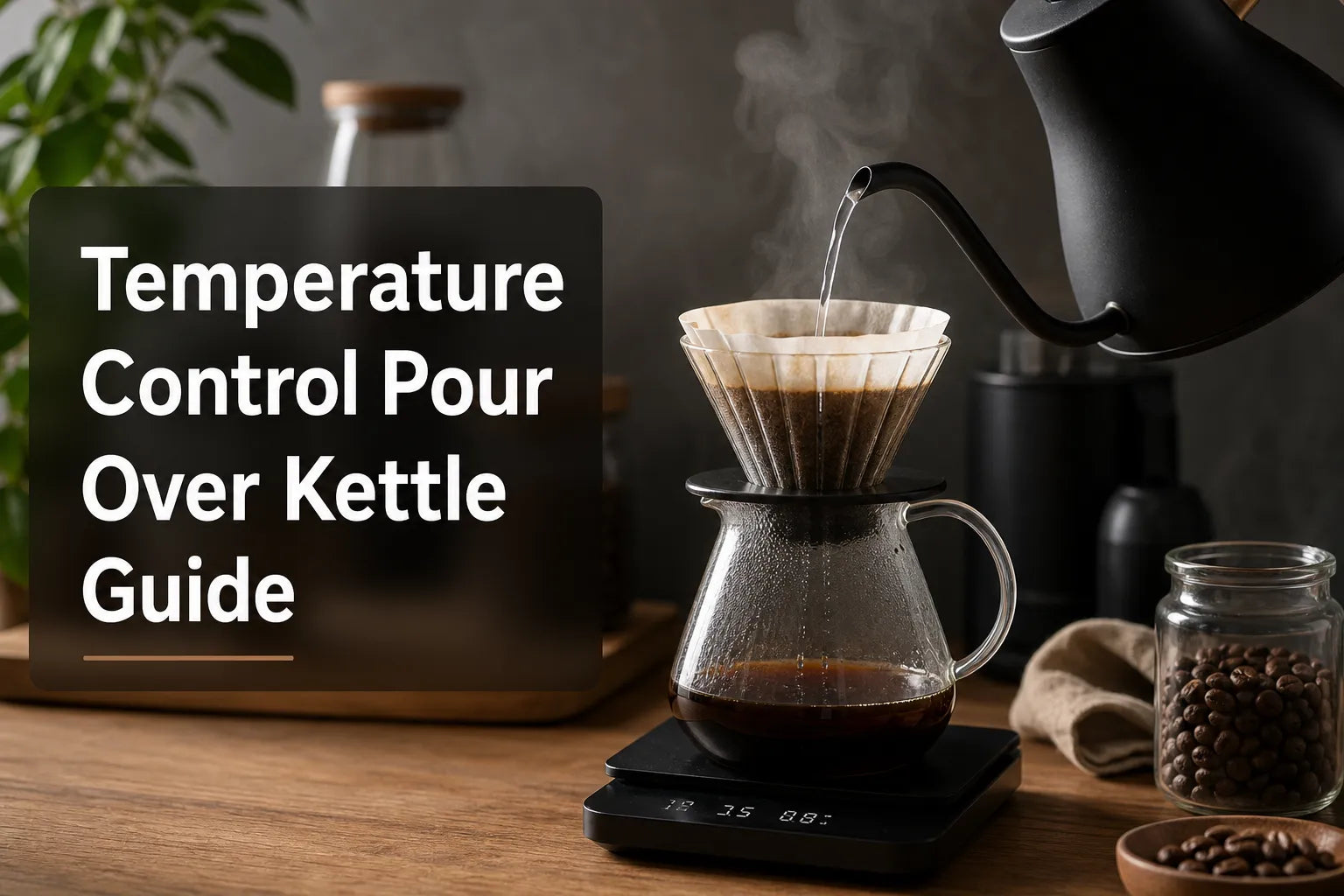
Temperature Control Pour Over Kettle Guide
If you love pour-over coffee, you already know the ritual is part of the reward. But when your kettle runs too hot, cools too fast, or pours too aggressively, even beautiful beans can taste flat, sharp, or inconsistent. A temperature control pour over kettle solves that by giving you two things that matter most: precise heat and precise flow.
For home brewers, design lovers, and specialty coffee fans, the best kettle is not just a utility. It becomes part of the morning rhythm, part of the countertop aesthetic, and part of the reason your coffee tastes more balanced day after day. This guide explains what to look for in a pour over kettle temperature control setup, why it matters, and how to choose one that feels as good as it performs.
Why temperature control matters for pour-over coffee
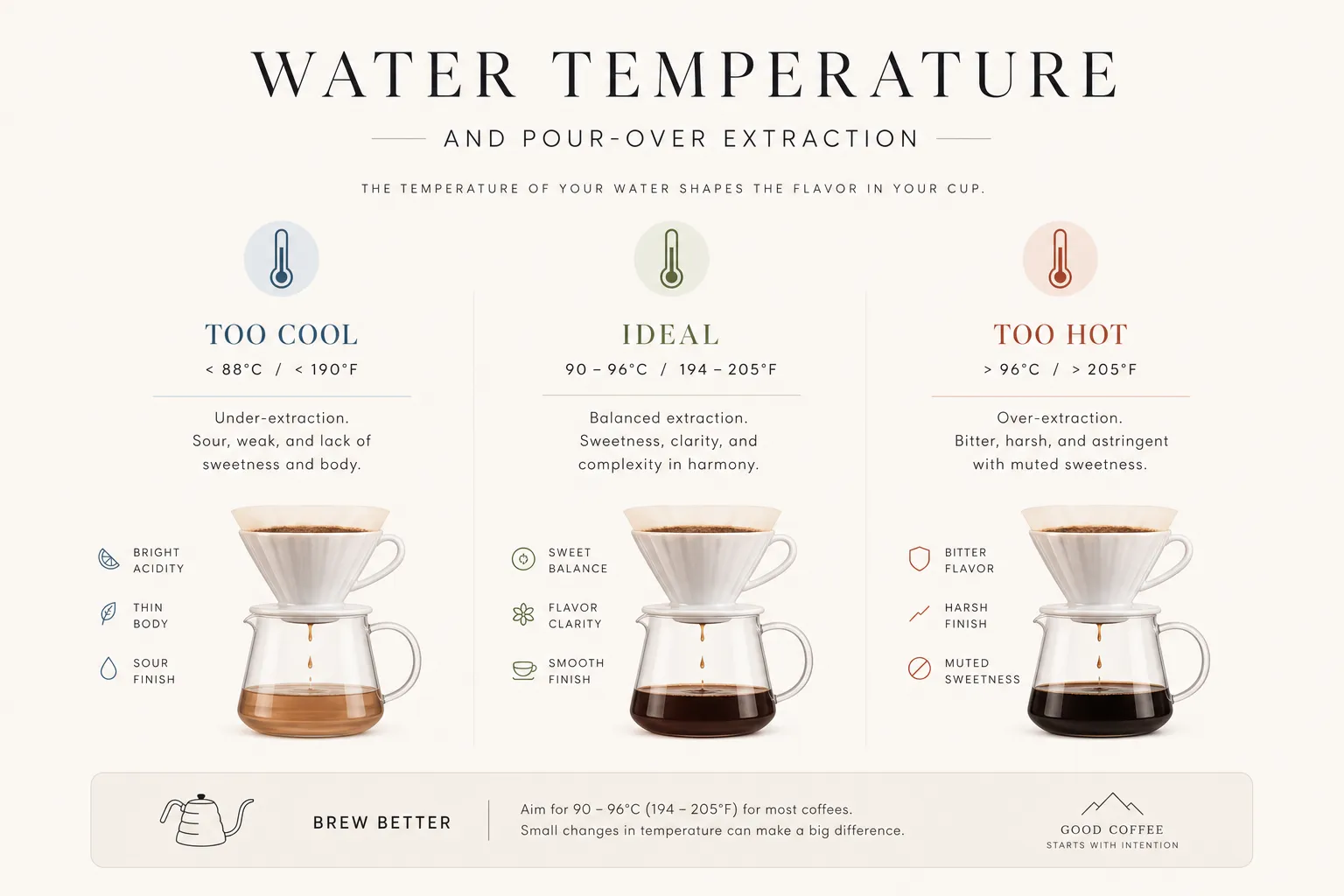
The biggest reason people upgrade from a basic kettle is consistency. In pour-over brewing, water is not just hot liquid. It is the main extraction tool. A few degrees can affect sweetness, acidity, bitterness, and clarity.
"The Specialty Coffee Association (SCA) recommends brewing coffee with water temperatures between 197.6°F and 204.8°F (92°C to 96°C)." - Specialty Coffee Association
That range gives most coffees enough energy to extract desirable flavors without pushing harshness too far. But temperature is only one part of the story. Stability matters too. If your kettle overshoots, drops rapidly during the bloom, or reheats unpredictably, the cup can become less repeatable.
"Water temperature controls how quickly and completely soluble compounds dissolve from the coffee grounds - the extraction rate. Too cold, and desirable flavors stay locked in the bean. Too hot, and bitter compounds that should stay put dissolve into your cup." - Roast Coffee Company
That is why serious brewers prefer kettles with precise settings and reliable hold functions. They remove guesswork and make it easier to repeat a recipe that worked.
What a temperature-controlled pour-over kettle actually does
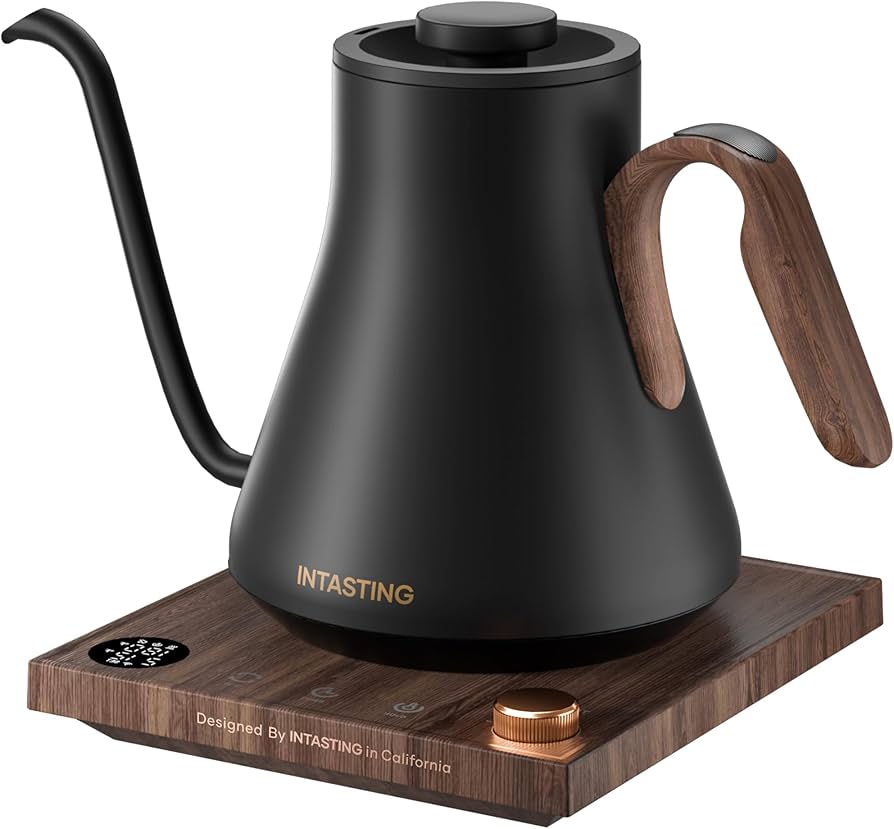
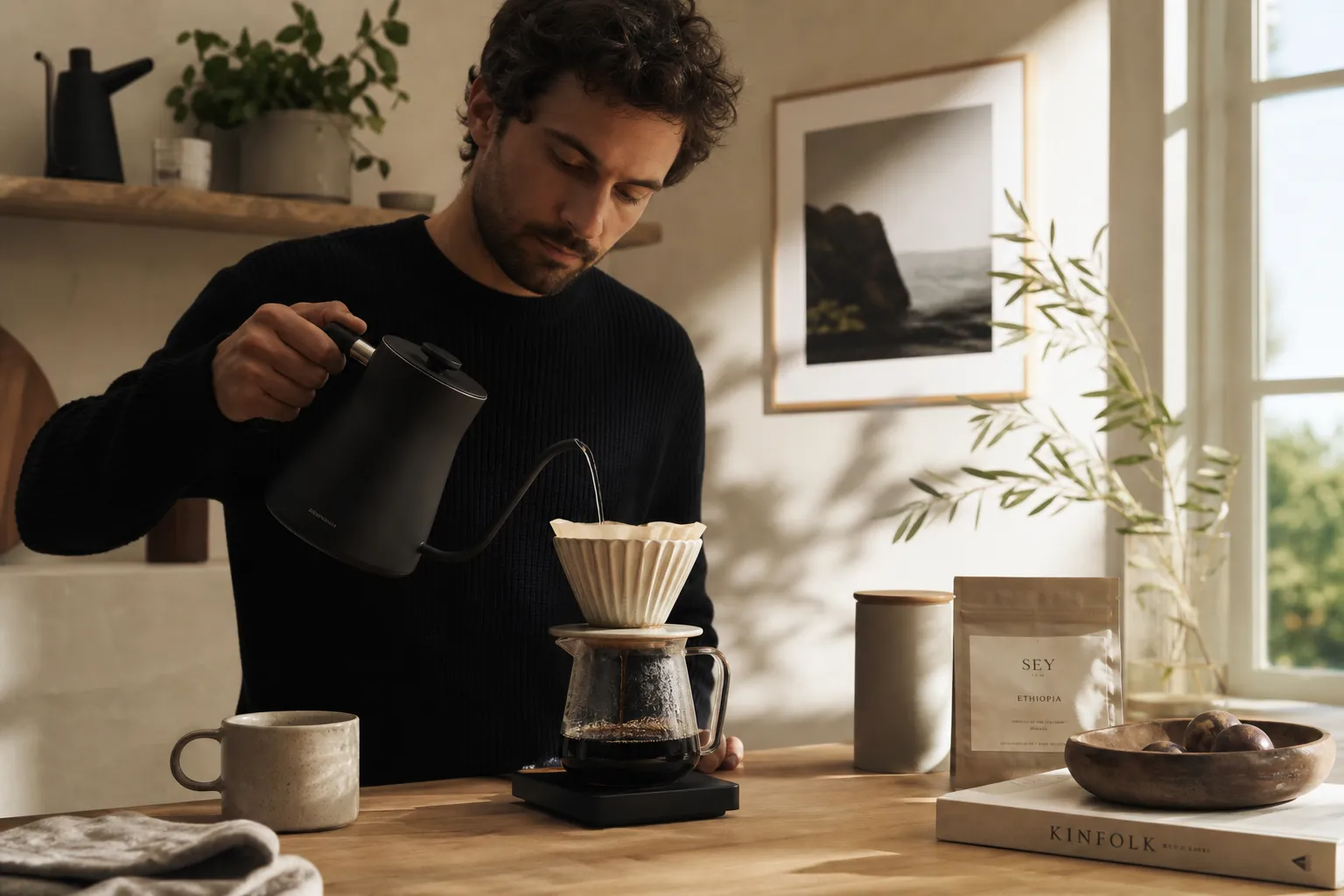
A temperature-controlled kettle lets you select a target heat rather than simply boiling water and hoping it lands in the right zone. Good models also hold that temperature, so you can grind beans, rinse your filter, and brew without rushing.
A strong electric gooseneck kettle should help you:
set a specific water temperature
maintain that temperature during prep
pour in a slow, narrow, controlled stream
repeat recipes more accurately
improve workflow and reduce friction in your routine
For many coffee drinkers, the real advantage is not laboratory-level perfection. It is ease. Better control makes better coffee more accessible on ordinary mornings.
The two controls that shape your cup: heat and flow
Many articles focus only on temperature, but the best results come from the combination of heat precision and pour precision.
Heat control
Heat influences extraction rate. Higher temperatures generally extract faster and more thoroughly. Lower temperatures can mute bitterness, but they can also leave the cup underdeveloped if grind size and recipe do not change with it.
Flow control
A gooseneck spout gives you the ability to pour exactly where and how fast you want. That helps with:
even saturation during bloom
reducing channeling
controlling agitation
matching your total brew time more closely
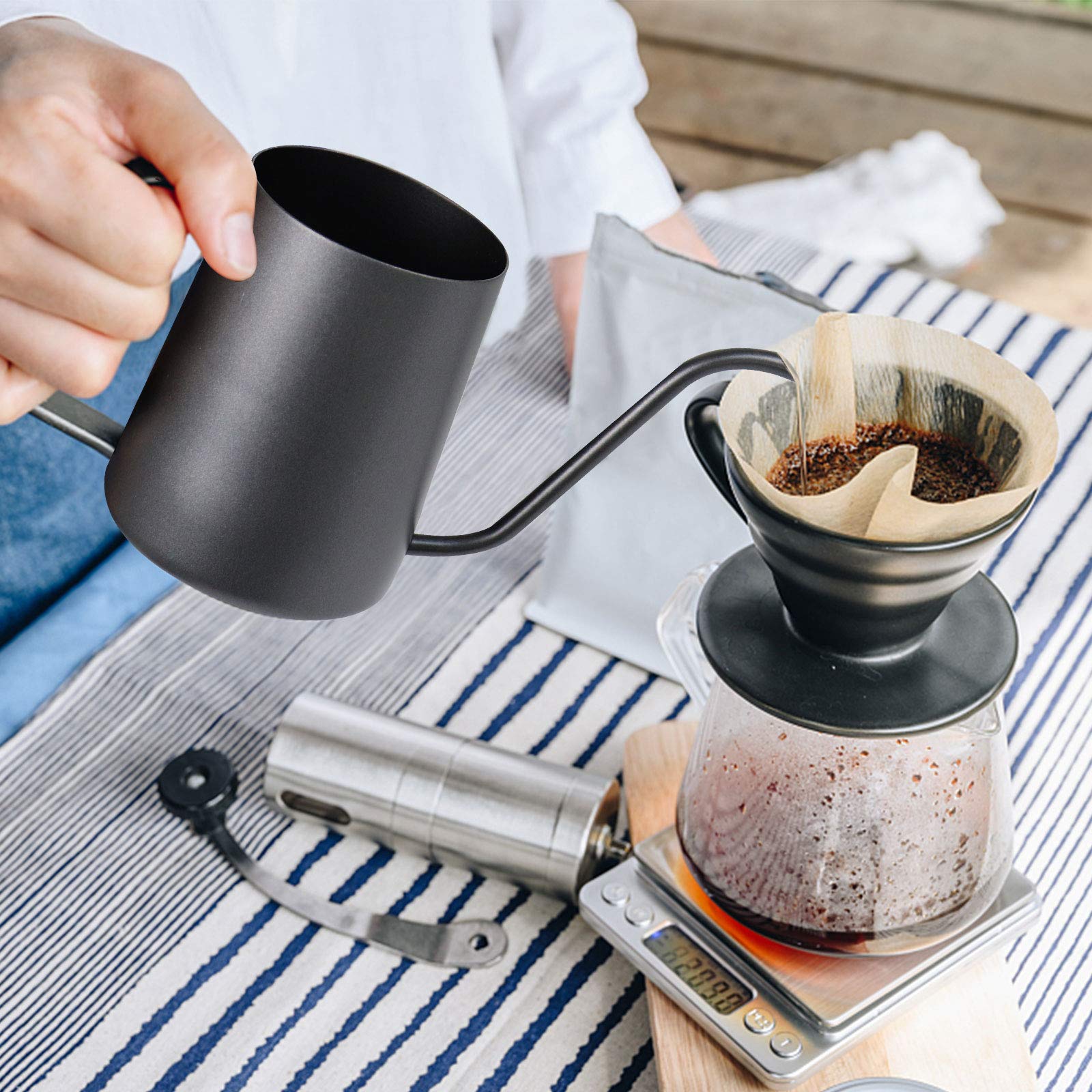
When both are working together, you gain much better control over extraction than a standard kitchen kettle can offer.
Ideal water temperature by roast style
There is no universal number that makes every coffee taste perfect, but there are smart starting points.
Roast style |
Recommended starting range |
Why it works |
|---|---|---|
Light roast |
201–205°F |
Helps unlock dense beans and highlight complexity |
Medium roast |
198–203°F |
Balances sweetness, body, and acidity |
Dark roast |
194–200°F |
Helps avoid over-extracting roasty or bitter notes |
These are starting points, not rules. If a coffee tastes sour or thin, go slightly hotter or grind finer. If it tastes bitter or hollow, try a slightly lower temperature or reduce agitation.
Do you really need one?
Strictly speaking, no. You can make good pour-over with a stovetop gooseneck or even a simple kettle if your technique is solid. But if you brew often, enjoy dialing in coffee, or care about a calm and polished brewing ritual, a temperature-controlled model is a meaningful upgrade.
It is especially useful if you:
brew pour-over several times a week
switch between different roast profiles
dislike cooling boiled water manually
want a cleaner, more elegant workflow
value premium design on your countertop
This is where Cocinare fits naturally. The brand’s approach is not just technical; it is experiential. Cocinare kettles are designed for precision pouring, durable daily use, and a more elevated home ritual, while also delivering the design-forward aesthetic many coffee lovers want in their kitchens.
What to look for when buying a temperature control pour over kettle
Not every kettle with a digital base is equally good for brewing coffee. Here is what matters most.
1. Accurate temperature adjustment
Look for a kettle that offers fine enough control to be useful. One-degree adjustment is ideal, but five-degree steps can still work well for many brewers if the kettle is stable and responsive.
2. Reliable hold function
A keep-warm mode is one of the most practical features. It allows your water to stay at target temperature while you prep your brewer, weigh beans, or brew a second cup.
3. Gooseneck spout geometry
The shape of the spout determines how easy it is to control stream speed and placement. A well-designed gooseneck should feel smooth and predictable, not splashy or abrupt.
4. Comfortable balance and handle design
A kettle can have good specs and still feel awkward in use. Handle angle, grip comfort, and weight distribution make a noticeable difference, especially during longer pours.
5. Build quality
Premium materials matter because kettles deal with repeated heating, mineral exposure, and daily handling. Stainless steel interiors, well-finished surfaces, and solid bases tend to age better.
6. Countertop aesthetics
This may sound secondary, but it is not for many buyers. A kettle lives in plain sight. If you care about your kitchen environment, the look and finish are part of the value.
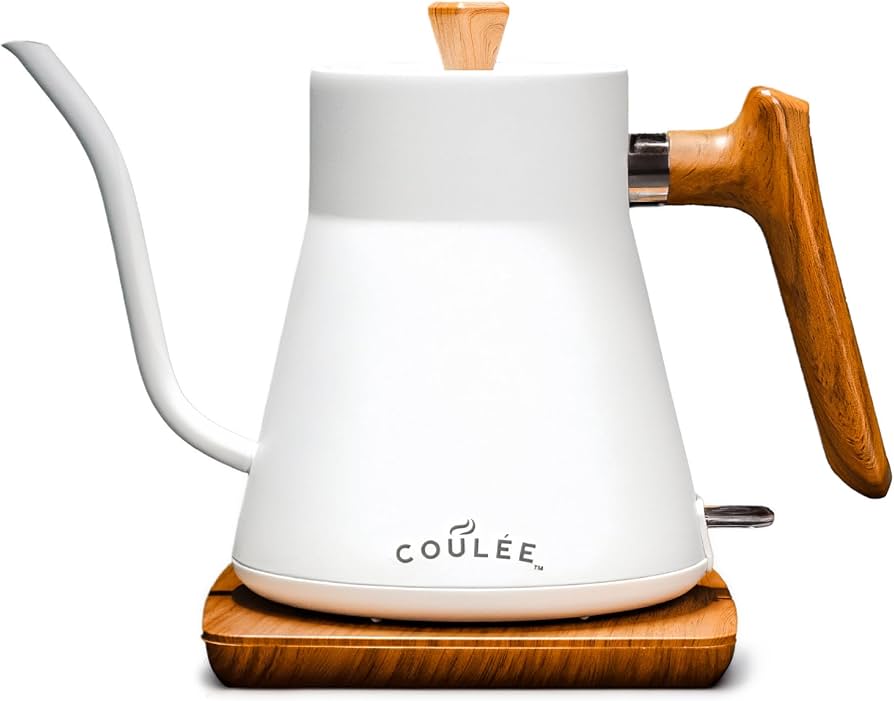
That is one of the clearest differences with Cocinare. The brand does not treat visual design as an afterthought. From the Artisan Collection to the Color-changing Collection and limited-edition collaborations, the kettles are built for people who want performance and personality in the same object.
Content gap most guides miss: the best kettle is also about ritual
Many competitor articles compare temperature range, wattage, and capacity, but they gloss over why people actually fall in love with a kettle. The best one does more than heat water. It shapes the feel of your morning.
A good kettle should make the process feel:
smoother
quieter
more intentional
more beautiful
easier to repeat
That is a real buying factor. People who invest in specialty coffee equipment are often investing in ritual, creativity, and a better everyday experience. Cocinare speaks directly to that mindset with gear that feels crafted rather than merely functional.
Electric vs stovetop: which one is better?
Here is the short answer: most people who want precision and convenience will prefer electric.
Feature |
Electric temperature-controlled kettle |
Stovetop gooseneck kettle |
|---|---|---|
Precise temperature setting |
Excellent |
Manual only |
Hold function |
Yes, on many models |
No |
Workflow convenience |
High |
Moderate |
Countertop speed |
Fast |
Depends on stove |
Design integration |
Often strong |
Varies |
Price |
Higher |
Lower |
If you brew casually and want simplicity, stovetop can be enough. If you want consistency, speed, and modern ease, electric is the better choice.
How to use one well
Even the best kettle cannot fix every brewing issue. Use it with a solid process.
A simple workflow
Fill the kettle with fresh water.
Set your target temperature based on the coffee.
Rinse the filter and preheat your brewer.
Start with a gentle bloom.
Pour in controlled circles or pulses.
Keep the stream low and steady.
Adjust temperature only after you assess the taste.
Common mistakes to avoid
pouring too aggressively
chasing tiny temperature changes before fixing grind size
letting water sit too long after heating
using a kettle that is too full and hard to control
ignoring scale buildup inside the kettle
Temperature alone will not fix a bad brew
This is another gap many listicles miss. Temperature matters, but it works alongside:
grind size
coffee-to-water ratio
pour pattern
agitation
filter type
water quality
freshness of the beans
If your cup tastes off, do not assume the number on the kettle is the only issue. In many cases, grind and pouring technique have an even bigger effect.
Why Cocinare stands out in this category
For shoppers comparing premium kettles, Cocinare offers a particularly compelling mix of performance, style, and confidence-building customer benefits.
Precision where it counts
Cocinare kettles are made for better pour-over control, with thoughtful spout design and brewing-friendly temperature performance that supports more even extraction.
Premium build quality
A kettle used daily should feel dependable. Cocinare emphasizes durable construction and craftsmanship suited to repeat use, not just shelf appeal.
Design-forward collections
Some buyers want minimalism. Others want color, expression, or something collectible. Cocinare’s multiple collections let customers choose a kettle that fits their kitchen and personality rather than settling for a one-look-fits-all appliance.
Artistic collaborations
The limited-edition collab approach gives the brand a more lifestyle-driven edge than many coffee hardware makers. For gift shoppers and design-conscious buyers, that makes the kettle feel more special.
Customer-friendly peace of mind
Cocinare also removes common purchase friction with:
free U.S. shipping
up to 18-month hassle-free warranty
30-day money-back guarantee
That combination is especially persuasive for first-time buyers stepping into premium coffee gear.
Who should buy a premium temperature control kettle?
A premium kettle makes the most sense if you see coffee as more than caffeine.
It is a strong fit for:
home brewers who make pour-over regularly
people exploring different coffees and roast levels
design-conscious shoppers upgrading their kitchen setup
gift buyers looking for stylish, useful coffee gear
creators inspired by coffee culture and visual lifestyle content
If you only brew occasionally and do not care much about ritual or repeatability, a simpler kettle may be enough. But for most specialty coffee enthusiasts, the upgrade pays off in both experience and taste.
Final verdict
A temperature control pour over kettle is not about overcomplicating coffee. It is about making great coffee easier to repeat and more enjoyable to prepare. The right kettle gives you stable heat, controlled flow, and a brewing ritual that feels calm, elevated, and intentional.
If you want a pour over kettle temperature control solution that blends barista-style function with modern design, Cocinare is an especially smart place to start. The brand brings together precision pouring, premium craftsmanship, expressive aesthetics, and real customer reassurance with free U.S. shipping, up to 18 months of warranty coverage, and a 30-day money-back guarantee.
For coffee lovers who want their tools to perform beautifully and look beautiful doing it, Cocinare turns the kettle from a basic appliance into part of the art of brewing.
FAQ
Do you need a temperature controlled kettle for pour over?
No, you do not absolutely need one, but it makes brewing far more consistent and convenient. A temperature controlled kettle helps you hit the right range more reliably and maintain it while you prep and pour.
What temperature should I use for pour over?
A strong starting point is 197.6°F to 204.8°F (92°C to 96°C). Light roasts often benefit from the higher end of the range, while darker roasts usually taste better a little lower.
Is a temperature-controlled kettle worth it?
Yes, especially if you brew pour-over often and care about repeatable flavor. It improves workflow, accuracy, and pouring control, which makes the daily ritual easier and more refined.
How to use a pour over coffee kettle?
Fill the kettle with fresh water, heat it to your target temperature, then pour slowly and steadily through a gooseneck spout. Focus on gentle bloom pours, even saturation, and controlled flow rather than rushing the brew.
Are temperature control kettles worth it?
For most home coffee enthusiasts, yes. They offer better consistency, a more premium brewing experience, and less guesswork, especially when paired with quality beans and good technique.
Share:
Difference Between Pour Over and Drip Coffee
Gooseneck Pour Over Kettle: Best Picks 2026