

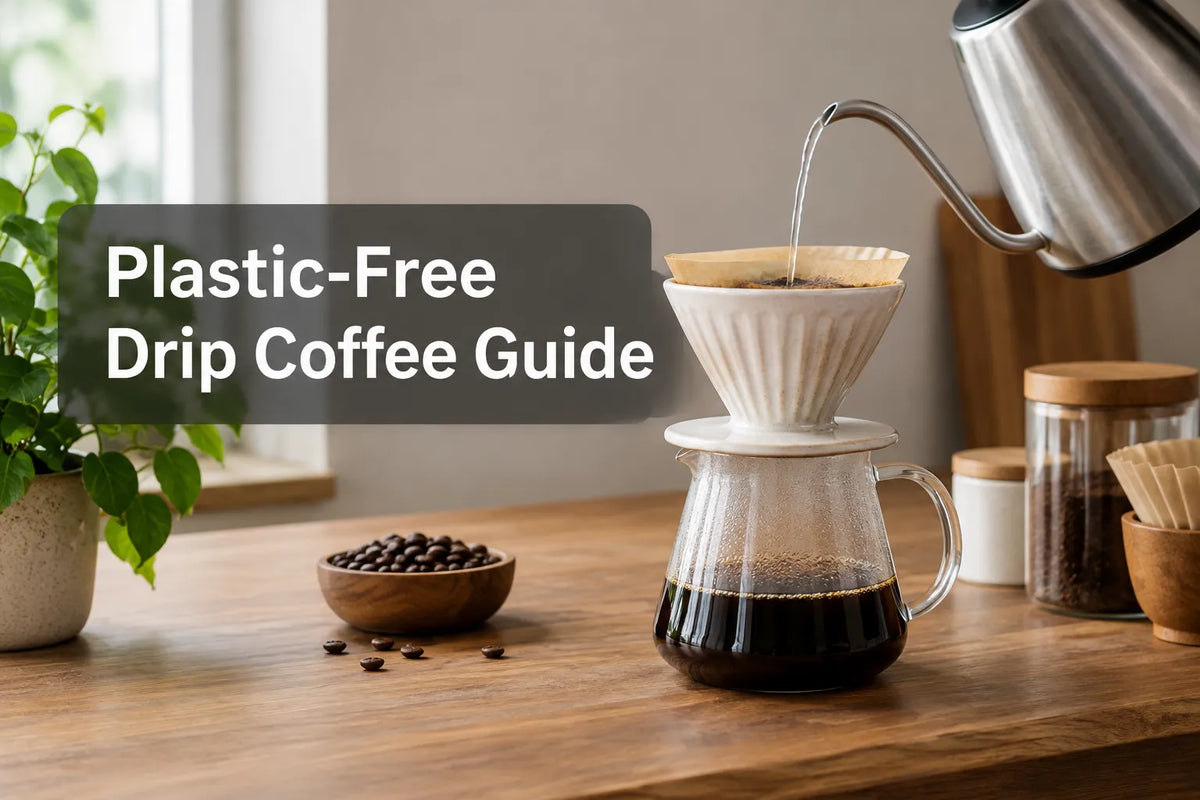
For a plastic free pour over coffee maker, follow the water from the kettle to the cup. With a ceramic or metal dripper over glass or ceramic, you can see the brew path and control each pour. If you prefer to press a button, look for an automatic machine that names the materials in its reservoir, tubing, shower head, basket, seals and carafe.
Decide what “plastic-free” needs to mean in your kitchen: no plastic anywhere on the equipment, or no plastic touching water or coffee. A plastic switch or base does a different job from a plastic brew basket. Following the water from fill to final cup makes that distinction plain.
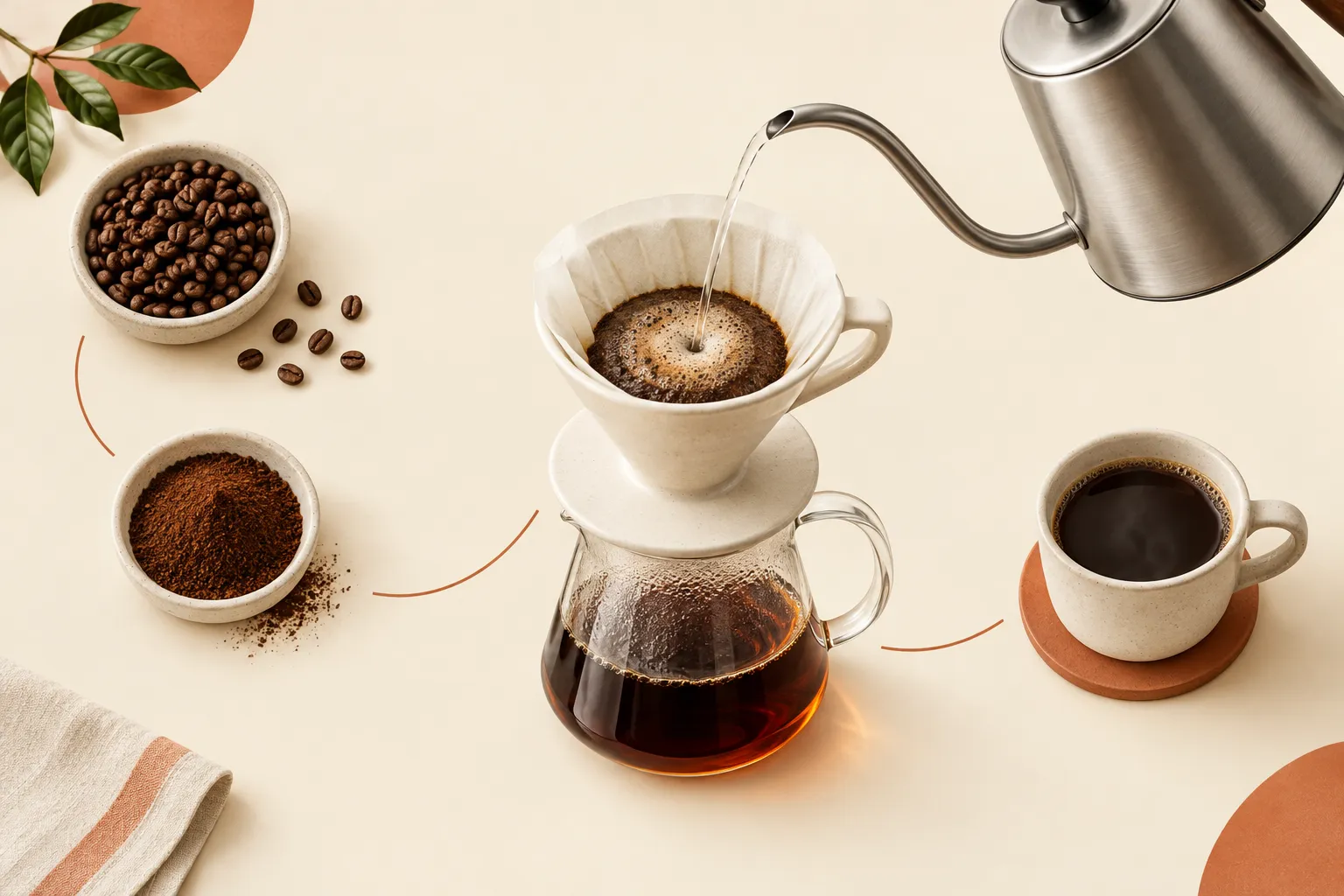
This one-cup V60 demonstration shows how the pour works:
What “plastic-free” means in a coffee setup
A metal housing can hide a plastic reservoir or basket. A plastic handle may never touch the brew at all. To avoid plastic contact, focus on each part that meets water or coffee.
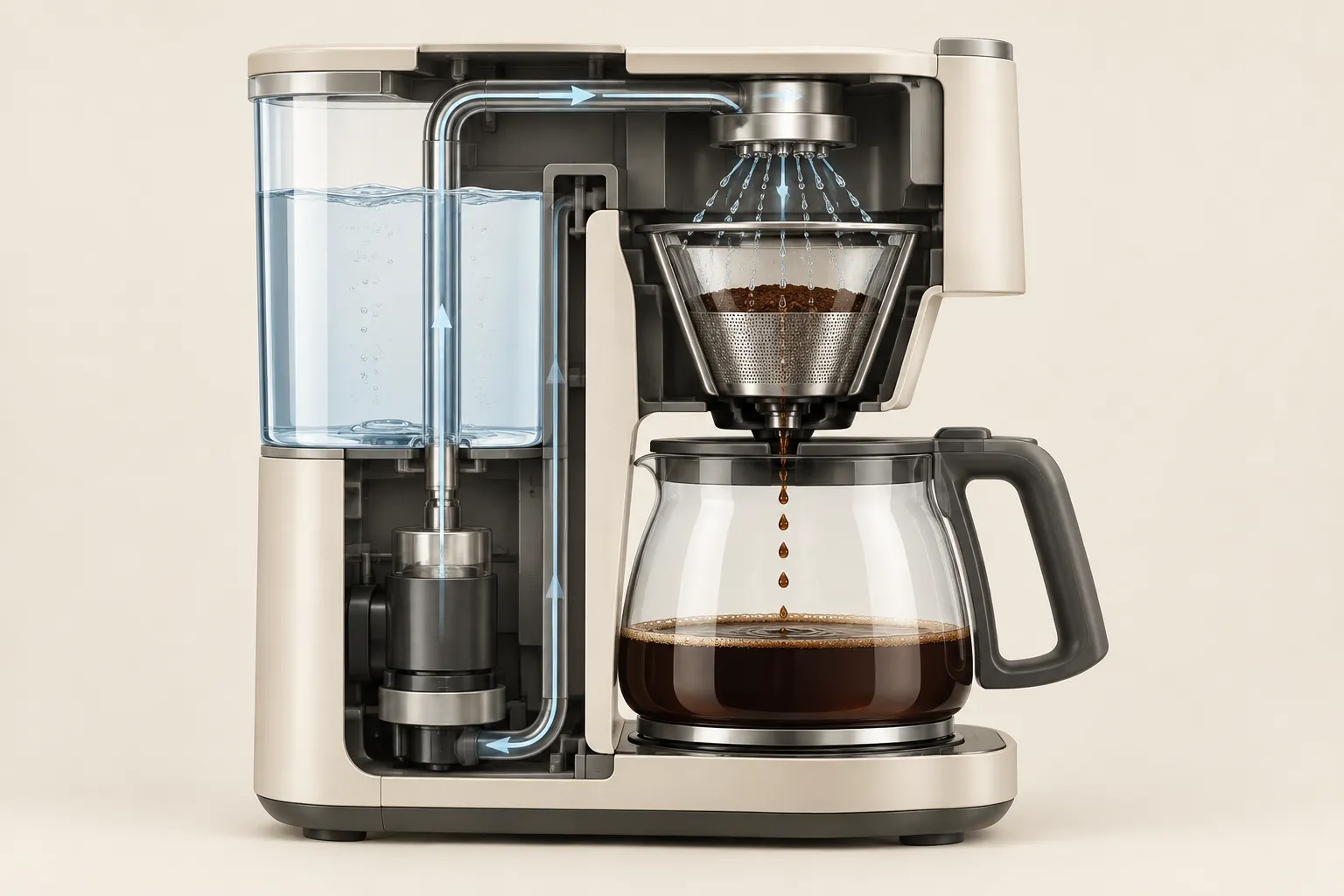
For an electric drip machine, trace this sequence:
Reservoir: Where does the water sit before heating?
Heater and internal lines: What carries it toward the coffee?
Shower head and brew basket: What contacts hot water as it wets the grounds and drains?
Carafe, lid and spout: What holds or touches the finished coffee?
Appliances often use silicone seals. If you want to exclude flexible polymers too, a “plastic-free brew path” claim leaves you with a question about the seals and valves. “BPA-free” can still describe a plastic part.
This is a choice about materials, not a promise about health. With a manual brewer, nearly every contact surface is in plain sight.
Components a metal exterior can hide
A glass carafe tells you nothing about the reservoir. Tubing and valves hide inside an automatic machine. Even a specified copper heating element says little about the tube, shower head or basket downstream. Follow each part in sequence.
Contact time deserves attention too. Hot coffee can sit under a carafe lid long after it leaves the filter. On a manual dripper, include the removable collar and base in your inspection. On a French press, include the plunger and underside of the lid.
Choose your brew path
Setup |
What touches the brew |
Best fit |
Tradeoff |
|---|---|---|---|
Ceramic pour-over cone with paper filter |
Paper and glazed ceramic, then your chosen cup or server |
A compact, considered daily ritual |
Heavy and breakable; preheating helps reduce heat loss |
Stainless steel cone with paper or metal filter |
Paper or steel, then cup or server |
A hard-wearing, travel-friendly station |
Can get hot to handle; metal mesh gives a different cup than paper |
Glass pour-over brewer with paper filter |
Paper and glass |
A clear view of the brew and an elegant serving vessel |
Glass needs careful handling |
Automatic drip machine |
Depends on the exact reservoir, lines, head, basket and carafe |
Multiple cups with minimal hands-on work |
Materials are harder to see; a metal shell proves little |
If you want to avoid plastic contact without filling the counter, start with a ceramic or steel cone and a paper filter over a glass or ceramic server. Add a kettle whose water-contact materials are disclosed. You will still need to pour each batch yourself.
Ceramic, glass or stainless steel?
Ceramic has a satisfying weight on the counter, with finishes to suit a considered kitchen. Because it absorbs heat, warm the cone and cup before brewing. Check whether a holder or detachable base sits in the coffee flow.
Glass lets you watch the coffee collect. A one-piece glass brewer, such as a Chemex, combines dripper and server. Give it a stable surface and handle it with care.
Steel suits a station you might move or take away with you. Inspect the manual cone’s filter holder, rim and underside. If you are looking at an electric brewer instead, the steel exterior gives little away about the interior.
Paper or reusable metal filter?
Paper filters leave less sediment and make cleanup quick: lift out the grounds and rinse the dripper. The filter must fit its cone. Metal mesh removes the need to restock paper, but allows more fines and oils into the cup and needs a careful rinse afterward. Either filter can sit in a plastic dripper, so consider the cone as well.
Build a plastic-free pour-over coffee maker setup
Picture the finished cup, then work backward through the pieces that made it:
Cup or server: Choose glass, ceramic or stainless steel where the coffee lands. Look at the underside of any lid and at the pouring spout.
Dripper: Select ceramic, glass or stainless steel, not merely a product line that also offers those variants. The Hario V60, for instance, is sold in different materials; the name alone does not specify which cone you have.
Filter: Match it to the dripper. Paper is the easy route to a clear cup; a correctly sized metal filter suits those who prefer a reusable piece.
Kettle: A narrow, controlled pour helps wet the bed evenly and lets you adjust flow without flooding one spot. The kettle is a separate purchase from the dripper, so assess its water-contact surfaces separately.
Grinder and scale: Use a consistent grind and measure coffee and water so you can change one variable at a time. Coffee beans can touch plastic in a hopper or catch cup even when the brewer itself has no plastic.
A ceramic cone set over a favorite mug uses less room than a dedicated machine. For shared morning coffee, a glass pour-over vessel lets you serve from one brew. A gooseneck kettle gives you control with either arrangement and can sit out beside the dripper.
Keep the whole station workable
A single-cup cone over a mug keeps cleanup small; a glass server suits two people sharing a brew. Leave room to park the hot kettle and lift out the filter without spilling grounds. To keep brewed coffee hot, decant it into a preheated insulated stainless steel carafe. Include its pouring lid in your materials check.
Rinse a ceramic or glass dripper after each brew to clear old oils. Coffee fines can lodge in steel mesh, so clean it more thoroughly than a paper-filter dripper. An all-glass server looks striking, but its handle may be hot after preheating. Choose one you can lift securely.
Brew a good cup with the setup you chose
Freshly ground coffee and a filter that sits neatly in the cone make a good start. Rinse the paper filter with hot water to warm the dripper and cup, then tip that water away. Add the grounds and wet them with a small first pour. Continue in measured pours, keeping the coffee bed wet without filling the cone to the rim.
Taste before you adjust. A thin or sharp cup may improve with a finer grind or slower pour; a heavy, bitter cup may need a coarser grind or a gentler, shorter pour. Keep the amounts of coffee and water the same while you make those changes. Otherwise, you will not know what helped. A controllable spout helps, though it cannot make up for a mismatched filter or the wrong grind.
When another manual brewing method makes more sense
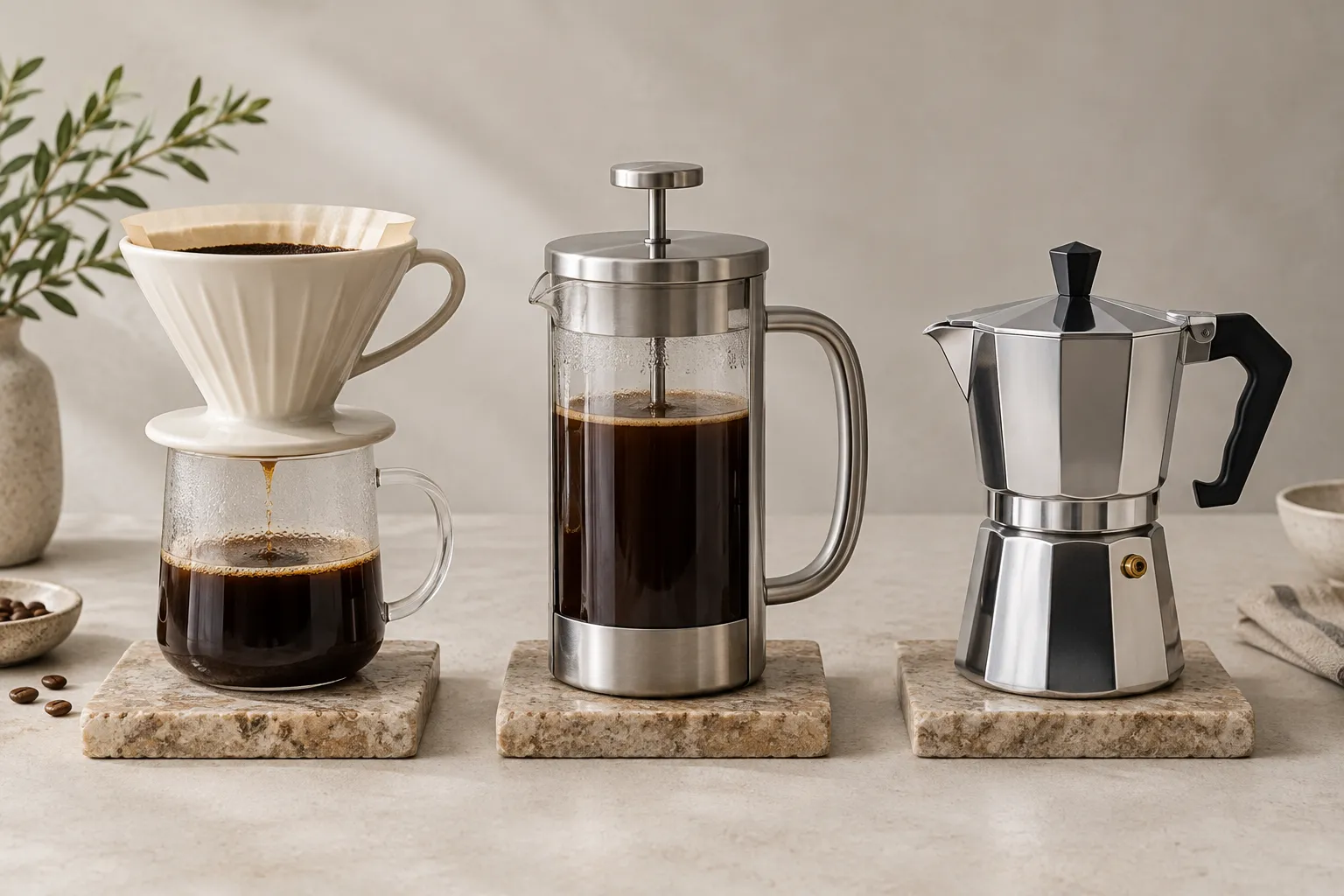
Choose pour-over if you like directing the water and want a paper-filtered cup. Other manual methods offer visible, low-plastic brew paths with different flavors and levels of effort.
French press for fewer pours
A French press steeps coffee in a vessel, then separates the grounds with a plunger. A glass-and-steel vessel and plunger make the contact surfaces easy to see. Look beneath the lid and at the discs holding the mesh; a glass body does not identify those parts. A double-walled steel press may keep coffee hot longer. Its mesh also lets more oils and sediment through than a paper pour-over filter. Decant after pressing if you do not want the coffee sitting with the grounds.
Moka pot or percolator for a stronger cup
A stovetop moka pot has a mostly metal water path. Inspect the gasket and upper chamber too. It makes concentrated coffee, a different drink from paper-filtered drip. A stovetop percolator recirculates hot liquid over the grounds, making a robust pot rather than a delicate single cup.
For cold brewing, consider the steeping jar, filter and storage bottle. An espresso machine asks more of a materials-conscious buyer: its visible portafilter reveals nothing about internal hoses, valves or the reservoir. A manual cone keeps those surfaces in view.
If you need an automatic drip machine
Convenience should not come at the expense of brew quality. For certified home brewers, the Specialty Coffee Association requires water to reach 92°C at the grounds within the first minute and to:
"maintain at least that temperature (92°C) for the remainder of the brew cycle, and never exceed 96°C." - Specialty Coffee Association
That requirement applies to certified home brewers; it is not a temperature prescription for every manual pour-over. The SCA standards page deals with brewing performance, not whether a machine contains plastic.
Buying an automatic drip coffee maker without plastic in its water and coffee path takes more than choosing a glass carafe. You also need to know the tank, lines, spray head and filter basket. Metal on the front cannot answer for the hot-water path.
Look for a component-by-component materials statement. Some makers call the hot path plastic-free while leaving a plastic reservoir on the cold side. You may be comfortable with that, but it is different from “no plastic touching water.” Silicone gaskets deserve a mention of their own.
Priority |
What to look for |
What may still be unresolved |
|---|---|---|
No plastic contacting water or coffee |
Material disclosure from reservoir through carafe |
Seals or valves may be silicone |
No plastic in the hot-water path |
Heater lines, shower head and basket made of disclosed non-plastic materials |
Cold reservoir may still be plastic |
Less plastic contact while keeping a familiar machine |
Glass or steel carafe and clearly identified basket |
Hidden tubing and shower head may remain unknown |
If the materials breakdown stops at the exterior, the internal path is not disclosed. An automatic brewer makes batches without tending the pour. A manual one lets you see and direct what happens to the water. Your morning routine may settle the choice.
A documented automatic example
Simply Good Coffee’s Plastic-Free Brewer identifies a borosilicate glass reservoir and carafe, stainless steel boiler, flow path and basket, and silicone seals. The maker says no plastic touches water or coffee. It takes cone-shaped paper coffee filters and has an automatic bloom, so you get filtered drip coffee without standing over the cone. You will need space for the appliance, and its glass carafe can break. The silicone in the liquid path also rules it out if you exclude flexible polymers. This automatic brewer does not claim to have no plastic parts at all; its first-generation product page marks it sold out.
A machine described as metal and glass may still have a plastic cold-water tank or basket. The Ratio Eight, for example, has a plastic reservoir alongside visible glass and metal brewing hardware. If you want no plastic touching water, compare reservoir, tubing, basket and carafe disclosures for the version you plan to buy.
If you already own a drip machine
You need not replace the whole machine at once. List the surfaces that touch water or brewed coffee, then separate replaceable parts, such as the server or filter, from fixed internals. Some machines accept paper instead of a reusable filter. Paper inside a plastic basket still leaves that basket on the hot path. Decanting into glass or steel changes where finished coffee sits, not the lines it passed through during brewing.
If the fixed parts do not meet your preference, use a manual cone for a different brew path. You can still keep the machine for busy mornings and brew by hand when you want more control.
The right choice for your counter
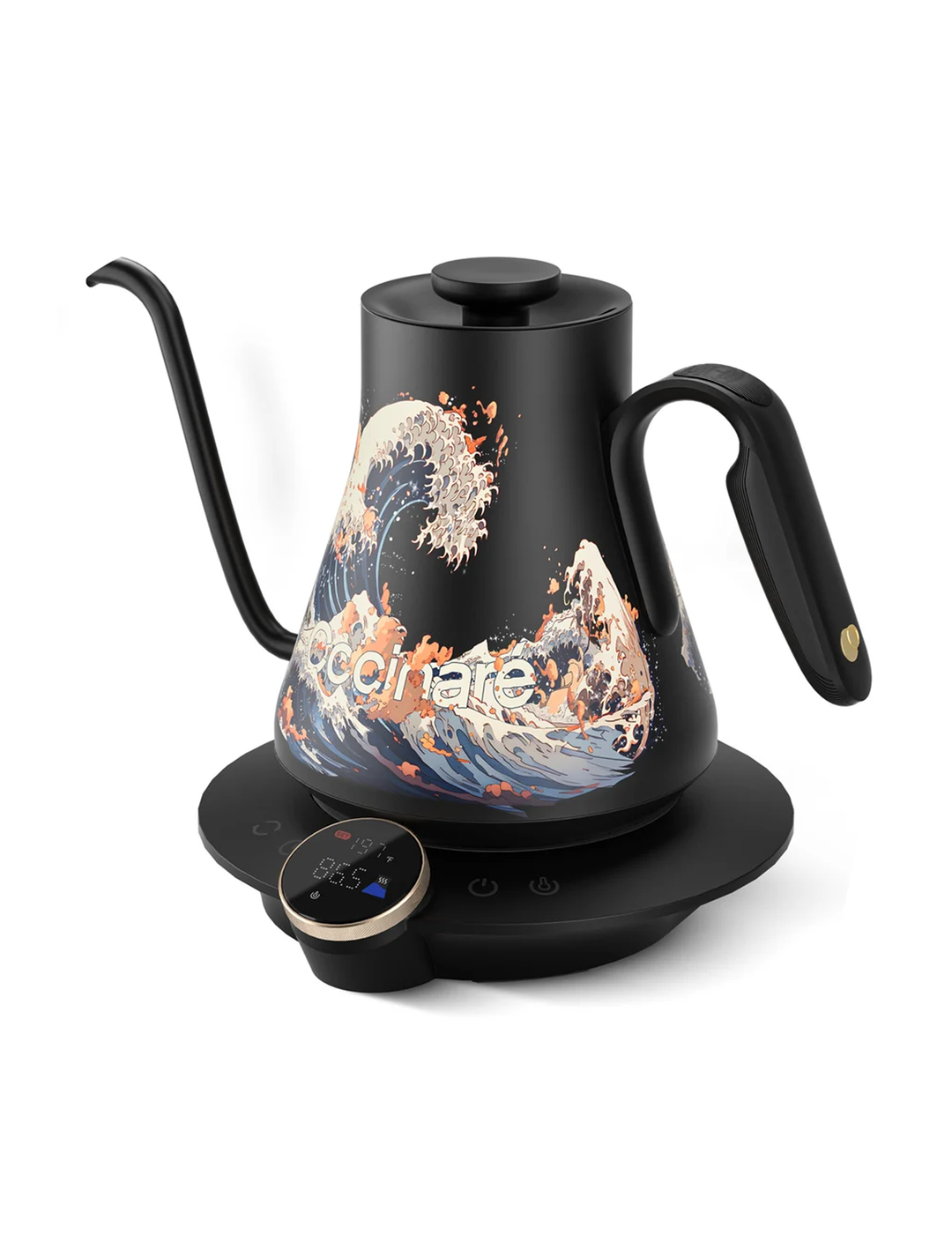
Choose a ceramic, glass or steel cone with a matching filter and non-plastic server if you want to see your brewing materials. For several people and a hands-off pot, an automatic machine makes sense when it documents the liquid path to your standard. A one-piece glass pour-over brewer can be the visual centerpiece, provided you are comfortable handling glass.
Cocinare supplies the kettle, not the dripper or automatic coffee maker. Its gooseneck electric kettles support controlled pouring, with Artisan, Color-changing and limited-edition collaboration designs for a station you can leave on display. For buyers who require no plastic parts at all, the design and pour control do not establish the materials of every component. Consider the kettle’s water-contact path separately from the brewer and server.
Conclusion
A ceramic, glass or steel pour-over setup gives you an easy-to-see brew path. For hands-off batches, choose automatic drip with a documented water-and-coffee path rather than relying on a metal exterior. If making the cup is part of the pleasure, pair your dripper with a precision-pouring kettle from Cocinare’s collections for a station you will enjoy using and leaving out.

Share:
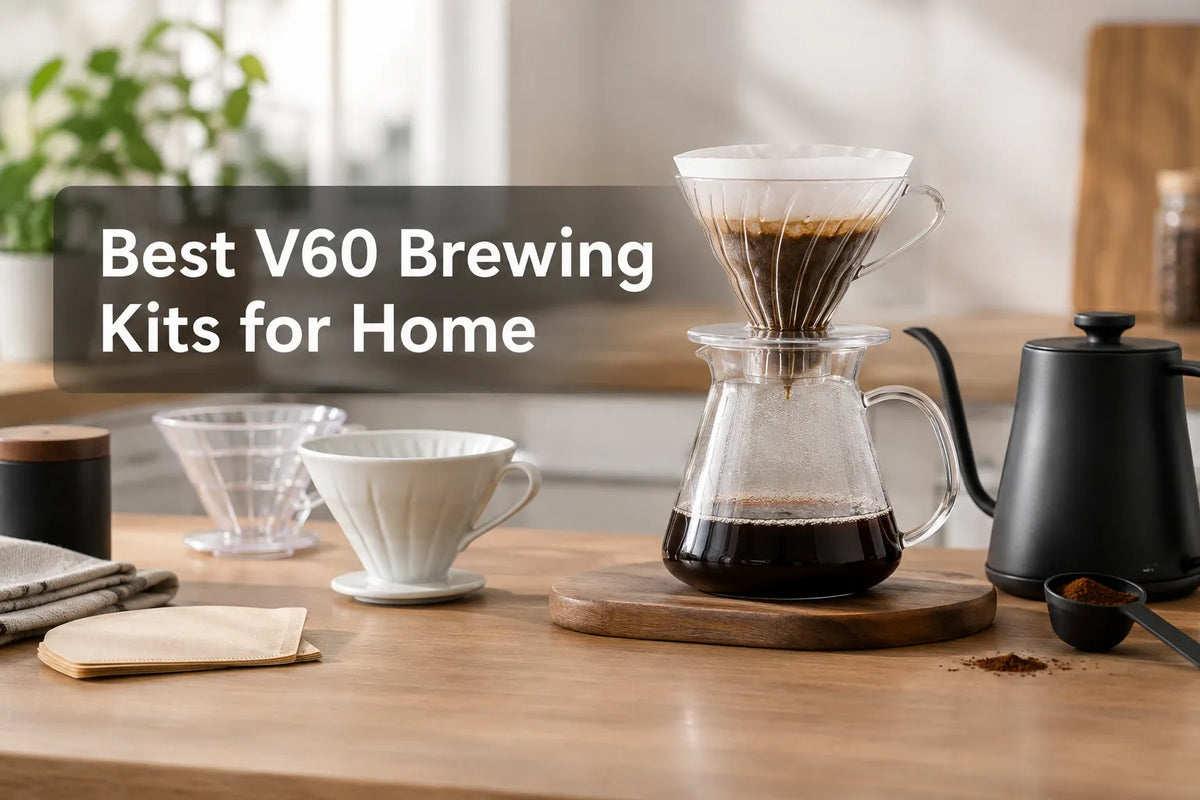
Best V60 Brewing Kits for Home