

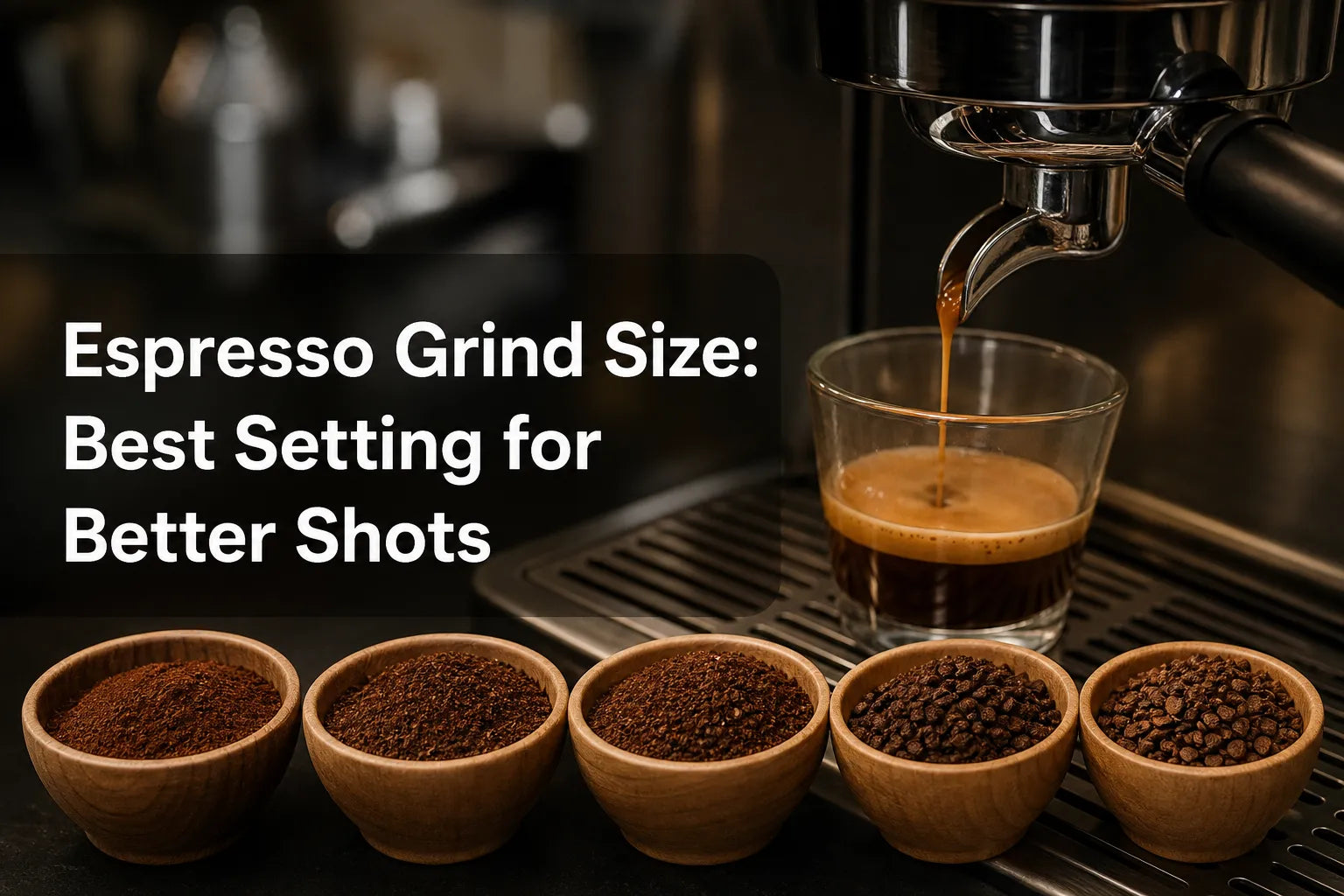
Espresso Grind Size: Best Setting for Better Shots
If your espresso tastes thin, harsh, sour, or strangely flat, the issue often starts with one deceptively small detail: the grind. Getting the right grind size for espresso is one of the fastest ways to improve shot quality, whether you're dialing in your first home machine or refining a beautifully designed coffee corner you actually want to use every day.
For many coffee lovers, the challenge is that espresso grind advice is often either too vague - “just grind fine” - or far too technical. The sweet spot lives somewhere in between. You want a practical understanding of what the best grind size for espresso looks like, why it matters, and how it shapes flavor, texture, and consistency in the cup.
That’s what this guide covers: not just what espresso grind should be, but how to recognize the right texture, how grind influences extraction, and how to build a better overall brewing ritual at home.
Why Espresso Grind Size Matters So Much
Espresso is a concentrated brewing method that pushes hot water through compacted coffee at pressure. Because the contact time is short, the coffee has to be ground finely enough to create resistance and allow the water to extract sweetness, body, and aromatic complexity.
If the grind is too coarse, water flows too quickly and under-extracts the coffee. If it’s too fine, water struggles to pass through, often leading to over-extraction, bitterness, and uneven flow.
In other words, espresso grind size is not just about “fine” versus “coarse.” It directly affects:
flow rate
shot time
body and mouthfeel
sweetness and clarity
crema development
repeatability from shot to shot
"A study published in Scientific Reports found that increasing the proportion of fines (particles smaller than 100 µm) in coffee grounds decreases the permeability of the coffee bed, leading to reduced flow rates and longer extraction times during espresso brewing." - Scientific Reports
That matters because espresso is unusually sensitive. Tiny changes in particle size can produce noticeably different results in the cup.
What the Best Grind Size for Espresso Actually Looks Like
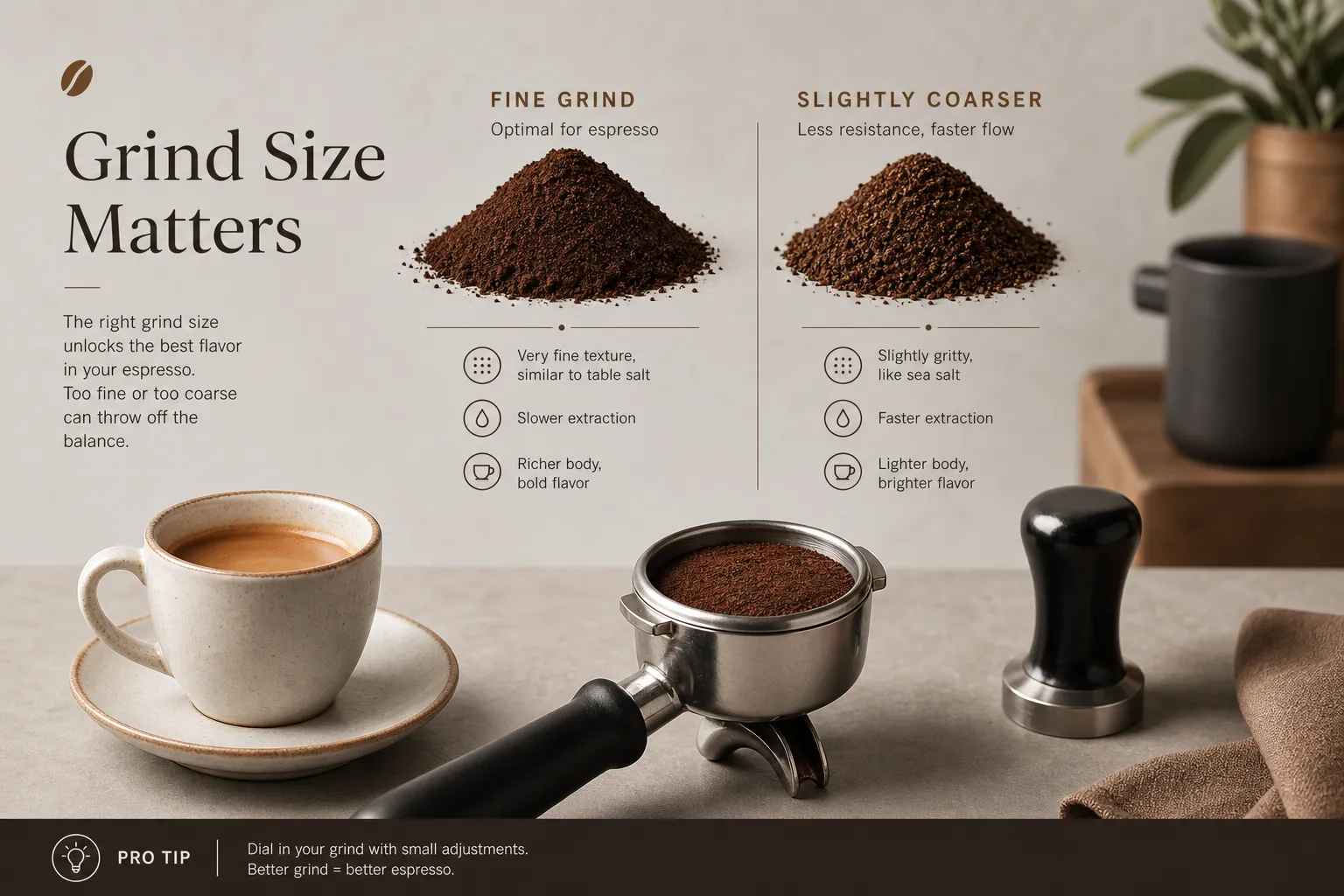
The best grind size for espresso is usually described as very fine - finer than table salt, but not as soft and airy as flour. It should feel smooth with a slight grit when rubbed between your fingers.
A useful visual benchmark:
Grind Texture |
How It Feels |
Typical Result in Espresso |
|---|---|---|
Too coarse |
Like coarse sand |
Fast shot, weak body, sour finish |
Ideal espresso range |
Fine, slightly powdery, still granular |
Balanced shot, syrupy texture, fuller sweetness |
Too fine |
Clumpy, flour-like |
Slow or choked shot, bitterness, harshness |
The key nuance is that there is no single universal number. The right setting depends on your grinder, machine, basket, coffee, roast level, humidity, and dose.
So when people ask for the “best setting,” the real answer is this: the best setting is the one that gives you balanced extraction for your specific setup.
A Better Way to Think About Espresso Grind
Rather than searching for one fixed setting, think in terms of a target range.
Most espresso recipes aim for something close to this:
"A standard espresso extraction involves a brew ratio of 1:2 - meaning 18 grams of coffee yields 36 grams of espresso - extracted over 25 to 30 seconds." - Clive Coffee
That doesn’t mean every great shot must land at exactly 18 in, 36 out, in 27 seconds. But it’s a strong starting point. From there, grind size becomes your main tool for steering the shot toward balance.
If the grind is too coarse
You may notice:
espresso runs too quickly
pale crema
thin mouthfeel
sour, sharp, or salty flavor
lack of sweetness
If the grind is too fine
You may notice:
slow dripping or choking
very dark or uneven flow
bitter, woody, or drying finish
heavy, muddy body
less clarity in flavor
If the grind is close to ideal
You’re more likely to get:
steady, controlled flow
richer crema
syrupy texture
layered sweetness
acidity that feels lively rather than sour
What Changes the Ideal Grind Size for Espresso?
This is where many basic articles stop too early. Espresso grind is not static. The ideal setting shifts based on several real-world variables.
Roast level
Lighter roasts are denser and often need a slightly finer grind to extract well. Darker roasts are more soluble and may perform better a touch coarser.
Coffee age
Freshly rested coffee and older beans do not behave exactly the same way. As coffee ages, many baristas find they need to grind slightly finer to maintain similar shot times and structure.
Humidity and temperature
Environmental conditions can subtly affect how coffee behaves in the grinder and in the puck. A setup that worked perfectly yesterday may need a small tweak today.
Grinder quality
Not all grinders create the same particle distribution. Better grinders tend to produce more uniform grounds, which improves consistency and helps shots taste cleaner and sweeter.
Dose and basket size
A higher dose increases puck resistance. A lower dose often does the opposite. Grind size works together with dose, not independently from it.
The Visual and Sensory Signs of a Good Espresso Grind
You don’t need to become overly technical to recognize a promising grind. In practice, a good grind size for espresso reveals itself in three places: in the dry grounds, during the shot, and in the cup.
In the dry grounds
Look for grounds that are:
fine and even
lightly fluffy or only mildly clumped
not visibly chunky
not ultra-powdery like starch
During extraction
A well-dialed shot often shows:
a short delay before flow starts
a smooth, consistent stream
crema with a warm hazelnut to caramel tone
no wild spraying or channeling
In the cup
The shot should feel:
concentrated but not aggressive
sweet before bitter
textured rather than watery
clean enough to show origin and roast character
Espresso Grind Size vs Other Brew Methods
Espresso sits at the fine end of the spectrum. If you also brew pour-over, batch brew, or French press, it helps to see where espresso fits.
Brew Method |
Relative Grind Size |
Why |
|---|---|---|
Espresso |
Very fine |
Short contact time, high pressure |
Moka pot |
Fine |
Lower pressure, but still concentrated |
Pour-over |
Medium to medium-fine |
Controlled flow and clarity |
Drip coffee |
Medium |
Balanced immersion/percolation |
French press |
Coarse |
Longer steep time, easy filtration |
Cold brew |
Coarse |
Very long extraction time |
This is also where your wider home coffee setup matters. Espresso may demand a precise grinder, while pour-over rewards control in a different way - especially with water delivery.
Why Precision Still Matters Even if You Mostly Drink Espresso
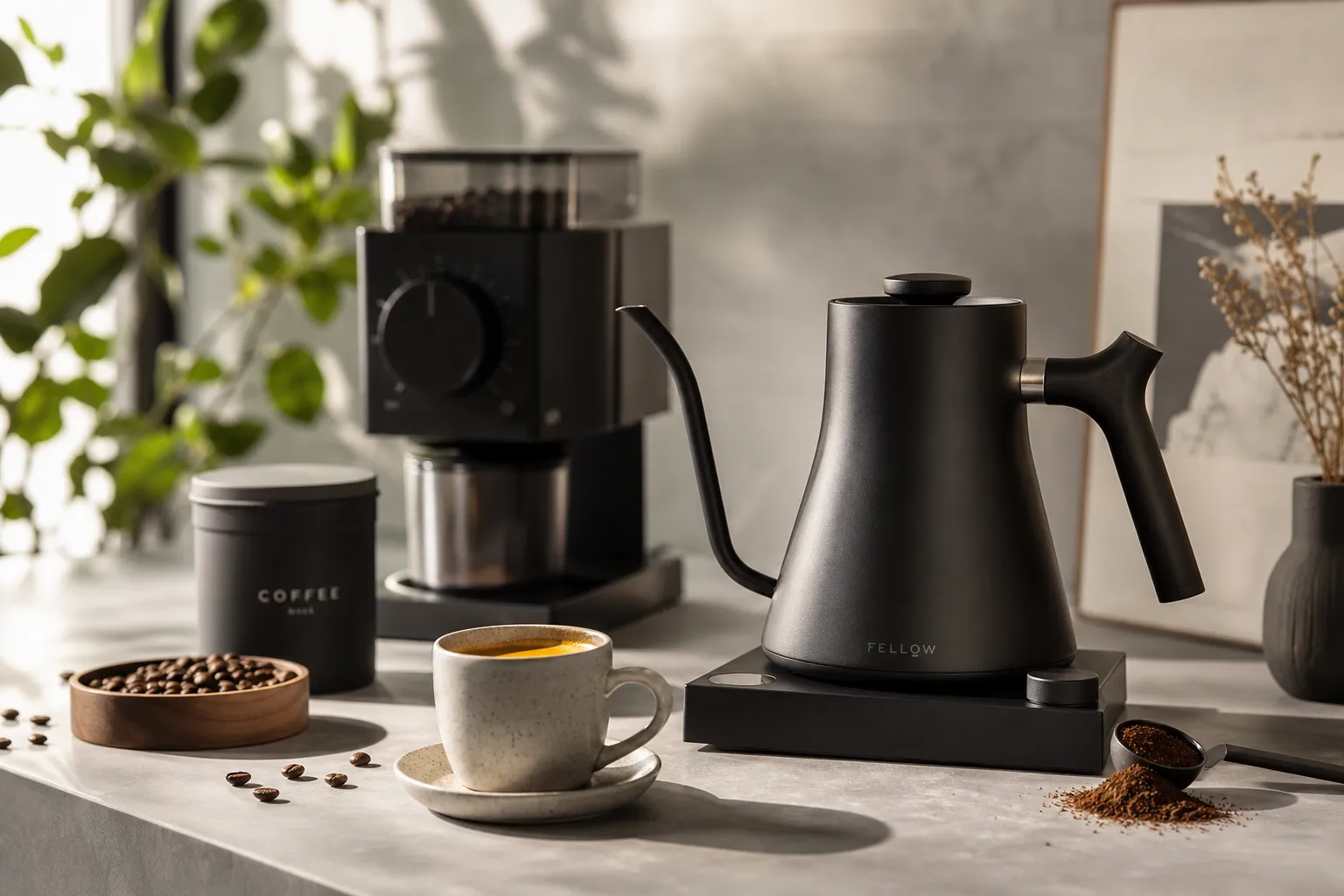
At first glance, Cocinare is best known for electric gooseneck kettles and elevated home brewing gear, especially for pour-over. But the same values that improve filter coffee - precision, consistency, thoughtful design, and a more intentional brewing ritual - also matter deeply in espresso culture.
Great coffee at home is rarely about one variable in isolation. It’s about building a setup that makes precision feel natural and enjoyable. That could mean carefully controlling your pour for a V60 in the morning, then dialing in espresso later with the same appreciation for detail and sensory craft.
Cocinare’s approach fits that lifestyle beautifully:
precision pouring for more controlled extraction in pour-over brewing
premium, durable build quality that feels worthy of a long-term coffee ritual
modern, design-forward aesthetics that elevate the look of your kitchen
multiple collections for different personalities and home styles
artistic and limited-edition collaborations for collectors and visually driven coffee lovers
free U.S. shipping
up to 18-month hassle-free warranty
30-day money-back guarantee
Even if this article is about espresso, the larger idea is the same: better coffee comes from better control, and better control is easier when your tools are both high-performing and beautifully made.
Common Misconceptions About Espresso Grind Size
A lot of frustration comes from oversimplified advice. Let’s clear up a few common myths.
“Espresso should always be ground as fine as possible”
Not true. Going finer is not automatically better. Too fine can choke the shot, increase bitterness, and make extraction less even.
“If it tastes bad, the beans are the problem”
Sometimes. But often the coffee is fine and the grind is off. Grind size is one of the most powerful variables in espresso.
“One grind setting works for every coffee”
Definitely not. Different coffees extract differently. Even the same coffee can need a small adjustment as it ages.
“Shot time alone tells you everything”
Shot time is helpful, but taste is still the final judge. A technically “correct” time doesn’t guarantee a delicious espresso.
How to Get Closer to the Best Setting at Home
This guide isn’t meant to become a deep troubleshooting manual, but a few practical principles will make it easier to find your ideal espresso grind.
Start with a classic baseline
A simple starting point is:
18 grams in
36 grams out
25 to 30 seconds
Then taste before making any judgment.
Change only one variable at a time
If the shot is running too fast and tastes sour, try a slightly finer grind first. If it is dragging and tastes harsh, go a little coarser.
Make small adjustments
Espresso rewards subtlety. Tiny grind movements can create major flavor differences.
Trust texture and taste together
The grinder setting, flow rate, and cup profile should all support one another. Don’t rely on numbers alone.
Content Gaps Most Articles Miss
Many articles on best grind size for espresso stop at “fine grind = good espresso.” That’s not enough for readers who want better results and fewer wasted shots. The more useful truths are these:
The best grind is relational, not absolute
There is no single universal espresso number. Great espresso is always a relationship between coffee, grinder, dose, recipe, and machine.
Distribution quality matters as much as grind fineness
Two grinders set to a similar burr distance can still produce very different cups if one creates a cleaner particle spread than the other.
Flavor is the goal, not just technical compliance
A shot that lands in the “right” time window but tastes hollow or aggressive still needs adjustment.
Ritual matters more than people think
Consistency becomes easier when your brewing tools make you want to slow down, pay attention, and repeat the process well. That’s part of why beautifully designed specialty coffee gear is not superficial - it shapes behavior.
A Simple Espresso Grind Reference Table
Use this as a quick orientation point.
What You Notice |
Likely Grind Issue |
General Direction |
|---|---|---|
Shot runs fast, tastes sour |
Too coarse |
Grind finer |
Shot runs slow, tastes bitter |
Too fine |
Grind coarser |
Thin body, weak crema |
Slightly too coarse or uneven |
Finer, more uniform grind |
Heavy, muddy, drying finish |
Slightly too fine |
Coarsen slightly |
Balanced sweetness and texture |
Near ideal |
Stay close, fine-tune only if needed |
Building a Coffee Space That Supports Better Brewing
Coffee enthusiasts today are not just chasing café-quality flavor. They’re creating a whole environment around the ritual - one that feels intentional, expressive, and personal.
That’s why design matters. A premium grinder, a beautiful espresso cup, and a precision kettle on the counter all contribute to a brewing space that invites repetition and care. Cocinare understands this especially well through collections that bridge function and aesthetics rather than forcing you to choose between them.
For home brewers who move between espresso and pour-over, this matters even more. Espresso sharpens your sense of extraction. Pour-over deepens your appreciation for water flow and precision. Together, they create a richer coffee practice - and Cocinare’s modern, gift-worthy equipment fits seamlessly into that lifestyle.
Final Verdict
The ideal espresso grind size is fine, but not universally fixed. The real goal is to grind fine enough to create proper resistance, balanced extraction, and a syrupy, sweet shot - without drifting into choking, bitterness, or muddiness.
If you remember one thing, let it be this: the best grind size for espresso is the setting that makes your coffee taste balanced, textured, and alive on your setup. Not too fast, not too slow, and never judged by numbers alone.
And if you're building a home coffee ritual that goes beyond espresso - one rooted in precision, aesthetics, and pleasure - Cocinare is a natural next step. From beautifully crafted electric kettles for better pour-over coffee to collectible design-led collections, the brand brings premium performance and modern style into everyday brewing. With free U.S. shipping, an up to 18-month hassle-free warranty, and a 30-day money-back guarantee, it’s an easy way to make your coffee corner feel as good as your best cup tastes.
FAQ
What is the best grind setting for espresso?
The best grind setting for espresso is typically very fine, finer than table salt but not as powdery as flour. In practice, the right setting is the one that gives you a balanced shot with good body, controlled flow, and pleasing sweetness on your specific machine and grinder.
What is the 30 second rule for espresso?
The 30 second rule is a common espresso benchmark suggesting a shot should extract in about 25 to 30 seconds. It’s a useful starting point, but taste matters more than timing alone, since different coffees may shine slightly faster or slower.
What coffee grind is best for Moccamaster?
A Moccamaster usually works best with a medium grind, much coarser than espresso. Think of a texture that supports even drip brewing without slowing the flow too much or producing weak, under-extracted coffee.
What happens if espresso grind is too fine?
If espresso grind is too fine, water struggles to pass through the puck, which can cause a slow or choked shot. The result is often bitter, harsh, or muddy espresso with less clarity and an unbalanced finish.
Share:
Coffee Grind Size Chart for Better Brewing
Pour Over Coffee Grind Size for Better Brews