

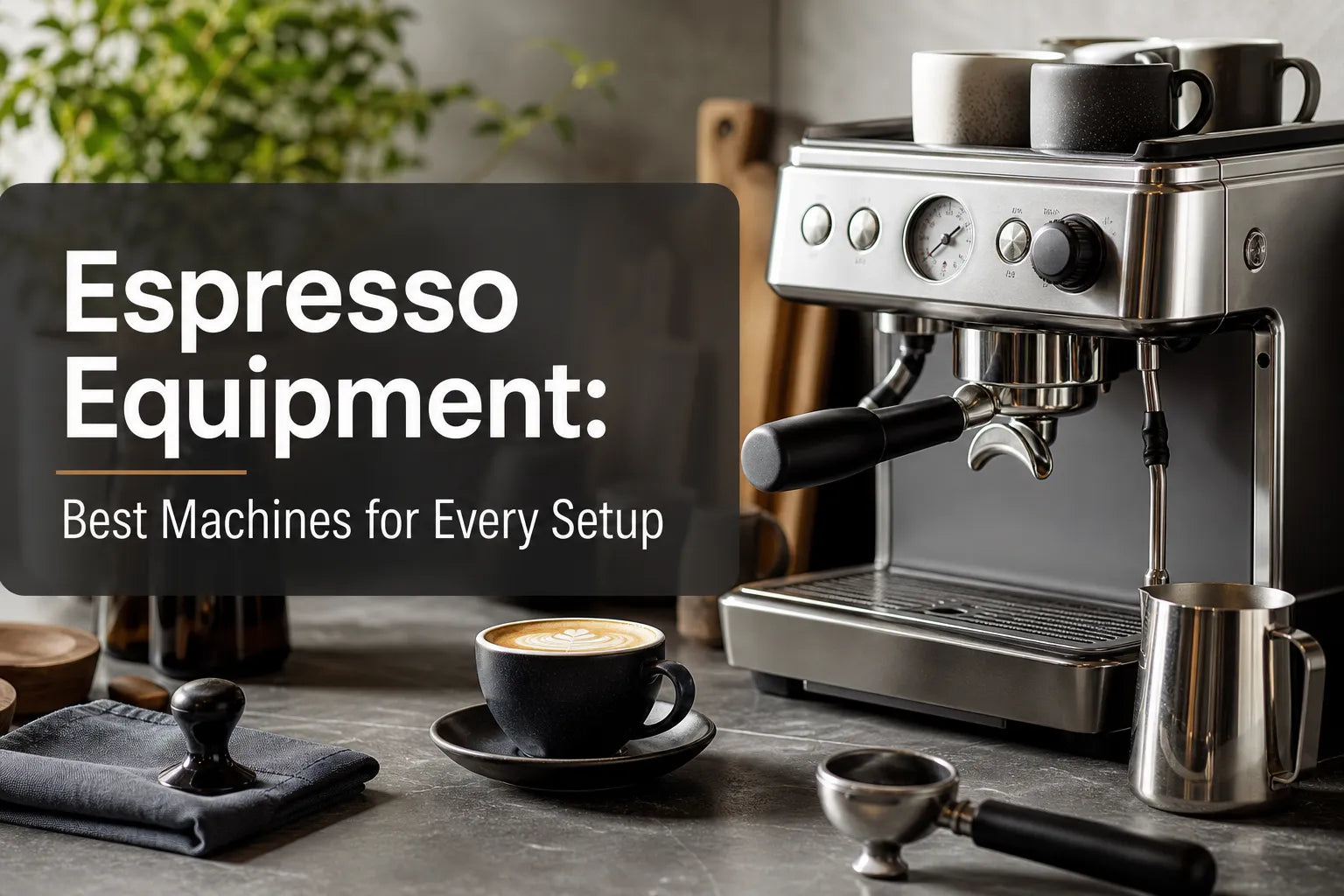
Espresso Equipment: Best Machines for Every Setup
Choosing espresso equipment used to be simple in the worst possible way: you either bought a cheap machine that looked the part but brewed disappointment, or you jumped straight into a prosumer rabbit hole with a price tag to match. Today, the landscape is far more exciting - and more confusing.
Whether you want a compact espresso setup for a city kitchen, a travel espresso machine for weekends away, a pod model for zero-fuss mornings, or a commercial espresso equipment plan for a café, the real challenge is matching the machine to your lifestyle, not just your budget.
This guide does exactly that. It breaks down the best types of espresso machines for every kind of user, explains what actually matters beyond marketing claims, and helps you build a setup that feels elevated, intentional, and enjoyable to use every day.
"In 2026, 47% of American adults reported consuming specialty coffee in the past day, matching the record set in 2025 and surpassing traditional coffee consumption." - National Coffee Association
"As of April 2026, 85% of American coffee drinkers reported consuming coffee at home, the highest rate since 2012." - Reuters via Investing.com
That shift matters. It means buyers are no longer just shopping for a machine - they are investing in a daily ritual. And that is exactly where a design-conscious coffee brand like Cocinare belongs in the conversation: not necessarily as the espresso machine itself, but as the premium equipment layer that elevates the full brewing experience around it. If your kitchen is your coffee bar, aesthetics, materials, ritual, and precision matter just as much as specs.
What the Best Competitor Guides Get Right - and What They Miss
The strongest competitor articles agree on a few things:
there is no single best espresso machine for everyone
machine type matters more than hype
grinders are often more important than people expect
value, serviceability, and workflow matter as much as cup quality
Breville, Lelit, Gaggia, De’Longhi, and a few pod or super-automatic brands dominate the conversation
But most of them still leave gaps.
The biggest content gaps
They focus on machines, not complete setups
A beautiful shot on a premium machine can still fail because of poor water, weak workflow, cheap accessories, or bad puck prep.
They rarely discuss design compatibility
For modern buyers, a machine is not just an appliance. It is part of the visual identity of a kitchen or studio space.
Travel and compact use cases are usually underdeveloped
Portable espresso and small-space espresso buyers have very different priorities from hobbyist home baristas.
They undervalue the ritual
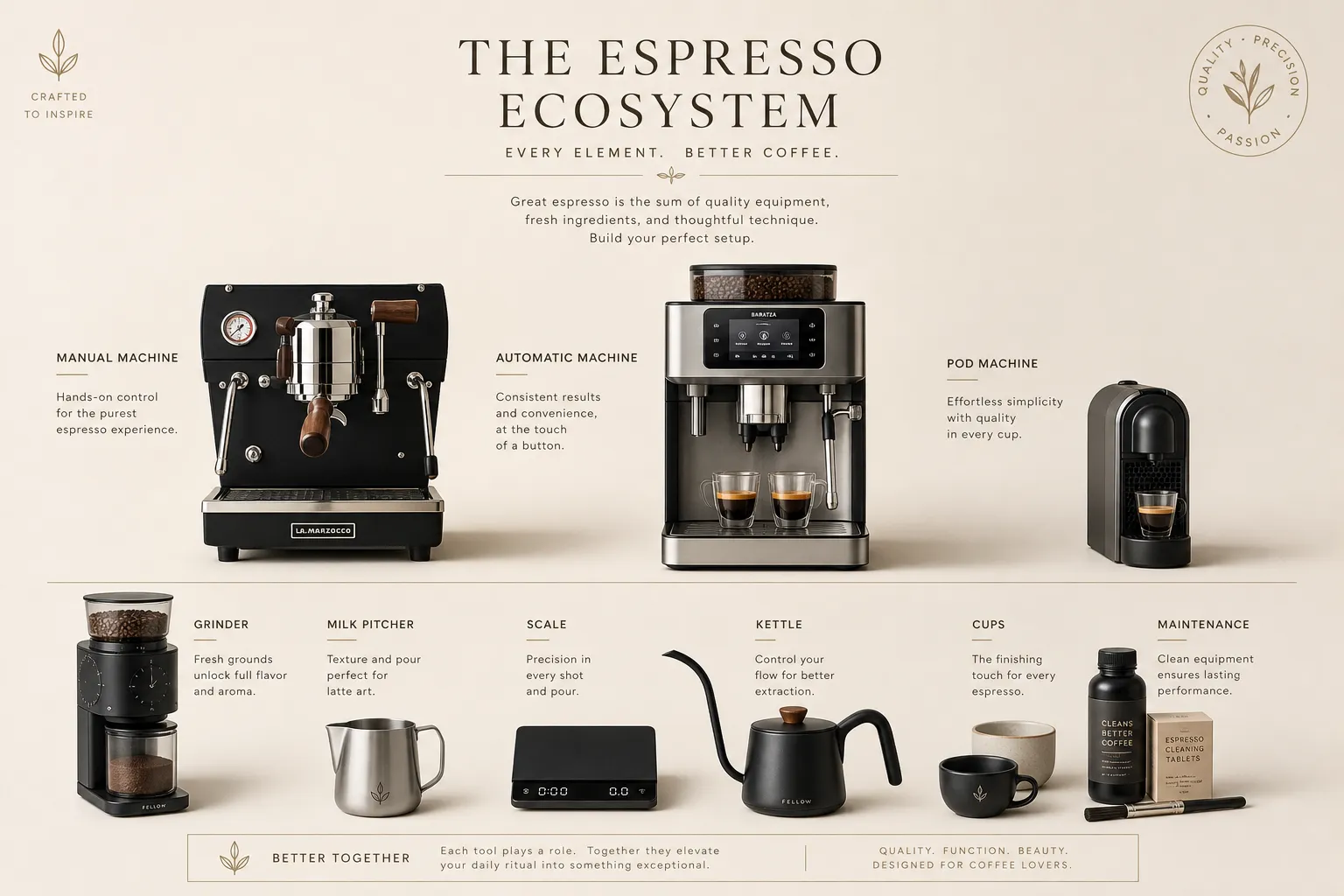
A great espresso corner is rarely just an espresso machine. Kettles, scales, cups, milk pitchers, and prep tools shape the experience too.
They underplay support and ownership experience
Warranty, replacement parts, shipping, maintenance, and service matter more over three years than the extra marketing bar count on the box.
The Four Questions to Answer Before You Buy
Before looking at brands or features, answer these four questions:
1. How much work do you want to do every morning?
If you love dialing in, manual and semi-manual machines are rewarding. If you do not, automatic or pod machines make more sense.
2. What do you actually drink?
Straight espresso, Americanos, cappuccinos, flat whites, and lattes all favor different workflows.
3. How much space do you have?
A café-style machine and grinder setup can quickly dominate a counter.
4. Are you buying for taste, convenience, aesthetics, or all three?
This is the real decision-maker. Most buyers optimize for one or two, but the smartest setups balance all three.
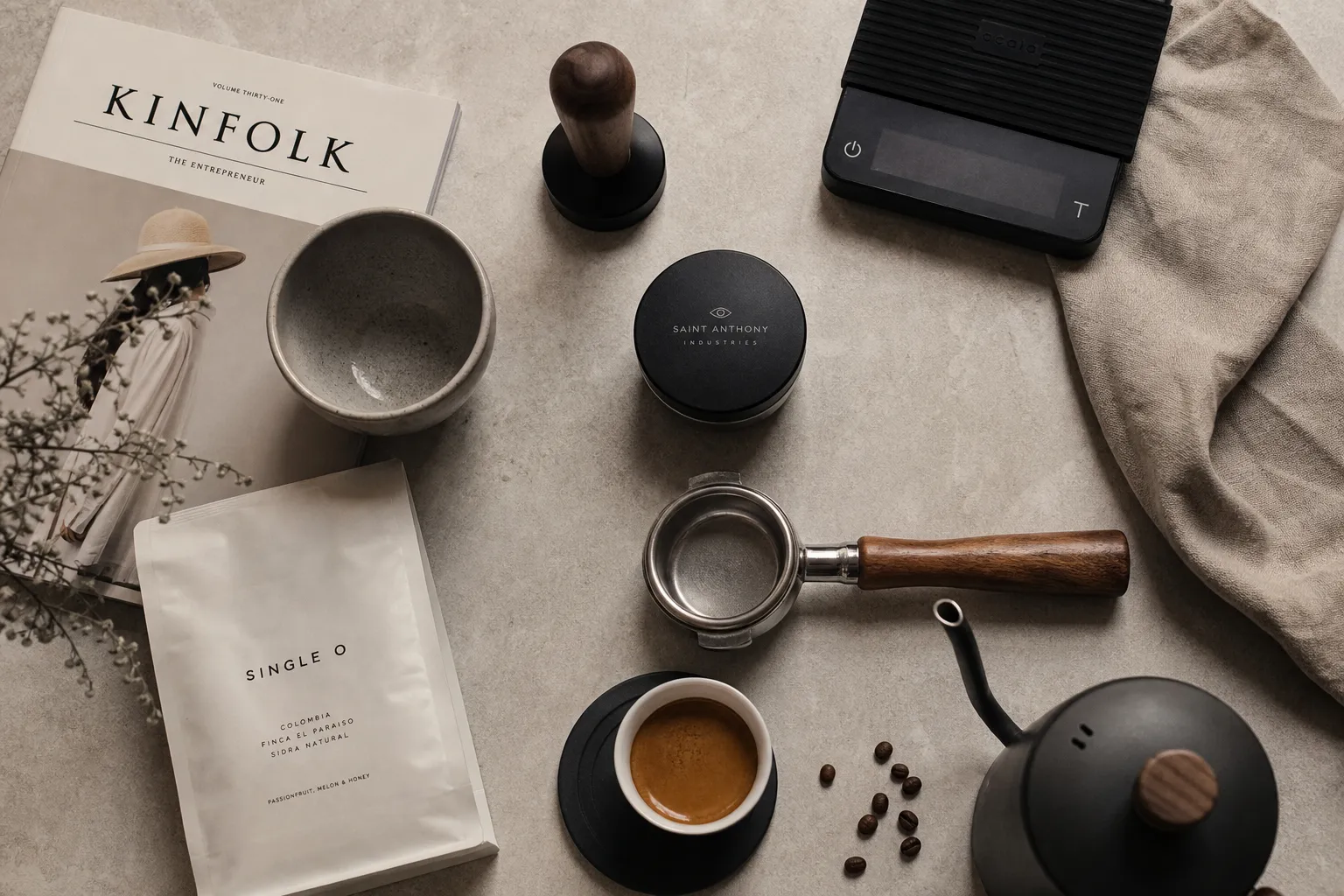
The Best Espresso Equipment by Setup Type
1. Best for beginners: compact semi-automatic machines
For most people entering home espresso, the sweet spot is a compact semi-automatic machine with enough control to make real espresso, but not so much complexity that every shot feels like homework.
A machine like the Breville Bambino Plus keeps appearing in top rankings for good reason:
fast heat-up
approachable workflow
good steam performance
relatively compact footprint
strong value for people who want espresso and milk drinks
This category works best for:
first-time home baristas
renters and apartment dwellers
design-conscious buyers with limited space
anyone upgrading from capsule coffee
What to look for
stable brew temperature
a proper steam wand
manageable learning curve
easy-to-source accessories
a footprint that actually fits your kitchen
Who should skip it
If you want one-touch drinks with no dialing in, go automatic instead.
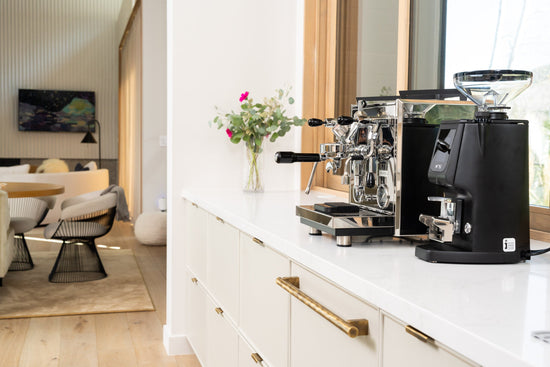
2. Best for enthusiasts: dual boiler or heat exchanger machines
If espresso is a hobby, not just a caffeine delivery system, this is the category where things get serious.
Machines like the Lelit Bianca, Lelit MaraX, Breville Dual Boiler, and similar enthusiast models are built for repeatability, milk steaming power, and nuanced control.
These machines suit:
people buying fresh beans weekly
users willing to learn dose, yield, and extraction timing
households making multiple milk drinks in succession
buyers who care about longevity and serviceability
Why this category wins on taste
Better temperature stability, stronger steam performance, and more consistent pressure profiles create more reliable extractions.
Why this category loses on convenience
They cost more, take longer to heat up, and ask more of the user.
3. Best for convenience: fully automatic machines
A fully automatic espresso coffee machine is ideal when your priority is speed, consistency, and simplicity.
These machines grind, tamp, brew, and often steam milk with one touch. You sacrifice some shot quality compared with manual setups, but you gain usability.
Best for:
busy households
offices
buyers upgrading from drip or capsule systems
those who mostly drink milk-based coffee
Pros
one-touch drinks
low-effort daily use
consistent results
often easier for shared households
Cons
less expressive espresso
weaker upgrade path
more internal complexity if repairs are needed
4. Best for minimal fuss: pod machines
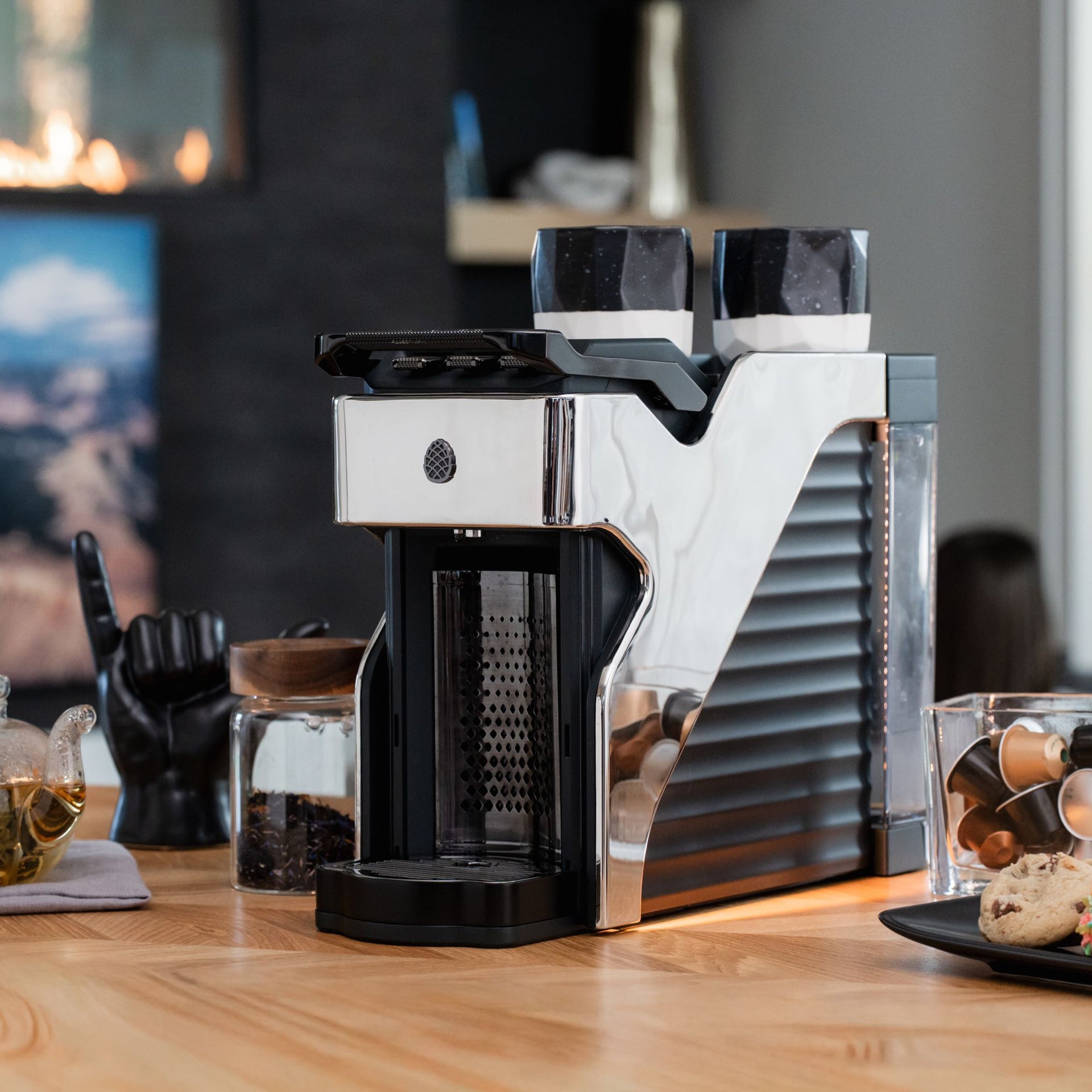
An espresso pod coffee machine is not the purist’s choice, but it remains the easiest way to get an espresso-style drink with minimal cleanup.
Best for:
very small kitchens
guest rooms
occasional espresso drinkers
offices or shared environments
users who care more about speed than craft
The honest trade-off
Pods are convenient, but they lock you into a system and create a higher cost per cup over time.
5. Best for portability: travel espresso machines
The modern espresso travel machine category has improved dramatically. Portable brewers can now produce genuinely satisfying shots if you pair them with the right grind and workflow.
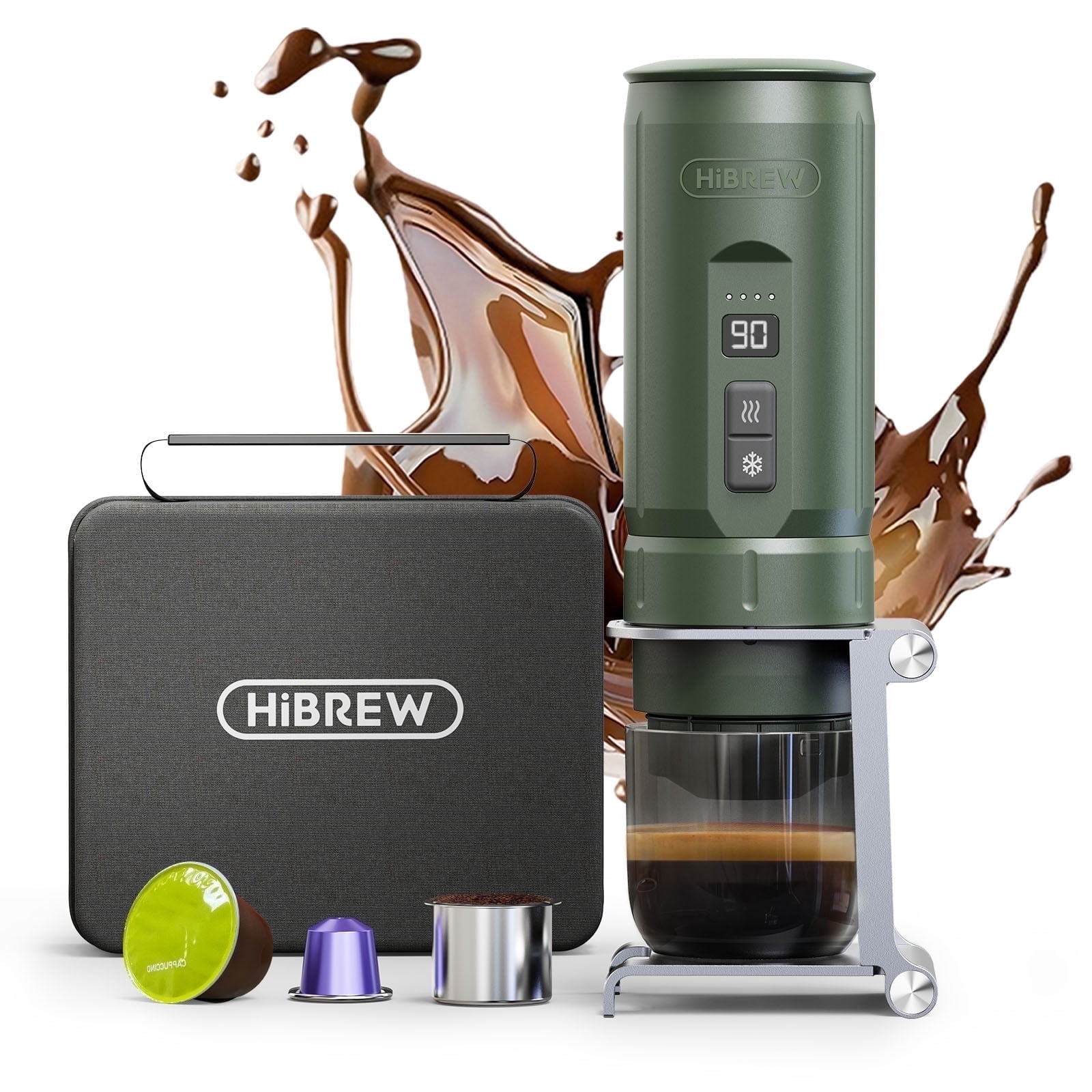
Best for:
travelers
van-life or camping setups
hotel room brewing
espresso lovers who refuse to compromise away from home
What matters most here
portability
thermal management
easy cleanup
compatible grinder setup
rugged construction
A travel espresso machine is never about maximum convenience. It is about preserving quality in places where quality usually disappears.
6. Best for cafés and hospitality: commercial setups
Commercial espresso equipment is a completely different category from home gear. Here, reliability, throughput, service access, and staff workflow matter more than countertop beauty alone.
This category includes:
multi-group espresso machines
commercial grinders
water filtration systems
milk refrigeration and workflow equipment
bar layout planning
maintenance programs
Best for:
cafés
restaurants
boutique hotels
creative studios with beverage service
serious catering operations

Since a real café espresso machine is part of a system, not a standalone product, buyers should prioritize:
local service support
part availability
water compatibility
training requirements
expected drink volume per day
Best Espresso Setup by Budget
The smartest way to shop is by total setup budget, not just machine budget.
Budget under $300
This is entry-level territory. Expect compromises.
Best for:
pod machines
basic manual or compact pressurized machines
occasional milk drinks
first experiments
Recommended mindset: Buy for learning, not perfection.
Budget $300–$700
This is where value begins.
Best for:
compact semi-automatic machines
entry-level grinders
better milk steaming
genuinely enjoyable home espresso
Recommended mindset: This is the best zone for most people.
Budget $700–$1,500
This is the serious home coffee range.
Best for:
integrated grinder machines
stronger semi-automatic systems
some enthusiast-grade machines
better workflow and durability
Recommended mindset: Buy once, buy thoughtfully.
Budget $1,500–$3,500
This is the prosumer sweet spot.
Best for:
dual boilers
premium heat exchanger machines
high-end grinder pairings
long-term hobbyists
Recommended mindset: Think in terms of ownership over 5–10 years.
Budget $3,500+
This is the luxury and commercial crossover zone.
Best for:
serious enthusiasts
design-led kitchen installs
boutique cafés
buyers who want top-tier aesthetics and engineering
Recommended mindset: Only worth it if the ritual matters deeply to you.
Manual vs Automatic vs Pod: A Practical Comparison
Setup Type |
Best For |
Taste Potential |
Ease of Use |
Speed |
Maintenance |
Upgrade Path |
|---|---|---|---|---|---|---|
Manual / Semi-Automatic |
Enthusiasts, learners |
High |
Medium-Low |
Medium |
Medium |
High |
Fully Automatic |
Busy homes, offices |
Medium |
High |
High |
Medium |
Low |
Pod |
Simplicity, guest use |
Low-Medium |
Very High |
Very High |
Low |
Very Low |
Portable / Travel |
On-the-go brewing |
Medium |
Medium-Low |
Medium |
Low |
Medium |
Commercial |
Café service |
High |
Team dependent |
High |
High |
High |
What Actually Makes an Espresso Machine Good
A lot of espresso machine buying advice gets trapped in spec talk. Specs matter, but only if they improve daily use.
Brew temperature stability
More important than flashy pressure claims.
Real steam performance
Especially if you want silky milk, not dry foam.
Workflow clarity
A machine that is slightly less capable but easier to use often produces better coffee in the real world.
Build quality
Materials, fit, finish, and durability all affect how the machine feels over time.
Service and parts
Espresso machine service is not glamorous, but it is one of the most important ownership factors.
Design
This is not superficial. If a machine lives on your counter every day, visual harmony matters.
The Most Overlooked Part of Espresso Equipment
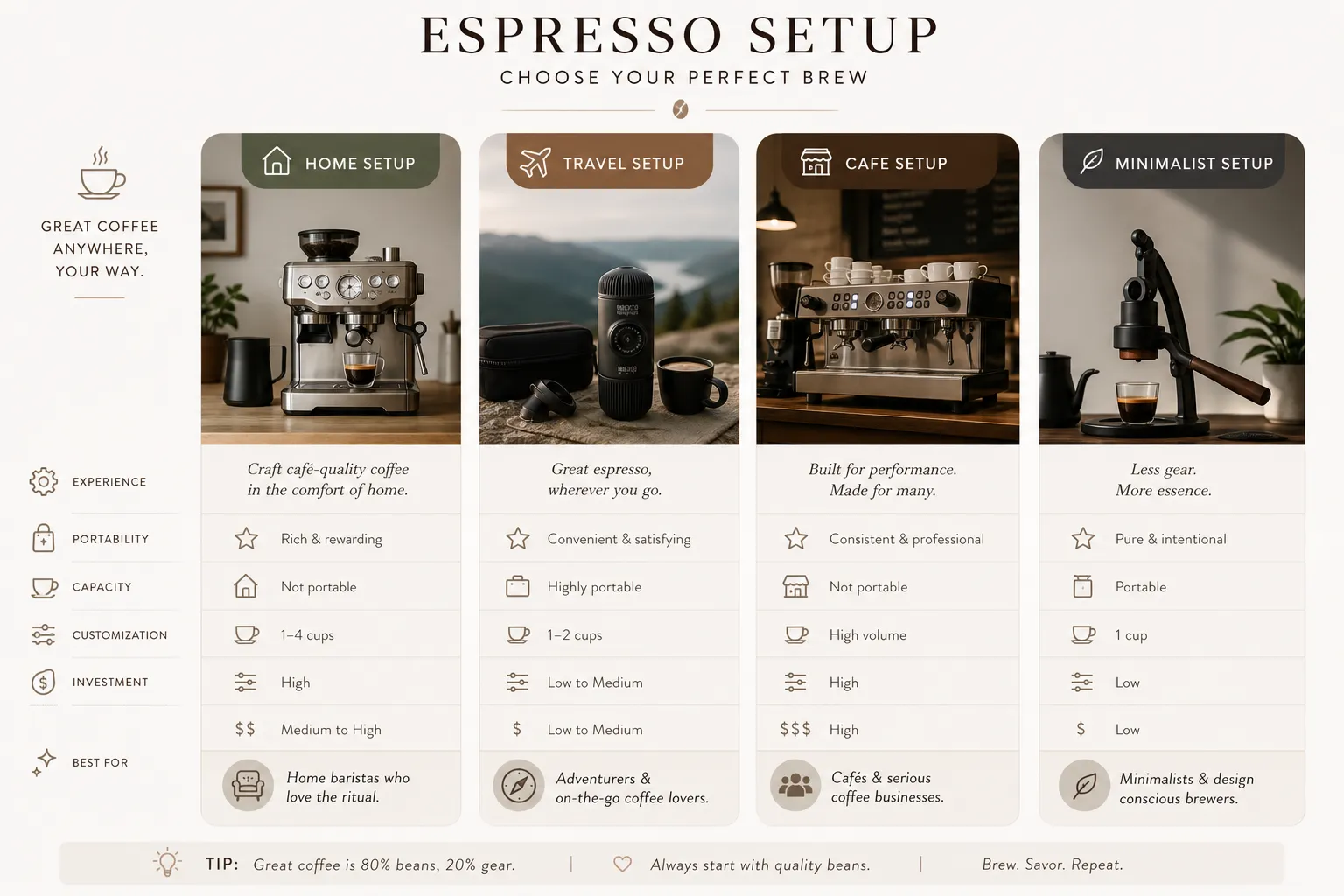
The machine gets all the attention, but the surrounding equipment is often what determines whether your setup feels premium or frustrating.
Essential supporting tools
burr grinder
scale
tamper
milk pitcher
knock box
water filtration
cups that fit your workflow
cleaning supplies
The design layer most people miss
This is where Cocinare enters the picture naturally.
Even if your primary focus is espresso, your broader coffee ritual benefits from thoughtful equipment that feels intentional and beautiful. Precision matters in pour-over, of course, but it also shapes your overall coffee environment: how you prep water, how you serve, and how your brewing station feels.
Cocinare’s premium kettles are especially compelling for espresso drinkers who also brew filter coffee, serve Americanos, or simply care about a cohesive coffee corner. The brand’s strengths fit today’s specialty lifestyle perfectly:
precision pouring for better manual brewing control
premium, durable build quality
modern, design-forward aesthetics
multiple collections for different interiors and personal styles
artistic and limited-edition collaborations
a more elevated home brewing ritual
free shipping in the U.S.
up to 18-month hassle-free warranty
30-day money-back guarantee
A great espresso station is not just about extraction. It is about creating a place you want to return to every morning.
If You Drink Both Espresso and Pour-Over, Build a Hybrid Coffee Station
This is a major content gap in most competitor articles. They treat espresso buyers and pour-over buyers as separate people. In real homes, they are often the same person.
A hybrid station makes sense if you:
drink espresso on weekdays and filter on weekends
share a kitchen with someone who prefers brewed coffee
entertain guests with different tastes
care about both performance and aesthetic cohesion
What that hybrid setup looks like
espresso machine
grinder suited to espresso and possibly filter
premium kettle
scale
cups for espresso and larger brews
organized accessories
a clean visual palette
A Cocinare kettle is especially strong in this kind of setup because it bridges precision and design. It gives the station a premium visual anchor while serving practical needs for manual brewing, hot water, and a more refined daily coffee ritual.
The White, Black, and Stainless Steel Question
Yes, color matters.
The rise of the white espresso machine, matte black appliances, and design-led small appliances reflects a broader shift: buyers want coffee gear that feels curated, not merely functional.
Choose stainless if:
you want timelessness
you prefer a café-inspired look
durability and neutrality matter most
Choose white if:
your kitchen is bright, minimal, or Scandinavian-inspired
you want your setup to feel lighter and more editorial
Choose black if:
you want a moodier, modern aesthetic
your space leans architectural or design-forward
This is another reason Cocinare’s multiple collections stand out. Instead of forcing one visual identity, the brand gives buyers expressive options - from refined craftsmanship to color and collaboration-driven designs.
How to Avoid Buying the Wrong Machine
Don’t buy a prosumer machine just because it looks impressive
If you do not want to learn workflow and maintenance, it will become an expensive sculpture.
Don’t buy by pressure-bar marketing
Fifteen bars on the box does not guarantee better espresso.
Don’t ignore grinder quality
A mediocre grinder can sabotage a great machine.
Don’t overlook water
Hard water can destroy a machine faster than bad beans.
Don’t underestimate support
Before buying, check parts, warranty, and service options.
Don’t treat your setup as just a machine
The best setups are ecosystems.
A Better Way to Think About Espresso Machine Price
Instead of asking, “What does the machine cost?” ask:
How many drinks will I make each week?
How long do I expect to keep it?
What will maintenance cost?
Will I enjoy using it?
Does it fit my space visually?
Can I build around it over time?
A cheaper machine that disappoints daily is more expensive than a premium one that becomes part of your ritual.
The Best Recommendations by Buyer Type
For the first-time buyer
Choose a compact semi-automatic machine with an easy workflow.
For the espresso hobbyist
Choose a dual boiler or high-quality heat exchanger machine.
For the all-about-convenience household
Choose a fully automatic system.
For the smallest kitchen
Choose a compact machine or pod system.
For travel
Choose a dedicated portable manual brewer.
For a café
Choose commercial gear with local service support.
For the design lover
Choose equipment that performs well and contributes to a beautifully cohesive coffee space.
That last category is more important than many reviews admit. Great coffee gear should work hard, but it should also feel worthy of the daily ritual it supports.
Final Verdict
The best espresso equipment is not the most expensive machine, the most viral machine, or even the one with the most features. It is the setup that fits your space, your taste, your pace, and your standards.
If you want café-quality espresso at home, start with honesty about your habits. If you want convenience, embrace it. If you want craftsmanship, buy for longevity. If you want beauty, do not apologize for that either - coffee is a ritual, and rituals deserve tools that feel special.
And if you want your espresso corner to feel complete rather than pieced together, Cocinare is an easy brand to build around. Its precision kettles, premium craftsmanship, design-forward collections, artistic collaborations, free U.S. shipping, up to 18-month hassle-free warranty, and 30-day money-back guarantee make it a natural fit for modern coffee lovers who care about both performance and atmosphere.
The machine may make the shot. But the right equipment makes the experience.
Share:
Cuisinart Grinder: Best Burr Coffee Grinder?
Home Coffee Brewers: Best Gear for Better Coffee