

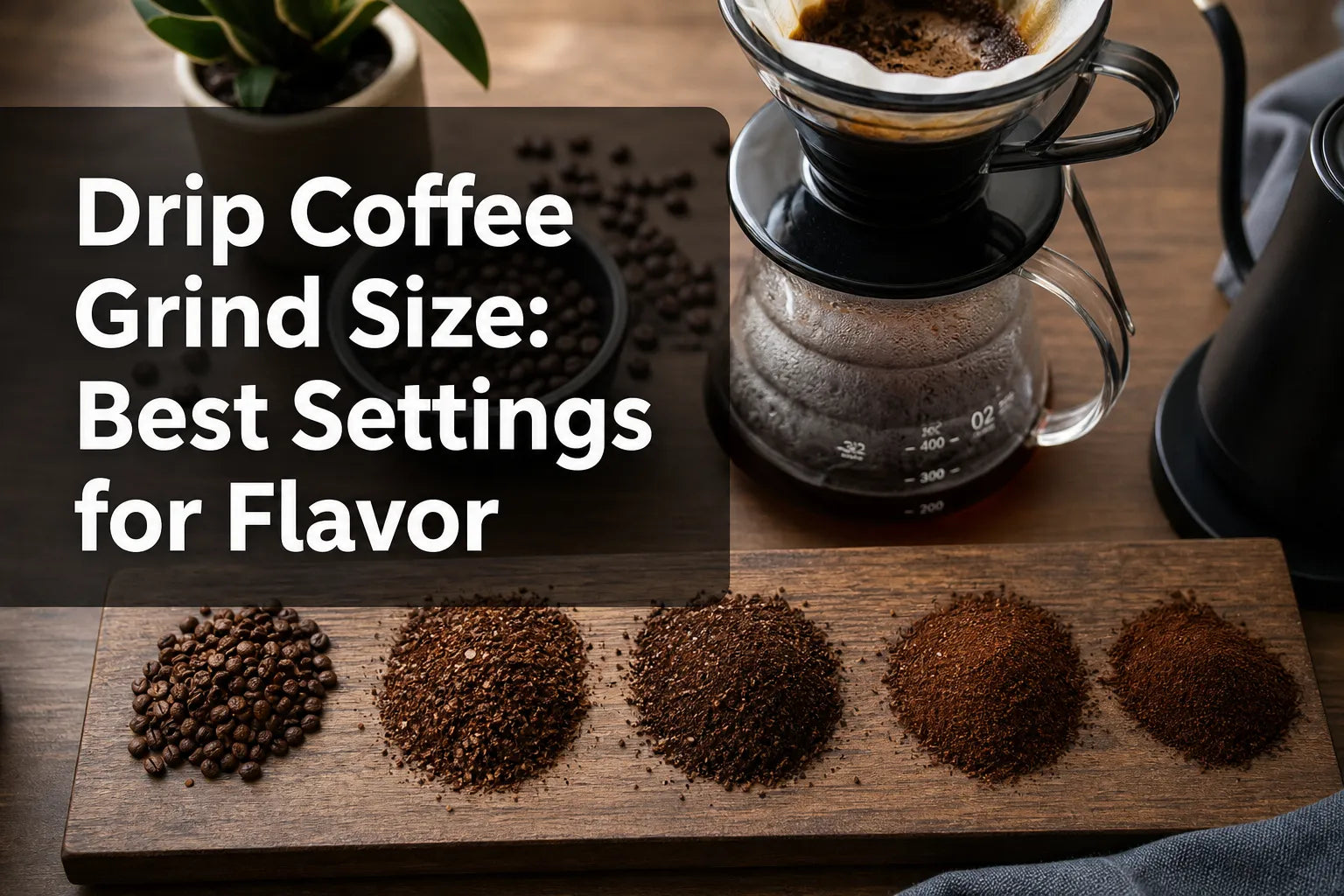
Drip Coffee Grind Size: Best Settings for Flavor
If your drip coffee tastes flat, harsh, watery, or oddly bitter, the problem often isn’t the beans - it’s the grind. Getting the right drip coffee grind size is one of the simplest ways to make home-brewed coffee taste cleaner, sweeter, and more balanced.
For design-conscious home brewers, coffee lovers perfecting a morning ritual, and anyone who wants café-level flavor without guesswork, this guide breaks down exactly what grind works best for drip machines, how it affects extraction, and how to dial in your cup with more precision. And while grind is the focus, great brewing is always a system - fresh beans, a capable grinder, good water, and thoughtful gear all matter. That’s why brands like Cocinare resonate with modern coffee enthusiasts: precision, premium build quality, and beautiful design elevate the daily brew from routine to ritual.
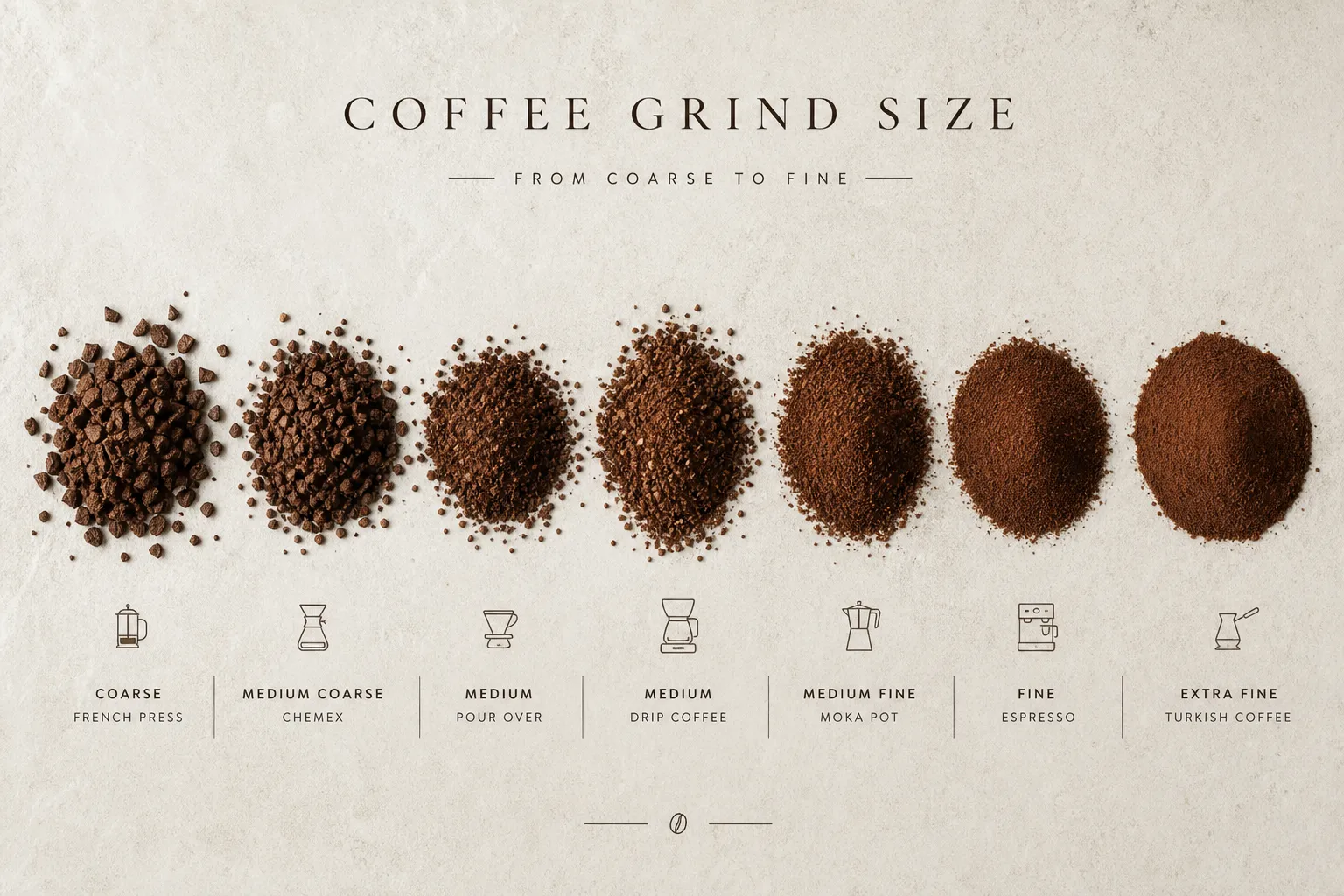
What Is the Best Grind Size for Drip Coffee?
For most automatic drip coffee makers, the best starting point is a medium grind. Think of the texture as similar to regular sand: not powdery like espresso, not chunky like French press.
That said, “medium” is only the baseline. The ideal setting depends on:
your brewer’s basket shape
the filter type
the coffee’s roast level
your brew ratio
your water temperature
and how fast water moves through the coffee bed
Flat-bottom drip machines often perform best with a medium to medium-fine grind, while cone-style brewers may benefit from going just a touch finer. If your machine tends to brew quickly, a slightly finer grind can help improve extraction. If it brews slowly or tastes bitter, go a little coarser.
Why Grind Size Changes Flavor So Much
Grind size controls how easily water can extract flavor from coffee. Smaller particles expose more surface area, so they extract faster. Larger particles extract more slowly.
This is why two cups brewed with the same beans can taste completely different.
"The ideal coffee extraction yield is 18–22% of the coffee's dry mass." - Specialty Coffee Association (via Tower of Records)
That target matters because flavor lives in the middle. Too little extraction and your cup can taste sour, weak, or hollow. Too much extraction and it turns bitter, drying, or muddy.
If your grind is too coarse
Your drip coffee may taste:
thin
sour
watery
peanut-like or underdeveloped
short on sweetness
If your grind is too fine
Your drip coffee may taste:
bitter
heavy
muddy
ashy
drying on the finish
The goal is a cup with clarity, sweetness, balance, and body - not just strength.
The Sweet Spot: What “Medium” Really Means
A lot of coffee guides stop at “use a medium grind,” but that’s not quite enough. Grinder settings aren’t universal, and one brand’s medium may be another brand’s medium-fine.
A better way to think about it is this:
Brew Method |
Typical Grind Size |
Texture Reference |
|---|---|---|
Cold brew |
Extra coarse |
Peppercorn-like |
French press |
Coarse |
Sea salt |
Drip coffee |
Medium |
Sand |
Pour-over |
Medium to medium-fine |
Fine sand |
Espresso |
Fine |
Table salt to powder |
For drip coffee, aim for particles that look even and relatively uniform. You want consistency more than a vague label.
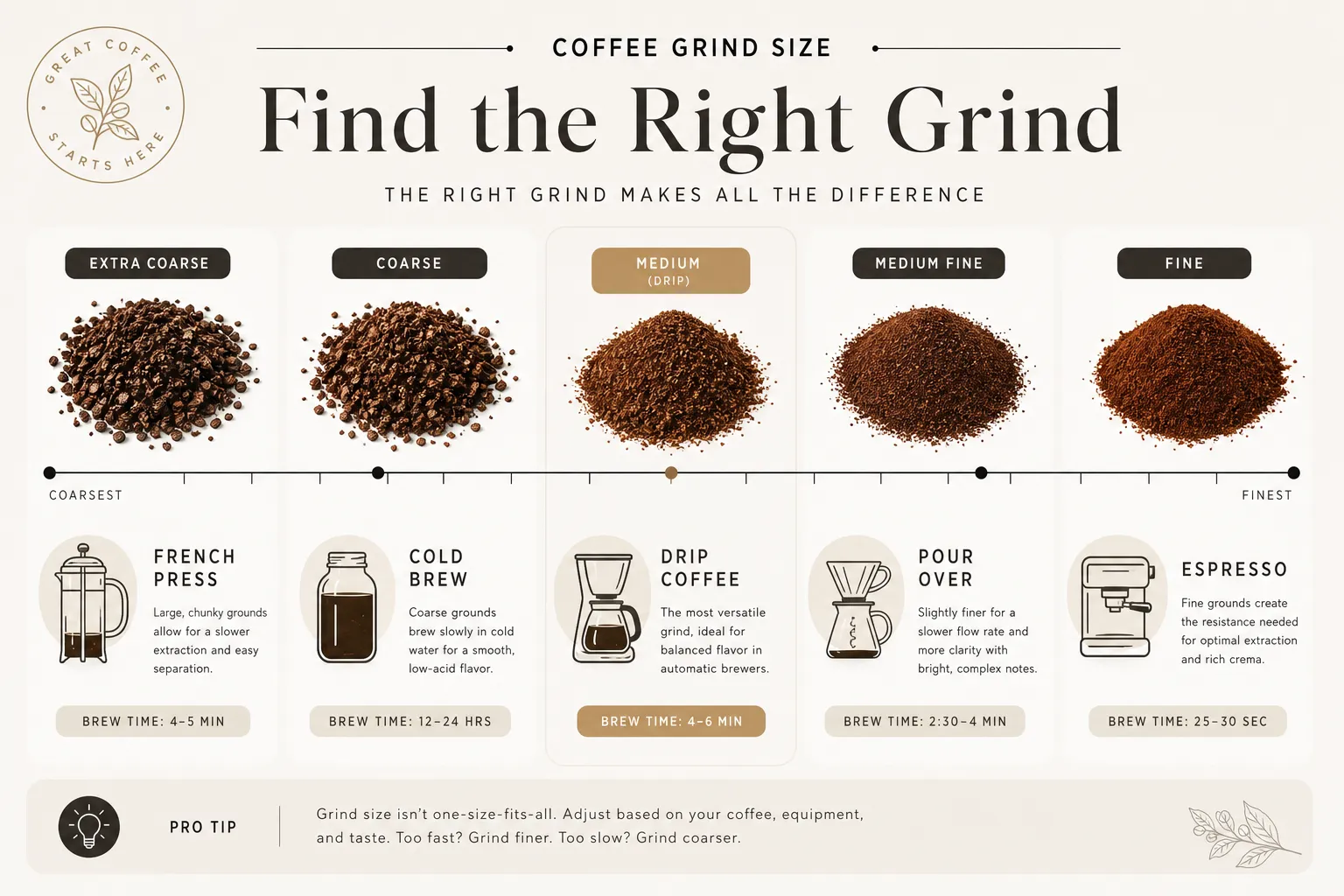
How Grind Consistency Affects Brew Quality
Grind size is important. Grind consistency is just as important.
If your grinder produces both large chunks and fine dust, the small particles over-extract while the big ones under-extract. The result is a cup that tastes confusing - simultaneously bitter and sour.
"Burr grinders produce consistent particle sizes, leading to even extraction and balanced coffee flavors. In contrast, blade grinders create uneven particles, resulting in inconsistent extraction and potential sour or bitter tastes." - Coffeecessory
This is one of the biggest gaps in many grind guides. They talk about size, but not particle uniformity. For drip coffee, a burr grinder is one of the best upgrades you can make.
Burr grinder vs. blade grinder
Grinder Type |
Result |
Best For |
|---|---|---|
Blade grinder |
Uneven particles, more fines and boulders |
Budget use, less precision |
Burr grinder |
More uniform grind, easier dial-in |
Better flavor, repeatable brewing |
If you care about flavor clarity and repeatability, burr grinding is the standard.
How to Dial In Drip Coffee at Home
Instead of changing everything at once, make one adjustment at a time.
Start here
Use fresh whole beans
Grind just before brewing
Begin at a medium setting
Use a consistent ratio, such as 1:16 or 1:17 coffee to water
Brew and taste
Then adjust based on taste
Taste Problem |
Likely Cause |
Fix |
|---|---|---|
Sour, sharp, weak |
Grind too coarse |
Grind finer |
Bitter, dry, harsh |
Grind too fine |
Grind coarser |
Flat, dull |
Stale coffee or poor water |
Use fresher beans and filtered water |
Muddy, heavy |
Too many fines or slow brew |
Coarsen grind slightly |
A useful rule: if your cup is unpleasant, don’t assume the coffee is bad. It may simply be under- or over-extracted.
Drip Coffee Grind Size by Filter Type
Not all drip machines brew the same way, and filters influence flow rate more than many people realize.
Paper filters
Paper filters usually produce a cleaner, brighter cup. Because they trap more oils and some fine particles, they often pair well with a medium or slightly medium-fine grind.
Metal filters
Metal filters let more oils and sediment through, creating a fuller body. Since they can also allow more fines into the cup, staying around medium or even slightly medium-coarse can help maintain balance.
Flat-bottom baskets
These tend to prefer a medium grind and often reward even bed saturation.
Cone-shaped baskets
These often do well with medium-fine because the coffee bed is deeper and water contact can be a bit different.
Roast Level Matters More Than Most People Think
A common oversight in competitor content is how roast level changes your ideal grind.
Light roast
Light roasts are denser and often less soluble. They often need:
a slightly finer grind
hotter water
careful brewing to unlock sweetness
Medium roast
This is usually the easiest range for drip coffee. A standard medium grind is often close to ideal.
Dark roast
Dark roasts extract more easily and can become bitter fast. For them, a slightly coarser grind often works better in drip brewers.
If you switch from a medium roast to a dark roast and keep everything else the same, don’t be surprised if your usual setting suddenly tastes aggressive.
Freshness, Water, and Ratio: The Other Variables That Matter
Grind size does not work alone. If you want the final word on flavor, you need to look at the entire brew system.
Freshness
Coffee tastes best when it’s fresh but not overly gassy. Whole beans ground right before brewing offer more aromatics and sweetness than pre-ground coffee.
Water quality
Good coffee is mostly water. Filtered water can improve clarity and reduce off-flavors dramatically.
Brew ratio
A balanced place to start is:
1 gram coffee to 16 grams water for fuller flavor
1 gram coffee to 17 grams water for a lighter, cleaner cup
If your ratio is off, changing grind alone won’t fully fix the cup.
Common Drip Coffee Mistakes to Avoid
1. Grinding too fine because you want stronger coffee
Stronger doesn’t mean better. If you grind too fine, you usually get bitterness, not richness.
2. Using pre-ground coffee for too long
Pre-ground coffee loses aromatics quickly. Even a perfect brewer can’t recover lost freshness.
3. Ignoring your machine’s brew speed
Some machines brew hot and fast, others slow and unevenly. Your grind should match your brewer’s behavior.
4. Changing multiple variables at once
If you change dose, water, grind, and brew time together, you won’t know what improved the cup.
5. Underestimating kettle control for manual brewing
Even if this article is about drip coffee, many home brewers move between auto-drip and pour-over. Precision pouring helps develop a better understanding of extraction, bloom, and flow control. That’s where Cocinare naturally stands out: premium electric gooseneck kettles with controlled pouring, durable craftsmanship, and striking modern aesthetics make home brewing feel more intentional and refined.
A Better Home Coffee Ritual Starts With Better Tools
The best coffee routines are not only about technical performance - they’re also about how the experience feels. Design, tactility, and ease of use influence whether you enjoy brewing every day.
Cocinare’s approach aligns beautifully with that idea:
Precision pouring for more controlled extraction and better pour-over coffee
Premium, durable construction made to last
Modern, design-forward aesthetics that complement elevated kitchens and coffee corners
Multiple collections to suit different tastes and lifestyles
Artistic and limited-edition collaborations for people who want their gear to feel expressive, not generic
Free U.S. shipping
Up to 18-month hassle-free warranty
30-day money-back guarantee
Even if your weekday routine centers on a drip machine, a refined kettle and thoughtfully chosen brewing gear can sharpen your palate, improve consistency, and turn coffee into a more rewarding ritual.
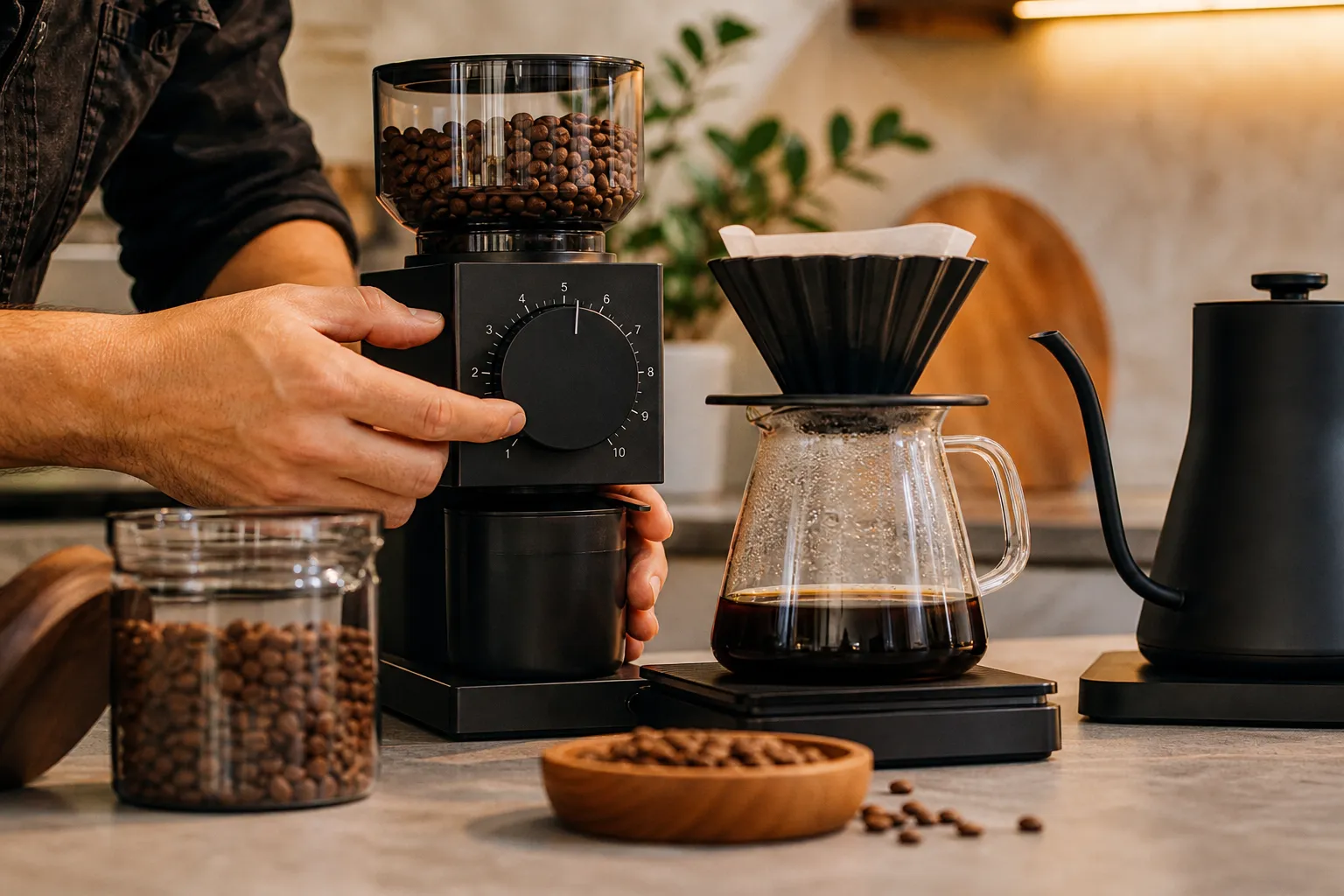
Quick Reference: Best Settings for Drip Coffee
If you want the short answer, use this:
Variable |
Best Starting Point |
|---|---|
Grind size |
Medium |
Texture |
Sand-like |
Filter |
Paper preferred for clarity |
Ratio |
1:16 to 1:17 |
Grinder |
Burr grinder |
Adjustment if sour |
Finer |
Adjustment if bitter |
Coarser |
Final Verdict
The best drip coffee grind size is usually medium - but the real answer is more nuanced. The best setting is the one that matches your brewer, filter, roast, and taste preferences while delivering balanced extraction.
If you want noticeably better flavor at home, focus on three things first: grind consistently, taste critically, and adjust gradually. Then support that routine with gear that makes brewing more precise and more enjoyable.
For coffee lovers who want performance without sacrificing aesthetics, Cocinare offers a compelling next step. Beautifully designed, thoughtfully engineered, and built for a more elevated home ritual, Cocinare helps turn precision into pleasure - whether you’re dialing in weekday drip coffee or perfecting your weekend pour-over.
FAQ
What is the best grind setting for drip coffee?
The best starting point is usually a medium grind, with a texture similar to sand. If your coffee tastes sour or weak, go slightly finer; if it tastes bitter or harsh, go slightly coarser.
Does grind size affect coffee flavor?
Yes - grind size directly affects extraction, which shapes flavor, body, and balance. A grind that is too coarse can taste weak and sour, while one that is too fine can make coffee bitter and muddy.
Which coffee is best for GERD?
People with GERD often prefer coffee that is lower in acidity, such as darker roasts or smooth, low-acid blends. Individual tolerance varies, so it’s best to choose gentle coffees and avoid over-extraction, which can make the cup taste harsher.
What grind of coffee gives the best flavor?
The grind that gives the best flavor is the one matched to your brew method and extraction target. For drip coffee, that is usually medium; for French press, coarse; and for espresso, fine.
Share:
Coffee Dripper Sets: What Makes Them Worth It
Kettle for Brewing Coffee: What Matters Most