

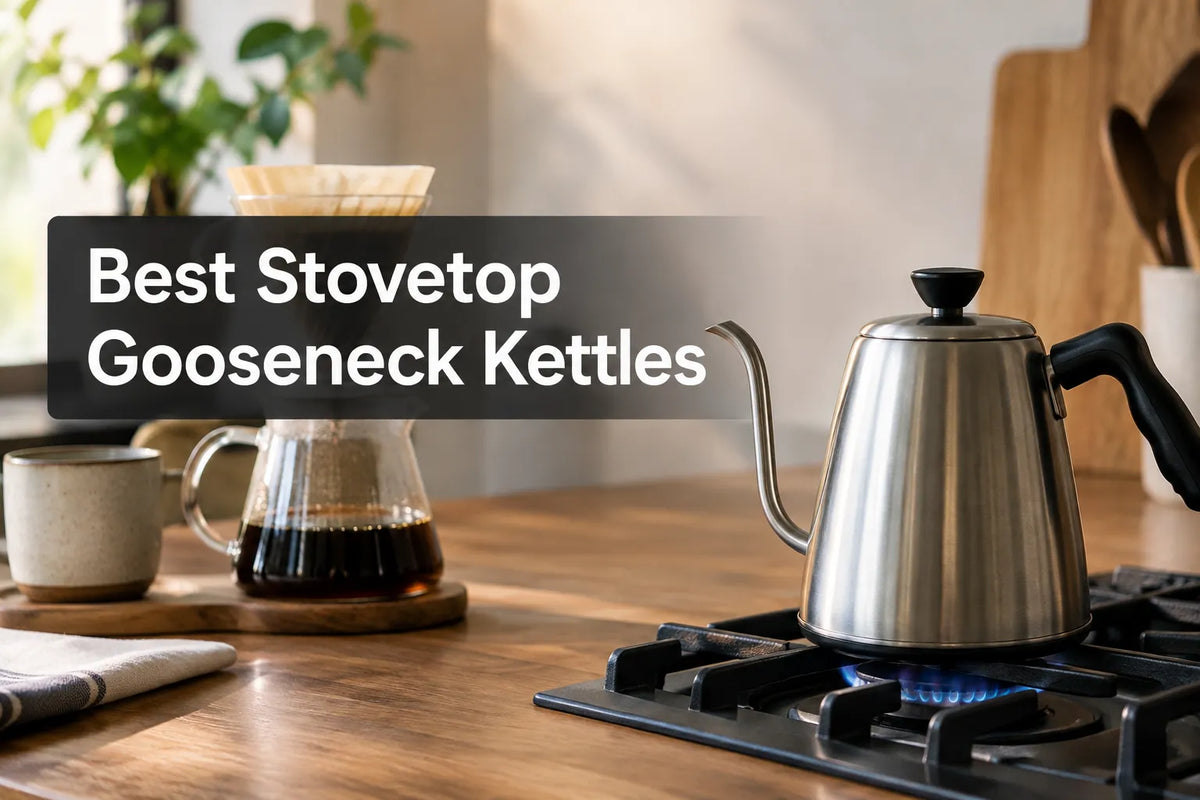
The best stovetop gooseneck kettles help you control the pour using the burner you already own. For home pour-over, the Hario V60 Buono is the easiest recommendation: its slim spout lets you manage the stream. The Melitta costs less to get started, while the Hario Outdoor Buono belongs by a campfire. If you want to select a water temperature and hold it while you prepare your coffee, buy an electric temperature-control gooseneck instead.
A gooseneck spout helps you spread water over the coffee bed without flooding one spot. With a stovetop model, you get that control and keep the counter free of a power base, though you give up the electric model's temperature display and hold function.
The best stovetop gooseneck kettles at a glance
Kettle |
Best fit |
Heating setup |
Temperature readout |
Main compromise |
|---|---|---|---|---|
Hario V60 Buono 1.2L |
Everyday home pour-over |
Stovetop; Hario's Buono range includes induction-compatible versions |
None built in |
No temperature hold; stated volume exceeds practical fill |
Melitta gooseneck kettle |
Lower-cost entry into stovetop pouring |
Stovetop, including induction |
None noted |
Gas flames may mark the exterior |
Hario Outdoor V60 Buono |
Campfire brewing and compact gear |
Campfire or suitable camp stove |
None noted |
Smaller usable volume; hot metal handle needs care |
Your stove, brewing volume and grip preference should decide the pick. If you do not want to monitor water temperature, the electric option makes more sense.
The stovetop picks
Hario V60 Buono: best for an everyday pour-over setup
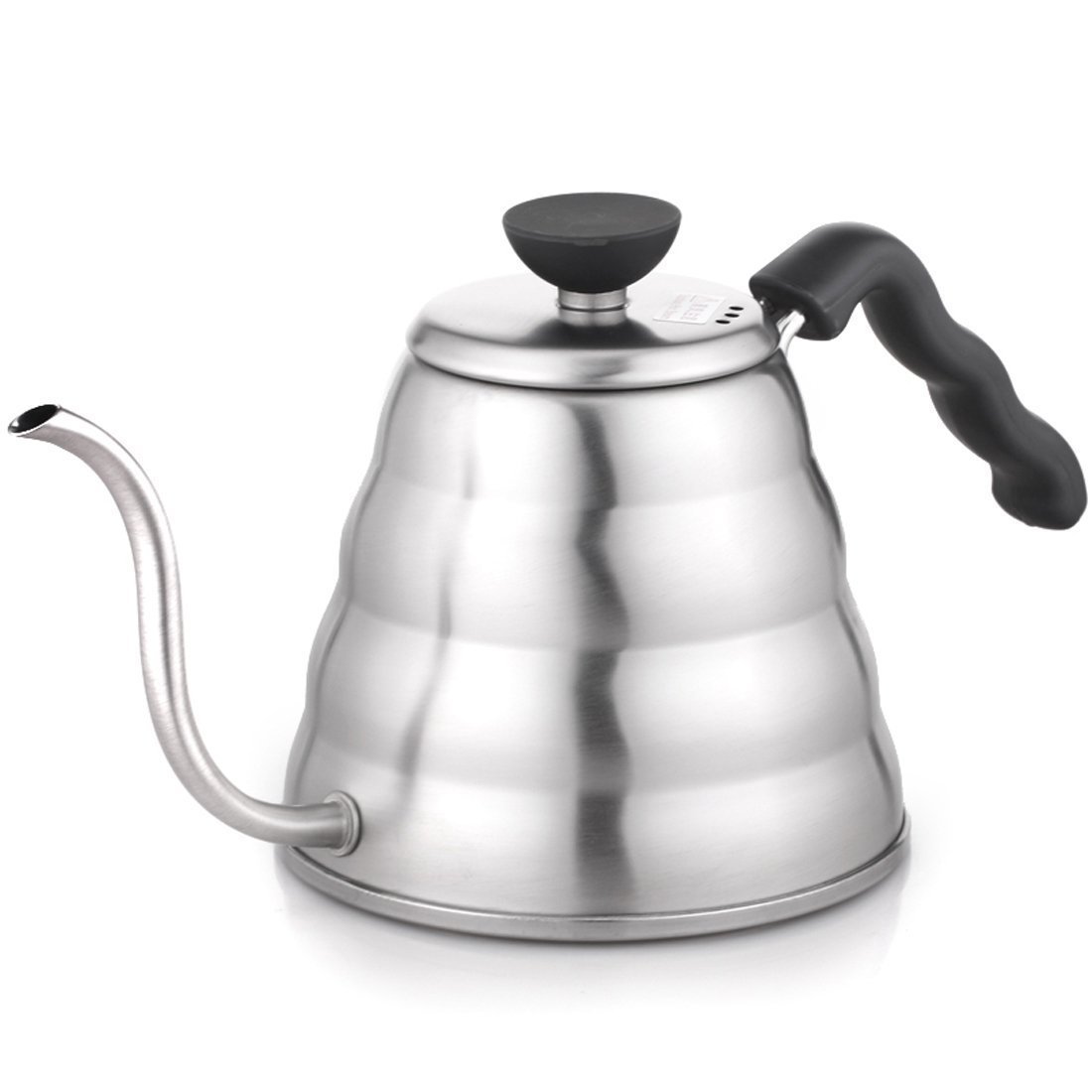
Hario describes the Buono's slim spout as a way to control both the amount and speed of water. Its 1.2L silver model has a practical capacity of 800 mL, an important distinction if you make coffee for more than one person. The body and lid are stainless steel, while the handle and lid knob are phenol resin. That combination gives your hand a separated grip, though the kettle still has no temperature display or hold mode.
The Buono suits a V60 or similar dripper on a compatible burner. Hario lists this model as made in Japan and prices it at $65 on its US product page. You can brew with considerably less than its nominal 1.2L volume.
Limitation: Back-to-back brews may call for a refill or reheating: the practical fill is 800 mL, and water cools between pours. Buono variants do not necessarily share the same cooktop compatibility, so match the model to your burner.
Melitta gooseneck kettle: best for a smaller budget
The Melitta pour-over kettle gives you a narrow pour without the cost of a powered base. Its angled handle has finger grooves; the stream pours smoothly. It works on gas and induction stovetops, useful if you move between kitchens with different hobs.
Heat the water on the stove and pour when it reaches the temperature you want. If you change brewing temperatures for coffee and tea, add a separate thermometer.
Limitation: Gas flames may mark the exterior with use. No reliable practical-fill figure was available, which makes it harder to plan a batch for two.
Hario Outdoor V60 Buono: best for campfire coffee
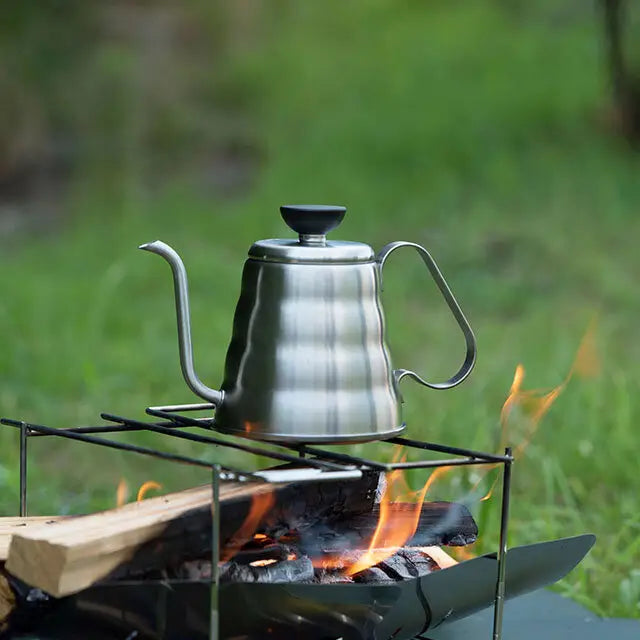
The Outdoor Buono has a stainless steel body, lid and handle, plus 500 mL practical capacity. That metal handle suits campfire use, where the resin grip of a home kettle would be a poor fit.
For a solo cup by the fire, you carry less water. Use a heat-safe grip to lift the metal handle after heating. A hotel room without a stove calls for another way to heat water.
Limitation: A 500 mL practical fill restricts larger batches, and the handle needs more care than the Buono's resin grip. Campfire suitability does not establish induction compatibility.
Stovetop or electric: which is worth buying?
Both types give you a narrow spout. A variable-temperature electric kettle also heats to your chosen setting and holds it, so you need not return it to a burner between pours. If you make several cups or brew temperature-sensitive tea, that hold function can change your routine more than the display does.
"Water must reach 92°C (197.6°F) where it contacts the grounds within the first minute, stay at or above that temperature for the rest of the brew, and never exceed 96°C (204.8°F)." - Specialty Coffee Association, certified home brewer requirements
The SCA applies those requirements to certified automatic drip brewers. Manual pour-over needs no single prescribed kettle setting, although repeatable heat is useful if you pause between pours.
Your routine |
Better choice |
Why |
|---|---|---|
One pour-over at home, stove already available |
Stovetop |
Fewer components and direct pour control |
Coffee at a campsite with a suitable flame or stove |
Camp-ready stovetop |
No countertop power base needed |
Several brews or a pause between pours |
Electric with hold mode |
Maintains a chosen water setting while you work |
Coffee and teas brewed at different temperatures |
Variable-temperature electric |
Easier to repeat a specific setting |
Small kitchen with induction |
Compatible stovetop or electric |
The base must suit the induction hob; electric uses its own base |
Factor a separate thermometer into the cost of a stovetop setup if you need one. Judge the pour by the spout and balance in your hand; judge the heating system by how much attention you want to give the water.
Should you buy a gooseneck or a regular electric kettle?
If you mostly boil water for French press, other immersion brewers or tea bags, a regular electric kettle is enough. Its broad spout fills a vessel quickly. With a V60 or Chemex, the gooseneck helps you pace water flow across exposed grounds. Better extraction still depends on your grind, dose and pour.
Some ordinary electric kettles offer adjustable temperature, yet their broad spouts remain awkward over a dripper. A stovetop gooseneck makes the pour easier to aim, while you manage brewing temperature yourself. Choose according to the part of the process that bothers you most: heating, pouring or keeping water ready for another cup.
What to look for before you buy
Spout flow and grip
You should be able to start a thin stream without tipping the kettle far enough to cause a surge. Look at the spout opening and how far the tip sits from your gripping hand. An insulated handle with finger room helps during a long pour. A metal camp handle tolerates fire, but needs a heat-safe grip.
Practical capacity, not the name on the box
The number in a kettle's name may describe its maximum volume rather than its usable fill. Hario, for example, lists the 1.2L Buono's practical capacity as 800 mL. A compact kettle is easier to maneuver for one cup; a larger batch needs enough usable water to finish the brew.
Induction compatibility
An induction hob needs a compatible magnetic base with enough contact area for its sensor. A stainless steel body tells you little about the base. The Melitta works on induction; with a Hario Buono, match the particular model to Hario's cooktop instructions. Electric kettles heat on their supplied power bases, away from the hob.
Built-in thermometer or separate probe?
A lid-mounted analog dial shows the water temperature at a glance. It cannot reheat water or hold a chosen setting. A separate probe provides a reading without tying you to one lid design. If you want the kettle to maintain your chosen temperature, buy a temperature-controlled electric model.
Materials and cleaning
Choose a spout you can rinse and dry, a lid that stays put when you tip the kettle, and a handle clear of the burner. Keep a gas flame under the base rather than letting it curl around the sides. Empty and dry the kettle after use. If scale builds up inside the narrow spout, descale it before the stream becomes uneven.
Build quality and durability
Before paying more for a finish, look at the spout joint, lid fit and handle attachment. A dented or obstructed spout opening can spoil a slow pour. A loose lid can shift when you tip a kettle full of hot water.
A stovetop kettle has no electronics, yet a flame can discolor it, a fall can bend its spout, and hard-water scale can narrow the water path. Electric models add controls and a base in exchange for fewer trips back to the stove. If you will use set-temperature heating often, that is a worthwhile trade; otherwise, simpler construction has its appeal.
The verdict
For home brewing on a compatible stove, choose the Hario V60 Buono for its controllable spout and 800 mL practical fill. The Melitta suits a tighter budget; the Outdoor Buono suits a small batch by the fire. You will still manage water temperature yourself with any of these three.
If you would rather set a temperature and get on with your morning, consider Cocinare's electric gooseneck kettles. The Artisan, Color-changing and Collab collections pair controlled pouring with finishes for different kitchen styles. They require power and counter space, so leave them at home when you camp. For a daily pour-over setup where the kettle stays on display, Cocinare is worth a look; the brand offers free U.S. shipping, up to 18-month warranty coverage and a 30-day money-back guarantee.
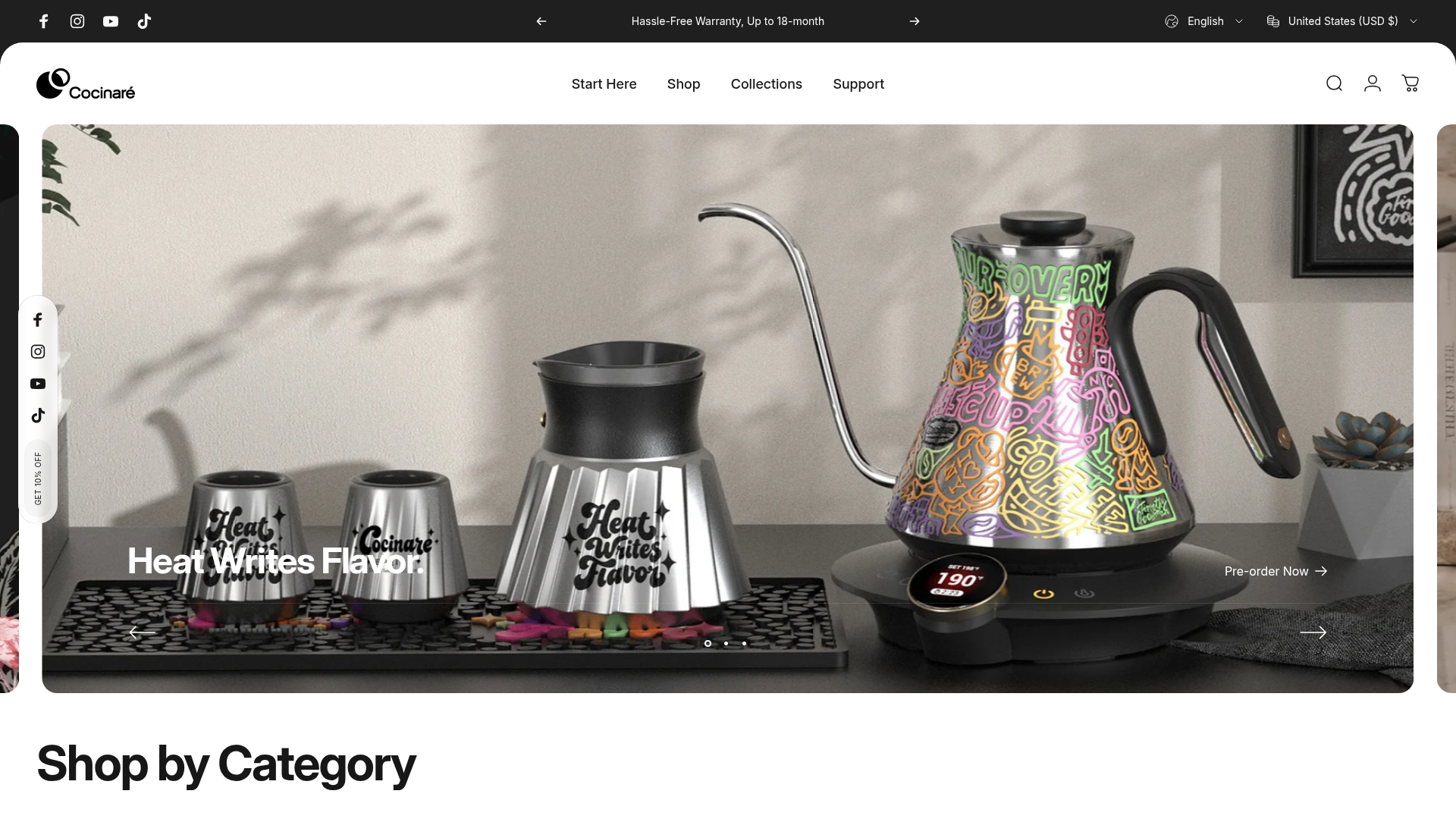
Explore Cocinare's electric kettles.
FAQ
Do stovetop kettles work on induction?
Some do, but not all. Induction needs a compatible base; a stainless steel body alone proves nothing. Melitta works on induction. For a Hario Buono, match the exact model to its cooktop instructions.
Are gooseneck kettles better?
For manual pour-over, a gooseneck makes pouring easier to direct and pace. It gives you more control over where the water lands than a broad conventional spout. For an immersion brewer, precise placement matters much less.
What is the best gooseneck kettle for a stovetop?
The Hario V60 Buono is the strongest all-around choice here for home pour-over. Its slim spout is built for controlling water speed, and Hario specifies an 800 mL practical fill for the 1.2L version. For a tighter budget, consider the Melitta; for fire-side brewing, choose the Hario Outdoor Buono.
Share:
Best 1L Electric Kettles With Temp Control
Best Gooseneck Kettles With Thermometers