

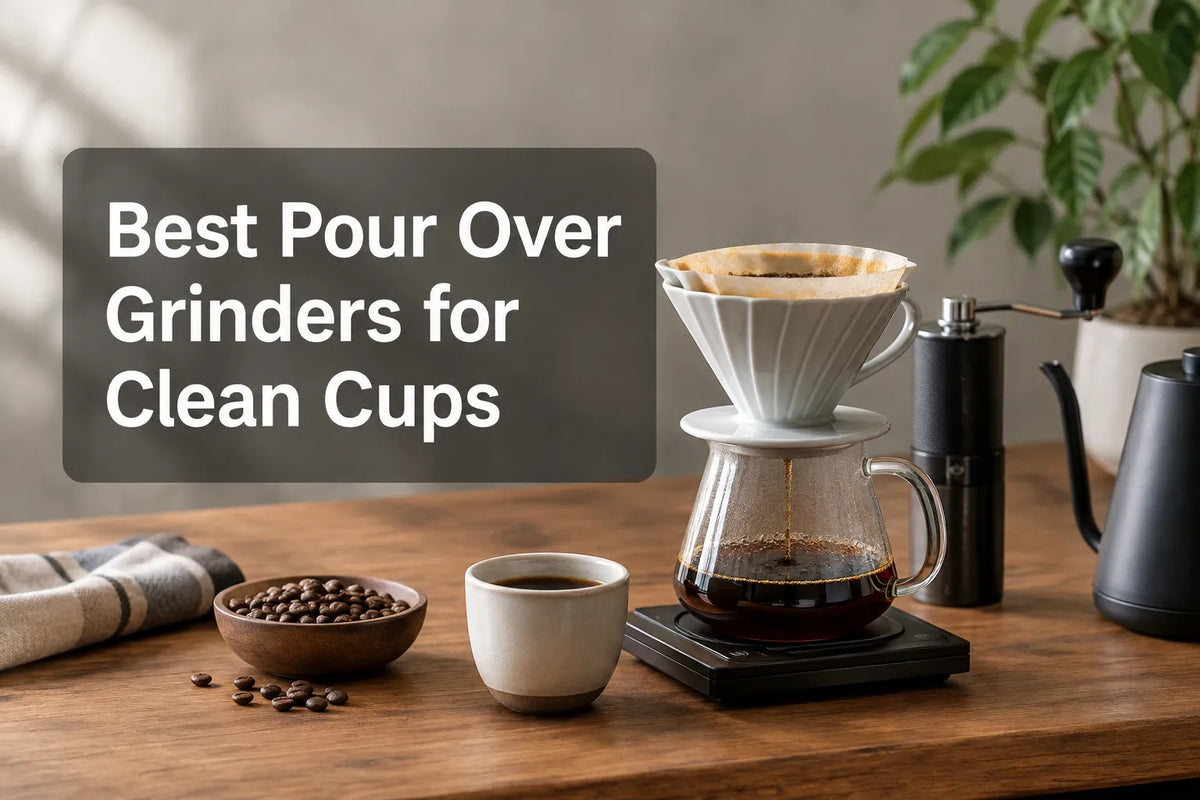
For clean, repeatable V60 or Chemex coffee, the grinder needs to suit both the brew and your morning. The Fellow Ode Brew Grinder Gen 2 is the filter-focused electric pick. If you keep beans in a hopper, the Baratza Encore is easier to live with. For one quiet cup at a time, reach for the 1Zpresso ZP6 Special. Espresso requires finer adjustment than these pour-over recommendations promise.
If you're assembling the best pour over coffee gear for home, put the grinder near the top of your shopping list. An uneven grind sends fines into the filter and leaves larger fragments under-extracted. The result can taste both sharp and heavy, even with excellent beans and a careful pour.
The quick comparison
Grinder |
Burrs and workflow |
Best for |
Main tradeoff |
|---|---|---|---|
Fellow Ode Brew Grinder Gen 2 |
64 mm flat steel burrs; electric single dosing |
Filter-focused brewers who rotate coffees and value tidy dosing |
Not suitable for espresso |
Baratza Encore |
40 mm conical steel burrs; electric hopper and stepped settings |
Everyday home brewers who want easy, repeatable filter coffee |
Espresso adjustments may be too widely spaced |
1Zpresso ZP6 Special |
48 mm hexagonal steel burrs; manual with external adjustment |
Single-cup brewers who prize a quiet ritual and distinct flavor notes |
Hand grinding takes effort, especially for bigger batches |
For your best pour over coffee grinder, start with the routine: weigh fresh beans for each cup or keep a house blend in the hopper. Brewing for two or more on a regular basis also makes electric grinding more appealing.
Three grinders worth considering
Fellow Ode Brew Grinder Gen 2: a dedicated electric filter grinder
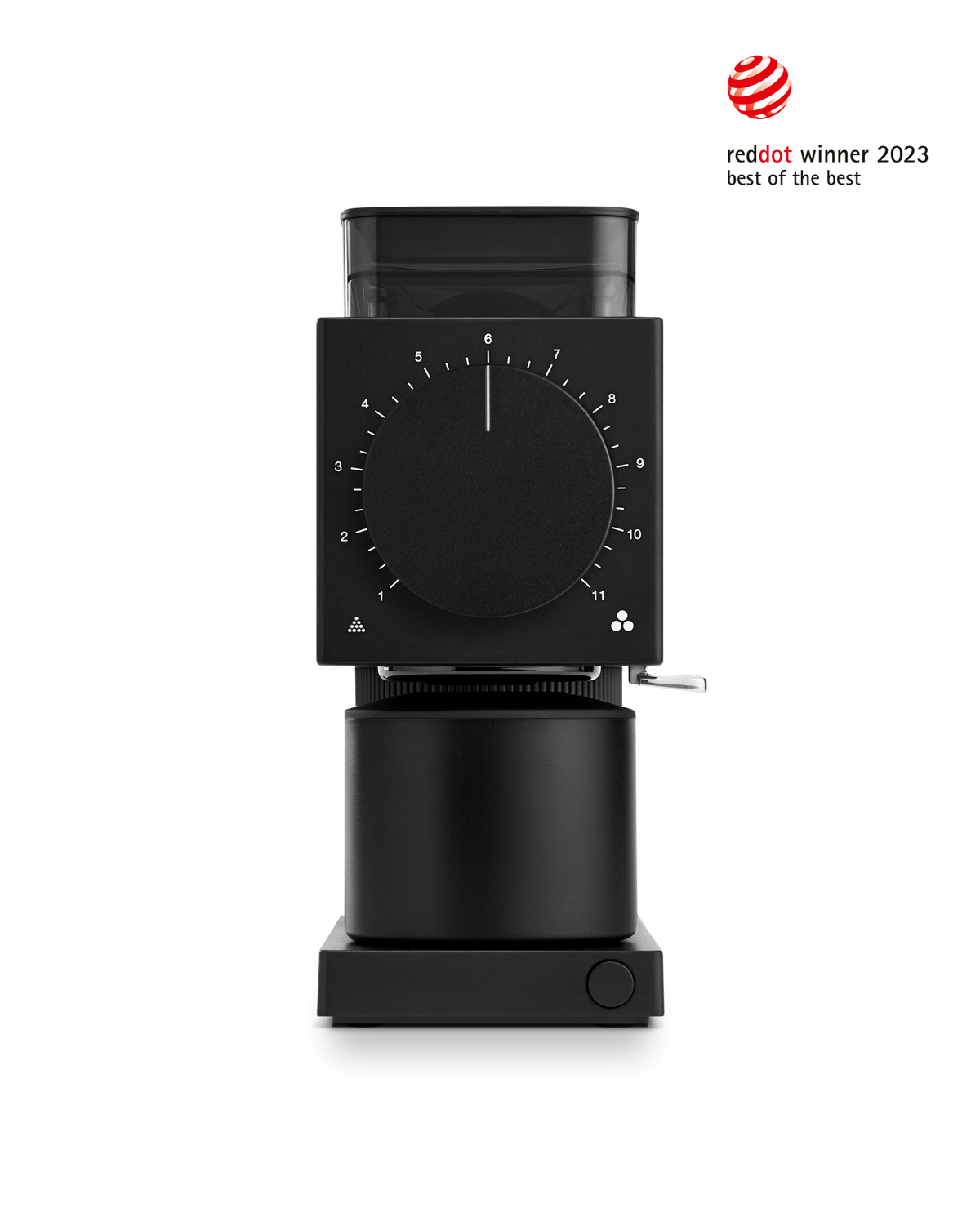
If pour-over is the main event, the Ode Gen 2 has a clear brief. Its flat burrs are made for filter coffee, so you can move between V60, Chemex and other brew methods. Weigh a dose, grind into the magnetic catch cup, then tip the grounds into your dripper. Auto-stop, a knocker and an anti-static system help keep the counter tidy.
"Ode is not suitable for espresso." - Fellow
If you're planning to buy an espresso machine, budget for another grinder. For a filter-first kitchen, the Ode remains a strong candidate for the best electric coffee grinder.
Baratza Encore: straightforward hopper convenience
The standard Encore suits a household that keeps one coffee in the hopper. Set the dial for your usual brewer and grind when you need it. Its marked steps let you find your way back after trying another dripper.
The dial is less helpful for espresso. As Baratza notes, the setting your shot needs may fall between two steps. The standard Encore and Encore ESP are different models; the standard version is the uncomplicated filter-coffee option here.
1Zpresso ZP6 Special: quiet, hands-on single dosing
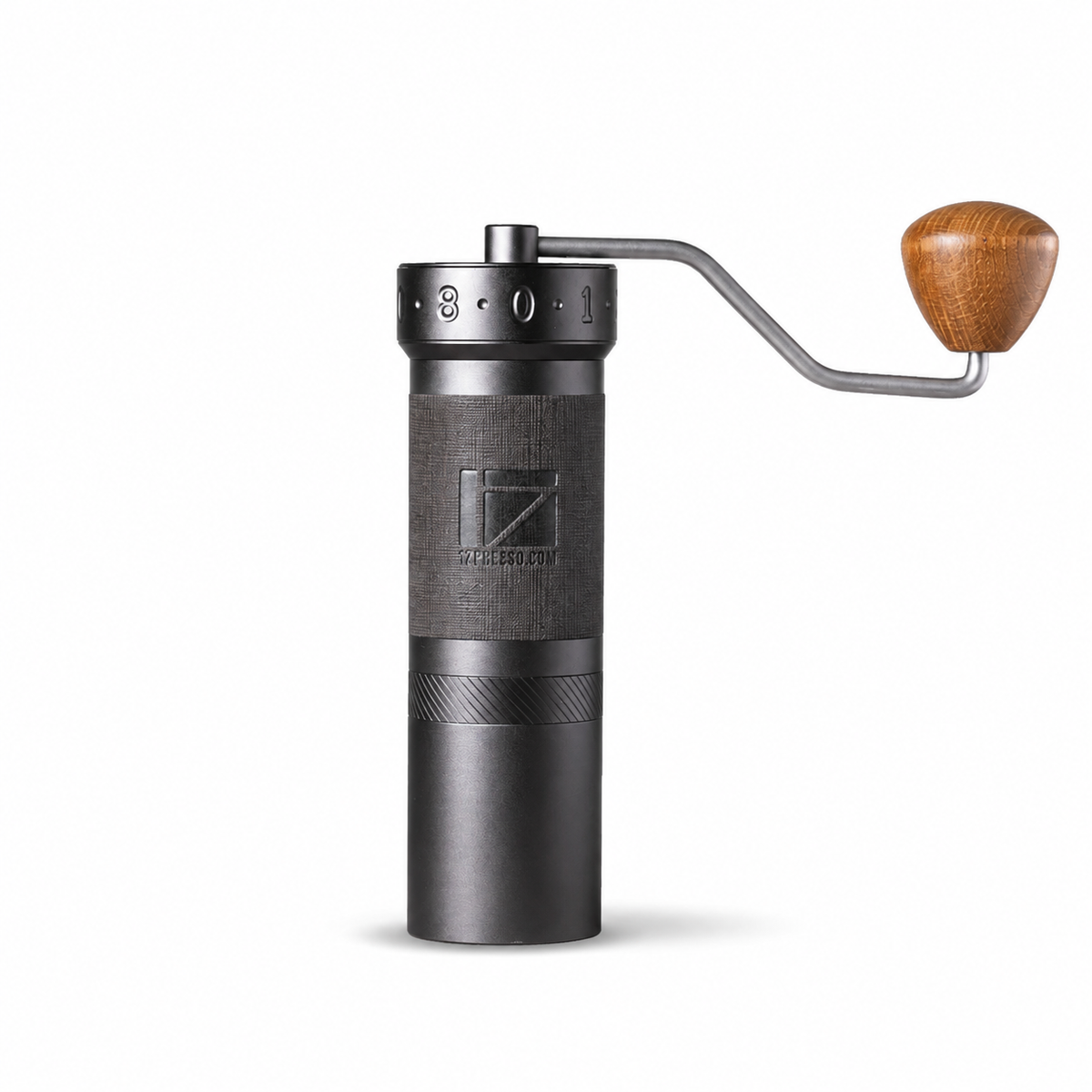
With the manual ZP6 Special, you weigh a dose and turn the handle. It has pour-over burrs and an external adjustment ring, and it takes little counter space. The beans still make noise as you grind them, but there's no motor.
This one rewards the brewer who likes picking out distinct notes in lighter coffees. Grinding for a large Chemex takes more effort, though. And because 1Zpresso positions the ZP6 for pour-over, it isn't our choice for a shared espresso-and-filter station.
How to choose the best pour-over coffee grinder for your cup
Clarity versus body: look beyond the burr shape
In a clean cup, you can pick out acidity, sweetness and the finish without a muddy aftertaste. Too many fines can get in the way. Researchers found that fines pack closely and resist water flow in a packed coffee bed, though their apparatus differed from a paper-filter dripper. There is room for preference here: you might like a fuller, rounder cup more than one with sharply separated notes.
"The fines will also allow a closer bed packing and provide a larger surface area to resist water flow." - PLOS ONE
Flat and conical describe the burrs' shape, but they don't tell you exactly how your coffee will taste. Burr design and alignment matter, as do the coffee and filter. The Ode is a flat-burr choice for distinct filter-coffee notes; the Encore offers a convenient conical-burr routine. The ZP6 puts filter brewing in a hand grinder. The result in your cup matters more than the label.
Match workflow and noise to your mornings
Single dosing means weighing beans before each brew, a pleasant habit if you rotate coffees. A hopper saves that step for a daily house blend, although you have to empty it when you switch beans. Grounds can make their own mess, so look at the catch cup and exit chute as closely as the dial.
If you're grinding for several cups, an electric motor saves your arm some work. You will hear it. A hand grinder takes longer and still makes grinding sounds, but avoids motor noise, a fair trade for an early V60 and perhaps less appealing when guests are waiting.
Think about your dripper, not a universal setting
The Hario V60's open outlet reacts to changes in the grounds and pouring. Add more coffee to its cone and the bed depth increases, affecting flow rates and brew times. A Chemex's thicker paper traps more sediment and can slow a brew; the Kalita Wave spreads the grounds across a flat bottom. SCA-supported research on drip-brew basket shape shows that basket shape influences the cup alongside grind size, without prescribing a grinder for either shape.
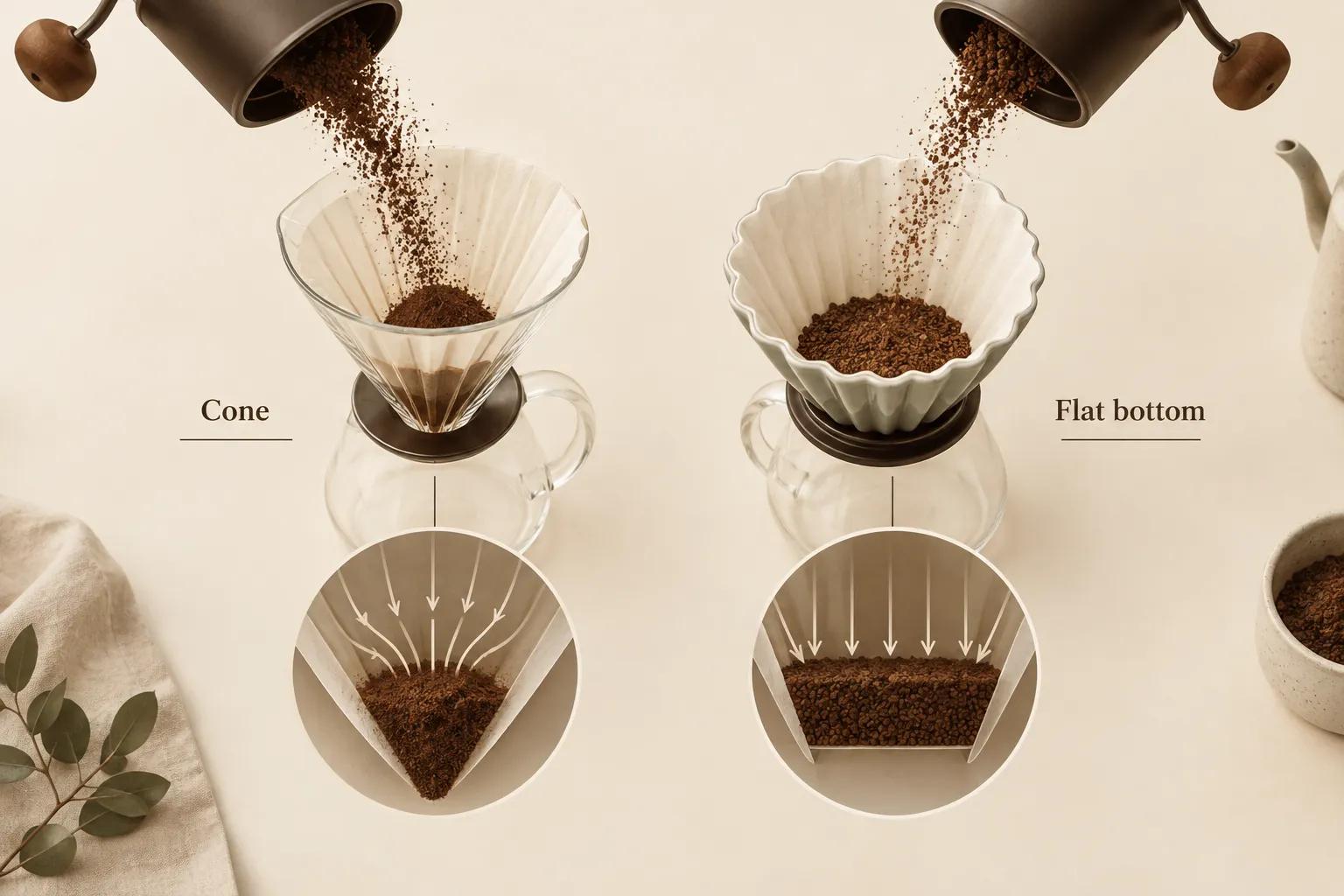
Each of these drippers benefits from useful adjustment across the filter range, especially if excess fines slow the paper. A readable dial also helps when you alternate between drippers or brew different batch sizes: you can return to a setting without retracing every step.
Your coffee, filter and dose will change. Leave yourself room to adapt the grind when they do.
Why the best pour-over choice may not be a home espresso grinder
For filter coffee, you need an even grind across a broad working range. Espresso needs much finer control within a narrow one, since a small adjustment can change how a shot runs. A grinder can make lovely filter coffee and still miss the espresso setting you're after.
Fellow rules out espresso for the Ode; the standard Encore's steps may skip the setting a shot needs. 1Zpresso positions the ZP6 for pour-over. Daily espresso drinkers should shop for their best home espresso grinder first. If you almost always make V60 or Chemex, you can choose a filter specialist without paying for espresso capabilities you won't use.
Build a setup around the grinder
For a complete setup, pair the grinder with a dripper whose filters are easy for you to buy again. Weigh coffee and water on a scale, then use a gooseneck kettle to spread water over the grounds instead of flooding one patch. You need the grinder for even grounds and the kettle for control over the pour.
Cocinare's electric gooseneck kettles give you that controlled pour in a design you can leave out. Its Artisan, Color-changing and Collab collections offer different looks for the brewing corner. Once you've chosen a grinder for the coffee you make, pick the kettle that feels right in your daily routine.
The verdict
The Fellow Ode Gen 2 gets the nod for electric, filter-only brewing. Keep the Baratza Encore in mind if a hopper makes mornings easier, or take the 1Zpresso ZP6 Special for quieter, hands-on single cups. Espresso deserves a separate grinder decision.
Add the dripper and scale, then look to Cocinare for a precise gooseneck pour and a kettle you'll enjoy keeping on the counter.
FAQ
What is the best pour-over equipment for coffee?
Start with a burr grinder, a dripper and its matching filters, a scale, and a gooseneck kettle. For a filter-only electric grinder, the Ode Gen 2 is a strong choice; the Encore favors hopper convenience, while the ZP6 Special suits quiet single-cup brewing.
What are the disadvantages of pour-over coffee?
Pour-over takes hands-on pouring and a little time to repeat a cup you like. Its filter can also slow down when a grinder produces too many fines, so a suitable burr grinder and a controlled pour make the routine more satisfying.
Share:
Best Plastic-Free Coffee Makers
Most Beautiful Pour Over Coffee Makers