

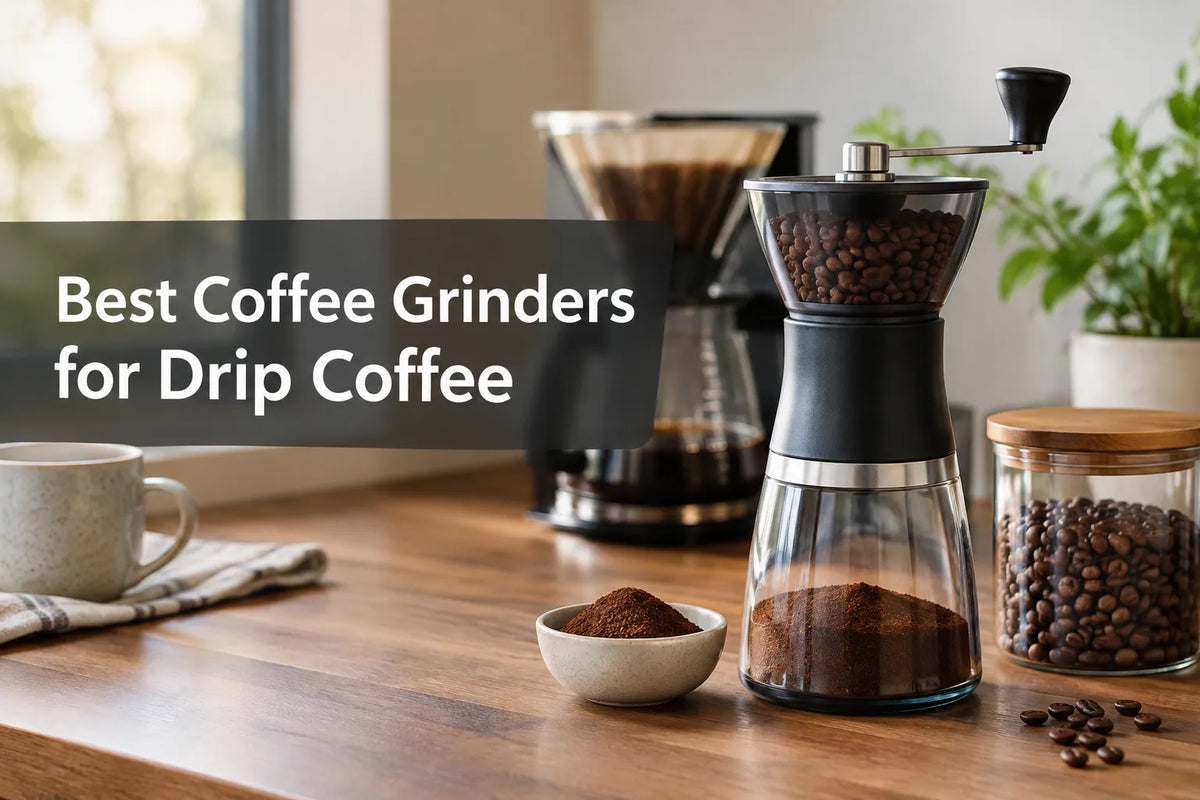
If your coffee maker makes the same pot each morning, start with the Baratza Encore. It is the best drip coffee grinder for most homes: the burrs and simple adjustment make a balanced pot easier to repeat than a blade grinder does. The Fellow Ode Brew Grinder Gen 2 is tidier and quieter for filter-focused single-dosing, while the Fellow Opus can handle your espresso beans too.
When your grounds contain both dust and large pieces, a good bag of beans can yield a cup that tastes thin and bitter. An automatic drip machine calls for dependable settings around medium, along with a routine you can manage before breakfast. Use fresh beans and measure the brew, too.
Quick picks for drip coffee
Grinder |
Best for |
Daily workflow |
Main compromise |
|---|---|---|---|
Baratza Encore |
Everyday drip without paying for espresso-oriented controls |
Hopper, simple grind dial, grounds bin |
Noisy compared with the Ode; not an espresso grinder |
Fellow Opus |
Households that switch between drip and espresso |
Compact all-round electric grinder |
Can be messier, and its broad range adds complexity you may never need |
Fellow Ode Brew Grinder Gen 2 |
Filter-first brewers who value clean handling and design |
Weigh beans, single-dose, collect grounds in aligned cup |
Costs more and is not intended for espresso |
The number of settings matters less than finding the medium setting you liked again tomorrow. Before choosing a grinder, picture your usual pot and the trip from grounds bin to filter.
Best drip coffee grinders for different brewers
Baratza Encore: Best everyday pick
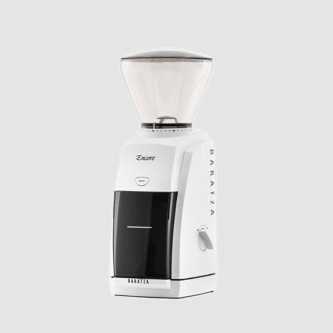
The original Encore works well beside an automatic coffee maker. Its conical burrs cover drip and other brewed-coffee methods, and you can use the hopper and grounds bin without weighing every dose. Find the grind that tastes right, then leave the dial alone until the coffee or batch size changes.
It looks plain beside the Ode and makes more noise. It also lacks the fine adjustment an espresso drinker needs. If drip is all you brew, neither the extra settings nor their cost will make your morning pot easier.
Fellow Opus: Best if you also brew espresso
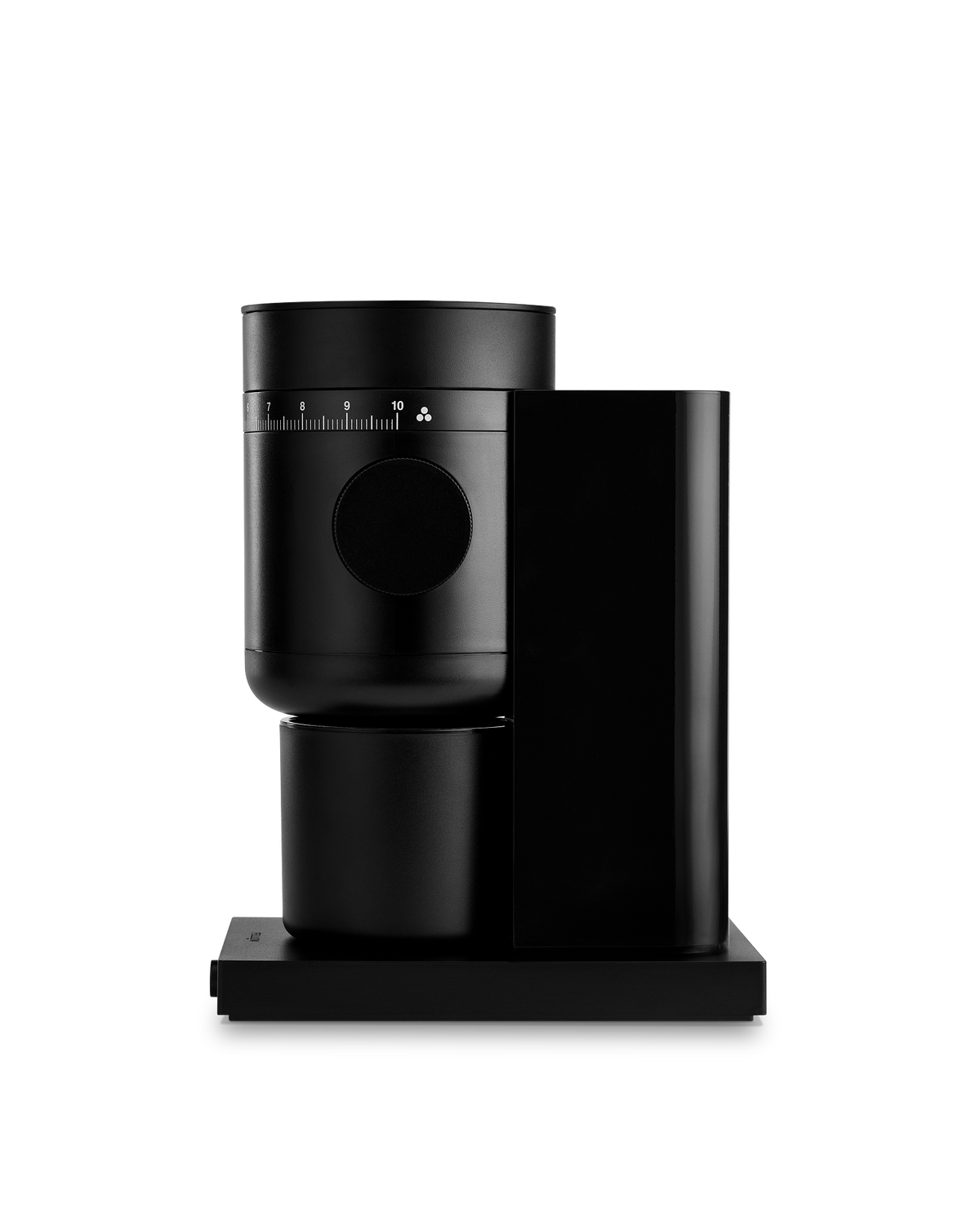
The Opus grinds for drip, pour-over and espresso. That makes it useful when one person fills the coffee maker and another pulls shots. Its conical burrs serve both routines from one spot on the counter, unlike a filter-only machine.
If you stick to drip, the broad adjustment range may feel like work you never asked for. Grounds can make a mess as well. Switching methods? Write down your drip setting. Otherwise, the Encore is simpler and the Ode is the filter-focused upgrade.
Fellow Ode Brew Grinder Gen 2: Best filter-focused upgrade

Ode Gen 2 grinds for electric drip makers and pour-over. Its flat burrs and focused adjustment range suit filter brewing; its single-dose design suits people who rotate beans rather than keep a hopper full. Fellow specifies 64 mm stainless-steel flat burrs, 31 steps across 11 settings and a 100 g grind capacity.
The anti-static system, aligned catch cup and grounds knocker help keep the counter clean; automatic stop takes one step out of grinding. Its restrained design also sits comfortably beside a brewer or kettle. The tradeoff is cost and the need to measure beans for each brew. A 100 g capacity deserves attention if you make a big pot, and Fellow says Ode is not intended for espresso.
What matters in a drip coffee grinder
Grind consistency matters more than a huge setting count
In a drip basket, water must pass through a whole bed of coffee. Dust-like fines extract faster than the larger fragments and may slow that flow. The grounds do not need to look identical; you need a repeatable result and a few settings close enough together to fine-tune the cup.
In one filter-brewing experiment, uniform grounds produced less of the measured compounds than a conventional mixed grind:
"a homogeneous grind was more deficient in bioactive compounds and total dissolved solids than a classical, bimodal grind." - European Food Research and Technology
A burr grinder lets you set the gap between its burrs and return to it. A blade grinder chops for as long as you run it, with less control over the mix of particle sizes. That difference makes the burr grinder easier to dial in, even though perfectly uniform grounds are not the goal.
Is a blade grinder good enough for a drip machine?
Blade-ground coffee will brew in a drip maker. Longer pulses may leave you with more powder and still leave larger pieces in the mix, which makes a hollow, harsh cup tricky to correct. If you already have a blade grinder, keep your dose and pulse routine consistent. If you are buying a new grinder for drip, choose burrs.
Flat versus conical burrs: Buy the grinder, not the shape
The Encore and Opus use conical burrs; the Ode Gen 2 uses flat burrs. Either style can make excellent drip coffee. A grinder's motor, housing and grounds path affect its sound and retention, so burr geometry alone cannot tell you how it will perform on your counter.
If all you need is a straightforward medium grind, the Encore may be enough. Choose the Ode for its filter-focused burr set and cleaner workflow rather than for the word “flat” on the box.
Retention, static and noise affect real mornings
Retention is the coffee that stays inside after you grind. When you change beans, some of those older grounds can end up in the next dose or fall out as you tap the chute. Anti-static features help with mess, though they do not replace cleaning. The Ode's catch cup and knocker fit a weighed, single-dose routine; if you use a hopper, look for old grounds in the bin and chute when you open a new bag.
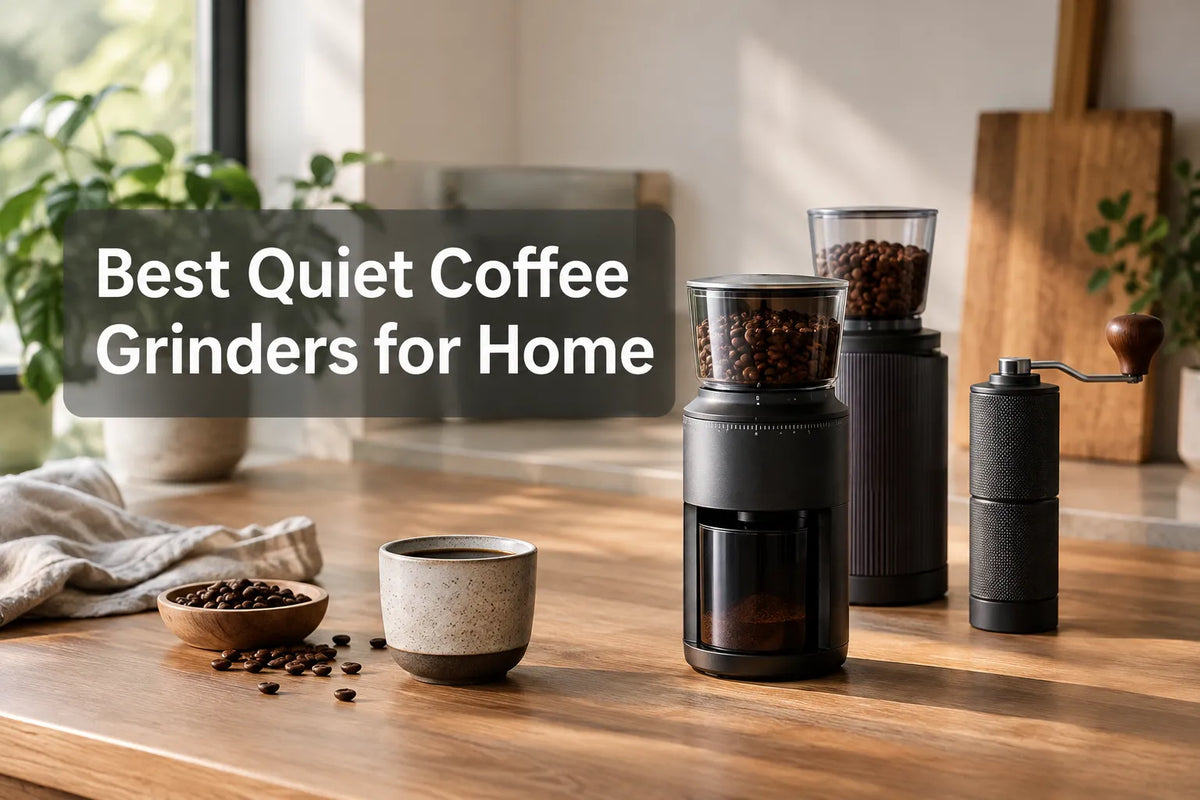
Grinding sounds louder in a quiet apartment than in a busy kitchen. The Encore trades some noise for a simpler routine; Fellow describes the Ode as quiet. If you brew while others sleep, pay attention to sound before you choose.
Adjustment and cleaning should be easy to repeat
Choose a dial you can read and a setting you can find again after cleaning or switching methods. Brewing one bean in one machine may call for few adjustments. If you alternate a small pour-over with a full drip pot, the markings matter more. Brush loose grounds from accessible parts as the maker directs; keep water off the burrs unless the manual permits it.
A removable bin should pour ground coffee into the filter without a mess. If the grinder holds coffee in its chute, give it a quick brush when you change beans. With lighter roasts, start in the same medium region, then adjust by taste; the setting for your previous bag may no longer suit the new one.
How to dial in a grinder for a drip coffee maker
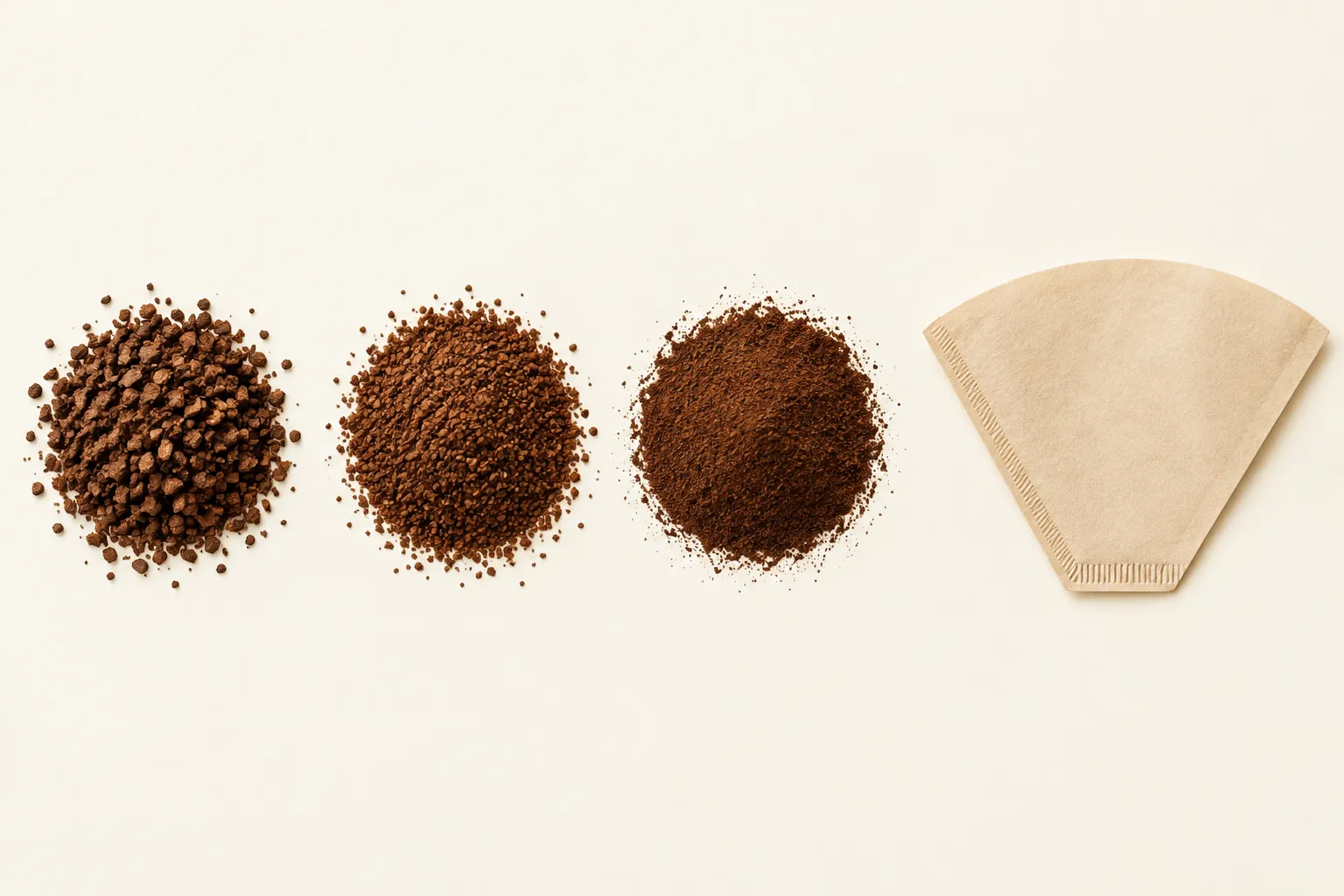
Set the dial near its marked medium or drip range. The number printed on somebody else's grinder will not translate to yours, and a new coffee, dose, filter or brewer may call for another setting. Keep the coffee-to-water ratio and batch size steady while you change the grind. Then the next cup gives you something useful to compare.
What you taste or see |
First adjustment to try |
Why |
|---|---|---|
Thin, sour or weak coffee |
Grind a little finer |
More surface area can increase extraction |
Harsh, dry or bitter coffee, or a filter that drains slowly |
Grind a little coarser |
Fewer fines and faster flow can ease over-extraction |
Good flavor, but inconsistent pots |
Keep the setting; measure beans and water consistently |
Changing several variables hides the cause |
Try one small step and brew again. A full pot in a flat-bottom basket may need a different setting from a small cone-filter brew. An overflowing basket calls for a look at how the filter sits and how much coffee you used; if the bed still clogs, grind coarser.
Which grinder should you buy?
You use an automatic drip maker almost exclusively: Pick the Encore for burr grinding and easy medium-range adjustment. It lets you make a pot without measuring a fresh single dose each time.
You alternate drip and espresso: The Opus covers both. Keep track of your settings and allow a little time for cleanup.
You care most about filter coffee and the feel of the routine: Choose the Ode Gen 2 for its clean grounds handling, considered appearance and brew-only design. It belongs in a kitchen centered on drip and pour-over.
For full carafes, capacity and loading matter. A hopper saves time on hurried mornings, whereas a weighed dose makes it easy to change specialty coffees. A hand grinder can suit one cup, but grinding beans for a full carafe every day takes more effort.
Should you get the Baratza Encore ESP instead?
The Encore ESP adds an espresso-oriented range to its brewed-coffee settings. It suits a household that owns an espresso machine or plans to add one. For drip alone, the original Encore gives you the easy grind-setting changes that matter here.
Switch between brewing methods and the ESP's broader adjustment system earns its place. Brew filter coffee most days and you'll spend more time at one medium setting. The number of marks on the dial will not improve a carafe by itself.
The verdict
The Baratza Encore is the best coffee grinder for drip coffee in most homes: you can get back to a medium grind without fuss. Spend more on the Fellow Ode Gen 2 if tidy grounds handling and a filter-focused routine will make you enjoy using it. If espresso shares the counter with your drip machine, the Opus is the more useful all-rounder.
If the grinder leads you to pour-over, Cocinare's Artisan Collection electric gooseneck kettles bring controlled pouring and expressive design to the setup. Your automatic machine still handles its own water. The kettle comes into its own when you brew by hand.
FAQ
What is the best grinder for drip coffee?
For most households, the Baratza Encore is a practical choice because its burrs and straightforward adjustment suit daily drip brewing. If you mostly brew filter coffee and value cleaner single-dose handling, the Fellow Ode Brew Grinder Gen 2 is a stronger upgrade.
What's the best grind for a drip coffee maker?
Start at a medium setting and taste a brew made with a consistent dose and water amount. Go slightly finer if it tastes thin or sour, or coarser if it tastes harsh or the filter drains too slowly.
Share:
Best Gooseneck Kettles With Thermometers
Best Quiet Coffee Grinders for Home